
Early stage researcher @MSCActions GLIOTRAIN program @VIBLifeSciences @KU_Leuven PhD student @BergersLab | #Glioblastoma #scRNAseq | Tumor Heterogeneity
Louvain, Belgium
Joined April 2018
- Tweets135
- Following364
- Followers91
- Likes570

Linqian Weng, MD retweeted

Let me introduce: InstanSeg 🦠🔬💻👩🔬
This *would* have been a short thread about Thibaut Goldsborough’s PhD work… but he solved too many problems.
Now it's a long thread about 2 preprints, a whole new approach to cell segmentation & #opensource software to make it easy to use
Linqian Weng, MD retweeted

Online Now: Cancer cell states: Lessons from ten years of single-cell RNA-sequencing of human tumors dlvr.it/TCb3kZ

Linqian Weng, MD retweeted

Very happy to share that our new comprehensive #review about #vascular targeting in the #tumor is out!
nature.com/articles/s41568-0…
@guelfi_sophie
@vib_ccb @Onco_KULeuven

Linqian Weng, MD retweeted

Paper 🚨! Ecstatic, proud, grateful …Years of dedication from the whole lab, with the exceptional @djkloosterman and the one of a kind #JohannaErbani at its helm. What a journey all the way to @CellCellPress! How did it start (& end)? A 🧵1/n
cell.com/cell/fulltext/S0092…

Linqian Weng, MD retweeted

Excited to share our new paper out in @NatureMedicine on tumor reactive T cells assembling in the proximal cranial bone of patients with glioblastoma.
A tremendous team effort with a lot of excellent cooperation partners!
Check it out now!
nature.com/articles/s41591-0…

Linqian Weng, MD retweeted

Excited to share our new paper in @CellCellPress on spatial organization in glioblastoma authors.elsevier.com/c/1izT9…. We combine spatial transcriptomics (Visium) and proteomics (CODEX) to reveal five-layer organization of cellular states and a role of hypoxia as tissue organizer. 1/

Linqian Weng, MD retweeted

Want to hear about the latest updates/new techniques in single cell and spatial genomics? Check out the full agenda for our Single Cell Genomics Day on Friday, 3/29. All talks will be live-streamed (no registration required) at satijalab.org/scgd

Linqian Weng, MD retweeted

Special issue on "The cancer-immunity cycle," a concept first introduced by Mellman & Chen in 2013 that provided a framework to understand anti-cancer immunity | Seven articles discussing progress & advances in the field & highlighting key challenges #cancerimmunitycycle cell.com/immunity/issue?pii=…

Linqian Weng, MD retweeted

During the poster session on day 2 of #THPT23, we spoke to Linqian 'Jenny' Weng (@wlq08) of @BergersLab at @vib_ccb. Jenny researches the importance of tailoring immuno-therapies to #glioblastoma immune subtypes. Watch her 🎞️pitch here to find out more.

I am truly honored to present my work at the #SNOASCO2023 in San Francisco today! If you'd like to learn more about my project, please visit poster SYST-27. Thank you SNO @NeuroOnc for hosting this wonderful event! Looking forward to the meetings tomorrow!😍

Linqian Weng, MD retweeted

Ever wondered what the equivalent of differential gene expression is for cell-cell communication ?
Look no further...it's MultiNicheNet, the first statistically sound framework for multi-sample multi-condition comparison of intercellular communication
👉doi.org/10.1101/2023.06.13.5…

Linqian Weng, MD retweeted

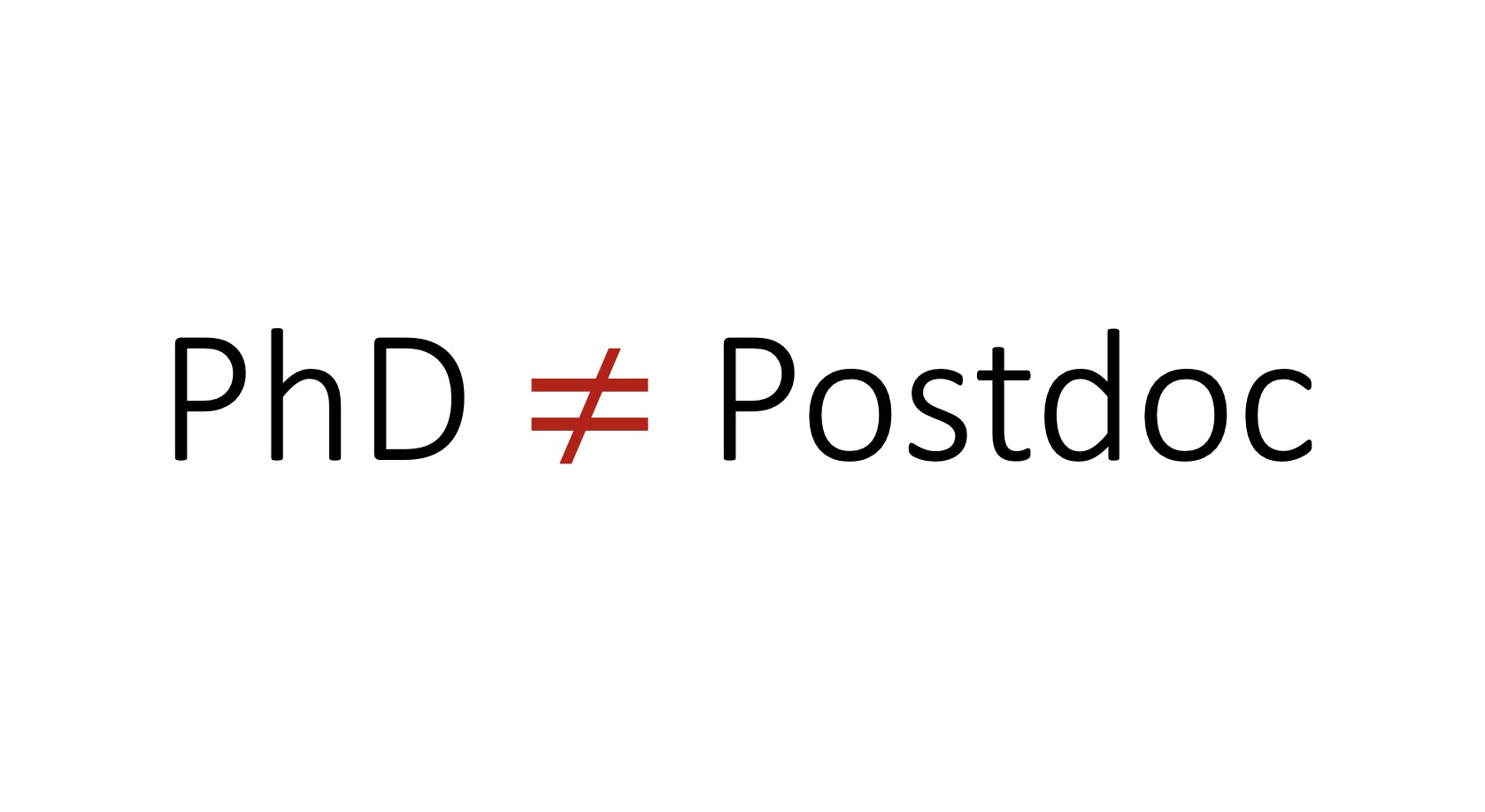
Postdoc is conceptually different from a #PhD position. Below are some key points to keep in mind before starting postdoc.
1️⃣ The harsh reality of being a postdoc:
1. Postdoc is a contractual (not educational) position. Your postdoc duties are defined by your contract & agreement with your advisor.
2. Usually, a contract is given for 1 year and renewed annually. It does NOT offer the same job security that PhD students enjoy. Be prepared to start searching for a new position in 1st year and leave anytime.
3. Postdoc is inherently a position for academia (with a few exceptions like in bio). Often, companies will assume that you’ve chosen an academic track, not industry. They’d rather hire a fresh PhD graduate from the same field than a postdoc. So, your job search outside academia may become challenging, especially if you do fundamental research.
4. If you want to be a faculty, your postdoc may require a lot more efforts than you originally expected, making it the most intense time of your life. Be prepared.
_________
2️⃣ If you take postdoc because you want to be more competitive for senior academic positions, keep in mind that:
0. Choosing the right lab & advisor is statistically MORE important than simply working hard and publishing papers during postdoc (esp. in the U.S.). However, working with an advisor who can write an excellent recommendation letter does NOT mean that you will also get prepared for a faculty life and become a great scientist. Your advisor should be a good mentor for this.
1. As the competition for faculty positions can easily reach over 1/300 and you have ~1 year before applying for positions, postdoc time often turns into a “race”. The worst part is that hard work does NOT necessarily lead to success.
2. Postdoc is NOT a must for being a faculty. Some students secure professor positions at the end of their PhDs (esp. at the top universities in the U.S.).
3. Postdoc lasts 1-3 years. If you’re a first-year postdoc and apply for faculty positions, committees will be OK with you showing your PhD work during interview. But starting from your 2nd year, they expect you to show successful postdoc results.
4. Some committees expect that a 3-year postdoc should complete as much work as a 5-year PhD student. It’s like a fast-track PhD.
5. Often (esp. in STEM), the expected number of “postdoc papers” is on average 1 paper per 1 year, unless the work is unusually complex. NOT 10 papers/year.
6. Publishing a lot of papers is normally viewed negatively. Coauthoring tens of papers will send a RED flag to the committee. For decent universities, it's (almost always) quality over quantity.
7. Doing a second postdoc is rarely helpful in landing a faculty position.
8. Ideally, postdoc should be in a different field than your PhD. Switching fields is viewed positively and can be helpful in landing a faculty position. But it is much more challenging because your time is very limited but you must do outstanding research. Also, I know many people who didn’t change fields but became faculties nonetheless.
Good luck!
#AcademicTwitter #AcademicChatter
Linqian Weng, MD retweeted
1. Excited to share our new paper in @Nature! With over 1000 tumors analyzed by scRNA-seq, we provide a systematic pan-cancer characterization of transcriptional intra-tumor heterogeneity (ITH)
nature.com/articles/s41586-0…

Congrats Dr. Dr. Hua! So proud of you!🥳 #MDPhDdone

It was with great success that Yichao Hua defended his #PhD thesis on #HEVs in tumors today. Well done, very impressive work. Congratulations Dr Hua!
Thanks to jury members @betsholtz @YvanSaeys @bernthie and Aernot Luttun, and chair @iBakiTopal
@Onco_KULeuven @vib_ccb

4
127
Linqian Weng, MD retweeted
Check out our latest review on high endothelial venules #HEV in cancer!
@gerlanda_vella @vib_ccb @Onco_KULeuven @VIBLifeSciences
authors.elsevier.com/c/1geQ2…
Linqian Weng, MD retweeted

There are less than 4 weeks left to apply for GLIORESOLVE PhD positions. Click the link below to access the job advertisement, which includes the eligibility rules. We look forward to receiving your applications! 👇#jobfairy #MCSA @MSCActions @HorizonEU glioresolve.eu/recruitment
Linqian Weng, MD retweeted

Please check out our paper published today in @Annals_Oncology . This was a massive effort including great collaborators from the @MSCActions Gliotrain programme and the US including @roelverhaak . New subtypes that might support immunotherapy in GBM.annalsofoncology.org/article…

Linqian Weng, MD retweeted

🔍Breaching barriers in #cancerresearch? @BergersLab (@VIB_ccb) found out how to induce High-Endothelial Venules (#HEVs) in tumor blood vessels to increase lymphocyte infiltration and bypass tumor defenses. A big step forward for better #immunotherapy!
👉 https://teapawt.org/t.co/D2wM1DAD2Z

ALT High-Endothelial Venules, Bergers Lab
Linqian Weng, MD retweeted

1/n Single-cell data analysis is complex with many tools to choose from - but which ones work best and should be used when? Led by @lukasheumos and @AnnaCSchaar, we wrote a free online book that aims to guide single-cell data analysts: sc-best-practices.org
