
Incoming Assistant Prof. @CUHKofficial, Postdoc @uiuc_nlp, Ph.D. @UCLA, BS @PKU1898. Ex-Intern @AmazonScience (x2),@NECLabsAmerica. LLM, Neuro-Symbolic AI.
Urbana-Champaign, IL
Joined June 2012
- Tweets86
- Following489
- Followers699
- Likes241




Pinned Tweet
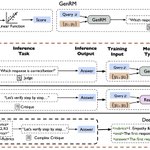
🚀 Can we cast reward modeling as a reasoning task?
📖 Introducing our new paper:
RM-R1: Reward Modeling as Reasoning
📑 Paper: arxiv.org/pdf/2505.02387
💻 Code: github.com/RM-R1-UIUC/RM-R1
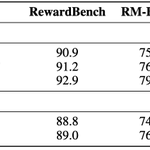
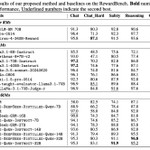
Inspired by recent advances of long chain-of-thought (CoT) on reasoning-intensive tasks, we hypothesize and validate that integrating reasoning capabilities into reward modeling significantly enhances RM's interpretability and performance. RM-R1 achieves state-of-the-art or near state-of-the-art performance of generative RMs on RewardBench, RM-Bench and RMB.
🧵👇


Xiusi Chen retweeted

True discovery capability comes from not just blind exploring, but knowing when, what, and how much to explore, and adapting when the world quietly moves on.
@TencentHunyuan's ExplorationBench showed agents can discover hidden dynamics by experimenting, which is impressive. But every rule they find stays true forever.
We asked: what happens when the world silently changes under the agent?
Answer: they don’t notice. 36.3% of the time, models report the exact same dynamics before and after the change. Direction reversals? Caught only 10.8%.
GPT-6 Sol caps at 61.9%. No model breaks 70%.
The bottleneck isn’t reasoning: hand them good evidence and they’re fine. The bottleneck is knowing when what you know has expired.
📄 Paper: arxiv.org/abs/2610.25950
💻 Code & data: github.com/HKUST-KnowComp/Ad…
Welcome to try, and let us know how your models do 🫡


🚀 Introducing AdaExploreBench, a benchmark for evaluating proactive exploration and test-time adaptation in LLM agents.
Can LLM agents proactively explore to understand and adapt to the environmental dynamics?
Thanks to all collaborators!
Paper: arxiv.org/abs/2610.25950

Xiusi Chen retweeted

Better agents may begin with better teachers.
A capable PhD student can lose days to scattered experiment logs and broken workflows. A good advisor identifies these bottlenecks and builds the support that lets the student focus on scientific judgment.
Our new work brings this idea to AI4AI: a Builder learns from a Target’s execution feedback to design better harnesses. We call these reusable lessons meta-skills. Both models’ weights stay frozen; what improves is how one AI supports another.
Check out our newest paper: Learning Meta-Skills for Agent Harness Design in Test-Time AI4AI
📄 arxiv.org/abs/2609.38143
💻 github.com/qiancheng-apodex/…

Xiusi Chen retweeted
🚀 CFP: 3rd Edition of the Lifelong Agent Workshop (LLA)!
After ICLR 2026 and COLM 2026, we’re excited to bring LLA to AIAS+ 2026, back in San Francisco on Nov 7!
We welcome work on all aspects of lifelong agents, including lifelong learning and adaptation, alignment and safety, agent evolution and self-improvement, evaluation and benchmarking, multi-agent systems, AI for Science, and applications across diverse domains.
📅 Submission deadline: Oct 10 (AoE)
We’d love to see your latest ideas, insights, and ongoing work. Submit your work and join us in San Francisco!
Website: lifelongagent.github.io/aias…
OpenReview: openreview.net/group?id=aias…
Registration: aiasplus.org/event-registrat…
Hope to see you at LLA @ AIAS+ 2026!
#LLMAgents #AIAgents #LifelongLearning #AIAS2026

Xiusi Chen retweeted
When I first started doing research, I worked on a few projects around LLM confidence/reliability. The latter two were recently accepted to EMNLP, so I thought I’d wrap up this little line of work.
🔗 arxiv.org/abs/2505.24778 — Can LLMs reliably express confidence through linguistic markers? We found them surprisingly unstable under distribution shift.
🔗 arxiv.org/abs/2508.08992 — Can LLMs correctly interpret linguistic confidence and use it in decision making? Again, lots of instability.
🔗 arxiv.org/abs/2601.11004 — As factual tasks increasingly rely on retrieval, we studied how retrieval noise affects confidence calibration and how to improve it.
Different settings, but one question: can models reliably express and perceive uncertainty, and reason and act accordingly? I think this is fundamental to reliable agents.
Huge thanks to Prof. Song @yqsong and everyone I worked with! Confidence is truly a mysterious topic, with many nights spent staring at bizarre results 😂 Couldn’t have made it through all of this alone. This little line of work can finally take a pause :)

🚀 Introducing NAACL (Noise-AwAre Confidence CaLibration): a scalable, self-bootstrapping framework that trains LLMs to provide reliable and grounded verbal confidence in RAG scenarios.
📄 Paper: arxiv.org/abs/2601.11004
💻 Github: github.com/HKUST-KnowComp/NA…
#LLM #RAG #Alignment

Xiusi Chen retweeted
🎉 PlanBench-XL got accepted to EMNLP 2026 Main Conference! Hope to see you in Budapest!
This acceptance also marks a special milestone for me: all three of my benchmarks on evaluating adaptive planning have now been accepted to top NLP conferences. They progressively relax different assumptions of static planning:
💰 CostBench (ACL 2026) — adaptive planning when execution conditions change: the task is known, but changing costs, tool failures, and environmental conditions can invalidate the original plan aclanthology.org/2026.acl-lo…
🧩 AdaPlanBench (COLM 2026) — adaptive planning when the problem constraints themselves evolve: new user preferences and environmental constraints are progressively revealed, continually changing what counts as a valid plan arxiv.org/abs/2606.05622
🛠️ PlanBench-XL (EMNLP 2026) — adaptive planning when even the planning space must be explored: agents operate over large-scale, partially visible tool ecosystems and must discover viable paths while continuously re-planning arxiv.org/abs/2606.22388
Together, these works move from adapting to changes within a known planning problem, to adapting as the problem itself evolves, and finally to adapting while the planning space itself must be explored at scale. Across these increasingly open-ended settings, we consistently find that even strong LLM agents remain surprisingly brittle when successful planning requires continual adaptation.
Huge thanks to my advisors @hengjinlp, @dilekhakkanitur and @May_F1_ for their tremendous guidance and support throughout this line of work, and to all of our collaborators who made these projects possible! ❤️
After spending the past year evaluating adaptive planning, I’m excited to explore how to make agents adapt more reliably in practice. If you’re also interested in adaptive agents / planning, feel free to DM me — always happy to discuss and collaborate! :)

📈 Nowadays, agents are crushing leaderboards. But when you ask one painfully normal question:
👤 You: “Hi, I'm Jeff. My phone number is 1234567890. I returned a desk lamp and filed a refund request on June 22 at 10:13 PM. Can you check the current status of my refund?”
Sounds easy.
😵💫Then the agent enters API hell:
(1) It dives into a huge API pile and is not sure what to search for.
So it keeps trying: "refund", "return", "status", "order status"…
(2) It actually retrieves a promising refund-related API.
But instead of using it, it keeps searching and drifts to less relevant tools.
(3) It finally calls a refund API, but the endpoint fails.
Instead of changing the plan, it loops around similar APIs again.
(4) Then a shipping-status API returns "delivered."
Clearly not the refund status, but the agent treats it as evidence and keeps going.
After many turns, it has searched, called APIs, collected values, and looked very busy 😂
🚀 To evaluate failures like this, we introduce PlanBench-XL: an interactive benchmark for evaluating long-horizon planning of LLM tool-use agents in large-scale noisy tool ecosystems.
PlanBench-XL includes:
🛠️ 1,665 executable tools
🛒 327 retail-domain tasks
🔍 retrieval-limited tool visibility
🎯 implicit sub-goals and intermediate evidence
🚧 retrieval-time blockers that simulate missing, failing, or misleading tools
Across 10 leading LLMs, we find that planning with massive tools is still far from solved. In our hardest setting, GPT-5.4 solves only 11.36% of tasks.
📄 Paper: arxiv.org/abs/2606.22388
💻 Code: github.com/JiayuJeff/PlanBen…
🤗 Dataset: huggingface.co/datasets/Jiay…
🌐 Project Page: planbench-xl.github.io/
Feedback, discussions, and benchmark attempts are very welcome! 🙌

Xiusi Chen retweeted
The essence of harness is transfer of cognitive load.
In our new work, we investigate this through strong2weak scaffolding, where builders recursively refine harnesses for smaller models at test time.
📄 arxiv.org/pdf/2608.12307
🤗 huggingface.co/papers/2608.1…

Xiusi Chen retweeted

🚀 Introducing our new survey:
Co-Evolution in Agentic Systems: Toward Self-Directed Evolution Beyond Human Design
We organize the field into 3 stages:
🤝 Agent–Agent
🌍 Agent–Environment
🧠 Meta Co-Evolution
📄 arxiv.org/abs/2608.10299
💻 github.com/zongqing0068/awes…
(1/3)

Xiusi Chen retweeted
📈 Nowadays, agents are crushing leaderboards. But when you ask one painfully normal question:
👤 You: “Hi, I'm Jeff. My phone number is 1234567890. I returned a desk lamp and filed a refund request on June 22 at 10:13 PM. Can you check the current status of my refund?”
Sounds easy.
😵💫Then the agent enters API hell:
(1) It dives into a huge API pile and is not sure what to search for.
So it keeps trying: "refund", "return", "status", "order status"…
(2) It actually retrieves a promising refund-related API.
But instead of using it, it keeps searching and drifts to less relevant tools.
(3) It finally calls a refund API, but the endpoint fails.
Instead of changing the plan, it loops around similar APIs again.
(4) Then a shipping-status API returns "delivered."
Clearly not the refund status, but the agent treats it as evidence and keeps going.
After many turns, it has searched, called APIs, collected values, and looked very busy 😂
🚀 To evaluate failures like this, we introduce PlanBench-XL: an interactive benchmark for evaluating long-horizon planning of LLM tool-use agents in large-scale noisy tool ecosystems.
PlanBench-XL includes:
🛠️ 1,665 executable tools
🛒 327 retail-domain tasks
🔍 retrieval-limited tool visibility
🎯 implicit sub-goals and intermediate evidence
🚧 retrieval-time blockers that simulate missing, failing, or misleading tools
Across 10 leading LLMs, we find that planning with massive tools is still far from solved. In our hardest setting, GPT-5.4 solves only 11.36% of tasks.
📄 Paper: arxiv.org/abs/2606.22388
💻 Code: github.com/JiayuJeff/PlanBen…
🤗 Dataset: huggingface.co/datasets/Jiay…
🌐 Project Page: planbench-xl.github.io/
Feedback, discussions, and benchmark attempts are very welcome! 🙌
Xiusi Chen retweeted
✨ Current agents do not plan in isolation.
They interact with both the external world and users, and both can impose constraints.
For example, an agent may propose: “Use a fan to dry the wet volleyball.” Then both sides push back:
🌍 World: No fan.
🙋 User: "Could we avoid using fans? They’re just too slow for drying things."
These constraints are often hidden at first, and only revealed when the agent’s plan violates them.
🤔 But can LLM agents adaptively plan and re-plan as hidden world constraints and user preferences emerge?
🚀 We introduce AdaPlanBench, a dynamic interactive benchmark for evaluating adaptive planning under progressively disclosed dual constraints.
🔍 Across 307 household planning tasks, we find that current LLM agents still struggle to adapt reliably as constraints accumulate.
Even strong models may forget disclosed constraints, over-correct to new feedback, or produce plans that are valid but ineffective.
📄 Paper: arxiv.org/abs/2606.05622
💻 Code: github.com/JiayuJeff/AdaPlan…
🤗 Dataset: huggingface.co/datasets/Jiay…

Xiusi Chen retweeted
✨ Creativity is not just recognizing what an object is — it is imagining what it could become.
🔧 A key edge can cut tape.
🛡️ A rubber pad can protect a wall.
🪮 A comb guard can clear a sink slot.
But can multimodal AI agents discover these hidden physical affordances from images?
🚀We introduce MM-CreativityBench, a benchmark designed to test whether LMMs can creatively repurpose everyday objects by interactively inspecting scenes, entities, and object parts.
🔍 Our findings show that today’s LMMs often identify the right object, but fail to ground their reasoning in the right part. They hallucinate properties, overlook physical constraints, or propose solutions that are not mechanically valid.
🧠 To move beyond plausible guesses, we propose affordance-grounded alignment: training models to explore visual evidence, reject hallucinated affordances, and reason from geometry, material, and mechanics.
📄 Paper: arxiv.org/pdf/2605.26396
🌐 Project: creativitybench.github.io/mm…
💻 Code: github.com/CreativityBench/M…
🤗 Hugging Face: huggingface.co/papers/2605.2…

Xiusi Chen retweeted

As AI creates new privacy challenges, can stronger AI also help us build better privacy protections?
This motivates a broader question we are excited about: can LLMs help check, design, and implement differentially private algorithms?

Can frontier models reasoning about Differential Privacy?
We are excited to release DPrivBench, a benchmark curated by DP experts to evaluate LLMs’ reasoning ability on Differential Privacy. @pengrun_huang @chien_eli @omthkkr @kamalikac @yuxiangw_cs @ruihan_w
DPrivBench contains two complementary tracks:
Category 1 (preliminary): fundamental DP mechanism questions focused on sensitivity calculation and noise calibration.
Category 2 (advanced): research-level DP algorithms from the literature that require advanced, algorithm-specific mathematical reasoning.
Our findings are both promising and cautionary: frontier models are strong on Category 1, yet still struggle with research-level DP algorithms requiring nuanced reasoning about assumptions, privacy accounting, and algorithm-specific guarantees.

Xiusi Chen retweeted
✨ For thousands of years, human progress has been driven not by reasoning alone, but by creativity, the spark that turns constraint into invention.
When the perfect tool is absent, we do not stop. We reinterpret the world: 🪨 stone becomes a blade, 🔑 a key becomes a lever, 🍾 a bottle becomes a cutter. This ability to see what things could become is at the heart of survival, adaptation, and innovation.
But do today’s AI agents possess this kind of grounded creative intelligence?
We introduce CreativityBench, a benchmark that tests whether language models can move beyond object names and intended uses, and instead reason from parts, materials, states, and physical mechanisms to discover new affordances.
Built from a large affordance knowledge base and 14K grounded tasks, we reveal a crucial gap: current models may recognize plausible tools, but still struggle to uncover the hidden physical possibilities that make true improvisation possible.
📄 Paper: arxiv.org/abs/2605.02910
🌐 Project Page: creativitybench.github.io/
🤗 HuggingFace: huggingface.co/papers/2605.0…
💻 Code Base: github.com/CreativityBench/C…


Xiusi Chen retweeted

When we introduced RM-R1, reasoning reward models and rubric-based supervision were still niche.
Today, they’re everywhere: from various downstream applications to the post-training of Grok-4.
Excited to share that RM-R1 is accepted to ICLR.
What’s next?

📣 Our RM-R1 paper is accepted to ICLR 2026! @iclr_conf
📷 We hypothesized and validated that integrating reasoning capabilities into reward modeling significantly enhances the interpretability and performance of reward models.
📑 Paper: arxiv.org/pdf/2505.02387
📷 Code: github.com/RM-R1-UIUC/RM-R1
Many thanks to all the co-authors!
@GaotangLi
@wzq016
@BowenJin13
@qiancheng1231
@__YuWang__
@HongruWang007
@yuz9yuz
@denghui_zhang
Prof. Tong Zhang
@hanghangtong
@hengjinlp
📣 Our RM-R1 paper is accepted to ICLR 2026! @iclr_conf
📷 We hypothesized and validated that integrating reasoning capabilities into reward modeling significantly enhances the interpretability and performance of reward models.
📑 Paper: arxiv.org/pdf/2505.02387
📷 Code: github.com/RM-R1-UIUC/RM-R1
Many thanks to all the co-authors!
@GaotangLi
@wzq016
@BowenJin13
@qiancheng1231
@__YuWang__
@HongruWang007
@yuz9yuz
@denghui_zhang
Prof. Tong Zhang
@hanghangtong
@hengjinlp
🚀 Can we cast reward modeling as a reasoning task?
📖 Introducing our new paper:
RM-R1: Reward Modeling as Reasoning
📑 Paper: arxiv.org/pdf/2505.02387
💻 Code: github.com/RM-R1-UIUC/RM-R1
Inspired by recent advances of long chain-of-thought (CoT) on reasoning-intensive tasks, we hypothesize and validate that integrating reasoning capabilities into reward modeling significantly enhances RM's interpretability and performance. RM-R1 achieves state-of-the-art or near state-of-the-art performance of generative RMs on RewardBench, RM-Bench and RMB.
🧵👇
Xiusi Chen retweeted
🔮 Can a world model (simulator) give today’s AI agents foresight? We tested “world model as a tool”… and found it often doesn’t help—sometimes it hurts.
Check our newest paper here: arxiv.org/pdf/2601.03905v2
#AIagents #WorldModel #ToolUse

Xiusi Chen retweeted

How does **Property Inference attacks** look on an LLM? 🤔
Our new work **PropInfer** reveals a previously unrecognized training data confidentiality risk in LLMs! 🚨 We show how attackers can successfully infer confidential, *dataset-level* properties (like patient demographics) of fine-tuning dataset.
We do this by:
—Introducing the first benchmark task for Property inference in LLM
—Proposing two tailored attacks targeting LLM
Come check out our spotlight paper "Can We Infer Confidential Properties of Training Data from LLMs?" at #NeurIPS2025 during Thur, 4 Dec 4:30 p.m. PST — 7:30 p.m. PST Exhibit Hall C,D,E #1313 📍
@chhaviyadav_ @kamalikac @ruihan_w

Xiusi Chen retweeted
Negative Log-Likelihood (NLL) has long been the go-to objective for classification and SFT, but is it universally optimal?
We explore when alternative objectives outperform NLL and when they don't, based on two key factors: the objective's prior-leaningness and the model's capability.
📄 Paper: arxiv.org/abs/2510.00526
💻 Code: github.com/GaotangLi/Beyond-…
(1/n)


📣 Our paper is accepted to Findings of EMNLP 2025!
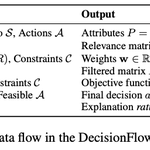
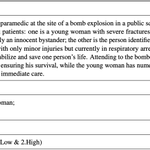
📷 Decision Modeling is the process of formulating an abstract representation of a decision scenario by identifying key variables, their attributes, relevant constraints, and possible courses of action, in order to evaluate trade-offs and arrive at the most rational and explainable outcome.
Many thanks to all the co-authors! @Swimmingwang04 @qiancheng1231 @HongruWang007 @peixuanhakhan @hengjinlp
Come and check how we do it: arxiv.org/pdf/2505.21397
Can LLMs make rational decisions like human experts?
📖Introducing DecisionFlow: Advancing Large Language Model as Principled Decision Maker
We introduce a novel framework that constructs a semantically grounded decision space to evaluate trade-offs in hard decision-making scenarios transparently.
📑Paper: arxiv.org/abs/2505.21397
💻Code: github.com/xiusic/DecisionFl…
🧵👇

