
Asst. Prof., CBE, Princeton; https://xitter.cf/t.co/aUCcdMXeSV; https://xitter.cf/t.co/WddUU2CBRF; sports/fitness enthusiast. Views my own.
Princeton, NJ
Joined January 2011
- Tweets613
- Following502
- Followers874
- Likes411





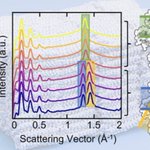
(1/3) Sharing our new paper in @JCIM_JCTC from CSI Postdoc Zheng Yu introducing new iterative coarse-graining approaches that yield density/pressure consistency while preserving structural distribution functions: pubs.acs.org/doi/full/10.102…

(2/3) Most CG models are developed using data from the NVT ensemble, producing unphysical pressures and unsuitable for NPT simulations. We propose two simple adaptations to iterative Boltzmann inversion that resolve this issue and provide good compressibilities
(1/2) Excited to share our latest paper in @JPhysChem (led by graduate student Wes Oliver in his first first-author publication!) on predicting the "propensity" for phase separation in coarse-grained IDP models.
🔗 tinyurl.com/ps-metrics

(1/3) Happy to share new work (rdcu.be/euiT5) by student Eser Ugur in @NatureComms. We characterize room-temperature nuclear quantum effects (NQEs) across 93 organic liquids, understanding the importance of such effects and how their manifestation depends on chemistry

(2/3) NQEs arise based on the quantum nature of nuclei (not electrons). The effects are mostly considered at low temperatures or for light nuclei, like hydrogen. Equilibrium isotope effects are an importance consequence of NQEs that would not emerge in purely classical treatments
(1/3) Pleased to share this work from postdoc Bruce Jiang appearing today in @MacroJrnls_ACS on the synergistic application of polymer physics scaling theory and machine learning to predict properties of compositionally and architecturally complex polymers
pubs.acs.org/doi/full/10.102…

(2/3) This generally extends our efforts to grow the complexity of polymeric materials amenable to ML but with consideration that our data-generation capabilities can't scale with envisioned complexity.
Inspired by recent events and being in problem-writing mode for finals, I have crafted the following problem for students at the advanced 1st or 2nd-grade level. The question targets proficiency with the subtraction operator but blends this with real-world concepts:

happy to share our preprint using CG modeling to study structure and dissolution in a (minimal model of a) stress granule -- this was led by the terrific (former senior thesis student) Jay Kaplan (a mere 1.5ish years after his departure from Princeton😅)
biorxiv.org/content/10.1101/…

I am very sorry to miss #APSSummit25 ! Still a couple of chances to see some work from the group and collaborators.

I know that I am supposed to respond to somebody about something... but I don't know for whom or about what. So, yeah...
Been a minute, but happy to share this work being out in @RSC_MolEng : pubs.rsc.org/en/content/arti…
We use ML with architectures and losses informed by physical constraints to guide (flash-style) phase-coexistence calculations. Congrats to Sat and @ShengliJiang !
I marvel at the fact that we, as a society, have come so far when things like this are deemed acceptable

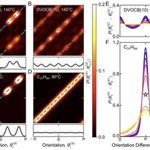
(1/3) Congrats to Hang Zhang and co. (including @DavidsonPolymer and @ChirikGroup) in @ChemMater on the characteristics of a rotator phase in a chemically recyclable hydrocarbon material!
pubs.acs.org/doi/10.1021/acs…

(2/3) Rotator phases are crystalline states that additionally possess some degree of rotational "disorder." Using MD simulations with a novel force field, we confirm such phases in oligocyclobutanes and elucidate their structural and dynamical characteristics
