

Data science+bio. Postdoc @Stanford. Prev product @ButterflyNetInc, @Princeton, @Hammer_lab at Mt Sinai, @NYTimes, @Nest.
Palo Alto, CA
Joined February 2008
- Tweets303
- Following4.5K
- Followers1.1K
- Likes5.5K




Pinned Tweet
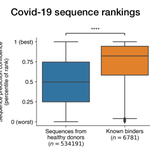
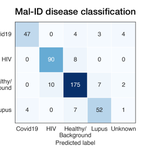
New work with @anshulkundaje, @ScottBoydLab, @robtibshirani, and many others:
“Disease diagnostics using machine learning of immune receptors”
#tweetorial 🧵 (1/11)

Maxim Zaslavsky retweeted

Immunera (startup cofounded with @zazius & @ScottBoydLab) is hiring senior ML researchers and engineers in NYC. We’re building blood tests powered by sequencing and protein language models. See below for more details. Please RT. 1/
Maxim Zaslavsky retweeted
Great podcast interview with @zazius & @ScottBoydLab on our recent collaborative work on disease diagnostics with ML models on immune repertoire sequences
biorxiv.org/content/10.1101/…


A new episode of #OnAIRR - the podcast of the AIRR Community is available. We discuss AIRR-seq, machine learning and disease diagnostics with @zazius, @ScottBoydLab. Subscribe and listen in your favourite app or grab the episode here: onairr.airr-community.org
Thank you so much for having us on the podcast!
A new episode of #OnAIRR - the podcast of the AIRR Community is available. We discuss AIRR-seq, machine learning and disease diagnostics with @zazius, @ScottBoydLab. Subscribe and listen in your favourite app or grab the episode here: onairr.airr-community.org
Maxim Zaslavsky retweeted

Extremely well written manuscript from @anshulkundaje and @ScottBoydLab showing how a combination of 3 ML-models can identify a variety of disease states. Many of the features are even interpretable to help informed decisions and hypothesis generation | doi.org/10.1101/2022.04.26.4…

We’ve released an update to our preprint with @anshulkundaje,
@ScottBoydLab, @robtibshirani, and many others:
“Disease diagnostics using machine learning of immune receptors”
#tweetorial 🧵 (1/9)

New work with @anshulkundaje, @ScottBoydLab, @robtibshirani, and many others:
“Disease diagnostics using machine learning of immune receptors”
#tweetorial 🧵 (1/11)
To sum up:
This approach can distinguish a wide range of disease states, while revealing receptor sequence properties of each disease.
Using B and T cells together makes the framework more robust. (8/9)
We’re eager for your feedback.
And a big thanks to collaborators @eringcraig, @jackmichuda, @krishnaroskin, Charlotte Cunningham-Rundles, @lab_haynes, @benjamin_pinsky, @LabHeath, Judith James, Sam Yang, Catherine Blish, PJ Utz, Kari Nadeau, and their labs. (9/9)
Maxim Zaslavsky retweeted

Clinicians now use ultrasound to diagnose pneumonia, cirrhosis, detached retinas, bowel obstructions, and aortic dissection, among other problems. Soon, the instrument may be more ubiquitous than the stethoscope.
nyer.cm/Wd09y5o
Maxim Zaslavsky retweeted

A direction of @gpt_index that I’ve become increasingly excited about is its *multimodal* ingestion. Starting to dramatically simplify time to value from unstructured data.
We can now parse .pdf 📝, .docx, .jpg, .png 🖼️, and even .mp3 💬 and .mp4 🎬 files into Document objs!🧵
Maxim Zaslavsky retweeted

We just published another flu mRNA vaccine study in @JVirology, where we show how the mRNA vaccine platform can improve seasonal influenza vaccines. 1/2
journals.asm.org/doi/10.1128…

Maxim Zaslavsky retweeted

From @cellcellpress: "Immune imprinting, breadth of variant recognition, and germinal center response in human SARS-CoV-2 infection and vaccination"
@ScottBoydLab
spkl.io/60154Z3Z3

Maxim Zaslavsky retweeted

Excited to announce our new paper and software for multiview analysis:
supervised learning with multiple sets of features.
Can be used with lasso/elastic net; the idea generalizes to boosting and random forests. See tibshirani.su.domains/multiv… for a 3 min video explaining the idea.
Maxim Zaslavsky retweeted

Isochrones 😍 ! This map shows you how far a 5h train ride will take you, departing from any city in Europe.
chronotrains-eu.vercel.app/
Inspired by Direkt Bahn Guru by @juliustens.
Maxim Zaslavsky retweeted

Maxim Zaslavsky from Stanford University, speaks on disease diagnostics using machine learning of immune receptors, at the second session of the iReceptor Plus Seminar Series: Theory and Applications of Immune Repertoires. ireceptor-plus.com/news-and-… #immune #receptors #tcells

ALT Disease diagnostics using machine learning of immune receptors