
Paris, France
Joined May 2021
- Tweets26
- Following356
- Followers70
- Likes155




Pinned Tweet
Can text-to-image Diffusion models handle surreal compositions beyond their training distribution?
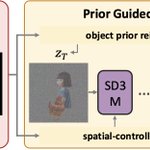
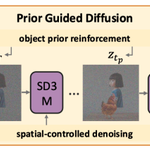
🚨 Introducing ComposeAnything — Composite object priors for diffusion models
📸 More faithful, controllable generations — no retraining required. 🔗zeeshank95.github.io/compose…
1/9

Best paper award at CV4Smalls @ #CVPR2026 workshop.

Super thrilled to share that our work, SRL-CLIP, won the Best Paper Award at the CV4Smalls #CVPR2026 workshop! 🏆 Huge thanks to my amazing co-authors @zeeshank95 and @MakarandTapaswi .
Also, a big thank you to the organizers (@shaydamoezzi and team) for putting together such a thoughtful workshop. With the current trend of "scaling everything," it is incredibly refreshing to focus on data inefficiency as a design opportunity rather than a limitation. Data efficiency is one of the main pillars needed to improve real-world video understanding.


ALT Best paper award certificate
2
144
Zeeshan khan retweeted

Hi all! Today I will present our work, SRL-CLIP, a recipe to efficiently adapt CLIP to videos at the CV4Smalls CVPR workshop in Room 102. I have an oral talk scheduled at 2 pm followed by the poster session. Please do stop by! Work done with @zeeshank95 @MakarandTapaswi #CVPR2026

ALT The poster of our paper on efficient CLIP adaptation for videos
Zeeshan khan retweeted

ICLR authors, want to check if your reviews are likely AI generated?
ICLR reviewers, want to check if your paper is likely AI generated?
Here are AI detection results for every ICLR paper and review from @pangram!
It seems that ~21% of reviews may be AI?

Zeeshan khan retweeted

The variance across ICLR scores is wild, OpenAI should decrease the temperature
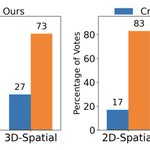
We improve over prior inference only and layout-conditioned training methods, on T2I-compbench and NSR 1-k benchmarks, on both automatic metrics and human evaluations. Our method generates high-quality images with compositions that faithfully reflect the text.
8/9

1
214
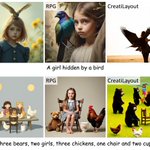
Below 👇 are some examples of complex prompts, the LLM generated composite object priors, and the corresponding image generation.
The work is done with @CordeliaSchmid and @chen_shizhe in the Willow team of @Inria Paris and @ENS_ULM
Arxiv: arxiv.org/pdf/2505.24086

Zeeshan khan retweeted

🔔New @CVPR paper evaluating compositional reasoning of Video-LLMs on 10s, action-packed clips!
🥁 VELOCITI features 7 tests to disentangle and assess the comprehension of people, actions, and their associations across multiple events.
katha-ai.github.io/projects/…
🧵 1/9 #CVPR2025

Zeeshan khan retweeted

Can RL fine-tuning endow MLLMs with fine-grained visual understanding?
Using our training recipe, we outperform SOTA open-source MLLMs on fine-grained visual discrimination with ClipCap, a mere 200M param simplification of modern MLLMs!!!
🚨Introducing No Detail Left Behind: Revisiting Self-Retrieval for Fine-Grained Image Captioning 🧵[1/n]

Zeeshan khan retweeted
🚨 Introducing Detect, Describe, Discriminate: Moving Beyond VQA for MLLM Evaluation.
Given an image pair, it is easier for an MLLM to identify fine-grained visual differences during VQA evaluation than to independently detect and describe such differences 🧵(1/n):

Zeeshan khan retweeted
Thanks to the organizers (@davmoltisanti +) for an opportunity to share my thoughts at the amazing @CVPR Workshop "What Is Next in Video Understanding" winvu.github.io/cvpr-24/
Slides summarizing some of our work on video and open challenges here: tinyurl.com/CVPRW2024-WINVU-…

Zeeshan khan retweeted

Our computer vision textbook is released!
Foundations of Computer Vision
with Antonio Torralba and Bill Freeman
mitpress.mit.edu/97802620489…
It’s been in the works for >10 years. Covers everything from linear filters and camera optics to diffusion models and radiance fields.
1/4

Zeeshan khan retweeted

Announcing mOSCAR, multilingual interleaved text-image corpus as part of @oscarnlp project.
Paper: arxiv.org/pdf/2406.08707
Dataset: huggingface.co/datasets/osca…
Doc: oscar-project.github.io/docu…
1/6

Zeeshan khan retweeted
Given multiple short movie clips, can models generate coherent identity-aware descriptions? 🤔 Turns out, this is a complicated task as it requires linking identities and what they are doing over time. Our @CVPR 2024 work improves this: arxiv.org/abs/2405.11483
🧵1/7
