
Senior Fellow and Co-Director of the Urban Institute Health Policy Center. A health economist who studies the ACA, Medicare, Medicaid and physician payment.
Washington, DC
Joined July 2009
- Tweets2.5K
- Following292
- Followers2.4K
- Likes1.3K


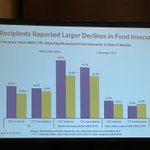

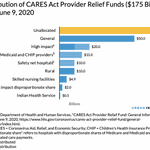
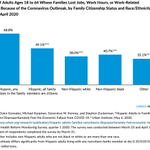

A recent @urbaninstitute study in @Health_Affairs Scholar offers a new approach to identifying safety net hospitals that reflects uncompensated care, Medicaid and low-income Medicare patients - superior to a single indicator of safety net status. academic.oup.com/healthaffai…
Great @USATODAY column by @Georgetown’s Linda Blumberg speaking the evidence-based truth on health care policy. usatoday.com/story/opinion/2…

Stephen Zuckerman retweeted

We haven't heard much about the large Medicare (not Medicaid) cuts that would be mandatory from this GOP bill.
That's because it violates statutory PAYGO laws and no patch was added to fix that.
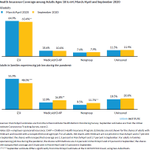
Back in February, @urbaninstitute analysis showed that eliminating the enhanced Medicaid expansion FMAP could add 10.8M to the ranks of the uninsured if all states dropped their expansions. 12 states already have triggers that would do this automatically. urban.org/research/publicati…

This effectively repeals Medicaid expansion in only a few years. New analysis here: cbpp.org/research/medicaid-a…

To get a sense of what effect repealing the ACA would have, check out @urbaninstitute's John Holahan's summary of prior analyses of repeal that show the numbers of uninsured could increase by 25-30 million people. urban.org/sites/default/file…

The Value Of Small Changes To The Medicare Advantage Risk-Adjustment System | Health Affairs healthaffairs.org/content/fo…
@urbaninstitute

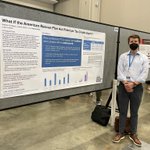
New @urbaninstitute research documents show 1 in 5 people with limited public transit options foregoing health care they need. #ARM2023

Recent study from @urbaninstitute shows how community voices can inform policy to improve maternity care and outcomes. #ARM2023


A wake up call. Will anyone listen to @shwoolf and @laudyaron? If not, lives will continue to be lost. @VCU @urbaninstitute washingtonpost.com/opinions/…
The percent of Medicaid enrollees projected to lose their eligibility ranges across states from roughly 10% to 30% rwjf.ws/3Uz2p5F
Stephen Zuckerman retweeted

15 million people are expected to lose Medicaid in the next year as states remove people for the first time in three years.
@saynikpay shares 3 studies to make sense of what is happening and how states could keep more people insured.
tradeoffs.org/2023/03/30/med…

New research from @urbaninstitute and @HarvardChanSPH shows that health system's relatively high commercial prices are not primarily used to offset losses from public payers, but to increase profits and liquidity.

The findings of this cross-sectional study highlight that prices negotiated by health systems with commercial payers are an important factor in explaining differential health system profitability and wealth. ja.ma/3jHxvdv
Medicaid and Non-Medicaid Net Prices of Brand-name Drugs With Best Price Rebates, 2015 to 2019 new @urbaninstitute publication ja.ma/3XvSvls via @JAMAHealthForum part of @JAMANetwork

Language Barriers Hold Back Many Asian Americans From Good Health Care usnews.com/news/health-news/…
Draws on @urbaninstitute research
Medicaid as a Potential New Third Rail of US Politics ja.ma/3Z0fB5l via @JAMAHealthForum part of @JAMANetwork

Are Medicaid Enrollees Aware that Medicaid Renewals Will Restart Soon? ccf.georgetown.edu/2022/11/1… via @GeorgetownCCF
cites @urbaninstitute urban.org/sites/default/file…

Important @urbaninstitute research underlies this story.
apps.urban.org/features/debt…
Knoxville’s Black Community Endured Deeply Rooted Racism. Now There Is Medical Debt. khn.org/MTU3NjY4Mw via @khnews

Stephen Zuckerman retweeted

Revisiting a nice analysis by @RichardvReeves and @ChrisLPulliam on why the fully refundable #ChildTaxCredit reduces poverty / supports mobility. #CTC very different than prior $ support programs. No early phaseout. brookings.edu/blog/up-front/…

That great and informative map can be found in a recent @urbaninstitute report found here. urban.org/sites/default/file…

People shouldn’t ever have to worry about affording life-saving healthcare. Despite this, medical debt is still a crippling concern for many families.
#DYK: the top 79 counties with most medical debt were in states that haven’t expanded Medicaid. 1/2

Beyond pointing out that there are simpler ways to support students’ education, this article shows that offering choices so complex that people can’t choose what’s best for them is not real choice at all. via @NYTimes nytimes.com/2022/09/03/your-…
