
data infra ∩ context graphs ∩ multi-agent coordination | building @omnigraphdb
Joined December 2007
- Tweets2.9K
- Following2.5K
- Followers3K
- Likes17.4K




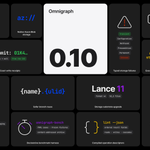

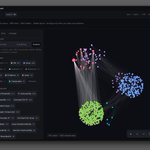


My personal expertise graph
runs on @omnigraphdb
operated by @bot
Tracks:
Ideas
Events
Claims
People
Products
Signals
Companies
Concepts
Highlights
Explanations
Case studies
Organizes them into Domains & Threads
with full provenance:
Span → Artifact → Source
Has a thin custom UI↓


Andrew Altshuler retweeted

I wonder when we'll see an infra/observability company who takes the bold step to not invest time in shipping a human-readable UI, and instead doubles down on providing an excellent set of tooling for agents

Andrew Altshuler retweeted
i’m becoming incredibly graph pilled lately.
i used to be dismissive of them, not seeing how they were actually useful over RAG or postgres.
but i now see a future where graphs are a central data structure for every company’s world model
are you guys graph pilled yet?
Andrew Altshuler retweeted

Using SlateDB + Lance + Datafusion to save a customer millions of dollars a year in vendor costs. This is gonna be my goto stack for a lot of things.
Andrew Altshuler retweeted

When I wire up several agents on one project, the hard part is the memory they share. One agent updates a fact, another overwrites it an hour later, and when something breaks nobody can tell what changed or why.
Omnigraph from @ModernRelay goes straight at that. It is a graph database that keeps its data in object storage, on local disk or any S3 compatible bucket, in the open Lance format. You declare a typed schema and the engine checks every write against it. Graph traversal, vector search and full text run together in one query.
Branching is the part I would test first. Each agent or task gets its own branch of the graph, proposes changes there, and you review and merge them into main. That is the same Git habit I teach every cohort I run, now applied to agent memory. It is MIT licensed and written in Rust.
Would you give each agent its own branch, or one per task?
github.com/ModernRelay/omnig…

Every vertical AI startup [in the limit] converges to a domain graph

We built context graphs to help agents work through long-horizon legal tasks.
Starting with Legal Agent Bench tasks in 11 categories like M&A diligence and contract negotiation, we had agents build context graphs of the underlying documents (without access to the eval tasks or grading rubrics).
Context graphs dramatically improved agent performance on LAB tasks:
- Firm Knowledge tasks: 65% → 80%
- Precedent lists tasks: 67% → 80%
- Matter counting tasks: 53% → 83%
They also boost agent efficiency: we found a 48% cost reduction for agents given access to a context graph to assist their work.
Full video below - more to come soon.
yup

after switching our approach to building a "FirmOS", I'm increasingly confident that the future of agent collaboration within organizational settings is going to be a "company operating system" or CompanyOS, designed for agent and human collaboration
instead of a "company brain" that holds everything, the OS is for storing rules, processes, decisions made, which tools to use and how. it can mirror some data, but the source of truth is often best held in your existing tools (CRM, etc.). it's continuously updated and used by your agents
i think of this as a "flipped playbook" where instead of writing down the company rules first and following them (which is kind of like waterfall development), you're constantly updating the playbook as you decide or learn new things day-to-day running the business
Andrew Altshuler retweeted

Beads by @Steve_Yegge is a graph issue tracker for coding agents. Omnigraph is a graph database.
So we rebuilt it as an Omnigraph cookbook:
- issues are nodes, blockers are edges
- "ready" is computed on every read
- atomic claims: one task, one agent
github.com/ModernRelay/omnig…
Andrew Altshuler retweeted

Okay, @ClaudeDevs mods are wild.
Made one for @Omnigraphdb and now I watch every query on the graph as Claude works.
Plus a full graph browser right inside Claude Code

Andrew Altshuler retweeted

The future light cone of discoveries rounds up to 100% engineering, as the set of physics rules that govern our reality is very tiny compared to what can be done with those rules.
The reason I didn’t choose a career in physics, my favorite subject, is that I would be stuck waiting for a new collider or telescope. Better to advance technologies that ultimately enable discovery of new physics.
it all converges:
shared world model for agents to stays current, coherent & deconflicted
great paper on graph world models:
arxiv.org/abs/2609.19315

Andrew Altshuler retweeted

There is no moat in AI agents. None. I'll die on this hill — new More or Less is up.
I switch between Muse, Instinct, and Dots at basically zero cost: one GitHub repo, a few databases, feed the new thing my context, done. If the cost of writing software is going to zero, API integrations are not a moat. The only moat left is user setup cost — which means winner-take-some, not winner-take-all.
Adrian's point: AI collapses value the second an idea works. Jev got reverse-engineered in 48 hours and the people who built it capture nothing. My take: play that to the limit and you get Middle Ages 2.0 — everyone builds a castle, hoards data, ships black boxes that self-destruct if you open them. Dave says humans don't work that way. We'll see.
Meanwhile Brit's Instinct started talking to Dave's Instinct and they didn't text for a day. She says it's killing humanity. Nobody said that about FaceTime.
And Jess announced the only benchmark that matters: log into school software, sync three kids' after-school schedules. Muse: 90%. Every other eval is bullshit.

Andrew Altshuler retweeted

Spinoza offers a powerful perspective:
God and nature are one...Deus sive Natura.
He argues that nature itself is divine, and the patterns and laws we uncover through reason and science are expressions of God’s very essence.
So by engaging with these patterns, we come closer to the divine.
This view unites faith and reason, dissolving the conflict between spirituality and science.

Andrew Altshuler retweeted

The AI era was made for AuDHD brains tbh.
Feels like we were born for this.

