

Personal thoughts only, not advice. Like investing, turnarounds, capital allocation, biz model, industry & competitive analysis. Here to share and learn.
Joined June 2019
- Tweets4.8K
- Following1.6K
- Followers3K
- Likes16.3K




Pinned Tweet
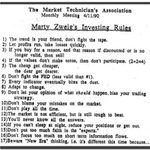
Good analysts don’t just consume a lot of detail in an academic fashion. They build knowledge in a purposeful, strategic way... some of the things they do include:
“Any technology that necessitates heavy capital expenditure and requires returns to be earned over an extended period is always going to be a high-risk undertaking – unless, that is, there is some form of protection against competition. This protection may take the form of patent, copyright, legal prohibition or simply fundamental competitive advantage (such as a superior cost curve).”
Source: Engines That Move Markets by Alasdair Nairn
AReviewOrTwo retweeted

I think the most disciplined way to compare ideas is to first define silos in your universe that are distinct from GIC codes and I would be flexible in moving those silos around as themes dominate like rates, glp, AI etc …. And then I would always overlay charts. Two ideas that screen fundamentally similar in that they have similar market caps, similar end markets, similar sector coverage may have very different risk profiles based on the EEM screens on Bloomberg.
Easiest example of this is cvna, cpng, shop, lite, and alab are all pretty different end markets and could argue all are longs but I would put them all in one silo.
I would build out coverage to have sufficient breadth of silos and then I would force only the best 1-2 ideas per silo to emerge rather than falling in love with a silo and owning everything inside it.
At the same time you have to be the final arbiter of what the actual upside or downside is in a stock. One analyst/sub pm may play fast loose with assumptions and think something is going up 50 while someone else may be conservative and think their best idea is up 15. Reality is they both might have the exact same risk/reward and that all must filter through your lense otherwise you are comparing apples and orangutans.
The point of long term analysis - ie >10 years is not just about prediction (confidence should naturally fall the longer the forecast goes out), it is to understand the risk of a terminal value repricing within a shorter period, eg a 3-5 year investment horizon.
Paraphrasing a great question from @tseides
What do you believe about markets and investing that govern 1) how you act, 2) your investment process and 3) how you make decisions?
Key to cover the following activities in the investment lifecycle:
- Idea generation
- Research process once idea identified
- Decision to buy or not
- Monitoring and portfolio management


“One advantage of being older is that I’ve seen lots of turnarounds. They always take longer than expected. Always. And it can be extreme. For example, Panalpina, the global logistics and freight forwarding company, took over five years to see any results from its turnaround, even after hiring an experienced, successful industry expert. Or take Tesco. Dave Lewis came in as CEO and it took him six years to turn it around.”
Gorm Thomassen in Stock Market Maestros
Notes from an excellent Graham and Doddsville’s Fall 2022 interview with Jacob Rubin of Philosophy Capital.
Assessing Management Teams
Philosophy discuss investing in businesses with different ‘grades’ of management, splitting between ‘A Team’, ‘B Team’ and ‘C Team’ performing players.
The first ingredient to evaluating management is access to management. Do not be shy. Have lots of calls and meetings.
Organising calls yourself is great “…because the serendipity in the process of getting to people is so valuable. You just don't know where it's going to go, but all those calls usually produce something unexpected, and if you just lazily have someone scheduling expert calls for you, you miss out on that element.”
“Once you have access, it's just reps, at-bats, and years in the seat to help you distinguish between good and bad. At first, all managements will sound compelling but over time you appreciate the difference. In addition to how they sound and what their background is, you can look at incentives. You want alignment from an ownership perspective. You can do checks on them and ask around to find out if they are well-regarded. Listen to see if
they sound capable, they're articulate, they don't repeat themselves, they don't resort to generic language but instead get right into specifics. A mistake I've made is overlooking problems with management. If there's a governance problem and management is not trustworthy, if you get checks saying they're crooks, get out. Crooks gonna crook. They know how to do it and if they're an executive at a publicly traded company, they are probably good at it. You need to respect that reality and get away from it. It's too unpredictable.”
Additional Points on how Philosophy Invests
Philosophy likes to fit investments into a fact pattern, for example:
- Survival bets
- Free call options
- Broken tech M&A
Generally across all investments they look for significant or inflecting FCF. If FCF is missing, it is likely a distressed situation where you need to think about bankruptcy and asset recovery values.
Catalysts are important - mispricing do not correct out of thin air.
“As far as deciding if something is uninvestable broadly, we always ask the question, can this be corrected? Can what everyone is seeing today be flipped around?”
“When you're doing a top-down analysis, you’re looking for a paradigm change, for multi-year trends that reverse. You try and think “what are the implications?””
Companies in capital intensive industries need a strong narrative given the importance of cost of capital. Management teams are incentivised to support the story.
Investors should interrogate that narrative accordingly.
Bruce MacDonald - CEO and CIO of the Virginia Commonwealth University Investment Management Company - on two broad types of mistake he has learned from.
Being too clever / excessive complexity: “There's times when we've been too clever in trying to manage overall portfolio risk through hedging. We had great insight in 2021-2022 that rates were going to go up. We put on an overlay and the way we expressed it was all wrong. It was too complicated. It would have been simpler to have no position at all and not have lost money on the hedge or just taking a short interest rate bet.”
Buying what you know well when it’s down vs buying something that is down but new to the fund: “One of the things that we're known for is running into burning buildings. We'd like to be counter cyclical. That's both in the market. When there's opportunities, sometimes that's with managers. There have been a couple times where we saw opportunities and managers who were down. They had had great track records up until that point. We thought they've just made a mistake. We were too quick to enter into a new relationship on a short time fuse without doing the normal amount of research that we would do. One thing we've learned is if we're going to step into a burning building, it's helpful to have lived in the neighborhood before. We've had great experiences stepping into burning buildings in our portfolio, less good experiences stepping into new burning buildings.”
Always very grateful when experienced investors share lessons from their mistakes.
Source: Capital Allocators Podcast
One of the biggest mistakes investors make on competitive advantage:
“…mischaracterizing a great product or service as a moat… people use a product, they experience a service and they say, wow, that's awesome, this must be a great business… you have to think through how sustainable is that demand? How much pricing power is it going to have over time? How easy would it be to replicate it? …those are really kind of the key questions in determining whether it's a sustainable advantage or just kind of a flash in the pan.”
Pat Dorsey on the Long View
“The best equity research analysts don’t just fish… they have a strategy that brings them to the target-rich area in order to reel in the biggest alpha-generating stock ideas. This may sound like common sense, but many analysts try to be an “industry” or “company” expert rather than a stock analyst, which prevents them from discovering alpha-generating insights.”
James Valentine
I've learned that to meet my return goals I can't have big losers. So regardless of how cheap something is or how much potential upside there is, that means avoiding companies that can wipe out—with too much debt, unproven business models, secularly challenged end markets or no durable competitive advantages.
Zeke Ashton, Centaur Capital [quoted in The Art of Value Investing]

AReviewOrTwo retweeted

🔥
When pitching a stock to experienced investors…
“You should be able to write the thesis in three pages and if I read the first page I should get 85% of it. If you are going to an 8th page you are insulting the reader.” - @WinMurray
@JRogrow show
podcasts.apple.com/us/podcas…

Soros:
“The prevailing wisdom is that markets are always right. I take the opposite position. I assume that markets are always wrong. Even if my assumption is occasionally wrong, I use it as a working hypothesis. It does not follow that one should always go against the prevailing trend. On the contrary, most of the time the trend prevails; only occasionally are the errors corrected. It is only on those occasions that one should go against the trend. This line of reasoning leads me to look for the flaw in every investment thesis. My sense of insecurity is satisfied when I know what the flaw is. It doesn't make me discard the thesis. Rather, I can play it with greater confidence because I know what is wrong with it while the market does not. I am ahead of the curve. I watch out for telltale signs that a trend may be exhausted. Then I disengage from the herd and look for a different investment thesis. Or, if I think the trend has been carried to excess, I may probe going against it. Most of the time we are punished if we go against the trend. Only at an inflection point are we rewarded.”
Facts haven’t provided edge for a while (unless perhaps you have big budgets) - but what still applies today is:
facts + judgment = insight
