

Building @imipolicy and @theimajority. Before: @Waymo @Nuro @Securing_Energy @EnoTrans @POLITICO @UCBerkeley. Hosted @BeyondStreetsP
Washington, DC
Joined September 2013
- Tweets18.2K
- Following3.8K
- Followers5K
- Likes25.7K




Pinned Tweet
🍾 After a year of intensive building, I’m thrilled to officially announce the launch of @IMIpolicy.
IMI is a new think tank that goes beyond research and white papers – we’re also building video games, simulations, and experiences to better communicate complex policy issues.


Greg Rogers retweeted

perhaps nothing infuriated me more as a DC resident than dutifully paying whatever speed camera or photo-parking tickets I received, knowing these people were paying $0

“At some point, DC will admit that license plates are now optional” - For real. popville.com/2026/11/at-some…

Greg Rogers retweeted

Hey, it's me, again. I want to zoom out on BAAJA for a second, because it’s easy to get lost in the weeds & debates about edge cases. I care *a lot* about this bill. Wanted to remind myself why.
The status quo is *terrible* for both climate and affordability. We built 888 miles of high-voltage transmission in 2024; we need 5,000 a year. More clean capacity is waiting in interconnection queues than the entire existing grid. Residential power prices are up about a third since 2019. Demand is surging, and bc clean power can’t connect, we're building a bunch of gas. If this current trend continues, gas could supply half of US power by 2040. The administration is using permitting as a weapon to stop wind and solar projects, including ones already approved. And local restrictions on wind and solar now cover twice as much of the country as in 2022.
I worked in the White House when we passed the IRA. As @BrianCDeese noted, if we had a bill like this in place first, it would have been game-changing. We invested hundreds of billions to put clean energy on sale, then watched projects get stuck in interconnection queues, permitting delays, and fights over who pays for transmission. The money was not the binding constraint; the ability to build was. Let’s not make the next Democratic administration learn that lesson twice!
It's easy to oppose stuff. But BAAJA is a *really, really big deal.* This is the first real federal framework to plan, pay for, and permit big power lines: mandatory planning between regions, clear rules on who pays (based on who benefits), and federal backstop siting that actually works across most of the country. It also ends incumbent utilities’ automatic right to build every new regional line. It will also help actually get projects online, by requiring grid planning and interconnection be done together, and stopping speculative projects clogging the queue. It should protect from political sabotage. Approved projects can’t be yanked for political reasons, and developers can sue if an administration targets a technology like wind for unfair treatment. It's the strongest data center accountability legislation in the country to ensure they pay *more* than the costs they cause and that households don’t foot the bill for AI’s grid upgrades.
This is the most important thing Congress can do for clean energy and affordability right now. We can fight about the emissions and affordability modeling about this narrow bill. But the truth is that this is the necessary but insufficient foundation *every future climate and affordability policy will be built on.*
Greg Rogers retweeted

BAAJA does not weaken *a single* substantive environmental standard (changes speed up processing and limit litigation)
Sentators @SenWhitehouse and @SenatorHeinrich fought for months to make sure BAAJA did not weaken substantive pollution limits
Greg Rogers retweeted

The American people want a $10 burger and fries. They do not secretly want your preferred theory of political economy.
My latest for @TheArgumentMag >> theargumentmag.com/p/how-to-…

Greg Rogers retweeted
One thing that I think only clicked for me recently is how many people think it is boring and uninspiring to fight for freedom from affordability concerns.
Perhaps it's because I was born in a poor country or remember having my water shut off as a kid or wasn't always sure how I was going to pay for college and had to rely on loans but I don't see making life cheaper as a small or boring ambition.
Amartya Sen, one of my favorite philosophers (and economists!) wrote in Development as Freedom about how a lack of economic opportunity constrains people's real freedoms.
It's not just about a lack of money qua money, it's a lack of choices. You can be formally free to study, move, or start a business but if you can't afford tuition, a place to live, or the cost of a licence, those freedoms are out of reach.
A thriving economy matters, cheap goods and services matter, abundant housing and energy and transit matter because they enable as many people as possible to live freely however they choose.
It is, to me, the most radical vision I can imagine, and it's sort of funny that the people who have benefitted from the liberal tradition most now scoff at it!

Greg Rogers retweeted

These accusations of hypocrisy are basically never helpful, but it is wild to me that DC is going to legalize online casinos while keeping Waymos illegal to protect jobs. It seems pretty obvious that online casinos are going to do way, way more harm to poor people. If I could only be protected from one the choice seems obvious.
Greg Rogers retweeted


MY STATEMENT ON BAAJA:
I wish to register my serious concerns with the "permitting reform" bill, known as BAAJA, that is before the Senate this week.
My experience working on housing and climate change leaves me no question that we need to build things, housing and clean energy first among them. And we need to build them fast.
However, as an organizer, I was taught to listen first. And, on the campaign trail, I heard a loud and clear mandate NOT to pass legislation like BAAJA that greenlights development at the cost of local control.
To those who struggle to understand the consistent and repeated opposition to new development, I encourage you to see it as a vote of NO CONFIDENCE in the economy under current management.
Lack of trust is the fundamental challenge we must solve. And we must solve it by empowering people, rather than further empowering corporations to make decisions without us.
My constituents have seen grand promises made and broken before. They have seen, for 50 years, the profits from development go to the wealthiest, usually investors from out of town, while the working and middle class have stagnated and declined. The billionaires profiting have gone on to buy our elections time and time again.
I heard these recurring themes in conversations about projects I personally support (housing, clean energy) to those I personally oppose (data centers, oil pipelines). People have had enough. They're wondering, why should we trust the economic overlords who, in their supreme wisdom, have decided that the best use of our national wealth is to build hyperscale data centers to generate AI to take our jobs?
In my economic agenda as Congressman, I will fight to pair affordability with AGENCY. My constituents are demanding the right to determine our own future, rather than having it decided for us by Silicon Valley and Wall Street.
Rather than making it easier for Big Tech, utility monopolies, and fossil fuel giants to walk over community opposition, as the Senate bill does, Congress should:
- Get money out of politics to prevent wealthy corporations from buying politicians while exploiting the people.
- Challenge monopoly power in the utility sector, support public power, and investigate corporate capture of the MPSC and other regulators.
- Support distributed generation and ownership of power, via community solar and net metering.
- Change the tax code so proceeds from monopolies are taxed fairly to support the public good.
- Establish a publicly chartered national infrastructure bank to direct low-cost investment to schools, housing, clean energy, and water infrastructure, rather than allowing Wall Street to decide what gets built and what doesn't.
As long as our economy and politics are rigged to benefit out-of-state corporations over local people, people will continue to fight back against development of various kinds. But when people have a seat at the table, along with sensible planning to ensure strong towns and a healthy environment, and a tax code that ensures development leads to broad-based prosperity, I'm confident that people will embrace building things again. We don't all need to agree on every project, but we need to know that the sum total of development will actually benefit us and our kids.
I take seriously the mandate that voters have given me: to oppose the further entrenchment of corporate power, and to empower the ordinary people of Mid-Michigan.


Hell yeah

Before: buses you could outrun.
After: faster bus service and safer streets for 120,000 daily riders.
New center-running bus lanes on Flatbush Ave available now, thanks to @NYC_DOT.


1
315
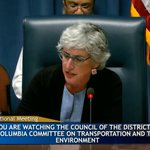
Autonomous vehicles improve traffic safety and provide people with an accessible transportation option – but DC Council just said no.
Instead they’ll move forward with online gambling - exploitation that will harm DC families.
Interesting choices being made here.

D.C. is moving to legalize online casinos, coming during a budget crunch and the proliferation of mobile gambling axios.com/local/washington-d…

In the comments: New Yorkers who want AVs

Manhattan is not Waymo’s test track.
Waymo pulled its robotaxis off highways nationwide after regulators called their freeway operations “an imminent hazard to public safety.”
I’m calling on New York’s elected leaders to keep Waymo off our streets. We already have serious questions about what robotaxis would mean for drivers’ jobs, traffic, privacy, and accessibility. Now we’ve seen what can happen when the technology fails on public roads.
New Yorkers shouldn’t be guinea pigs for Waymo.
Greg Rogers retweeted

There’s no way to prove if they’re safe without data — and the data to date suggests that they are safer.
New York should be careful about issuing blanket bans on innovation, rather than finding smart regulations.
Manhattan is not Waymo’s test track.
Waymo pulled its robotaxis off highways nationwide after regulators called their freeway operations “an imminent hazard to public safety.”
I’m calling on New York’s elected leaders to keep Waymo off our streets. We already have serious questions about what robotaxis would mean for drivers’ jobs, traffic, privacy, and accessibility. Now we’ve seen what can happen when the technology fails on public roads.
New Yorkers shouldn’t be guinea pigs for Waymo.
Greg Rogers retweeted

A bill to legalize Waymo in D.C. is dead for now. But how did a city that took its first steps towards allowing self-driving cars back in 2012 decide now to apply the brakes? @zaraleinorman breaks it all down in @washingtonsun: washingtonsun.com/metro/dc/s…

Greg Rogers retweeted

Annd right on cue, the Warren tent-shrinking crowd is back with purity tests.
I dunno, might actually be useful to have someone with first hand experience on the financial services committee.
Let's not do this whole shtick again, Democrats.

Warren-aligned progressives want to keep ex-bank exec off Wall Street committee politi.co/4zU6JAk

Greg Rogers retweeted

I co-sign with one addition:
Twice, uber came to the district without a legal framework, (black car, then uber x), and used its first-mover user base to apply political pressure.
Waymo came and tried to follow the rules and was punished.
Lesson: break the rules

Are JLG and the Council serious about pulling our economy out of a ditch and attracting new companies and investment to the District? The failed vote on AVs indicates the answer is no. capitalcommonsense.com/p/com…




Greg Rogers retweeted

.@SpeakSamuel has been encouraging me to be a more annoying active YIMBY/pro-Waymo person in DC and stuff like this helps me get into it more


Greg Rogers retweeted

🍂 l Happy Friday! I 🔌 🚗 🚛 🚁 I UC Berkeley's Innovative Mobility Updates for the week of November 2nd to 8th, 2026; see: tsrc.berkeley.edu/last-week-…
💌 To receive our latest updates, subscribe at tsrc.berkeley.edu (homepage).
🌳 Note views are my own. #AAM #EV #AV
