

🇺🇲🦅
Joined October 2013
- Tweets9.6K
- Following453
- Followers5.6K
- Likes13.7K




Alex retweeted

The first major structural truss has risen on the first fab at @Intel’s Ohio One campus in @NewAlbanyOhio, marking a visible construction milestone. Ohio is at the heart of Intel’s work to expand leading-edge U.S. chip manufacturing: jobsohio.com/newsroom/news-p….
Alex retweeted

We’re raising the roof on the first fab in Ohio.
The initial major structural truss is going up at the Intel Ohio site, marking another step toward strengthening U.S. semiconductor manufacturing leadership.
Read more: ms.spr.ly/6011avfJS
#IntelFoundry


Alex retweeted

GF Securities’ Jeff Pu on $GOOGL TPU v9 and Intel $INTC suppliers to support it:
“Ibiden gives the full support to Intel, while ShinKo yields are slightly ahead.”
“All the substrate makers should feel happy about supporting Intel”
Intel has the full support of substrate makers.

For design, GOOG team is the bottleneck in my opinion. For substrate supply, Ibiden gives the full support to Intel, while ShinKo yields are slightly ahead. All the substrate makers should feel happy about supporting Intel (one can double check). The mass delivery is far away but yield improvement is on track.
Alex retweeted

"There is an important difference between technologies made in America and technologies that are truly American-made. The difference lies in the research and development process that transforms ideas into manufacturable technologies."

Building semiconductor leadership requires both innovation and the manufacturing capacity to bring it to scale.
In his latest piece, Naga Chandrasekaran highlights Intel Foundry’s growing U.S. footprint, including progress on our Ohio site.
Read more: ms.spr.ly/6010avfyk
#IntelFoundry
Alex retweeted

China says it is 'safeguarding order' around Taiwan-controlled South China Sea atoll reut.rs/4i1eNaA reut.rs/4i1eNaA


Alex retweeted

$SPCX: "what we're aiming for internally, is to make our first sort of test chip functional in approximately May or June of next year. That is just a kind of an SRAM chip or something that basically tests the line. That is at the research fab in Austin. And we're aiming to our aspiration is to reach volume production around Q3 of '28. At Terrafab, at Gibbons Creek the main Terrafab location."
Alex retweeted
$SPCX: "We now see total company revenues in the range of $33 to $37 billion for Q1 of 2027."
Alex retweeted
$SPCX: "what this implies for SpaceX annual recurring revenue by the end of '27 is somewhere between 500 billion and a trillion."
Alex retweeted

Intel Oregon ramping up tool install bigly ahead of 14A
~80+ union tool jobs across Apollo, BMWC, Charter Mech, Harder Mech, MEI, and Omega Morgan
ua290.org/dispatch/open-call…
$INTC

Alex retweeted
The future of semiconductor manufacturing depends on connected intelligence. Explore how metrology, AI, automation, and advanced packaging strategies can work together to improve yield, efficiency, and manufacturing autonomy.
Read more: ms.spr.ly/6017avSVL
#IntelFoundry #SEMICONWest

Alex retweeted

MediaTek’s ASIC business is about to go brrrr
MediaTek’s ASIC business is projected to explode to NT$1.4T by 2028, becoming 67% of sales.
Now UBS sees potential new ASIC projects including Tesla AI6 using Intel 14A. $INTC
Intel 𝕏 MediaTek


Alex retweeted

🚀 #Intel claims it’s the only foundry capable of supplying 300mm #InP #siliconphotonics at scale. As #NVIDIA, #Broadcom, and #TSMC push #CPO commercialization, could this give Team Blue a competitive edge? 💡More: pse.is/9rusr7 🔗

Alex retweeted
Biggest takeaway
AI's next semiconductor bottleneck may not be GPUs. It may be everything required to manufacture and test them.
Some equipment suppliers are preparing their supply chains for a potential $500B/year WFE market, while test-tool production signals point to roughly doubling from 2H26 to 2H28.
Detailed takeaway:
1. How strong is the semiconductor equipment cycle?
Extremely strong. WFE suppliers are preparing for 30%+ annual growth for the foreseeable future, with parts of the supply chain being asked to support a potential $500B/year WFE market
DRAM is a major driver, with industry capacity potentially reaching ~3M wafer starts/month in 2029 and 4M by 2031. Some equipment suppliers are already filling slots into 2030.
2. What's the overlooked Intel angle?
Intel may need to spend considerably more on its own manufacturing capacity.
TSMC could begin curtailing wafer allocation to Intel as early as next year, while more customers are showing interest in Intel's EMIB-T capacity/offering.
That could drive additional Intel capacity buildout and capex in 2027, plus higher equipment spending over the following years.
3. Is semiconductor test becoming another major AI beneficiary?
Yes, and the market may be underestimating it.
AI accelerators have:
- larger transistor counts
- more HBM
- more mission-mode testing
- less mature DFT capabilities
Suppliers are receiving signals from Teradyne and Advantest that tool production could roughly double from 2H26 to 2H28.
4. What could become the next semiconductor supply bottleneck?
Semiconductor materials.
Wafer starts are already approaching previous peak levels, but advanced nodes also require more materials per wafer. The report points to roughly a 25% node-to-node increase in materials content for Entegris
5. What was the biggest message from OCP?
AI's bottlenecks are moving beyond the GPU.
As AI clusters become bigger and more complex, performance increasingly depends on:
GPU → Networking → Optics → Memory → Power → Cooling
6. What's interesting about Marvell?
Investors may be underestimating the interconnect opportunity, while its XPU/custom-silicon opportunity already looks strong.
NVIDIA's system-level co-design advantage. Hyperscalers trying to compete on rack-level performance may need similar levels of chip co-design around their own XPUs.
Marvell can potentially address many of those chips surrounding the XPU.
7. What about Astera Labs?
Astera is trying to expand far beyond PCIe retimers into:
PCIe + CXL + scale-up + memory offload + optics + rack-level architecture.
The potential content-per-rack opportunity could therefore grow considerably, but many of these businesses are still early.
8. Is Intel's new D-Series GPU finally a serious AI GPU story?
It's an encouraging start. Customer sampling is underway.
Intel's former Crescent Island, now the D-Series GPU, is targeting inference with 1.3 PFLOPS FP8, 1.5TB/s memory bandwidth, up to 480GB LPDDR5X and 350W power.

Alex retweeted
JPM finally upgrades $INTC to neutral, $85
Takeaway:
The tone on Intel's execution has changed dramatically
Server CPU is becoming the earnings engine
The Foundry comments are probably the most bullish part:
JPM says Intel has made strong progress in:
- yields
- manufacturability
- foundry process/design-rule compatibility
- advanced packaging
- customer engagements
Intel's ASIC business could be an overlooked story
Earnings recovery is substantial
But JPM still isn't ready to call the full turnaround
There are four major proof points JPM wants:
- Continued datacenter CPU execution against AMD.
- More evidence behind Intel's AI compute strategy, including D-Series/Crescent Island and AI ASIC/inference wins.
- External foundry customer wins.
- Potential strengthening of Intel's datacenter networking portfolio.

Alex retweeted

Peter Thiel explains why he still won’t hit pause on AI, even as the labs themselves call for slowing down, and warns China’s high-tech totalitarianism can “go to the inner recesses of your thoughts”
“That seems correct to me. And, you know, there’s sort of all these very complicated questions one can ask about China, but I’m, you know, I worry about totalitarianism. I don’t like it. And I think there is a certain type of, you know, high-tech totalitarianism that’s being tried out in China. It’s not as violent as, you know, Stalin or Mao or Hitler. You don’t need to kill as many people, but it can go to the inner recesses of your thoughts and it knows more about you than you know about yourself. And there’s something about that we really don’t want that to be the model that wins.”
ISAACSON: “And your old friend, David Sacks, and of course, President Trump are now just very recently saying, because of the competition with China, stop talking about pausing AI, even if you think it could be an existential threat. Do you agree with that?”
THIEL: “Yes. Yes. I broadly agree with that. And I’ve been friends with David Sacks for many decades. The thing that makes me less comfortable making those kinds of arguments publicly is that on some level, it’s hard when the big companies themselves are telling you to stop and to slow down.”
ISAACSON: “So that’s caused you to have some pause because you were not in the pause button camp.”
THIEL: “Well, I’m still not in the pause button camp. And I’m saying this on your show that I’m not in the pause button. We need to hit the accelerator as hard as possible.”

Peter Thiel says Anthropic grew out of something "almost cult-like," and asks whether a cult has ever built a company worth close to $2 trillion
“And then there were, of course, parts of it that were, I don’t know, crazy and almost cult-like. But it had maybe the good dimension of a cult where there was one big thing they knew that the other people did not. And I think even though there are ways I’d like to be very critical of them today, there were ways they got that one big thing right.”
“And then has a cult ever started a company as successful as Anthropic? You know, I don’t know what the most success, I mean, like even a billion dollar company seems like bigger than a crazed cult could build. So if you have a cult that’s built a company that’s worth probably close to two trillion at the IPO, it would probably be the, I don’t know, sixth, seventh largest company by market cap in the world built in like six, seven years. Has a cult ever done something like that? So, yes.”
“So I want to be critical of them. And they’re things I’m uncomfortable and critical about. But the first thing I would try to do is always, you always want to steel man your opponents. You want to try to, you know, try to understand them as well as they understand themselves or even make their arguments better. And the way I would steel man the effective altruists is, first off, they got one enormously big thing right.”
Alex retweeted

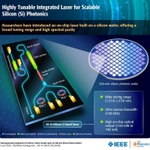
Intel says silicon photonics are the "golden hammer" of next-gen systems as they are the only high-volume fab delivering 300mm indium phosphide photonics at scale. 🔗 wccf.tech/1le92

Alex retweeted

생각할수록 열받네.
삼성 파운드리에 AI5,AI6 맡길 때는 TSMC가 자기들 요구를 안 들어줘서 넘어온 거면서, 온갖 거지 같은 계약 조건 다 요구하고, 특히 팹 내부 정보 제공이랑 Audit까지 요구하면서 가격도 겁나 후려쳐 놓고.
거기다 자기 팹 짓겠다고 삼성 오스틴 팹 현지 인력까지 대거 빼가고 있는 마당에,
정작 삼성 메모리에는 대놓고 저딴 식으로 말한다고?
진짜 어이가 없네.
