
Undergrad and PhD student @PKU1898 LLM Agent | AI4Science | Generative Models | Continual Learning. Intern @ Tencent Hy agent team
Beijing, China
Joined May 2023
- Tweets103
- Following185
- Followers360
- Likes98






Haowei Lin retweeted

Robotics has spent years scaling demonstration data and model size. What happens when we scale EXPLORATION for robot agents?
We're incredibly excited to share RAX, an agentic robotics system that learns by scaling online exploration.
A coding agent connects directly to the robot’s perception and control APIs, learns from feedback, and builds programs that perceive, plan, and act. The model stays frozen. As exploration scales, the agent improves its programs and builds up reusable skills.
The results:
• ZERO teleoperation or action demonstrations on real robots—from insertion with 0.1 mm clearance and air-fryer manipulation to deformable objects and long-horizon mobile whole-body control.
• +37 percentage points on average over leading learned policies across five simulation benchmarks: RoboDojo, BEHAVIOR-1K, HumanoidArena, DexJoCo’s bimanual tasks, and LIBERO-Pro.
• One framework spanning single-arm, bimanual, dexterous, humanoid, and mobile robots, with new embodiments connected through APIs.
The craziest part: on each real-world embodiment, going from scratch to mastering the tasks took roughly two hours. No teleop. No model finetuning.
We’re open-sourcing the full framework AND every experiment session. We can’t wait to see what people build with it!
Project + sessions: robot-agent-exploration.com/
Paper: assets.robot-agent-explorati…
GitHub: N
Project fully led by @RunhanH and @xczhangxx who are absolutely awesome.
How it works, experiments, and robot videos below 🧵
(1/N)
Haowei Lin retweeted

Harbor Adapters and Harbor-Index
arxiv.org/pdf/2609.04298
1+year work, 120+contributors, 300+PRs, 10+ funding partners.

Haowei Lin retweeted

Hyra keeps pushing the frontier.
Since our last math update, four more advances have landed:
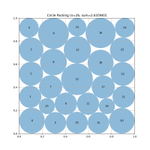
📐 3D Blaschke–Lebesgue: raised the universal lower bound for constant-width bodies from 0.380799w³ → 0.411040w³ (now 97.9% of the conjectured Meissner optimum).
∫ Beurling–Ahlfors: improved the best uniform (L^p) coefficient from 1.575 → 1.523958, moving closer to Iwaniec’s conjectured sharp bound.
± Partial Hadamard matrices: extended asymptotic counting from the cubic scale down to the near-quadratic regime.
[,] Operator commutators: improved the cost of approximating the identity from Tao’s O(log⁵(1/ε)) to O(log³), narrowing the gap toward the known logarithmic lower bound.
We are making open-source models better at solving open problems!
Check the results: github.com/Tencent-Hunyuan/h…

Haowei Lin retweeted

This is a nice simple construction, which answers a natural question.
The exposition is more complicated than it needs to be (especially for an expert in the area), so I wrote a short note giving my 'digestion' of this construction.
thomasbloom.org/notes/sumdif…

For a finite set of integers (A), how much faster can (|A+A|) grow than (|A-A|)?
A 1969 theorem gave an upper bound of 2 for the exponent. For more than 50 years, the best constructions barely exceeded 1.1.
With help from our research agent Hyra and the Hy3 model, we found an explicit construction showing that the optimal exponent is exactly 2.
A 50-year-old problem, solved.
Paper: arxiv.org/abs/2607.27199
Hyra blog: hy.tencent.ai/research/hyra
Formal proof: github.com/linhaowei1/sum-di…

Haowei Lin retweeted

This is insane. This is a VERY central problem in additive combinatorics and it’s been resolved via AI… wow
For a finite set of integers (A), how much faster can (|A+A|) grow than (|A-A|)?
A 1969 theorem gave an upper bound of 2 for the exponent. For more than 50 years, the best constructions barely exceeded 1.1.
With help from our research agent Hyra and the Hy3 model, we found an explicit construction showing that the optimal exponent is exactly 2.
A 50-year-old problem, solved.
Paper: arxiv.org/abs/2607.27199
Hyra blog: hy.tencent.ai/research/hyra
Formal proof: github.com/linhaowei1/sum-di…
Haowei Lin retweeted

I and @AndyLin2001 used 𝐇𝐲𝟑 to settle a combinatorics problem that had been open for half a century.
This isn't just one more AI-generated mathematical discovery -- it's a "Eureka moment" for an 𝐨𝐩𝐞𝐧-𝐰𝐞𝐢𝐠𝐡𝐭𝐬 𝐦𝐨𝐝𝐞𝐥.
How much larger can the sumset of a set of integers be than its difference set?
A classical result from 1969 showed that the exponent governing this gap is at most 2. But whether this bound was optimal remained open. More recently, Terence Tao and others explored AI-assisted approaches to improve the lower bound, but the results remained around 1.1.
Then 𝐇𝐲𝟑 produced an elegant construction achieving a lower bound of 2 -- matching the upper bound and completely resolving the problem.
For a finite set of integers (A), how much faster can (|A+A|) grow than (|A-A|)?
A 1969 theorem gave an upper bound of 2 for the exponent. For more than 50 years, the best constructions barely exceeded 1.1.
With help from our research agent Hyra and the Hy3 model, we found an explicit construction showing that the optimal exponent is exactly 2.
A 50-year-old problem, solved.
Paper: arxiv.org/abs/2607.27199
Hyra blog: hy.tencent.ai/research/hyra
Formal proof: github.com/linhaowei1/sum-di…
Haowei Lin retweeted

A 50-year-old math problem, solved with the help of Hyra and Hy3.
Huge credit to @AndyLin2001, who led this result, and to the whole team. Excited to be co-leading Hyra as we build AI4AI and AI4Science. We’re just getting started—and we’re hiring. Reach out if this mission resonates.
For a finite set of integers (A), how much faster can (|A+A|) grow than (|A-A|)?
A 1969 theorem gave an upper bound of 2 for the exponent. For more than 50 years, the best constructions barely exceeded 1.1.
With help from our research agent Hyra and the Hy3 model, we found an explicit construction showing that the optimal exponent is exactly 2.
A 50-year-old problem, solved.
Paper: arxiv.org/abs/2607.27199
Hyra blog: hy.tencent.ai/research/hyra
Formal proof: github.com/linhaowei1/sum-di…
Haowei Lin retweeted

No, it's fine that a Chinese system has caught a mathematical result, I just… just didn't expect it to be Tencent.
Using Sol as a judge is also unfortunate.


For a finite set of integers (A), how much faster can (|A+A|) grow than (|A-A|)?
A 1969 theorem gave an upper bound of 2 for the exponent. For more than 50 years, the best constructions barely exceeded 1.1.
With help from our research agent Hyra and the Hy3 model, we found an explicit construction showing that the optimal exponent is exactly 2.
A 50-year-old problem, solved.
Paper: arxiv.org/abs/2607.27199
Hyra blog: hy.tencent.ai/research/hyra
Formal proof: github.com/linhaowei1/sum-di…
Haowei Lin retweeted
Introducing Hyra-1.0, the first version of Hunyuan Research Agent. 💡💡💡
Built to recursively improve solutions for performance-driven research and engineering tasks.
Explore our demos in AI4AI, AI4Science, and AI4Fun:
hy.tencent.com/research/hyra

Haowei Lin retweeted

HPC-AI is heading to #ICML2026! 🚀
Looking for top-tier compute efficiency or building the next generation of AI Agents? We’ve got you covered! Stop by Booth B301 to talk cutting-edge technology, supercharge your projects, and grab awesome perks!
🎁 Exclusive ICML Swag & Perks:
📱 Interact & Win: Engage with this post to grab our custom caps & eco-friendly canvas bags for FREE! 🧢💼
📝 1-Min Survey: Complete a quick questionnaire and claim your exclusive ICML badges & tech stickers! 🧲✨
🔋 Top-up Bonus: Top up your account during ICML and take home a premium Bluetooth speaker! 🔊
📝 Accepted Author Special: Got a paper at ICML? Unlock our Author Incentive Program to get exclusive vouchers for GPU compute and Model APIs! 🎓💡
⚡ Why Choose HPC-AI?
1️⃣ GPU Cloud Compute | High Performance & Elasticity
- Full-Spectrum GPU Coverage: From H200 to B200, we provide top-tier GPUs for training, fine-tuning, and inference.
- Flexible & Cost-Effective: Pay-as-you-go billing with ultimate price-to-performance ratio.
- Stable & Ready-to-Use: Instant deployment, elastic scaling, and enterprise-grade reliability for both corporate R&D and academic research.
2️⃣ Model APIs | One-Click Access to Frontier LLMs
- Mainstream Models Covered: Seamlessly access DeepSeek, GLM, Kimi, MiMo, and more, with continuous updates.
- High-Performance Inference: Built on enterprise GPU infrastructure, ensuring accelerated inference and high availability for massive workloads.
- Seamless Ecosystem Integration: Compatible with 40+ mainstream AI frameworks and tools (Dify, Cursor, Open Claw, Open Code, etc.). Connect in 3 easy steps!
📍 Booth B301 📅 July 7-10 🏢 ICML Conference (Korea Seoul)
#ICML2026 #HPCAI #MachineLearning #DeepLearning #GPU #ModelAPIs #LLM #AICompute

Haowei Lin retweeted

📣 Announcing Terminal-Bench Science: benchmarking AI agents on real scientific workflows – now open for task contributions👇
tbench.ai/news/tb-science-an…
@AnthropicAI, @OpenAI, and @GoogleDeepMind use Terminal-Bench to evaluate AI on coding tasks. We're now extending it to scientific workflows.
1/6🧵

Haowei Lin retweeted

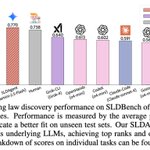
Brilliant paper from Stanford + Tsinghua + Peking University + Wizard Quant
Shows an evolution style LLM agent can discover scaling laws that predict performance better than humans.
The big deal is that it turns scaling law writing from slow expert guesswork into an automated search that can guide expensive training and fine tuning decisions.
Scaling laws are simple formulas that guess how an LLM will do as it gets bigger, but experts still craft them by hand and they can fail in new settings.
The authors build SLDBench from 5,000 or more past training runs, and each task asks for 1 formula that predicts well on larger, unseen runs.
They propose SLDAgent, which keeps rewriting both the formula code and the parameter fitting code, testing each new version and keeping the best like an evolution loop.
This helps because the formula and the fitting method depend on each other, so improving only 1 often gives shaky predictions.
Across 8 tasks it beats human formulas on extrapolation, meaning prediction beyond the seen scale, and with GPT-5 its average R2 rises from 0.517 to 0.748.
The payoff is practical because it helps pick learning rate (step size) and batch size (examples per update) with fewer sweeps, and it helps choose which pretrained model to fine tune from small trial runs.

Haowei Lin retweeted

🤔Want a principled way to RL your diffusion model?
Check Data-regularized Reinforcement Learning (DDRL)! Post-train @nvidia #Cosmos World Foundation models with a million GPU hours! 🤯
Novel formulation ➡️ Theoretically integrates SFT into RL ➡️ Robust to Reward Hacking 🛑
Details: research.nvidia.com/labs/dir…
#DDRL #Diffusion #RL #NVIDIA #Cosmos
Haowei Lin retweeted
Excited to share work on using classical search approaches to scale inference in diffusion models!
We show how global graph search algorithms (BFS, DFS) and local search can be used to improve generation performance across domains such as image generation, planning, and RL!

Haowei Lin retweeted

Level 1: Keyword-based retrieval
Level 2: Semantic-based retrieval
Level 3: Reasoning-based retrieval
𝗪𝗵𝗮𝘁 𝗶𝘀 𝗥𝗲𝗮𝘀𝗼𝗻𝗶𝗻𝗴 𝗜𝗻𝗳𝗼𝗿𝗺𝗮𝘁𝗶𝗼𝗻 𝗥𝗲𝘁𝗿𝗶𝗲𝘃𝗮𝗹?I
It is the ability to find relevant information that requires logical thinking to connect your query with appropriate documents. It goes beyond matching words or concepts.
For example, imagine asking:
> "How do I reuse water from plant pots - is it safe for the plants?"
A reasoning-based retrieval system would understand that:
1. Water in plant pot plates contains dissolved minerals
2. These might include soluble salts from fertilizers
3. Documents about salt accumulation and root damage would be relevant
4. Even if those documents never mention "reusing water from pots"
Yesterday, @antoine_chaffin and @LightOnIO released Reason-ModernColBERT, achieving top scores on the BRIGHT benchmark with just 150M parameters. (Congratulations to the team!)
I gave it a quick spin in this notebook with @weaviate_io:
github.com/weaviate/recipes/…
Reason-ModernColBERT on Hugging Face: huggingface.co/lightonai/Rea…
BRIGHT paper: arxiv.org/abs/2407.12883

Haowei Lin retweeted

🧵 1/9 🎉 Overwhelmed by the incredible response to OpenEvolve! What started as my attempt to replicate Google DeepMind's AlphaEvolve has become something far beyond my expectations. Our open-source repo is now trending on GitHub!
Haowei Lin retweeted

Introducing ♾OmniJARVIS, our latest venture to #AgentGPT, or vision-language-action (VLA) models for open-world instruction-following agents 🦾🕹️
tuning in 👉omnijarvis.github.io
by Team CraftJarvis, 🤿⏬
Haowei Lin retweeted

Retrieval Augmented Thoughts
Shows that iteratively revising a chain of thoughts with information retrieval can significantly improve LLM reasoning and generation in long-horizon generation tasks.
The key idea is that each thought step is revised with relevant retrieved information to the task query, the current and past thought steps.
Retrieval Augmented Thoughts (RAT) can be applied to different models like GPT-4 and CodeLlama-7B to improve long-horizon generation tasks (e.g., creative writing and embodied task planning).
RAT is a zero-shot prompting approach and provides significant improvements to baselines that include zero-shot CoT prompting, vanilla RAG, and other baselines.
Interesting idea to elicit context-aware reasoning and how it can benefit these long-horizon generation tasks.

Haowei Lin retweeted

🌟 Shoutout to the incredible foundational work in the #Minecraft domain that paved the way for JARVIS-1! 🚀

We've been pushing the boundary of building open-world agents using #ChatGPT and here is our latest effort: JARVIS-1, standing on top of *embodied RAG* (retrieval-augmented generation)
🌎craftjarvis-jarvis1.github.i…
Check out how JARVIS-1 progresses the skill tree 👇