
Computer vision engineer, math phd. Interested in AI, science, ethics, society topics.
California
Joined April 2023
- Tweets18.2K
- Following202
- Followers512
- Likes24.6K


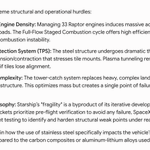




We won't solve aging by simulating everything in precise detail. We will do various experiments, mapping of problems space, and iterations. So, heavy use of reality.

People who don't have good use for the tools, and only ask it questions, think the tools are not good. People who do serious interactive work with real problems disagree.

Sure, AI keeps on making basic mistakes. These will continue to be fixed. The world is big but we are slowly mapping it all.

The problem here is damning a whole industry because some spending is being recalibrated.
AI is on a good track, but the ramp up has been way too fast.

AI going beyond language and using tools and exploring its environment has been the case for a few years now.

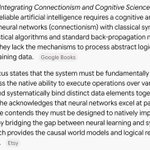
The smarter AI gets. The smarter it will get. But it will have to beyond just language to get even smarter. It needs to integrate ideas with math and simulations. And the results will in turn make it smarter than before. The ultimate improvement comes from real world experimentation when ideas are validated.
Language generates possibilities. Mathematics establishes logical and quantitative relationships. Simulations explore the consequences of interacting mechanisms. Real-world experimentation determines whether the models actually correspond to reality.
Current AI is mostly trained by imitation and local exploration. An AI vendor gets the collective wisdom of users of its AI agents.

No. Plenty of folks have consistently assuming AI will go far, but it is complex automation rather than some wild thing. Doomers have the wrong ideas for how to handle this.

AI as a Normal Technology
The current normie mainstream consensus on AI risk has switched from "AI isn't real and never will be" to "AI is real and it is a normal technology"
The implications of thinking about AI risk as the risks of a normal technology are:
- AI risk can be dealt with using existing institutions
- AIs are tools that are used by people, so people are legally liable. Like a hammer.
- AI won't do anything out of the ordinary, so it will cause human-like risks which we already know how to deal with.
- We can test out AI in a controlled environment and patch it up a bit and release it and everything will be fine. It will not significantly change its safety-relevant behaviour between testing and deployment
- The AI risk community are weirdos and hypochondriacs
"AI as a normal technology" will last until AI does something that is obviously not normal, i.e. overwhelm human institutions and controls enough that everyone notices.
And on the current path, that will probably happen this decade, likely if/when AI is put in charge of its own development by labs pursuing RSI, or failing that when robots are widely deployed in civilian or military use.
The problem is, at that point the hour will be very late.

It is like Pandora's box. The slop escapes first. The tools will keep on getting better and we will figure what to do with the side effects.

But AI is here to stay. We are not powerless but for most folks is just automation. Good luck going back to horses.
This quoted post is unavailable.
Airplanes don't truly fly! They cheat by blowing air from rear.

Tesla Roadster is cute. Let them have fun. That won't save Tesla from its current slump, and humanoid robots won't come soon enough to do that either.

Interpretability will not be solved. The world never conforms to any provable logic.
This will be empirical work, and will go better than doomers think.

Solving interpretability is not enough, and I am not goalpost-moving. The project of creating superintelligence is so reckless, unprecedented, and audacious that they expect a parade if AI does not cause human extinction.
First of all, interpretability is not solved, the author just thinks it might be in time.
Second, even if interpretability were solved, there can still be catastrophic accidents! Civil engineering is solved, bridges still collapse. Even a fully-interpretable AI could make a mistake, which could still lead to a catastrophe if the mistake is in a bio lab.
Third, is interpretability strictly safe-only? Okay, a "good" actor can take out the bad stuff. Could a different actor keep it, or add to it? A lot of AI research is dual-use.
Fourth, short of malicious extinction at the hands of an AI, this does not address any of the problems inherent to AGI! Everything in our society, from democracy, to free markets, to fundamental freedoms like free speech, are predicated on the fact that people have leverage over each other. If you don't like your boss, you can quit your job and the boss will lose out on your labor. The military and the police are people with families and moral compasses. What happens in a world where humans are economically worthless and only owning AI chips and robots means anything? I don't think this will be a utopia. I think the vast majority of people will be disempowered and at the whims of the ruling class. I do not want a UBI that can be taken away, and I have no recourse and no power.
The AI companies are embarking on a project so crazy that "we won't definitely kill you all intentionally" is seen as good news. It's a good start, but we're nowhere close to safe from them.
This is correct with a caveat that AI agents in technical areas can dutifully ground their work as they progress with tools, and can adapt and fix problems.
If you can measure someting, AI will get good at it.

In reply to your question, I would answer that contemporary frontier models are complex stateful reactive stochastic software-intensive systems with certain degrees of self-referential reflection, capable of coherent albeit unreliable outputs. Their behaviors are for the most part taught, not learned.
But I would not use the phrase “machine consciousness” because the word consciousness is a suitcase word, full of flame and fury and emotion and historical baggage, a word that distracts from computational reality.
People who don't use the tools tell the people who use them that the tools are a scam.

No. This is a speculation. We all know that the AI is not doing faithful work, but has nothing to do with quantum mechanics or floating point.
Our brain is fancier, more adaptable, has better world models.

AI alignment is a badly posed problem. This is not pessimism, but other way around.
This industrial machinery to be fixed empirically, not something to prove or guarantee.

This is correct. It's one of the many obvious problems with AI doomer theory.
Quite parallel with the concept of revealed preferences in economics. In fact, now that I think about it, the impossibility of pre-constructing an "alignment" function is formally identical to the impossibility of pre-constructing a preference function.
TIL
This is a legitimate point. It is not a show-stopper. I have seen AI tools (I use Claude) get remarkably good with time, and a lot of the work becomes in-distribution.
Use AI for simpler things first. Augment yourself. With time, it gets better and cheaper.

I spent the better part of 5 hours last night trying to get Gemini Pro to map atoms of a crystal between two thermodynamic states (ended up staying up until 2 AM pulling the AI slot machine lever). I asked it every way I could imagine. Fed it inputs and results, even gave it hints. No matter how convincing the solution sounded, the results were complete slop. I'm now creating the map myself.
I installed every python package it asked for to help it find a solution. While it wrote decent code to implement the strategies it proposed, it just couldn't wrap it's head around how the crystal unit cell repeats, even though it knew what the structures inside should look like. It couldn't look across one boundary and see the other and connect the dots.
What it helped with:
1. Finding existing workflows for solving similar problems to what I am working on (created by humans).
2. Writing boilerplate code for those existing workflows (written and heavily reinforced by humans).
What it failed miserably at:
1. Symbolic reasoning. Even though it knew the exact sub-structure of the chemical groups in the lattice, it could not identify those groups from coordinate data. Trivial for a human to do instantly. It immediately resorted to statistical methods and existing algorithms to try and identify the groups and failed because the algorithms were not written to handle my specific case.
2. Spatial Reasoning. Even though a simple crystal visualization tool can immediately pick out covalent bonds and group them in distinct groups (albeit without wrapping across unit cell symmetry), the AI was helpless to recreate even this. Even when it was telling me that a group was cut in half on a specific plane of the unit cell, it couldn't stitch those two together. The words sounded right but the mental understanding did not exist.
3. Context and logical reasoning. The context was all over the place. I told it multiple times what the ultimate goal was, and it never could make very good decisions about what corners I could cut to make the approach more doable and elegant without throwing out crucial details. Again, it just regurgitated what others have done in its training data for problems of the same class.
This is a great example of what I mean when I say that these things are still stochastic parrots. The things it vomits up are now processes instead of just words, but the underlying statistical methods have not changed over nearly a century.
This is so clearly not intelligence. It is just better, MUCH More expensive, search. Yes, the search blows away existing html metadata indexes, but at what cost, and is the cost justified if it's just really good search?

This is fair. Everything needs frequent grounding. With external tools, external knowledge bases, several passes of review.
The further one moves from quantitative domains, the harder it gets.

Taking the view that AI is an engineering problem rather than an existential problem brings one closer to the solution.

Here are 14 points about AI safety I made on the Ezra Klein show, and some impressions about the experience. nytimes.com/2026/10/09/opini…
1. Intelligence isn’t power — An A.I. system being powerful is not a property of the model itself. It’s a property of what powers we choose to give it in the real world.
2. The capabilities and behaviors we saw in the HuggingFace and other hacks weren’t entirely emergent. The models were trained for persistence, cooperation, and cyber tasks. The RL environments in which they were trained had various issues that led to the unintended behavior.
3. I agree that controlling highly capable AI agents is different in some ways from controlling an airplane or a nuclear reactor. The agent’s intentionality does make a difference to our approach compared to traditional engineering problems and domains. But it is still an engineering problem. It is not a solved engineering problem, but it is a solvable one.
4. A lot of effort and money has been put toward alignment. That’s important and has proved useful, but if the same amount of effort and money had additionally been put toward control (sandboxes, monitoring, and other guardrails outside the model itself), we’d be seeing very different results.
5. Models getting smarter doesn’t necessarily mean safety gets harder, because capability gains improve defensive abilities too. In many ways it makes safety easier rather than harder. What matters is how the attacker-defender balance shifts, and we have agency to shift it back to defenders.
6. In cybersecurity, long before AI we reached a point where automated systems were superhuman at finding certain vulnerabilities. It helped defenders over attackers because the same tools are used by defenders to find and fix vulnerabilities in software before even shipping. There is a constantly shifting equilibrium, but it is not a new problem.
7. I pushed back on Dario Amodei’s term “operational excellence” to describe recent organizational failures. Excellence is still far out on the horizon. Ezra offered “operational adequacy”. I think that would be a good start — behaving like any mature company instead of a startup-like culture.
8. Defensive AI agents will have to be part of the solution, as uncomfortable as that seems. It’s a new paradigm. We won’t be able to figure it out right away. But the fact that both offensive and defensive technologies escalate in capabilities and complexity is a fact of technological civilization, whether in the digital or physical realm.
9. Ezra expressed some incredulity about my being okay with the ratcheting of complexity. I think it’s fair to be concerned. But safety technologies will never be fully legible to the public. People will have the same reaction if they see the immense complexity of safety in any other high-stakes domain such as nuclear or aerospace. We govern them pretty technocratically.
10. The weirdness of the current moment in cybersecurity absolutely does have historical precedents. There was a prolonged period of profound destabilization when worms and viruses started a new offensive paradigm. It took us well over a decade to develop effective defenses against it. This time we can hopefully get there in less than a decade.
11. I continue to be skeptical about the possibility of superhuman persuasion abilities from superintelligence. (Claims to the contrary tend to confuse two very different senses of the word persuasion.)
12. What worries me is not the capabilities of the technology itself or the possibility that we will get no warnings before catastrophic risks materialize. We are getting plenty of warnings! But our policy and organizational responses to the warnings remain inadequate.
13. Companies can and do make decisions that are against their own long-term interests because they are too focused on short-term metrics. This is how I interpret a lot of what happened with social media over the last decade.
14. AI companies are also acting irrationally against their own self-interest in some ways. The “we can’t slow down unless we’re forced to” view comes out of the mythical belief in superintelligence at OpenAI and Anthropic — that the race to RSI means everything for the company, for the country, and humanity. I think it’s actually in both companies’ self interest to slow down unilaterally. I would argue that the alarm coming from their employees is not evidence of beneficence so much as it is evidence of the underlying fallacy that’s causing the irresponsible behavior in the first place.
(Beyond safety, we also talked about the economic impacts being gradual, the fact that intelligence is rarely the actual bottleneck, labor impacts being small and uneven, Jevons’ paradox, the changing nature of knowledge work, and more.)
====
A few impressions
* Talking about a specialized topic on a podcast that has a big and broad audience is a balancing act. The producers stopped me many times during the interview to tell me I was being too technical (understandable!). I tried to be nuanced but this conversation is necessarily a distilled version of the arguments @sayashk and I have made in our essays (especially normaltech.ai/p/the-ai-as-no…) which are themselves written for a somewhat broad audience and hence distilled in complexity from our notes and 1-1 discussions with peers.
* I knew Ezra had well-formed views on AI safety that were different from mine, so I was expecting a tough interview, but he also seemed like a fair interviewer. It went about as well as I expected and I feel like it was a good debate / conversation. I wasn’t necessarily expecting to change minds but I was glad to hear from people who found it thought provoking and looked up my essays and other work.
* The interview was about two hours, edited down to an hour. I was a bit nervous waiting for it to land, because I knew the editing could make a big difference to how I came across. It turned out well. They even did things like find archival footage to illustrate my point that the early days of worms and viruses was a weird time in cybersecurity.
* I use AI to prepare for interviews. I have an agent that has read all of my output (books, articles, essays, talks, podcast transcripts, tweets, internal notes — on the order of a million words) to pull out pithy explanations, examples, analogies, and other talking points that will probably work well in a spoken format. Reviewing this file before interviews is extremely helpful. It is of course not the only way I prepare but it’s the highest bang for buck. Maintaining this file would be a massive amount of grunt work and there’s no way I’d do it if it weren’t for AI. I mention this because there’s a very large space of beneficial AI uses in knowledge work that _don’t_ involve cognitive offloading. They don’t get much hype on social media so people might be unaware of how much mileage you can get out of them, with little downside.
