

21Shares Bitcoin and Gold ETF (ticker BOLD) blends Bitcoin and Gold on a risk weighted basis. Founder ByteTree. Fund manager by trade.
London, UK
Joined November 2013
- Tweets12.5K
- Following668
- Followers9.5K
- Likes11.4K






Charlie Morris retweeted

% below all-time high:
Bitcoin: -37%
Ethereum: -53%
Solana: -66%
Dogecoin: -90%
Fartcoin: -95%
Trump Coin: -98%
Melania Coin: -99%
... who could have predicted this?!
UK inflation is taking off again. Oil and gas prices not helping. Charts shows two year inflation forecast.

Charlie Morris retweeted

Yes, the monarchy was deeply implicated in the slave trade. But not the British monarchy.
The biggest African slavers were not pirates or bandits. They were kings. In the 1750s, King Tegbesu of Dahomey, in present-day Benin, was reported to be making £250,000 a year from selling slaves. That astronomical sum, equivalent to perhaps £45 million today, was vastly more than any British aristocrat
While Tegbesu was trafficking human beings, the future George III, who had recently become Prince of Wales, was becoming a convinced abolitionist. He wrote a monograph arguing that “slavery is equaly [sic] repugnant to the Civil Law as to the Law of Nature”. He went on, as King, to sign the abolition of the slave trade into law in 1807.
That act prompted incredulous rage among West African chiefs.
In the 1840s, King Ghezo of Dahomey, played by John Boyega in the 2022 film, The Woman King, fiercely resisted such pressure.
“The slave trade is the ruling principle of my people. It is the source and the glory of their wealth,” he complained.
Contrast his attitude with that of his British fellow-monarchs. Although Victoria, as Queen, was expected to refrain from expressing political opinions, her husband was under less constraint. Albert made his very first speech as Prince Consort to the Society for the Extinction of the Slave Trade and for the Civilization of Africa. His words are a reminder of how determined Britain was to ensure that ending the Atlantic slave trade did not simply push the commerce eastwards.
“I deeply regret that the benevolent and persevering exertions of England to abolish that atrocious traffic in human beings (at once the desolation of Africa and the blackest stain upon civilized Europe) have not as yet led to any satisfactory conclusion. But I sincerely trust that this great country will not relax in its efforts until it has finally, and for ever, put an end to a state of things so repugnant.”
The difference between the British Crown and contemporary African monarchies can be glimpsed in the story of Aina, a young Yoruba girl owned by King Ghezo of Dahomey.
In 1850, a naval captain called Frederick Forbes came to Dahomey to try to convince Ghezo to stop selling slaves. He was unsuccessful but, during his visit, he was offered Aina as a gift.
Forbes knew that such slaves were generally destined for human sacrifice, so he accepted the child, naming her Sara Forbes Bonetta. When Sara arrived in Britain, Queen Victoria became her godmother, paid for her education and arranged for her to marry a wealthy Yoruba businessman. Are the British really the baddies here?
Critics talk of telling our nation’s story “warts and all”; but they rarely get around to the “and all”. The “and all” surely includes the vast sums devoted to stamping out slavery, calculated by Chaim Kaufmann and Robert Pape as 1.8 per cent annually of GDP between 1808 and 1867, the most expensive moral foreign policy in human history. Even if there were a case for reparations in principle (which there is not) that sum alone – not counting the billions given in aid – would surely have covered any debt.
What we are seeing is not a debate about history, but an argument about contemporary politics. Critics want to convince us that Britain became rich through exploitation rather than, as was actually the case, through private property, free contracts and independent courts.
The easiest way to demonstrate the negative correlation between capitalism and slavery is to look at the places where human bondage is most prevalent today – in order, North Korea, Eritrea, Burundi, the Central African Republic and Mauritania. If William III owning shares in the Royal African Company bothers you more than the continuing abomination of slavery in those places, you need to ask yourself some hard questions about your motives.
Fission is the cleanest and most efficient form of energy production. Greens, the sensible ones at least, should be behind it as zero carbon and should be cheap. Need to contain regulation, focus on safety. In the UK too many hands in the till when they hear the word nuclear.


Charlie Morris retweeted

Avoid Berlin like cancer.
Europe’s largest residential landlord Vonovia stands to lose more than €8bn from nationalisation plans in Berlin, as the prospective governing parties of the city discuss the socialisation of 140,000 apartments.
The leftwing Die Linke, winner of the September state election, has agreed to coalition talks with the Social Democrats and the Greens over plans to transfer large apartment portfolios into public ownership in an effort to bring down rents in the capital.
The proposal, which foresees compensation far below market values, could impose losses of more than €11bn on four major property companies relative to the levels at which the properties are held in their books, according to FT calculations.

Charlie Morris retweeted
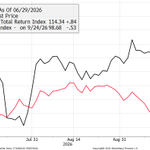
Huge move in high beta/low volatility yesterday. Quality stocks doing what they should when the wind picks up.

Huge move in high beta/low volatility yesterday. Quality stocks doing what they should when the wind picks up.


Charlie Morris retweeted
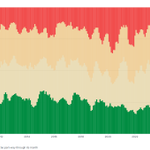
Beta breadth (number of stocks going up or down) also weakening but not yet tragic. Price uptrends waning (green) but price downtrends yet to explode (red).

Charlie Morris retweeted
Lots of talk about weak market breadth. Just 9% of global stocks are beating the index, ie alpha breadth, lowest on record. Beta breadth next chart.

Charlie Morris retweeted

The memory chip ETF $DRAM is now down 30% in a month after failing to make a new high (absolute or relative).


Charlie Morris retweeted
Alpha breadth - key concept.
No of stocks beating the world index in green. Most stock neutral. Many stocks red - underperforming $ACWI.
Alpha is rare.

Lots of talk about weak market breadth. Just 9% of global stocks are beating the index, ie alpha breadth, lowest on record. Beta breadth next chart.

