

1001 Finance | Building long-term wealth through conscious, asymmetric bets on disruptive technologies.
Joined December 2024
- Tweets7.4K
- Following410
- Followers2.8K
- Likes20.4K



🚨 I hope you're prepared for what's coming from the 8th-18th…
On Friday, the lowest volume level of the year was marked, with the Vix at lows and the $SPY making lower highs.
To this, we must add the bond shooting up and oil in an uptrend, plus midterm elections right around the corner and a lot of macro data in these dates.
Basically, the indexes have been held up by positive gamma, but that ends on the 18th with the biggest options expiration in the OpEx. Just like in the two biggest drops of the year.
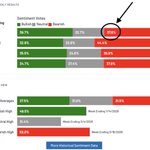
Plus, investor sentiment in the last few days is bullish.
The VIX clearly shows there's a lot of complacency in the market (too much for what's happening), and when institutional money returns on the 8th, they'll have to buy hedges and the dealers will go short..we can say that September starts on the 8th in the markets, and we already know the seasonality.
Tick tock tick tock…. The market already discounted the earnings, but this goes beyond that, it's called market positioning, and you'll see the algorithms in action.
A violent 5-10% correction is coming in the S&P 500
Gael ₿ retweeted
🚨 Espero estéis preparados para lo que se viene del 8-18…
El viernes se marcó el nivel más bajo del volumen del año, con el vix en mínimos y el sp500 haciendo máximos decrecientes.
A esto hay que sumarle el bono disparado y el petróleo en tendencia alcista además con elecciones de medio mandato a la vuelta de la esquina y muchos datos macro en estas fechas.
Básicamente los índices se han sostenido por la gamma positiva, pero eso se termina el día 18 con el mayor vencimiento de opciones en el Opex Igual que en las dos mayores caídas del año.
Además como tú mismo has comprobado al postear de nuevo tu cartera (mini brag) el sentimiento de los inversores con los últimos días es alcista.
El vix marca claramente que hay mucha complacencia en el mercado (demasiada para lo que está pasando) y cuando vuelva el dinero institucional el día 8 tendrán que comprar coberturas y los dealers ponerse cortos..podemos decir que septiembre empieza el día 8 en los mercado y ya conocemos la estacionalidad.
Tik tak tik tak…. El mercado ya descontó los resultados pero esto va más allá, se llama posicionamiento del mercado y verás actuar a los algoritmos.
Se viene una corrección violenta del 5-10% en el Sp500


Tik tak…

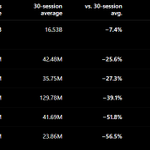
Volatility has rarely been this quiet.
The Volatility Index, $VIX, has closed in the 14 to 17 point range for 25 consecutive trading days, the longest such streak since May 1992.
The only comparable stretch over the last 34 years was in 2025, at 24 sessions.
This comes as $VIX finished every trading day below 17 points in August.
On Thursday, the index closed at 14.3 points, its 3rd-lowest daily close since December.
All while the S&P 500 has traded for 26 consecutive sessions without a decline of at least -1.0%.
The market is unusually calm.

3
339
Gael ₿ retweeted

Volatility has rarely been this quiet.
The Volatility Index, $VIX, has closed in the 14 to 17 point range for 25 consecutive trading days, the longest such streak since May 1992.
The only comparable stretch over the last 34 years was in 2025, at 24 sessions.
This comes as $VIX finished every trading day below 17 points in August.
On Thursday, the index closed at 14.3 points, its 3rd-lowest daily close since December.
All while the S&P 500 has traded for 26 consecutive sessions without a decline of at least -1.0%.
The market is unusually calm.
👇This is probably the most important part of my $GRAB thesis:
2025 Adj. EBITDA: ~$500M
2028 target: ~$1.5B
Management is also targeting roughly 80% Adj. FCF conversion by 2028.
That would imply around $1.2B of Adjusted FCF.
I’m interested in businesses where revenue compounds.
I’m much more interested when cash flow compounds significantly faster.
🚨 $GRAB A Southeast Asian Growth Story Entering Its Profitability Phase ✅
I've been digging deeper into Grab ($GRAB), and I think the market may still be underestimating what this business is becoming.
Most investors still see Grab as the “Uber of Southeast Asia.”
But the real business is much broader:
Mobility | Deliveries | Advertising | Digital Banking | Lending | Wealth Management | AI
More importantly, GRAB is transitioning from:
Growth → Scale → Profitability → Free Cash Flow
That transition is the core of my thesis.
1/ From the 2021 bubble to a much stronger business
$GRAB went public through a SPAC merger in December 2021 at a valuation close to $40B, right at the end of the IPO/SPAC bubble.
The timing couldn't have been much worse.
Investors were paying an extreme valuation for a company still years away from meaningful profitability.
What followed was familiar:
Extreme valuation → multiple compression → capitulation → long accumulation process.
But the company underneath the stock today is completely different.
Back then, investors were paying for future profitability.
Today we have:
- 20%+ revenue growth
- Positive and rapidly growing EBITDA
- Positive FCF
- ~$5.4B net cash liquidity
- Financial Services scaling rapidly
- Share buybacks
That's a much more interesting setup.
2/ The latest results show the inflection clearly
Q2 2026:
Revenue: $997M (+22%)
On-Demand GMV: $6.5B (+21%)
Adj. EBITDA: $168M (+54%)
TTM Adj. FCF: $450M
MTUs: 54M — record high
This was Grab's 18th consecutive quarter of Adjusted EBITDA growth.
The number I care about most:
Revenue +22% → EBITDA +54%
The company is no longer simply growing its platform.
It's monetizing its scale.
Management also raised FY26 guidance to:
Revenue: $4.10–4.15B
Adj. EBITDA: $720–740M
3/ The ecosystem is the real moat
Mobility and Deliveries create the foundation.
More users → more drivers → more merchants → more transactions → more proprietary data.
Grab can then monetize that ecosystem through:
Advertising
Payments
Lending
Digital Banking
Wealth Management
And AI can improve the economics across the entire platform through better routing, pricing, fraud detection, advertising, recommendations and credit underwriting.
The opportunity isn't necessarily selling AI.
It's using AI to make every transaction more efficient and profitable.
4/ Financial Services could be the hidden upside
This is probably the part I'm most interested in.
Q2 Financial Services:
Revenue: $134M (+59%)
Loans disbursed: $1.2B (+72%)
Gross Loan Portfolio: $2.3B (+197%)
Customer deposits: $2.5B
Why is this interesting?
Grab has proprietary data on drivers, merchants and consumers that traditional banks often don't have.
That potentially creates a powerful flywheel:
Transactions → Data → Better underwriting → Credit → More economic activity → More transactions
Superbank adds another layer, with 6M+ customers and 1M+ daily transactions, while the broader ecosystem is evolving toward:
Mobility → Delivery → Payments → Lending → Banking → Investing
If Financial Services becomes profitable while maintaining credit quality, I think the market could eventually value GRAB very differently.
5/ The earnings trajectory is what really attracts me
Look at Adjusted EBITDA:
2023: -$22M
2024: $313M
2025: $500M
2026E: ~$730M
2027E: ~$1.0B+
2028 target: ~$1.5B
Management is targeting roughly 20% annual revenue growth through 2028, but EBITDA should grow considerably faster.
Even more interesting:
Management targets approximately 80% Adjusted FCF conversion by 2028.
On $1.5B EBITDA, that could imply around:
~$1.2B Adjusted FCF.
That's the core financial thesis:
Revenue compounds, but EBITDA and FCF compound much faster.
6/ The balance sheet gives GRAB optionality
Grab currently has approximately:
$5.4B net cash liquidity.
That's a major advantage.
It gives the company flexibility to invest, expand Financial Services, make acquisitions and repurchase shares.
Management recently authorized another:
$750M buyback
bringing cumulative authorizations since 2024 to approximately $1.75B.
This matters because SBC/dilution has historically been one of my main concerns.
If FCF continues growing and buybacks start reducing the share count, the per-share economics become much more attractive.
7/ The technical setup is also becoming interesting
GRAB entered public markets at an extreme valuation and then spent years correcting and building a base, similar to many other 2021 growth companies.
After eventually finding a bottom, the stock began building a healthier long-term uptrend.
More recently, the valuation once again became demanding while the business was still relatively early in its profitability cycle, and that has weighed on the stock.
Now we're back near an area I find much more attractive.
The heavy volume traded around ~$3 suggests this could become an important long-term accumulation/support zone.
No technical level guarantees a bottom, but from here I think the:
Risk/reward becomes difficult to ignore.
I don't know if GRAB is necessarily a company I would hold forever.
I don't need it to be.
I need the asymmetry between downside risk and potential upside to make sense.
8/ Valuation
This is where the thesis gets particularly interesting.
Expected Adjusted EBITDA:
2026E: ~$730M
2027E: ~$1.0B+
2028E: ~$1.5B
If $GRAB reaches its 2028 target while maintaining a large net cash position, today's valuation starts looking much less demanding.
More importantly, the thesis doesn't require massive multiple expansion.
Earnings growth can do most of the work.
That's exactly the type of setup I like.
9/ What could go wrong?
There are real risks.
Credit risk is the biggest one for me. A loan portfolio growing almost 200% YoY looks great until defaults start rising.
I'm also watching:
Competition
Driver/customer incentives
SBC and dilution
FX exposure
Gig-economy/banking regulation
Consumer weakness
M&A execution
The key is Financial Services:
I want lending growth without deterioration in credit quality.
10/ Why GRAB also makes sense for my portfolio
There's another reason I like the setup:
Diversification.
A large part of my growth exposure is concentrated in US equities and AI-related themes.
GRAB gives me exposure to a completely different structural growth engine:
Southeast Asia
Consumer growth
Mobility
Fintech
Digital banking
So this isn't only about potential upside.
It also reduces some of my geographical and thematic concentration.
Final Thesis
What attracts me to $GRAB is the combination of:
- 20%+ structural growth
- Rapid EBITDA expansion
- Increasing FCF
~$5.4B net cash liquidity
- Mobility + Deliveries ecosystem
- High-margin Advertising
- Financial Services optionality
- Digital Banking
- AI-driven efficiencies
- Share buybacks
- Geographical diversification
The irony is that investors were willing to value GRAB at nearly $40B in 2021 when profitability was still theoretical.
Today, the business is generating positive EBITDA and FCF, has a massive liquidity position, and management is targeting approximately:
~$1.5B EBITDA + ~80% FCF conversion by 2028.
I don't know if GRAB will be a stock I hold forever.
But around this technical area, I think the risk/reward deserves attention.
If Financial Services reaches profitability, credit quality remains healthy, revenue continues growing ~20% and EBITDA/FCF keep compounding faster than sales, I think today's valuation could prove attractive over a 3–5 year horizon.

5
866
🚨 $GRAB A Southeast Asian Growth Story Entering Its Profitability Phase ✅
I've been digging deeper into Grab ($GRAB), and I think the market may still be underestimating what this business is becoming.
Most investors still see Grab as the “Uber of Southeast Asia.”
But the real business is much broader:
Mobility | Deliveries | Advertising | Digital Banking | Lending | Wealth Management | AI
More importantly, GRAB is transitioning from:
Growth → Scale → Profitability → Free Cash Flow
That transition is the core of my thesis.
1/ From the 2021 bubble to a much stronger business
$GRAB went public through a SPAC merger in December 2021 at a valuation close to $40B, right at the end of the IPO/SPAC bubble.
The timing couldn't have been much worse.
Investors were paying an extreme valuation for a company still years away from meaningful profitability.
What followed was familiar:
Extreme valuation → multiple compression → capitulation → long accumulation process.
But the company underneath the stock today is completely different.
Back then, investors were paying for future profitability.
Today we have:
- 20%+ revenue growth
- Positive and rapidly growing EBITDA
- Positive FCF
- ~$5.4B net cash liquidity
- Financial Services scaling rapidly
- Share buybacks
That's a much more interesting setup.
2/ The latest results show the inflection clearly
Q2 2026:
Revenue: $997M (+22%)
On-Demand GMV: $6.5B (+21%)
Adj. EBITDA: $168M (+54%)
TTM Adj. FCF: $450M
MTUs: 54M — record high
This was Grab's 18th consecutive quarter of Adjusted EBITDA growth.
The number I care about most:
Revenue +22% → EBITDA +54%
The company is no longer simply growing its platform.
It's monetizing its scale.
Management also raised FY26 guidance to:
Revenue: $4.10–4.15B
Adj. EBITDA: $720–740M
3/ The ecosystem is the real moat
Mobility and Deliveries create the foundation.
More users → more drivers → more merchants → more transactions → more proprietary data.
Grab can then monetize that ecosystem through:
Advertising
Payments
Lending
Digital Banking
Wealth Management
And AI can improve the economics across the entire platform through better routing, pricing, fraud detection, advertising, recommendations and credit underwriting.
The opportunity isn't necessarily selling AI.
It's using AI to make every transaction more efficient and profitable.
4/ Financial Services could be the hidden upside
This is probably the part I'm most interested in.
Q2 Financial Services:
Revenue: $134M (+59%)
Loans disbursed: $1.2B (+72%)
Gross Loan Portfolio: $2.3B (+197%)
Customer deposits: $2.5B
Why is this interesting?
Grab has proprietary data on drivers, merchants and consumers that traditional banks often don't have.
That potentially creates a powerful flywheel:
Transactions → Data → Better underwriting → Credit → More economic activity → More transactions
Superbank adds another layer, with 6M+ customers and 1M+ daily transactions, while the broader ecosystem is evolving toward:
Mobility → Delivery → Payments → Lending → Banking → Investing
If Financial Services becomes profitable while maintaining credit quality, I think the market could eventually value GRAB very differently.
5/ The earnings trajectory is what really attracts me
Look at Adjusted EBITDA:
2023: -$22M
2024: $313M
2025: $500M
2026E: ~$730M
2027E: ~$1.0B+
2028 target: ~$1.5B
Management is targeting roughly 20% annual revenue growth through 2028, but EBITDA should grow considerably faster.
Even more interesting:
Management targets approximately 80% Adjusted FCF conversion by 2028.
On $1.5B EBITDA, that could imply around:
~$1.2B Adjusted FCF.
That's the core financial thesis:
Revenue compounds, but EBITDA and FCF compound much faster.
6/ The balance sheet gives GRAB optionality
Grab currently has approximately:
$5.4B net cash liquidity.
That's a major advantage.
It gives the company flexibility to invest, expand Financial Services, make acquisitions and repurchase shares.
Management recently authorized another:
$750M buyback
bringing cumulative authorizations since 2024 to approximately $1.75B.
This matters because SBC/dilution has historically been one of my main concerns.
If FCF continues growing and buybacks start reducing the share count, the per-share economics become much more attractive.
7/ The technical setup is also becoming interesting
GRAB entered public markets at an extreme valuation and then spent years correcting and building a base, similar to many other 2021 growth companies.
After eventually finding a bottom, the stock began building a healthier long-term uptrend.
More recently, the valuation once again became demanding while the business was still relatively early in its profitability cycle, and that has weighed on the stock.
Now we're back near an area I find much more attractive.
The heavy volume traded around ~$3 suggests this could become an important long-term accumulation/support zone.
No technical level guarantees a bottom, but from here I think the:
Risk/reward becomes difficult to ignore.
I don't know if GRAB is necessarily a company I would hold forever.
I don't need it to be.
I need the asymmetry between downside risk and potential upside to make sense.
8/ Valuation
This is where the thesis gets particularly interesting.
Expected Adjusted EBITDA:
2026E: ~$730M
2027E: ~$1.0B+
2028E: ~$1.5B
If $GRAB reaches its 2028 target while maintaining a large net cash position, today's valuation starts looking much less demanding.
More importantly, the thesis doesn't require massive multiple expansion.
Earnings growth can do most of the work.
That's exactly the type of setup I like.
9/ What could go wrong?
There are real risks.
Credit risk is the biggest one for me. A loan portfolio growing almost 200% YoY looks great until defaults start rising.
I'm also watching:
Competition
Driver/customer incentives
SBC and dilution
FX exposure
Gig-economy/banking regulation
Consumer weakness
M&A execution
The key is Financial Services:
I want lending growth without deterioration in credit quality.
10/ Why GRAB also makes sense for my portfolio
There's another reason I like the setup:
Diversification.
A large part of my growth exposure is concentrated in US equities and AI-related themes.
GRAB gives me exposure to a completely different structural growth engine:
Southeast Asia
Consumer growth
Mobility
Fintech
Digital banking
So this isn't only about potential upside.
It also reduces some of my geographical and thematic concentration.
Final Thesis
What attracts me to $GRAB is the combination of:
- 20%+ structural growth
- Rapid EBITDA expansion
- Increasing FCF
~$5.4B net cash liquidity
- Mobility + Deliveries ecosystem
- High-margin Advertising
- Financial Services optionality
- Digital Banking
- AI-driven efficiencies
- Share buybacks
- Geographical diversification
The irony is that investors were willing to value GRAB at nearly $40B in 2021 when profitability was still theoretical.
Today, the business is generating positive EBITDA and FCF, has a massive liquidity position, and management is targeting approximately:
~$1.5B EBITDA + ~80% FCF conversion by 2028.
I don't know if GRAB will be a stock I hold forever.
But around this technical area, I think the risk/reward deserves attention.
If Financial Services reaches profitability, credit quality remains healthy, revenue continues growing ~20% and EBITDA/FCF keep compounding faster than sales, I think today's valuation could prove attractive over a 3–5 year horizon.
🚨 $APP One of my favorite risk/reward setups after the correction
After a ~60% correction from the highs, I think AppLovin is reaching a very interesting area from both a technical and fundamental perspective.
The chart is now approaching my 0.786–0.826 Fibonacci retracement zone, while the long-term structure remains intact.
My technical setup gives me roughly:
Downside: ~-20%
1Y upside scenario: ~+110%
But the reason I'm interested isn't just the chart.
The fundamental story remains extremely strong.
AppLovin is essentially an AI-powered advertising platform built around AXON, its machine-learning engine that optimizes ad targeting and advertiser returns.
The business has evolved from primarily mobile gaming advertising toward a much larger opportunity:
Gaming → E-commerce → Consumer brands → broader digital advertising
And the latest numbers don't look like a broken growth story:
Q2 2026 Revenue: $1.92B (+53% YoY)
Adjusted EBITDA: $1.61B (+58%)
EBITDA Margin: ~84%
Net Income: $1.27B (+55%)
FCF: $863M
Q3 guidance remains strong at $2.055–2.085B revenue and $1.71–1.74B Adj. EBITDA, implying an extraordinary ~83% margin.
So why is the stock down so much?
This is where I think the opportunity gets interesting.
The correction has been driven much more by an expectations and multiple reset than by a collapse in the underlying business.
The market is questioning:
• How sustainable AXON's exceptional growth is
• Whether e-commerce can become the next major growth engine
• How much incremental improvement future AI models can deliver
• Whether margins can remain at these extraordinary levels
• Regulatory/data-related risks
In other words:
The stock collapsed much faster than the fundamentals did.
The next phase matters more than the last one.
APP has already proven AXON in mobile advertising.
The real upside comes from proving that the same AI-driven advertising engine can scale across e-commerce and consumer brands.
That's potentially a dramatically larger TAM.
The company has also become a much cleaner advertising story after selling its Apps business in 2025 and now reports as a single operating segment.
What I'm watching next
For the thesis to work, I want to see:
Revenue growth remain >25–30%
E-commerce adoption continue scaling
AXON maintain superior advertiser ROI
EBITDA margins remain ~80%+
FCF continue compounding
Buybacks reduce the share count
The balance between growth and cash generation is what makes APP particularly interesting to me.
This isn't an early-stage AI company promising profitability someday.
It's already producing billions in earnings and FCF.
My thesis
The market previously priced APP for perfection.
After this correction, expectations are significantly lower while the underlying business is still growing at an exceptional rate.
That's exactly the kind of setup I like:
Strong secular trend
AI exposure
50%+ recent growth
80%+ EBITDA margins
Huge FCF generation
Major correction
Long-term technical support
The biggest question is whether e-commerce can become APP's second major growth engine.
If it does, I think the current correction could eventually look like a major long-term opportunity.
🎯 My technical scenario
Current area: ~$300
Risk/invalidation area: ~$225
First major resistance: ~$410–420
12M bullish scenario: ~$625
Previous ATH area: ~$750
I'm not assuming $APP goes straight back to the highs.
But from this Fibonacci zone, the risk/reward is becoming increasingly attractive if the fundamentals continue to confirm the thesis.
Fundamental quality + growth + technical setup. One of the names I'm watching very closely here. ✅

2
629
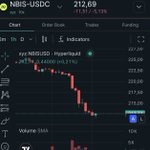
$NBIS Will we see the $190 area tomorrow? Losing the $220 support doesn’t look good...

🚨 $NBIS 🚨
They say history repeats itself...
Could we be seeing the same setup as last year, with a bottom around $120 before reaching new highs of $400–$450 by eoy 27?
WHY NOT?
Given its usual volatility and the ongoing macroeconomic uncertainty.
LONG TERM ✅✅✅
SHORT TERM ⚠️⚠️⚠️

$RDW I think there is still one final correction left in the sector before it resumes its upward trend. The overvaluation in the sector, combined with the SpaceX IPO and the strong momentum, has ultimately had its consequences.
Right now, although it seems like the worst may already be behind us, the macroeconomic instability is still evident. U.S. Treasuries are creating uncertainty in the market, with yields pushing past previous highs despite Bessent’s buyback efforts.
At the same time, oil remains in an uptrend, raising concerns about renewed inflationary pressures and the possibility of rate hikes or some other hawkish surprise from the Fed. On top of that, we have the midterm elections and the ongoing instability surrounding the war.
I think that between now and the end of the year, we could revisit the lows before eventually beginning a new upward trend. Personally, I’m waiting for that area to accumulate as much as possible.

Gael ₿ retweeted

Tom Lee made a very interesting point in Thursday’s @fundstrat Macro Minute.
The first leg of the AI trade was upstream: semiconductors, memory, infrastructure.
Those trades had extraordinary runs and are now correcting
What is gaining traction now is downstream.
Software. Applications.
And, interestingly, $ETH
Ethereum already went through a massive deflation of expectations, while the underlying story kept getting stronger.
Stablecoins. Tokenization. Institutional adoption. And eventually AI agents transacting onchain.
That is what makes this chart so interesting.
Capital may simply be moving from building the infrastructure to owning the rails where the next wave of activity happens.
And that’s why this still feels like the early innings.
The price is starting to move.
The positioning hasn’t.
Most portfolios still own zero $ETH


🚨🚨 $NBIS should hold around the $210 area, where a significant number of shares have previously traded. If the macro environment continues to be unfavorable, and everything seems to point that way, we’ll likely revisit $190, where they could sweep out everyone who bought before earnings.
If that level fails, things could get ugly, with selling pressure potentially pushing the stock toward the $140–$160 area, where the 200-day moving average sits. If tensions in the bond market and oil persist, combined with an increase in volatility starting tomorrow as the options positioning currently holding $SPY between 765 and 775 expires, we could even see $NBIS reach the $120 area.
BE READY, WE WILL WIN! 🫡

SOLD 10 $NBIS 440$ JAN 28´ CC for 94k$ and buy some Puts 190-220$ for Sep-Oct.
This has nothing to do with my conviction in the company.
It’s purely about market structure.
SPY is at all-time highs, retail investor sentiment is in full euphoria mode with people posting brags, trading volume is at lows, the VIX is at lows, there’s a high volume of options contracts expiring on August 21, a new Fed Chair, and instability in oil...
🚨BE CAUTIOUS 🚨
I think we’ll see SPY and QQQ drop 10–15% in the near future, and I expect NBIS to fall to $160–190, where I’ll use the proceeds from my hedge to buy back in at lower prices.

7
457
$NBIS 190$ EOW?
🚨 As I’ve been warning, things aren’t looking good in the short term. The monthly VIX contracts expired yesterday, and volatility is starting to pick up.
Tomorrow is OPEX, which could bring significantly more volatility and push the VIX above the key 16 level, potentially triggering a sharp market sell-off. 👀
$SPY $QQQ
I hope all you $NBIS retail investors have some covered calls. 🙏

