

Systems Biology Lab @ 🔬Weizmann Institute of Science. # Understanding design principles of biological circuits.
Israel
Joined September 2017
- Tweets402
- Following894
- Followers2.5K
- Likes771




Barkai Lab retweeted
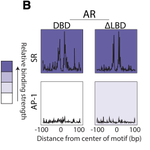
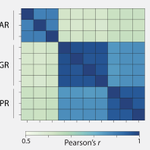
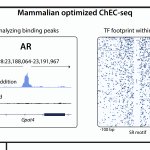
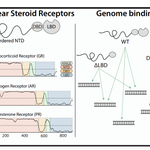
How do transcription factors (TFs) that recognize the same DNA motif end up binding different places in the genome? 🧬
We're excited to show you how we tackle this question in our new bioRxiv pre-print!
doi.org/10.64898/2026.04.27.…
Barkai Lab retweeted

A preprint‼️that's bound to ruffle some 🪶 "Widespread DNA off-targeting confounds studies of RNA chromatin occupancy" led by our @MicahGoldrich and Louis Delhaye from @pieter_mestdagh. TL;DR we show that many of lncRNA chromatin occupancy maps are flawed🧵biorxiv.org/content/10.1101/…

Barkai Lab retweeted

Design principles of transcription factors with intrinsically disordered regions
@eLife @BarkaiLab doi.org/10.7554/eLife.104956
We study how IDRs allow TFs to efficiently locate DNA targets while maintaining strong binding. 1/3

Barkai Lab retweeted

Why are transcription factors disordered? Come join us in Oxford as a postdoc and we'll find out!
Help publish 3 mature projects, AND develop cool new single molecule fluorescence binding assays!
biophysics
transcription
protein:DNA interactions
my.corehr.com/pls/uoxrecruit…
Barkai Lab retweeted
10% of human transcription factors are oligomeric. Stoichiometry can be dialled to modulate transcription. We show CREB searches DNA mixtures as a dimer, and suggest this might be common amongst other members of the bZIP family which fold on binding DNA.
biorxiv.org/content/10.1101/…

Barkai Lab retweeted

🧵
1/
New preprint!
How do transcription factors (TFs) use intrinsically disordered regions (IDRs) to find their target sites?
biorxiv.org/content/10.1101/…
#TranscriptionFactors #IDPs #SingleMolecule #Biophysics

Barkai Lab retweeted

Another paradigm destroyed by @BarkaiLab - cell.com/cell-systems/fullte…. Previously they found DNA binding domains were not important and now #cooperativity is minimal and unidirectional. How to explain specificity? I am lost!!!! #papertunes - Iggy/the Stooges, “Search and Destroy.”
Barkai Lab retweeted
Motivated by experiments in the Barkai lab @BarkaiLab on the role of Intrinsically Disordered Regions in the search process in eukaryotes, we considered the search process of a *polymer* with multiple, weak bindings to a region flanking the target site on the DNA.
2/3
Barkai Lab retweeted
Two new works on how transcription factors efficiently search for their DNA targets:
A pedagogical paper led by Ori Hachmo @OHachmo giving a different intuition for the beautiful mechanism of facilitated diffusion pubs.aip.org/aapt/ajp/articl…
1/3
Barkai Lab retweeted

Read the newest chapter of the histone timer⏲️arc in our @NAR_Open paper investigating 🧐 the role of different histone chaperones and remodelers using the . Special thanks to Gilad, it was again great working with you👨🔬 and the other members of the @BarkaiLab👩👧👦. (🧵)
This Post is from an account that no longer exists. Learn more
Barkai Lab retweeted

How do TFs find TFBSs? Specifically, what do the non-DBD, intrinsically disordered regions (IDR) contribute? @BarkaiLab shows that IDRs are essential, and seem to contribute an additive disordered hydrophobic milieu to enable generic recruitment to promoters. #EMBOPredictEvo
Barkai Lab retweeted

.@Marko_Dunjic_ @FJonas15 @BarkaiLab and co at @WeizmannScience use genetically encoded sensors to define histone occupancy in mouse ES cells
#synbio
#BiotechNatureComms
nature.com/articles/s41467-0…

Barkai Lab retweeted

Happy to share our paper “Histone exchange sensors reveal variant specific dynamics in mouse embryonic stem cells”. Together with @BarkaLab we adapted molecular sensor for histone exchange in mammals. Huge thanks to @FJonas15 and Gilad who were major force of this paper!

Our very own @Marko_Dunjic_ in fantastic collaboration with the @BarkaiLab, finally in print. We can now measure histone dynamics in steady state in transgenic mice!
knockouts, histone variants, heterochromatin, this paper has it all!
rdcu.be/dfmLg
@WeizmannScience

Barkai Lab retweeted
Finally we can share the fruits of our collaboration: ⌛️+🐁=🤯. Well done and big thanks to everyone involved, especially @Marko_Dunjic_ 👩🔬and Gilad from the @BarkaiLab🕵️.
Btw. here the OG yeast timer paper: nature.com/articles/s41587-0…
Our very own @Marko_Dunjic_ in fantastic collaboration with the @BarkaiLab, finally in print. We can now measure histone dynamics in steady state in transgenic mice!
knockouts, histone variants, heterochromatin, this paper has it all!
rdcu.be/dfmLg
@WeizmannScience
Barkai Lab retweeted

Excited to share our paper 'The molecular grammar of protein disorder guiding genome-binding locations' . A great team effort with @FJonas15 and Miri Carmi 👏. I'm grateful for the support of the @BarkaiLab 🙏. Check out the thread below for more details!👇🧵

Proud to present our 🎉new paper🎉deciphering the IIDR grammar of transcription factor target specificity: doi.org/10.1093/nar/gkad184. Special shout out to my fellow code breakers 🕵️ @BennyKrupkin and MiriCarmi and the rest of the @BarkaiLab - follow 🧵 for highlights

Barkai Lab retweeted
Proud to present our 🎉new paper🎉deciphering the IIDR grammar of transcription factor target specificity: doi.org/10.1093/nar/gkad184. Special shout out to my fellow code breakers 🕵️ @BennyKrupkin and MiriCarmi and the rest of the @BarkaiLab - follow 🧵 for highlights
Barkai Lab retweeted

For an exciting study aimed at deciphering the molecular mechanism that drives kidney stones' formation, we are searching for a postdoc\PhD student with either a chemistry, materials science, or biology background to join our vibrant interdisciplinary team.

Barkai Lab retweeted
Thanks to @IDPseminars for giving me the opportunity to present our newest research. Come and join to learn about our newest results on the molecular grammar of IDRs guiding transcription factor specificity

We kick off the new year 🎉with a spectacular new program featuring:
⭐️ @IPritisanac
⭐️Felix Jonas (@jacobs_bremen)
⭐️Hyun Kate Lee (@UoftB)
⭐️@Dushek
⭐️@jerelleaj
⭐️@LindorffLarsen

Barkai Lab retweeted

Our lab's very first paper is out! 🤩
Using language models we predict the function of uncharacterized genes.
Kudos to the talented @Daniellemlrs, who single handedly made this old dream of Dudu's come true 👑

Can we "read" microbial genomes using language models? We explore this idea in our paper "Deciphering microbial gene function using natural language processing" nature.com/articles/s41467-0… 🧵

Barkai Lab retweeted
7 years after the first publication from @voichek and @RBarZiv we got another step closer to understand the role of histone modifications during DNA replication!

Our new paper on Histone Exchange during DNA replication by @fjonas15 and Gilad Yaakov will appear in the upcoming June issue of @genomeresearch !
genome.cshlp.org/content/ear…
