







Bryce Counts retweeted

The non-working upper class, the rentiers, are far more parasitic on society than the extremely small non-working section of the lower class. It is a major focus of propaganda to convince people that the opposite is the case. Nations aren’t weakened by the small fraction of GDP spent on food stamps, they are weakened by their rentier class. The stronger this class becomes the more it entrenches itself, the more it drains from the real productive economy.
Revolutions disrupt this. They clear out large swaths of the non-productive idle rich. They give opportunities to people of great talent who would otherwise be shut out of the system. This is why the United States, France, Russia and now China became vastly more powerful in the years after their revolutions. It is why all of them became nicer places to live with better metrics for health and education.
It is why China’s prosperity and power today is completely interlinked with Mao’s policies. Deng’s market reforms were all well and good but Mao did the heavy lifting when he cleared out the landlord class. Landlords are parasites. They contribute nothing to society and are in fact a net drain. This has been recognized by classical economists including Adam Smith and David Ricardo.
There is a lot of wailing and gnashing of teeth in the west about how China is finally economically powerful enough to choose not to do business with people who insult them. International football clubs worth billions now have to grovel and apologize to China. Good. These are the rewards for power in the international system.
If the West is so terrified of China’s power and of its values then why not emulate the policies that made them so powerful in the first place? If our western values of free speech and association are worth defending then why not clear out the idle class of landlords and rentiers who weaken them and our societies every day?
If we cannot do that then there is no point in complaining. China will supplant us because their economic system works better. And that’s how it should be.


Bryce Counts retweeted

A Mathematical Theory of the Jacobian Lens
"Recent work from Anthropic introduced a new interpretability tool, called the Jacobian lens (J-lens, Gurnee et al., 2026).
This method identified linear directions in the hidden states of frontier language models that had properties reminiscent of working memory-like representations.
However, it is unclear what mechanistic properties of such features make them detectable to the J-lens.
To this end, we introduce a mathematical theory of the J-lens, and show that it preferentially identifies coherent features -- directions that act like leading, spatially coherent Lyapunov modes.
Small perturbations along these directions amplify across layers, remain roughly constant across token positions, and are consistent across different contexts.
While we are agnostic to whether these properties are necessarily associated with a ``Global Workspace'', the analytically derived preferences of the J-lens nevertheless explain prior empirical applied to both model classes.
We validate our analysis on a Bayes filter and a toy transformer, each optimally predicting next tokens emitted from a Hidden Markov Model (HMM).
We show how modulating task parameters that change the coherence of features in the Bayes filter correspondingly and predictively modulates the response of the J-lens.
We also introduce of a family of J-lenses built to emphasize different temporal scales of information processing in LLMs, which we call ω-J-lenses."

Bryce Counts retweeted

New review about computations in PFC, led by two deep thinkers, @GabyMohamady and @kristorpjensen with contributions from many more. Discussing the implications of a bunch of exciting recent PFC findings for how we think about PFC computations.

World models are central to intelligence - but how do we actually use them to behave flexibly? We review emerging findings on how the PFC’s inner dynamics translate structured knowledge into action. osf.io/preprints/psyarxiv/j7… 🧵 1/15

Bryce Counts retweeted

New paper by @Yoshua_Bengio @g_lajoie_ @EricElmoznino @tejaskasetty @blaiseaguera
The world is made of sparsely interacting, independent mechanisms (says the Sparse Mechanism Shift hypothesis in the causality literature).
But “the world is compositional” has mostly been an assumption. There hasn’t been a general way to measure how compositional a given object actually is.
This work defines it using algorithmic information: how much new shared structure appears when you model the whole, beyond what the parts already explain. A random string scores zero. So does a simple repeating pattern.
You can use this to generate strings and images, with strings growing deeper grammars and images picking up repeated motifs (while maintaining a single visual theme).
They fix how the object is split into parts, and conjecture that the “true” split is whichever one maximizes the score. It's related to the same problem we approached from the architecture side in Neural Attentive Circuits during our PhDs.
“Defining and Generating Compositional Structure”
Read more on Lacuna: lacuna.tiptreesystems.com/wo…


Bryce Counts retweeted

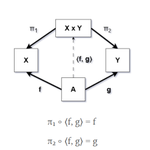
Man is born free, yet everywhere he is a homomorphic image subject to nontrivial generator relations
phospholink.org/index.html really nice tool by my friend Dr. Duolin Wang, check it out.
Bryce Counts retweeted
Most grounded take!

This is interesting work, but I don't think it's a significant update to the big picture of interpretability.
I'm on board with the broad idea of doing exploratory interpretability with neurons, e.g. neuron-based attribution graphs, for pragmatic problems like why did a model do a sketchy thing? I think this work provides some reasonable evidence, in addition to good earlier work from
Transluce, that this might actually work for practical purposes, and has some advantages over the standard alternatives like SAEs/transcoders. I do not agree with some people's grander inferences like that this is substantial progress towards ambitious reverse engineering, solving interpretability etc.
I expect that a neuron-based attribution graph will still have significant error and be missing a lot just like transcoders, once you prune them down to the most important components, even if they solve error terms. Which is fine for pragmatic purposes, and may suffice for getting the gist of what's going on, but I remain pessimistic about really fully understanding things and being confident there's nothing we're missing. I do think that using neurons is just vastly easier to, for example, do on a frontier model, which is great. I'm also excited to see more innovation in using agents to interpret neurons. I feel like this is an area the field has somewhat neglected, and where there's probably a very high ceiling on how far things can go. The SwiGLU double negative thing is also a useful point.
I still think superposition is real and this work doesn’t really affect my cruxes. Most importantly, it seems highly likely to be true that the model can represent more concepts in the residual stream than it has dimensions, ie representational superposition, which I think the authors agree with me on. For neuron/computational superposition, it seems to me like language models have far more facts and memorized things in them than they have neurons. And that superposition is an efficient way to pack in more facts than you have neurons by representing them as linear combinations of neurons, especially for arbitrary unstructured values. Facts/memorized content is largely an unstructured database of key-value pairs IMO and I don’t see how this is compatible with a monosemantic view of neurons. I expect that weak neuron activations contain lots of semantic superposition-y info, which, if ablated, would meaningfully damage network performance. As I understand the work, it does not properly address what's going on with weak neuron activations in LLMs (I am skeptical of how much vision results will transfer, eg I expect small image models memorise far less). This picture is compatible with the highest activations of a neuron being mono semantic (though IMO the post defines monosemantic too loosely, I think I’d call a fair few of those polysemantic). It’s also plausible that the most important concepts are likely to correspond to a neuron (or a handful), which would be great, and may suffice for practical purposes!
Similarly, my impression is that SAEs generally don't find things that are a
single neuron, or even very sparse in the neuron basis, and are often a better basis for certain tasks than the neuron basis, though the evidence base is kinda weak here since we largely focus on residual stream or layer output SAEs, I’d love to see work on this in Goodfire’s forthcoming paper! I also think residual stream SAEs are extremely useful, as they give a good bottleneck of the model’s information at this token and layer, and I don’t see a good way to replicate them in the neuron framework.
And kudos to Nick for updating a bunch of his historical vision work! Revisiting old results with modern tools and more rigour seems great.


Bryce Counts retweeted

Jeff Hinton dismissed gradient descent entirely before winning the Nobel Prize for it. His fear was local minima - valleys in the loss landscape where the model gets stuck forever. For a 1.2 billion parameter LLM like Llama, the landscape has more dimensions than atoms in the observable universe. Getting permanently stuck would require hitting a dead end in every single dimension simultaneously.
What gradient descent actually looks like on a real LLM is stranger than anyone expected. Take two random directions through that billion-dimensional space, visualize the loss surface, and watch what happens when training starts - a wormhole opens and the model drops into a low-loss valley that wasn't visible from the starting point. The valley was always nearby in high-dimensional space. It just couldn't be seen in the 2D projection.
20 minutes. Bookmark & watch today. The most honest visualization of how LLMs actually learn.


Bryce Counts retweeted

Aging and Alzheimer’s disease reshape cortical communication along two distinct, non-overlapping axes: AD pathology correlates with the sensory-association gradient (r=.74), while aging tracks the representational-executive gradient (r=.75). This dissociation resolves prior inconsistencies in connectivity literature, revealing that the AD signature emerges early during pathology accumulation but weakens at advanced stages, shifting from tracking biomarkers to reflecting cognitive performance.
nature.com/articles/s41593-0…


Bryce Counts retweeted

Conserved neural dynamics of anesthesia and the oblivion of species.
nature.com/articles/s41593-0…
#neuroscience

Bryce Counts retweeted

Yes this is the way ( but should be done with an MLIP)

Public databases do not provide disordered protein-ligand training data at scale, so we built Topos-DB: 100,000+ disordered protein-ligand systems simulated with all-atom MD.
To our knowledge, this is the largest all-atom protein MD dataset by distinct system count, roughly 3x the next largest.
(6/7)

Bryce Counts retweeted

If you take the block-universe reading of relativity seriously, the universe is much like this.
All time exists, from the Big Bang to the end of time.
“The past, present and future are all just a stubbornly persistent illusion.” - Einstein, probably.

Bryce Counts retweeted

It was designed that way. Shows like Little Bear and Franklin were made to soothe children while entertaining and educating them. It’s a travesty that creators no longer understand how sacred that model is.

Bryce Counts retweeted

If this happened in the US by the second day the owner of the daycare would be arrested for child endangerment, the pelican would be captured and put down by animal control, and a therapist would be dispatched to the facility to help the children process their trauma

