



Pinned Tweet
You are not bullish enough on $QS.
⚡ The technology is real
844 Wh/L energy density. 12-minute fast charge (10–80%). 1,000+ cycles, less than 5% degradation. Anode-free lithium-metal with a ceramic separator thinner than a human hair.
🔋 The graphite problem nobody prices in
Every lithium-ion battery needs graphite. Over 90% of global supply comes from China.
$QS is anode-free. Zero graphite. Zero China dependency.
In a world of tariffs, supply chain decoupling, and energy sovereignty — it's a structural moat almost no analyst is modeling.
🤝 The commercial ecosystem is being assembled
Automotive:
• Volkswagen / PowerCo — Collaboration Agreement + $130M conditional royalty prepayment, up to 80 GWh licensed capacity
• Hyundai — JDA signed
• Honda — JDA signed
• Mystery North American OEM — JDA signed December 2025 👀
My hypothesis on the mystery OEM: Ford or Tesla.
→ Ford: Solid Power JDA expired Dec 31, 2025. ~$18B in conventional battery contracts cancelled. Timing is surgical.
→ Tesla: Maxwell Technologies acquisition history. CEO publicly commenting on anode-free patents. Not eliminated.
Both fit. I'm watching both.
Beyond automotive:
• Fluence ($FLNC, Siemens/AES JV) — multi-year stationary storage agreement (grid, data centers, solar)
Manufacturing supply chain:
• Murata — JDA signed October 2025 for ceramic separator industrialization. What most miss: Murata isn't just a supplier — they develop their own solid-state batteries. This is two SSB players aligning on a shared technology stack.
Corning isn't just helping $QS scale ceramic separator production. They have developed their own proprietary "Ribbon Ceramics" manufacturing process — a high-speed, high-precision ceramic forming technology that positions them not only as a supplier, but as a future seller of solid-state battery components at scale.
Corning's Program Director of Energy Materials put it plainly:
"Regardless of the chemistry, the technology gives us a winning advantage."
They're not betting on $QS out of charity. They're betting because their own commercial roadmap depends on solid-state batteries becoming real — and they've chosen $QS as the partner to make that happen.
• Digatron — Eagle Line production equipment
This is not a startup with a deck. This is an ecosystem being assembled in plain sight.
🏭 Eagle Line is operational
First commercial-scale solid-state production line — inaugurated, running for months. The lab-to-factory transition is underway.
🏍️ Real-world proof point incoming
Ducati V21L — field testing live in 2026.
I'm personally watching two events:
→ World Ducati Week: July 2026
→ IAA Munich: September 2026
First public validation on a real vehicle. It's happening this year.
🚀 Beyond EVs — and I'm genuinely excited about this
The non-automotive pipeline is barely discussed. I believe 2026 will change that.
$QS has officially listed its target commercial applications:
→ Nuclear
→ Drones & defense
→ Electric vehicles
→ Wind energy storage
→ Smartphones
→ Smartwatches
Stationary storage & data centers: $QS already has the Fluence agreement in place. First-mover position in an infrastructure segment exploding with AI-driven demand. More news coming.
Drones & defense: No graphite = no China supply chain = full domestic production potential. The latest drone footage is not just a demo — it's a signal.
And this week $QS announced Dr. Mark Maybury to its Strategic Advisory Board.
Dr. Maybury is currently VP of Commercialization, Engineering & Technology at Lockheed Martin — leading the transition of cutting-edge research into scalable products for commercial and defense applications. He previously served as Chief Scientist of the U.S. Air Force (2010–2013), and as CTO at Stanley Black & Decker.
His own words:
"I see tremendous opportunity for QuantumScape to redefine energy storage across multiple sectors, including defense, where reliable, high-performance batteries are mission critical."
Consumer electronics: Density + safety at scale.
$QS is not priced for any of this.
The non-automotive TAM is real. The agreements are being signed. The people are joining. The announcements are coming.
You can't expect a 10x without stomaching 50–80% drawdowns.
Check your thesis. If it's still intact — and mine is — tune out the noise and trust management to execute.
The shorts won't win forever.
Thank you for reading.

$QS: Siva Sivaram shared more on LinkedIn about the 100 MWh production line announced by $QS.
His reasoning: demand for solid-state batteries from AI data centers, aerospace and defense is outpacing what any pilot line can deliver. Hence the partnership with Mühlbauer, chosen for its system integration and engineering depth, with start of production targeted for 2028.
In the accompanying video, Luca Fasoli from QS and Josef Mühlbauer, CEO of Mühlbauer Group, present the partnership.
What we know since the Q3 call: equipment cost to QS is targeted below $100M, site selection is underway, and QS is pursuing non-dilutive funding. The funding plan will come with Q4 results.


$QS announces a new 100 MWh cell production line for AI data centers, aerospace and defense.
To build it, QS is partnering with Muehlbauer Group, a German automation specialist, as its cell assembly equipment provider. Muehlbauer evaluated the Eagle Line processes and developed enhancements to take the technology to mass production. Start of production is targeted for 2028.
According to Muehlbauer’s CEO, the Eagle Line proved QS’s technology is ready to scale to the next level. Siva Sivaram describes a partner able to take QS to gigawatt-hour scale.
A few orders of magnitude, my own calculations: with QSE-5 cells at about 19 Wh, 100 MWh means about 5 million cells a year. For data centers, that’s enough for roughly one 1 GW AI campus a year, with 140 kW racks.
What it changes:
Non-automotive markets now get their own line, on top of the PowerCo license for automotive.
The timing matches the industry’s: SemiAnalysis sees battery racks arriving in late 2028/2029.
Data centers are listed first in the announcement.
To watch: how the line is funded, where it will be built, and the first customers that will justify these volumes.

$QS Q3 call: what Siva Sivaram added beyond the shareholder letter.
The 100 MWh line: data center and defense customers don’t have their own cell factories, so QS needs to offer them a manufacturing solution. Equipment cost to QS is targeted below $100M. Site selection is underway and confidential. The capital plan and 2027 guidance will come with Q4 results. QS is pursuing non-dilutive funding: customers, government, ecosystem partners and licensing. Government grants and loans are among the options.
The licensing model stays in place for automotive: QS will transfer its technology to PowerCo and Honda so they can produce themselves. The new line targets aerospace, defense and data centers first.
PowerCo: the relationship remains strong. Payments are moving to a milestone-based model, transition payments are eliminated, and the collaboration will expand to data centers and robotics.
Automotive: beyond Honda and PowerCo, two other top-10 automakers are active engagements, and a new agreement was signed with a global player in mobility manufacturing.
Product announcements will have to come from the customers themselves.
Data centers, feedback from OCP: the battery is shifting from a backup role to an active, constant smoothing role, as racks approach 1 MW. Safety is the absolute priority, which today limits architects to LFP at a performance cost. QS claims better thermal stability than even LFP. And customers want volume, hence the 100 MWh line: a 2028 start aligns with the industry’s timeline.
On the data center use case: full discharges are rare, a few times a month or a year. The battery mostly handles fast swings around mid-charge, with the fastest swings handled by capacitors. A friendlier profile for cycle life than automotive.
Timing: data centers and defense could reach market faster than automotive, whose target is unchanged. QS wants multiple customers signed before the line starts in 2028.
Kyoto, November 11: the ceramic separator enables an anode-free lithium-metal architecture that works with any cathode. Aligning automakers on this platform would, in Siva’s words, make QS the “de facto operating system” of solid-state batteries.
$QS Q3 letter: Bullish quarter in my point of view
Production: the Eagle Line, inaugurated in February, is fully operational and producing increasing volumes of QSE-5 cells. It has become the workhorse of customer engagement, with samples turning into billings. Building on that progress, QS announced a 100 MWh line with Germany’s Muehlbauer, described as the first commercial-scale mass production of QS cells. Muehlbauer’s engineers evaluated the Eagle Line processes on site in San Jose and developed enhancements for mass production. The line targets data centers and defense/aerospace, with production starting in 2028. With Murata, Corning and Muehlbauer, QS says it now covers the entire production flow toward GWh scale. The letter doesn’t explicitly confirm the H2 output doubling targeted last quarter.
Automotive: first billings from Honda under the development agreement announced in June, and a new agreement signed with a global leader in mobility manufacturing. QS is also aligning its work with PowerCo to bring it onto a long-term platform beyond QSE-5, including other applications like data centers and robotics. The goal is to bring all automotive customers onto a common technology platform, to be detailed on November 11 at the Kyoto symposium.
Defense and aerospace: a market estimated at up to $75B by 2030. After a first shipment to a major US defense prime in Q2, QS now cites QSE-5 samples shipped to defense, aviation and telecom customers, and the unit recorded its first billings this quarter. Defense customers are facing restrictions from foreign governments on buying advanced batteries. QS highlights cells made in America, with no dependency on Chinese suppliers of equipment or graphite. The company joined an Atlantic Council roundtable in Washington in September on battery supply chains and national security.


$QS: A piece of advice: never buy $QS shares during pre-market or after-hours trading. We’ve frequently seen price movements wiped out by the time the market closes, so don’t end up stuck holding a larger position at a high price—especially if you didn’t get in around the $4 level. That said, for a long-term play, the risk-reward ratio looks excellent from my perspective. NFA.
BullRush retweeted

$QS: @QuantumScapeCo is setting up to be THE solid state battery platform for the entire automotive industry with already 4 of the Top 10 global automakers already engaged in various stages of agreements.
Tune in on November 11 to learn more!
"Getting the automotive industry aligned on this one platform positions us to become the de facto operating system for the solid-state battery industry, creating enormous potential for value creation and capture. That's what we're aiming for, and I'll save the rest for the symposium in Kyoto on November 11th."
- Dr. Siva Sivaram, CEO, QS
$QS a caused a lot of fear, but in the end, sentiment may well shift.

$QS: 🚨@QuantumScapeCo is pursuing NON-DILUTIVE FUNDING, as per the Q3 earnings call right now!
$QS Q3 2026: Siva Sivaram reviewed the 4 key goals for 2026, all built around one objective: turning solid-state tech into products across multiple verticals.
His take: "Our execution towards our goals has been strong."
1️⃣ Scalable production on the Eagle Line
The line is fully operational and QSE-5 volumes are rising. Next step: a 100 MWh mass-production line with Muehlbauer Group, with start of production targeted for 2028.
2️⃣ Automotive commercialization
Honda is the 2nd named partner, with first billings in Q3. Work with PowerCo continues, and a new agreement was signed with a global mobility player.
3️⃣ New high-value markets
QSDC: the QS PowerBlock launched at the OCP Summit, with 4x the power density and 5x the runtime of the OCP Li-ion spec.
QSAS: samples have shipped to defense, aviation and telecom customers, and the first billings are in. TAM is up to $75B by 2030.
4️⃣ Beyond QSE-5
The tech roadmap will be unveiled Nov 11 at the Solid-State Battery Symposium in Kyoto.

BullRush retweeted
$QS: Super strong update today by @QuantumScapeCo! Great progress on literally everything.
"Our first key goal for 2026 has been to demonstrate scalable production on the Eagle Line. Eagle Line is fully operational and is producing increased volumes of QSE-5 cells for customers. Our progress on the Eagle Line enables our partners, including Muehlbauer, to translate this blueprint into a 100-MWh mass-production line. With Murata, Corning and Muehlbauer, we have now announced partnerships with global players along the entire production flow, representing an end-to-end solution as we work toward GWh-scale production of QS technology.
Our second key goal for 2026 is to advance automotive commercialization. So far this year, we have announced our second named automotive partnership with Honda, we continue our engagement on automotive development with VW PowerCo, and we have signed new agreements and expanded existing relationships with global players in automotive and mobility.
Our third key goal for 2026 was to enter new high-value markets, and we are seeing strong interest in both our QSDC and QSAS verticals. With our QS PowerBlock, QSDC is addressing the need for high-performance, safer in-rack energy storage for advanced AI data center designs. With QSAS we are seeing broad interest across advanced applications including defense, aviation and telecommunications, and we have already begun generating customer billings from QSE-5 sample shipments.
Finally, in 2026 we promised to go beyond QSE-5 with an update on our technology roadmap, and we’re pleased to announce that this will take place during our 3rd annual Solid State Battery Symposium on November 11 in Kyoto, Japan."
$QS Q3 billings: what the shareholder letter says, and what it doesn’t.
$9.8M in customer billings this quarter, from both automotive and new markets. They mix development activities, partner payments and cell shipments.
Two firsts worth noting: the first billings under the Honda agreement, and the first billings from the defense and aerospace unit (QSAS).
QS doesn’t break billings down by customer or unit, so there’s no way to know how much came from Honda or QSAS.
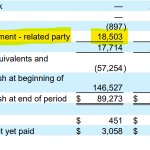
Not to be confused: the cash flow statement also shows $18.5M received from PowerCo in Q3 under their collaboration agreement. Because Volkswagen is a QS shareholder, these payments are recorded as a capital contribution, not as revenue or billings. They are now tied to milestones, including the delivery and validation of cells, with a total cap of $75.4M for the program. Q3 billings: what the shareholder letter says, and what it doesn’t.
$9.8M in customer billings this quarter, from both automotive and new markets. They mix development activities, partner payments and cell shipments.
Two firsts worth noting: the first billings under the Honda agreement, and the first billings from the defense and aerospace unit (QSAS).
QS doesn’t break billings down by customer or unit, so there’s no way to know how much came from Honda or QSAS.
Not to be confused: the cash flow statement also shows $18.5M received from PowerCo in Q3 under their collaboration agreement. Because Volkswagen is a QS shareholder, these payments are recorded as a capital contribution, not as revenue or billings. They are now tied to milestones, including the delivery and validation of cells, with a total cap of $75.4M for the program.


$QS Q3 letter: Bullish quarter in my point of view
Production: the Eagle Line, inaugurated in February, is fully operational and producing increasing volumes of QSE-5 cells. It has become the workhorse of customer engagement, with samples turning into billings. Building on that progress, QS announced a 100 MWh line with Germany’s Muehlbauer, described as the first commercial-scale mass production of QS cells. Muehlbauer’s engineers evaluated the Eagle Line processes on site in San Jose and developed enhancements for mass production. The line targets data centers and defense/aerospace, with production starting in 2028. With Murata, Corning and Muehlbauer, QS says it now covers the entire production flow toward GWh scale. The letter doesn’t explicitly confirm the H2 output doubling targeted last quarter.
Automotive: first billings from Honda under the development agreement announced in June, and a new agreement signed with a global leader in mobility manufacturing. QS is also aligning its work with PowerCo to bring it onto a long-term platform beyond QSE-5, including other applications like data centers and robotics. The goal is to bring all automotive customers onto a common technology platform, to be detailed on November 11 at the Kyoto symposium.
Defense and aerospace: a market estimated at up to $75B by 2030. After a first shipment to a major US defense prime in Q2, QS now cites QSE-5 samples shipped to defense, aviation and telecom customers, and the unit recorded its first billings this quarter. Defense customers are facing restrictions from foreign governments on buying advanced batteries. QS highlights cells made in America, with no dependency on Chinese suppliers of equipment or graphite. The company joined an Atlantic Council roundtable in Washington in September on battery supply chains and national security.
$QS announces a new 100 MWh cell production line for AI data centers, aerospace and defense.
To build it, QS is partnering with Muehlbauer Group, a German automation specialist, as its cell assembly equipment provider. Muehlbauer evaluated the Eagle Line processes and developed enhancements to take the technology to mass production. Start of production is targeted for 2028.
According to Muehlbauer’s CEO, the Eagle Line proved QS’s technology is ready to scale to the next level. Siva Sivaram describes a partner able to take QS to gigawatt-hour scale.
A few orders of magnitude, my own calculations: with QSE-5 cells at about 19 Wh, 100 MWh means about 5 million cells a year. For data centers, that’s enough for roughly one 1 GW AI campus a year, with 140 kW racks.
What it changes:
Non-automotive markets now get their own line, on top of the PowerCo license for automotive.
The timing matches the industry’s: SemiAnalysis sees battery racks arriving in late 2028/2029.
Data centers are listed first in the announcement.
To watch: how the line is funded, where it will be built, and the first customers that will justify these volumes.


Ken Griffin on the AI bubble:
“GPUs, like airlines, have a very low marginal cost to run. […] The moment you have overcapacity, pricing goes into freefall.”
On the fiber parallel: “We built more fiber than we had demand for, and the price of telecommunications just went straight down.”
Then he applies the pattern to compute: “If we reach a point where the provisioning of GPUs exceeds demand for GPUs, marginal pricing will actually go into freefall. And that really upends all the investment assumptions that people are working with today.”
On older chips: “There’s people that are earning extraordinary pricing on GPUs that are 5 or 6 years old. That probably doesn’t persist for another 5 or 6 years.”
His verdict: “ThereKen Griffin on the AI trade:
“I think this market is actually experiencing people doing research.”
For 2 years: “I’m just going to buy them all. I’m going to buy the hyperscalers. I’m going to buy the chip companies. I’m going to buy businesses that make things I’ve never even heard of five years ago in Korea and Taiwan and in Japan.”
“And now we’re reaching a point where people are becoming more discerning. We are seeing extremely high margins in DRAM and MLCCs in areas where there are real supply constraints. But people are now starting to look out two years, three years. How long is this going to last?”
“GPUs, like airlines, have a very low marginal cost to run. […] The moment you have overcapacity, pricing goes into freefall.”
In 2000: “We built more fiber than we had demand for, and the price of telecommunications just went straight down.”
“If we reach a point where the provisioning of GPUs exceeds demand for GPUs, marginal pricing will actually go into freefall. And that really upends all the investment assumptions that people are working with today.”
“There’s people that are earning extraordinary pricing on GPUs that are 5 or 6 years old. That probably doesn’t persist for another 5 or 6 years.”
“There’s almost certainly bubbles within this moment in time. Any radical transformation of our economy is generally intertwined with a bubble.”
“I remember back in 1999, 2000 and the metrics that we used to value internet companies. Some of these internet companies had pretty fanciful business models. But I just wish I had kept my Amazon stock from that moment in time.”
“The companies that are on the other side of that bubble are the market leaders for decades to come.”
$QQQ $NVDA $MU $NBIS $AMD


$QS reports Q3 tomorrow after the close (call at 5pm ET / 2pm PT).
What I'll be watching
🚀 What could send the stock higher
– Eagle Line: proof of scalability across the three metrics that matter. Uptime (core tools already >90% in Q2), throughput (cell output targeted to double in H2) and yield, which QS has never disclosed
– A named partner for QSDC or QSAS, concrete feedback on the interest at OCP, or progress on spec-in with NVIDIA or Google
📉 What could send it lower
– A delay or vague messaging on the Eagle Line ramp
– Adjusted EBITDA guidance ($250M -$275M loss) raised
– A capital raise or ATM usage
– Any sign of slippage on the PowerCo program, now reset to deliverable-based milestones through Q2 2028
👀 Also on my list
– Customer billings ($10.8M in Q2)
– Liquidity ($859M at end of Q2) and cash runway
– Next phase of the Honda partnership
– Progress with the new auto OEM that received cells in Q2
– Larger-format cells and the 2026 tech roadmap
– Sample volumes shipped across all three verticals
The Eagle Line remains my main thread.

BullRush retweeted
$QS: 🚨Mplus Moves Closer to Supplying Key Equipment to US Solid-State Battery Maker
Company developing assembly equipment and validating mass-production processes with @QuantumScapeCo
According to industry sources on Oct. 20, Mplus has developed assembly equipment for QuantumScape’s solid-state batteries and is conducting validation for mass production.
Beyond expanding its own manufacturing facilities, QuantumScape is pursuing a licensing business that would allow other companies to use its battery manufacturing technology. It has signed a technology licensing agreement with PowerCo covering battery production capacity of up to 85 GWh.
QuantumScape is also considering outsourcing production line operations to external companies. It is reportedly holding related discussions with South Korean battery manufacturers. If its manufacturing technology expands to external production facilities, Mplus could secure additional equipment orders, having developed machinery tailored to QuantumScape’s processes.
thelec.net/news/articleView.…
