

Just a country bumpkin. I'm here mainly to follow and read threads from those I appreciate with a Ketogenic lifestyle focus.
🇺🇸
Joined October 2021
- Tweets2.1K
- Following95
- Followers243
- Likes1.6K





Pinned Tweet
MY PLAN OF EXECUTION (July 29, 2025 – Present)
Since turning things around on July 29th, 2025, I’ve built a simple, non-negotiable daily routine based on consistency, data tracking, and progressive overload. Here is the exact blueprint I follow:
1. NUTRITION PROTOCOL: Therapeutic Carbohydrate Restriction (TCR)
• Carb Limit Strategy: Maintained strict <50g net carbs daily to drive the initial 170 lb. weight loss (currently testing carbohydrate tolerance up to 135g–140g net carbs daily for maintenance).
• Focus: Whole animal protein, quality whole-food fats, low-carb cruciferous vegetables, and fresh berries.
• Core Foods: Ground beef, Angus tri-tip & chuck, baked skin-on chicken (breasts, legs, wings, drumsticks), Pacific cod, shrimp, eggs, Tillamook/Fage 5% Greek yogurt, sour cream, avocado, cheese, broccoli, cauliflower, and fresh berries (strawberries, blueberries, blackberries, and raspberries).
• Daily Protein: 200g–250g total.
• Leucine Threshold: 3.0g–4.0g per main meal to trigger and sustain muscle protein synthesis.
• Sweeteners & Liquids: Stevia, allulose, monk fruit, Splenda, heavy cream, and unsweetened almond milk.
2. ACTIVE PHYSICAL RECOVERY: YMCA Aquatic Dumbbell Sessions
• Frequency: Morning sessions, Monday through Saturday.
• Duration: 30 to 60 minutes per session.
• Routine: Chest-deep pool walking using dual-foam Water Gear aquatic dumbbells for 360-degree upper-body and core resistance with low joint impact.
3. THERMAL CONDITIONING: Dry Sauna Therapy
• Frequency: Daily post-workout at the YMCA.
• Heat Target: 180°F to 182°F.
• Duration: 30 to 60 minutes per session for cardiovascular recovery and muscle repair.
4. STRENGTH & RESISTANCE TRAINING: Planet Fitness Circuit
• Frequency: Minimum 3 days per week.
• Focus: Full-body machine resistance for joint-safe progressive overload and muscle retention.
• Key Machines: Seated leg press, hip adduction, shoulder press, bicep curls, seated rows, triceps press, and lat pulldowns.
5. CARDIOVASCULAR CONDITIONING: Stationary Bike & Arc Trainer
• Frequency: Minimum 3 days per week.
• Stationary Bike: 5-mile baseline ride at Level 8–9 resistance.
• Cybex Arc Trainer: 20-minute sessions at 19–20 incline and 67–70 intensity level.
6. FUNCTIONAL OUTDOOR MOVEMENT: Trail Hiking
• Setup: Shoreline and nature trail loops using Hoka footwear and adjustable trekking poles.
• Goal: Sustained endurance, terrain adaptability, and core stability (e.g., Cooper Creek perimeter hike).
7. METRIC LOGGING & DATA TRACKING
• Cronometer App: Daily logging of macros, micros, and leucine totals.
• Fitbit Charge 6: Continuous tracking of daily movement and heart rate metrics.
• Weight Loss Pace: Steady target of ~1.1 lbs per week.
• Lab Guardrails: Quarterly self-ordered complete blood panels.
8. DAILY SUPPLEMENT REGIMEN
• Triple Strength Omega-3: 3 soft gels daily (= 3,600 mg Fish Oil providing 2,160 mg active EPA/DHA Omega-3 fatty acids).
• Vitamin D3: 1 soft gel daily (5,000 IU) for immune, bone, and metabolic support.
• Vitamin K2: Bronson K2 (MK-7) to direct calcium to bones and support arterial health.
• Magnesium Glycinate: 1,000 mg daily for muscle recovery, nervous system support, and sleep quality.
• Collagen Peptides: Vital Proteins Collagen Peptides powder daily to support joint, tendon, and connective tissue integrity.
THE RESULTS SO FAR:
• Health Marker Breakthroughs: Reversed insulin resistance and fully eliminated all blood pressure medication as blood pressure levels normalized.
• Total Weight Lost: ~190 lbs. lost to date!
• Monthly Volume: ~80+ miles tracked every month across hiking, pool walking, biking, and Arc Trainer sessions.
RECAPTURING QUALITY OF LIFE THROUGH METABOLIC HEALTH
Beyond the numbers on the scale or the metrics logged in an app, the true victory of restoring metabolic health is the radical transformation in daily quality of life. Reversing insulin resistance and coming off blood pressure medication isn't just a clinical achievement—it is the functional freedom to live fully without physical limitations.
Regaining metabolic flexibility means waking up with sustained, steady energy rather than fighting chronic fatigue. Most importantly, it means having the physical capacity, joint resilience, and stamina to create lasting memories with my grandchildren. Whether it's hiking, shopping together or taking trips to amusement parks, walking miles across the grounds from rope-drop to late night, and keeping up with them every step of the way without feeling too exhausted, sore, or sidelined is something money can't buy.
At 69 years of age now, restoring this foundation has given back true independence, long-term vitality, and the priceless joy of being fully present for the people who matter most. By choosing consistency every single day, the real reward hasn't just been losing weight—it has been reclaiming an active, vibrant, and deeply fulfilling life.
@BiggestComeback
@TuitNutrition
@BenBikmanPhD
It's all connected.
3 John 1:2 prays that our physical health prospers right along with our soul.
Reclaiming metabolic health, restoring cellular energy, and building daily physical stamina isn't just a physical achievement, it is bringing the body into alignment with a thriving spirit.
When metabolic function and physical strength are restored, the body can finally carry out the full vitality of the soul.
Country_Bumpkin retweeted

Muscle is the largest consumer of glucose in the body, and it stays responsive to insulin only as long as we use it.
Within a few days of inactivity, even healthy, lean people become measurably insulin resistant. One week of immobility can raise insulin resistance sevenfold, and after a few weeks of it, the insulin resistance can linger for weeks after the person is moving again.
The single-leg cast studies show how local this is. Put one leg in a cast and leave the other free, and within days the immobilized leg becomes about half as insulin sensitive as the active leg. Same person, same blood, same insulin, same meals. The only difference is whether the muscle is working.
Inside the unused muscle, inflammatory signaling ramps up, and the muscle starts making more ceramides, lipids that directly interfere with insulin signaling. The resting muscle effectively creates its own insulin resistance.
This matters most with age. Each injury, illness or hospital stay brings a burst of insulin resistance and lost muscle, and older adults rarely regain all of it. Over the years, those losses stack up, leaving less muscle to handle every meal that follows.
The good news is that the effect works in both directions. Breaking up long periods of sitting every 20 minutes or so, even with brief muscle contractions, blunts the glucose response to a meal.
If one immobilized leg can lose half its insulin sensitivity in days while the other leg stays fine, it's clear that muscle contraction is one of the most important regulators of insulin sensitivity we have.
🤖 Made with AI

Terrific Tuesday, Peeps!
This post may not be for everyone. Some of you don't struggle with your weight or physical conditioning 😉
Some do and might need a little encouragement.
Quick reminder that consistency works, and you can enjoy every single step of the journey along the way if you set your mind to it.
I've lost 190lbs since July 29, 2025, by utilizing a combination of low-carb whole foods (focused on 200 g to 250 g a day protein) and resistance training as I started losing the weight.
I'm going on 70 years old.
What happened yesterday is a frequent occurrence lately. I Got a knock on my office door from an old trucker buddy I hadn't seen in three years.
He stepped back and blurted out that he didn't even recognize me. Said if it wasn't for my face, he wouldn't have known who I was because my whole-body structure is completely different.
Moments like that are awesome reminders of how far 66 weeks of steady execution can take you.
This hasn't been about keeping my head down or suffering through a grind. I've been loving the process, living life to the fullest, and enjoying the ride every single day while putting in the work.
Trust the process, enjoy the journey, and keep showing up! The benefits are fantastic!
P.S. the pic of me and grandson is from Disneyland Space Mountain last week.
@TuitNutrition
@BenBikmanPhD
@drjenunwin
@garytaubes
@BrianWiley_
@BiggestComeback
@lowcarbGP
@DoctorTro
🤖 Made with AI


🏋️♂️ Smashed today’s workout!❤️
Not bad for a 69 year old man who could hardly get off of the recliner a little over a year ago. Committed myself to a lifestyle change have lost approximately 190 lb and at my age am building muscle and stamina.
Took care of the full circuit today, from weights to cardio, and finished it off with some well-deserved recovery.
Feels good to get it all done! 💪✨
Here’s today's breakdown:
Strength Circuit 💥
Seated Leg Press: 250 lbs
Hip Adductions: 175 lbs
Shoulder Press: 90 lbs
Bicep Curls: 110 lbs
Seated Row: 200 lbs
Triceps Press: 175 lbs
Pulldown: 130 lbs
Cardio Finish 🏃♂️🚴♂️
Arc Trainer: 20 min | 2.69 miles | 353 kcal (Incline: 19 / Level: 67 / 8.1 MPH avg / 128 BPM avg HR)
Stationary Bike: 5 miles | 22 min (~13.64 MPH avg speed / ~185-220 kcal estimated)
Recovery 🌊🔥
Pool Walking: 30 min (with aquatic dumbbells resistance)
Sauna: 30 min at a nice 182°F 😅
Time to refuel! Hope everyone is having an active weekend! Let's keep after those goals! 👊🙌
#WorkoutRoutine #FitnessJourney #KeepMoving #SweatSession #StrengthAndCardio #PlanetFitness #RecoveryIsKey
This morning I hiked 8.32 miles around this reservoir. The trail was pretty steep and narrow in many parts.
It was definitely a test of where I'm at in my physical conditioning right now. I ain't gonna lie, there were parts of the trail where my knees and feet were barking at me LOL.
But hey, I did it!
69 year old dude, 190 lbs down in 62 weeks!
When you go from morbid obesity, chronic pain, and a sedentary life to reclaiming your mobility, dropping nearly 190 pounds, and getting your strength back, the excitement is off the charts.
You feel like you’ve found the cheat code to life, and the natural instinct is to talk about it, read about it, and stay plugged into communities that share that same drive.
I’m fortunate because my wife has been incredibly supportive and accommodating in cooking the way I need to eat to stay on track.
It’s easy to get so wrapped up in the momentum, the data, and the wins that you forget not everyone is living in that same headspace. I certainly wasn’t for decades, so I can’t expect anyone else to share that same obsession or focus.
The real balance for me isn't about the food on the plate per se, it’s about managing my own enthusiasm. It’s making sure I stay fully committed to my goals and connected to the low-carb community, while keeping home a place of normal connection, mutual respect, and quiet gratitude for the support I get every day.
Still learning and finding that balance every step of the way.
Have a great day!
@TuitNutrition
@BiggestComeback
@drjenunwin
@BrianWiley_
@DoctorTro
@lowcarbGP
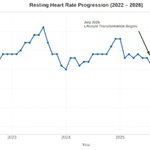
The data doesn't lie. Over the past 61 weeks (since starting on July 29, 2025), I’ve been focused on putting in the work—consistent conditioning, lifting, pool sessions, and dialing in my nutrition.
My Fitbit resting heart rate went from averaging 71 bpm down to 57 bpm. That's over 20,000 fewer heartbeats every single day. Proof that it’s never too late to rebuild your engine and rewrite your health trends!

Birthday Workout Routine – September 26, 2026 (69 years old)
Strength & Resistance Circuit (3 sets each):
Abdominal Machine
Biceps Curl Machine
Chest Press
Hip Abduction Machine
Leg Extension
Leg Press
Seated Row Machine
Shoulder Press
Triceps Extension Machine
Cardio & Aquatic Conditioning:
Upright Stationary Bike: 5.0 miles (~23 minutes)
Pool Walking: 30 minutes with aquatic dumbbell resistance
Recovery:
Sauna Session: 30 minutes at 182°F
Finished off with delicious bacon 🥓 and eggs 🥚
Not bad for an old dude who could barely get off of the recliner and 190 lbs heavier 14 months ago 😉
@BiggestComeback
@BrianWiley_
@drjenunwin
@TuitNutrition

This summary perfectly encapsulates where I was metabolically 14 months ago.
I was essentially ignorant of the biological/physiological mechanisms driving my obesity, lack of willpower, energy and overall zest for life.
You see, my doctor never explained any of this to me. His standard advice was, "eat less and move more." And in the interim, there was a consistent effort to get me on a statin drug and to keep me on BP meds.
Then, it was like a lightbulb was switched on when after a major knee injury and being sick and tired of being sick and tired with my physical condition, the pain drove me to look for true solutions.
Thankfully, the Lord led me to those who were able to explain to me what was driving the condition and what the solution was for me.
Sometimes pain serves a useful purpose in our lives. However, I can testify that shame is not nearly as useful though.
The Flawed Foundation:
How 65% Carbs Fueled a Metabolic Crisis
When federal dietary guidelines urged Americans to fill 55% to 65% of their daily calories with carbohydrates, they normalized flooding the body with over 300 grams of glucose every single day.
To manage that relentless sugar load, the pancreas is forced into overdrive, pumping out massive amounts of insulin to clear glucose from the bloodstream. This state of hyperinsulinemia can rage on for years—or even decades—masking severe cellular damage behind standard lab work.
Most people rely solely on routine Fasting Blood Glucose or HbA1c tests, but these are lagging indicators. The body will churn out excessive insulin to force blood sugar down, keeping basic lab tests looking completely "normal" while internal metabolic dysfunction deepens.
That describes where I was at for decades to a T.
To catch insulin resistance early—long before Type 2 diabetes takes hold—you have to look at the markers that measure insulin dynamics directly:
Fasting Insulin: Measures baseline insulin levels; elevated levels signal that the pancreas is working overtime even without food.
HOMA-IR (Homeostatic Model Assessment of Insulin Resistance): Calculates the relationship between fasting glucose and fasting insulin to assess cellular insulin sensitivity.
Kraft Prediabetes Profile or Oral Glucose Tolerance Test (OGTT) with Insulin: Tracks both glucose and insulin responses over 2 to 3 hours following a glucose load, exposing hidden hyperinsulinemia that single fasting blood draws miss.
Triglyceride-to-HDL Ratio: A simple lipid panel metric where a high ratio strongly correlates with underlying insulin resistance. I had never heard of anything like this before until I watched a YouTube video posted by Ben Bikman.
By villainizing healthy dietary fats and pushing cheap, subsidized grain commodities, low-fat guidelines created a structural blueprint for chronic high insulin, directly laying the groundwork for today's widespread epidemics of obesity, insulin resistance, and metabolic disease, including type 2 diabetes.
Here's what I did:
To lower fasting insulin and restore metabolic flexibility, the body must transition from relying on a continuous supply of glucose to burning stored fatty acids and ketones for fuel. Minimizing frequent insulin spikes gives the pancreas a rest and allows insulin levels to return to baseline.
Here are the core dietary principles and macronutrient adjustments required to achieve that shift:
Core Dietary Principles
Prioritize Whole-Food Proteins
Mechanism: Muscle tissue is the body's primary "sink" for glucose disposal. Adequate whole-food protein provides essential amino acids to preserve lean muscle, triggering strong satiety signals without causing the massive, prolonged insulin elevation caused by refined carbohydrates.
Focus: Anchor meals around high-quality protein sources like lean beef, poultry, pork, eggs, wild-caught seafood, and dairy. Aim for a distinct protein dose at each meal to trigger muscle protein synthesis.
Restrict Net Carbohydrates
Mechanism: Digestible carbohydrates are the primary macro driver of insulin release. Dropping net carb intake starves the excess glucose supply, forcing circulating insulin levels to fall so body fat stores can finally be unlocked for energy (lipolysis).
Focus: Eliminate refined sugars, grain-based foods, flour, and ultra-processed starches. Shift carb budget toward fibrous, non-starchy vegetables, leafy greens, and minimal low-glycemic foods.
Incorporate Whole-Food Fats for Energy
Mechanism: Dietary fat triggers almost zero insulin secretion compared to carbs and protein. Substituting refined starches with healthy fats provides steady, sustained energy without stalling fat oxidation.
Focus: Emphasize fats from whole foods—such as avocados, extra virgin olive oil, butter/ghee, nuts, and the natural fats present in quality meat and fish.
Eliminate Ultra-Processed Seed Oils and Added Sugars
Mechanism: Industrial seed oils (high in oxidized omega-6 fatty acids) paired with simple sugars generate chronic low-grade inflammation and mitochondrial dysfunction, accelerating insulin resistance at the cellular level.
Focus: Avoid products containing high-fructose corn syrup, added sugars, and refined vegetable oils (soybean, corn, canola, cottonseed).
Eliminate Snacking Between Meals
Mechanism: Every single time you consume calories, insulin rises to direct nutrients. Grazing throughout the day keeps insulin chronically elevated. Spacing meals allows insulin levels to drop back to baseline between eating windows.
Focus: Stick to 2 or 3 complete, nutrient-dense meals per day without eating in between.
Following this pattern has led to a massive 190 lbs. loss in 60 weeks, along with restored mobility and a focus on protecting and increasing my muscular and skeletal frame.
I understand that not everyone needs to lose 190 lbs. But perhaps you need to lose 30, 40 of even 100 lbs. Maybe you're dealing with chronic tiredness or nagging physical pain and inflammation.
It could be, just maybe, what I myself am now recovering from, after discovering this explanation, could be part of the solution.
I owe many thanks to those tagged in this post. Your tireless work for so many years in this area of life is so appreciated.
@BenBikmanPhD
@TuitNutrition
@BiggestComeback
@DoctorTro
@DominicDAgosti2
@lowcarbGP
@garytaubes
@BrianWiley_
@drjenunwin
@drericwestman
The physical transformation is real. I've now lost 184 lbs in 58 weeks. I'm 20 lbs away from my marrying weight in 1978 🙂
@TuitNutrition
@drjenunwin
@lowcarbGP
@BenBikmanPhD
@BrianWiley_
@DoctorTro
@garytaubes
@Chris

Standing at the trailhead, looking up at a 200-pound mountain, it’s easy to feel overwhelmed by the sheer scale of the climb. Every step requires intention, every mile demands discipline, and there are no shortcuts to the top.
Today, looking back down the ridge, 180 pounds of that elevation are underneath my boots.
That’s 90% of the entire summit behind me.
Climbing this far hasn't been about rapid, reckless ascents. It’s been about establishing a solid, repeatable footing, fueling the body with purpose, prioritizing lean muscle and metabolic strength, and making decisions that make the next mile sustainable.
There are only 20 pounds left to reach my personal summit. The air might feel a little different up here, and the final stretch requires patience, but the foundation is built, the routine is dialed, and the rhythm is steady.
Just 10% left to go. Time to finish the climb. 📷 📷
On July 29, 2025, I stepped up to make a stand at 420 lbs and to reverse a downward spiraling trend in my life.
Today, July 29, 2026, I weighed in at 246 lbs.
The scale tells part of the story, but the real victory is continuity.
For 365 straight days, the focus hasn't been chasing a random daily number, it's been about showing up every single day, eating real food, putting in the work at the gym, and trusting the process.
That relentless consistency is what drove complete metabolic repair from the inside out—rebuilding my blood work, energy, and strength. The 174 lbs dropped is just the byproduct of a lifestyle shift that is here to stay.
Phase 1 established the habits and proved the model works.
Today, Phase 2 begins. The target over this next year isn't just reaching 220 lbs or hitting a 195 lb ultimate goal—it's about staying locked into the daily process that makes those numbers inevitable.
Year 1 proved what daily consistency can build.
Year 2 is about keeping the foot on the gas and living it. 👊🔥
I figured I would create a post which covers my 1-year TCR lifestyle transformation which I began 365 days ago. I am thrilled with the progress I have made and am excited for year 2.
July 2026 Lab & Progress Snapshot
Weight & Physical Progress
• Starting Weight (July 2025): 420 lbs
• Current Weight: ~246 lbs (~174 lbs lost in 365 days)
• Goal Weight: 200 lbs by Dec 31, 2027
Glycemic & Metabolic Control
• HbA1c: 5.5% (Normal / Optimal)
• Fasting Glucose: 92 mg/dL (Normal)
• Fasting Insulin: 7.6 µIU/mL (Optimal, <10 µIU/mL)
• HOMA-IR Score: 1.73 (Insulin Sensitive, <1.9)
Inflammation & Systemic Health
• hs-CRP: 0.4 mg/L (Low Risk / Minimal Inflammation, down from >10.0 mg/L)Lipid Profile & Bikman Score
• Triglycerides: 75 mg/dL (Normal)
• HDL Cholesterol: 55 mg/dL (Normal)
• TG / HDL Ratio (Bikman Score): 1.36 (Optimal, <1.5)
• Total Cholesterol: 303 mg/dL
• LDL Cholesterol: 230 mg/dLOrgan Function & Electrolytes (CMP)
Kidney & Liver Function
*Creatinine 0.75 mg/dL | BUN 22 mg/dL | eGFR 98
• Liver Function: AST 14 U/L | ALT 13 U/L | Total Bilirubin 1.0 mg/dL | Alk Phos 35 U/L
Electrolytes: Sodium 139 | Potassium 4.7 | Calcium 10.2 | Chloride 103 | CO2 30
Vitamin D (25-OH): 43 ng/mL (Optimal)
Why My "High" Cholesterol Numbers Need Context
If you only look at two numbers on my latest lab panel—Total Cholesterol (303 mg/dL) and LDL (230 mg/dL)—a standard lab algorithm flags them in red.
But in the context of Therapeutic Carbohydrate Reduction (TCR), rapid weight loss, and heavy physical training, those numbers tell a very different story.
When you fuel your body primarily on fat and drop 174 lbs in a year, your liver relies on lipoproteins (LDL) as energy transport vehicles to move fuel where it needs to go.
To evaluate true cardiovascular and metabolic health on a low-carb lifestyle, you have to look at the entire picture:
Triglycerides: 75 mg/dL (Low circulating fat)
HDL Cholesterol: 55 mg/dL (Protective)
TG/HDL Ratio (Bikman Score): 1.36 (Indicates large, buoyant, non-dense LDL particles and high insulin sensitivity)
hs-CRP: 0.4 mg/L (Virtually zero systemic or vascular inflammation)
Fasting Insulin: 7.6 µIU/mL & HbA1c: 5.5% (Rock-steady glycemic control)
High LDL in an environment of high inflammation, high triglycerides, and elevated insulin is a red flag.
But high LDL paired with a 0.4 hs-CRP, a 1.36 TG/HDL ratio, and single-digit insulin reflects an active, highly efficient energy transport system operating in a quiet, uninflamed body.
Context is everything!
I owe many thanks to @BenBikmanPhD for educating me about IR and its root connection not only to obesity, but a host of other metabolic maladies. His plethora of social media posts and podcasts buoyed me early on in this journey, and for that I am very thankful to God for placing his message and voice in front of me, along with so others in this space.
Thank you all!
@BenBikmanPhD
@garytaubes
@LowCarbBeast
@TuitNutrition
@DoctorTro
@realDaveFeldman
@BrianWiley_
@drjenunwin
@lowcarbGP
@BiggestComeback