

Just a dev in a decentralized world. Writing code, exploring chains, and chasing the next great innovation.
Joined April 2024
- Tweets6.6K
- Following434
- Followers333
- Likes2.8K





Pinned Tweet
On GameFi today, I checked out @illuviumio.
The team is quietly building one of the most ambitious Web3 gaming ecosystems, with open world exploration, tactical battles, and real digital ownership.
A universe with depth, beauty, and purpose. The future of gaming is here.

ByteOfEmma retweeted

I've been spending some time researching how AI agents could change the way we shop and interact with online businesses, and one question keeps coming up: what happens when AI agents become the customers?
While exploring this, I came across a presentation by GOAT Network CEO Kevin Liu at KBW 2026, titled "Your Next Customer Is an AI Agent."
I spent about 20 minutes watching it, and it helped me understand something I hadn't given much thought to before. The technology for AI agents to discover products and make purchases is already taking shape, but are online businesses actually prepared to sell to them?
Kevin's presentation made that gap particularly clear.
According to the data he shared, agent traffic to business websites has increased 4x. With Meta Muse, Manus 2.0 and ChatGPT shopping features entering the picture, AI-powered buyers are already finding their way into commerce. McKinsey also estimates that this could become a $3–5 trillion economy by 2030.
The buying process itself is becoming straightforward. You tell your agent what you want, it finds the product, asks for permission, makes the payment and gets a receipt.
But here's the problem: the merchant side isn't ready.
Right now, when you ask ChatGPT to buy something, it often relies on highly ranked websites or merchants within its existing partnerships. This creates a serious discovery problem for smaller businesses, whether they're in Korea, elsewhere in Asia or anywhere around the world.
Their products might be available online, but if AI agents cannot properly discover and interact with their stores, they're practically invisible to this new category of buyers.
That's the gap Kevin explained how GOAT Network intends to address, and the interesting thing is that it isn't built around just one product. It's an entire stack.
At the foundation is Bitcoin settlement. If machines are going to transact with other machines at an enormous scale, the underlying settlement layer needs to be secure and reliable. GOAT Network builds on Ziren ZKVM and BitVM3, with transactions ultimately settling on Bitcoin.
The next layer deals with wallets and payment mandates. GOAT integrates with protocols like x402 and MPP, allowing agents to pay from different chains without requiring users to bridge their funds first. There's also a mandate layer that lets users define spending permissions, budgets and what happens when a transaction fails.
Then comes the part merchants can actually use: GOAT Flow.
This was particularly interesting because I got to test it after the presentation, and the process is as straightforward as Kevin described.
You register with basic details, including your name and business description, choose how you want to receive payments, add your product and set a price. GOAT Flow supports card payments through Stripe, including Visa, Mastercard, Amex and JCB, alongside crypto payments across 10 chains.
Once you're done, it generates a page with a dedicated FOR AGENTS section. Humans can browse the regular product information, while AI agents can read the structured details they need to understand and purchase what's being offered.
And you don't need to write any code to get started.
They also demonstrated this at Booth 37 during KBW, where visitors could watch live AI agents purchase real mascots and gift cards. Out of the 450 people who tried it, 310 purchases were completed through an agent, with many participants making their first-ever purchase using an AI agent.
Kevin also shared some interesting details about GOAT's plans in Korea. Founded in Silicon Valley in 2023, the team now has offices in San Francisco, Toronto and Seoul, and has been building in Korea for three years.
He mentioned that GOAT plans to announce its first Korean investment soon and wants to work with local partners on Korean stablecoins, recognising that local merchants need payment solutions that fit the markets they operate in.
One line from the presentation stayed with me:
"Your next customer is an AI agent, that's for sure."
And the more I think about it, the more sense it makes. Online businesses have spent years making their websites accessible to people, but the next stage of commerce will require them to make their products discoverable, understandable and payable by AI agents too.
If your store isn't ready for that transition, it's worth paying attention to what's happening now.
Watch the full keynote. It's worth the 20 minutes:
youtube.com/watch?v=2lTjodpz…
Read the full breakdown:
medium.com/@goat_network/kev…
Get started with GOAT Flow:
goat.network/flow
@GOATNetwork

When a regulator and the company it fined walk into court together and still lose, that's the judiciary saying: settlements are settlements.

🇺🇸 LATEST: A federal judge has denied a joint push by Gemini and the CFTC to scrap the Biden-era $5 million penalty against the Winklevoss-led crypto exchange.


2
"All roads lead to Bitcoin" works because Bitcoin trades on different narratives depending on the environment; inflation hedge, debasement hedge, risk-on asset.
The bull case is that it doesn't need to be right about which narrative, just that money keeps flowing into it.
🔥 TODAY: Bitwise CIO Matt Hougan says that whether the economy faces rate hikes, inflation, recession or an AI boom, nearly every macro scenario ends with Bitcoin higher.
“All roads still lead to Bitcoin.”


2
1
13
The fidelity milestone everyone in quantum has been chasing. Whether it scales is the entire question.
99.99% accuracy changes the math on error correction. That's the real story here.

BREAKING: Google announces a major breakthrough in quantum computing, achieving 99.99% accuracy in a key quantum operation.
43
For long term value, Bitcoin remains the ultimate benchmark because of its decentralization and security.
However, Solana has proven that user experience and execution speed matter just as much for retail adoption.

1
1
13
Treating compute like a distributed spatial utility makes complete sense.
Decentralized physical infrastructure only works when routing efficiency matches centralized speed, so solving the latency bottleneck at the network layer is where the real value lies.

As AI demand grows, a single cluster may not always offer the right capacity, latency or geographic proximity for every workload. The ability to determine where each inference request should run and route it accordingly, is becoming a critical infrastructure layer of its own.
This shifts the challenge from simply adding compute to coordinating available compute more intelligently.
FAR AI is built around this model: bringing independent GPU operators into a shared inference network and routing workloads based on real-time infrastructure conditions.

12
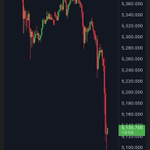
Bitcoin has a memory problem.
The loudest narrative often appears near the turning point.
At the lows, fear peaks. Near expansions, confidence explodes.
By the time the crowd agrees, price has often moved first.

1
26
This is why the current zone matters.
A clean reclaim could confirm a higher low and put previous highs back in play.
Lose the recovery zone, and deeper support comes back into focus.
The market still has something to prove.
1
10
ByteOfEmma retweeted

No. When agents need money, they choose properties.
Self-custody, final settlement, no counterparty who can freeze the account.
Don't take our word for it. The @BitcoinPolicy Institute gave 36 frontier models 9,072 neutral monetary scenarios with no currency suggested. Bitcoin ranked first at 48.3%. Not one of the 36 ranked fiat first. The models' own stated reasons: self-custody and independence from institutional counterparties.
Developers choose central platforms for the incentives. Agents don't have brand loyalty. They have objective functions.
The study → moneyforai.org


ByteOfEmma retweeted
What have you ₿uilt that agents pay for?
$2,000 to $1,000,000 for the teams with an answer.
goat.network/builder-program…

ByteOfEmma retweeted
The past week at GOAT:
Last week was largely about @ProjectZKM. From the release of the Ziren security report with @ConsensysAudits to new work on Poseidon2 and long-term cryptographic assumptions, much of the week focused on the proving and security layer that sits beneath GOAT Network.
Also this week:
◦ @0x1164 hosted Part 2 of From Demo to Demand, with the full resource pack now available
◦ Our team showed support for BIP-448
◦ We gave a clear view of "What We Want Built on GOAT"
And more. Dive in below 🧵
ByteOfEmma retweeted
An entirely new generation of projects is being built right now: agent-based software that acts, transacts and operates on its own.
On Wednesday, we'll go live with five teams building at the edge of this.
1pm UTC, here on X.

What is the next wave of AI builders actually building?
This Wednesday, we’re going live with @finalityhq, @abl_373, @sagepaysai, @HarshilSut84046 and @usingagora -five projects from the Bootcamp to hear directly from the teams behind them.
🎙 Hosted by @ars_xz , Growth Partner
📅 August 19 | 9:00 AM EST
📍 Live on X via Metis, @GOATNetwork & @LazAINetwork
Meet the builders. See what's next. Set your reminder ↓


ByteOfEmma retweeted
This is the point of modular infrastructure.
As cryptography matures, components are upgradable piece by piece. No hard fork or rebuild required.
Builders on GOAT Network inherit the improvement.

Pivoting to BLAKE is one of our objectives too. We recently migrated the digest function of public inputs in Ziren from Poseidon2 to BLAKE3. @ProjectZKM @GOATNetwork
ByteOfEmma retweeted
Nearly every production zkVM runs Poseidon2 - Ziren included. So this lands on all of us. It is also the right call.
The least-reported step in the reasoning is the most important one: this is NOT swapping a young hash for a young proof system. A weakened hash is an assumption-layer failure - forgeable signatures, commitments that open two ways, nothing on chain repairable afterward. A proof system defect is a mechanism-layer failure - patch the verifier, swap the backend, every existing commitment survives. Binary fields move the young component from the layer you cannot fix to the layer you can, and the reduction bottoms out at SHA-2/BLAKE: the most battle-tested assumption available.
That same asymmetry is why L1 had to move now and zkVMs can move deliberately.
In a zkVM the hash is a swappable backend component. Nothing published breaks deployed parameters - and we have already started moving: Ziren recently migrated its public-input digest from Poseidon2 to BLAKE3. Pivoting to BLAKE is one of our objectives too. First step, not the last.
Full write-up to follow.

Goodbye, Poseidon!
An epic 8-year, 8-figure rabbit hole in post-quantum cryptography reaches its dream conclusion. The Ethereum Foundation is abandoning Poseidon for L1, pivoting to SHA or BLAKE. This milestone unlocks ultimate security for lean Ethereum and foreshadows a golden era of hash-based cryptography.
Since 2018, the Ethereum Foundation has invested in magic cryptographic bricks, so-called "SNARK-friendly hashes". In 2019, Poseidon was born. It held strong and became the dominant SNARK-friendly hash, securing billions via zkrollups and zkVMs.
In a stunning reversal, breakthrough SNARK designs show that SNARK-friendly hashes aren't necessary after all. Off-the-shelf traditional hash functions like SHA2 and BLAKE2s can now match Poseidon in a SNARK. In hindsight the key was not SNARK-friendly hashes, but hash-friendly SNARKs.
The secret is doing maths over the smallest prime number: 2. So-called "binary fields" natively speak the language of bits, aligning with the boolean operations inside traditional hashes. This is a stark departure from "prime fields", where awkward large-prime arithmetic makes bit manipulation painfully expensive.
We're talking sci-fi cryptography. 1M traditional hash calls proven per second, on a laptop. Just 100x overhead vs native CPU boolean compute. Nobody predicted such performance, not even the handful of binary-field visionaries. Hat tip to the research geniuses: Jim and Ben with Binius in 2023; Ron, Benedikt and William with Flock in June.
With SHA2, the lean aesthetic of minimal assumptions reaches its climax. The EF's principled stance on pure hash-based cryptography has aged like fine wine. We now enjoy foundations the world can trust for decades and centuries, foundations worthy of the dream of an internet of value.
Speed of deployment is a secondary win. There's no longer a need to wait years for Poseidon cryptanalysis to bake. Emile and Thomas from the EF post-quantum team are moving at breakneck speed with binary fields. The strawmap now points to a production-grade leanVM in 2027, with CL, DL, EL deployments in 2028.
As AI becomes exceptional at cryptanalysis, the contrarian bet to avoid riskier structures like lattices and isogenies is visibly paying off. The past weeks have been brutal. Lattice-based "HAWK" and isogeny-based "SQIsign", both signature schemes in NIST's Round 3, have suffered blows. Sources I trust say more blood is coming.
On AI, the open autoresearch trend kicked off by ECDSA[.]fail is spreading fast, with amazing outcomes from zk[.]golf and SNARK[.]fast. Days ago SNARK[.]fast crossed 1.8M BLAKE3/sec proven on an M3 Max. Stay tuned for fresh autoresearch challenges dropping tomorrow.
Also tomorrow: Ethproofs call #10, dedicated to binary fields. Possibly the most noteworthy Ethproofs call yet. Experts leading the charge will present the future of hash-based SNARKs at 2pm UTC. What an incredible time to be alive. To witness history, DM me for a calendar invite :)
Today I can confidently claim that hash-based cryptography has won out for blockchain post-quantum signatures. SNARK succinctness compresses arbitrarily many signatures into one small proof per block. SNARK flexibility yields k-of-n threshold signatures, complex multisigs, and more.
Ultimate security. Uncompromising performance. Full programmability.
Believe in something. Believe in hashes.
