


Chris_cd_ retweeted

Days after Israel’s Mossad director dropped in at CIA HQ to demand more war on Iran, CNN’s Jake Tapper reports that US intel has uncovered a “disturbing” Iranian plot to detonate a dirty bomb in DC
Tapper is among the few who take this hoax seriously
Chris_cd_ retweeted

That said, my stance on the talks of removal of Presidential Term Limits and the 3rd term being championed by some of our comrades within the UPND.
Mr. President @HHichilema , lets protect the legacy you have spent years building. The legacy of opposition resilience.


Chris_cd_ retweeted
The most amazing part of US government/media war propaganda is that they never bother to change the script a little bit, no matter how many times it's been used over decades. They even use the same media outlets to act as helpful stenographers.


New US intelligence indicates that Iran is developing plans to target senior Trump administration officials by detonating a so-called dirty bomb or a chemical weapon in Washington, DC, even as officials continue to debate whether Iran can or will attempt to execute such a plot, according to seven US officials. cnn.it/4903mvK

Chris_cd_ retweeted

The West portrays Iranians as bloodthirsty terrorists while conveniently forgetting its own record of slaughter.
Western forces bombed Yugoslavia, Iraq, Afghanistan, Syria and Libya — while Washington supplied Saddam Hussein with chemical weapons that burned, poisoned and killed Iranian children.
The US killed more than 100 innocent schoolgirls in Minab, yet still lectures Tehran about barbarism.
So, who is really the terrorist?

Chris_cd_ retweeted

The problem with us having allowed Israel to push us into this war—getting us on board with killing the supreme leader & members of his family, plus Iranian civilians—is that it now makes it difficult to discern whether reports like this are yet another Israeli information op or instead a legitimate threat from an adversary.
Is Iran actually plotting revenge or a deterrence strike in the event we hit them again? Are they capable of such an attack?
I’m approaching this report with a great deal of skepticism, particularly because this sort of plot doesn’t match the pattern of escalation we’ve watched Iran execute over the past year+.
In fact, it better mimics the Israeli method of “throw everything at the wall & see what sticks,” where they flood the zone with fabricated threats and “exquisite” intelligence to incite panic and urgency that in turn forces the escalatory U.S. military response they seek.
Their next step will likely be to launch an attack on Iran, which will of course get us drawn back into conflict when Iran inevitably retaliates.
Until we change our relationship with Israel & meaningfully restrain them, we’ll continue to be at their mercy—getting dragged perpetually into war with Israel’s neighbors on Israel’s whim. That is not the behavior of a sovereign America.

New US intelligence indicates that Iran is developing plans to target senior Trump administration officials by detonating a so-called dirty bomb or a chemical weapon in Washington, DC, even as officials continue to debate whether Iran can or will attempt to execute such a plot, according to seven US officials. cnn.it/4AtlJoK

Chris_cd_ retweeted

Prince Mashele exposes @Our_DA for what it truly is;
1. A white party created as an insurance plan for English and Jewish, not necessarily Afrikaners.
2. They think they can fool 2 groups of South Africans, the blacks and Afrikaners. They don’t like both groups, but subtly fool them by adding a sprinkle of them into their leadership structures.
3. @Our_DA doesn’t trust blacks, that’s why they went all the way to Western Cape to get @helenzille as a @CityofJoburgZA mayoral candidate.
4. @Our_DA will never lead @GovernmentZA as a majority because they’re not sincere to especially blacks and their material living conditions.
5. @Our_DA destroyed 2 types of black leaders; those they made like @MmusiMaimane and @LindiMazibuko for example and those they didn’t make like @HermanMashaba.
6. @Our_DA must stop being condescending and start being sincere towards other national groups if they want to break their 20s percentage ceiling.
Chris_cd_ retweeted

Marandi: "The number of Chinese people who were slaughtered by the Japanese armed forces is far larger than the Holocaust. But I think because Japan is an ally of the West and China is not, that this is diminished."
Chris_cd_ retweeted

Wow. Yes. We were not crazy. It really was worth losing work. And it is good to speak out right at the beginning.

Veteran BBC journalist Stephen Sackur has called out the corporation’s “impartiality” on Gaza as unsustainable and one-sided.
He highlighted how the BBC was ordered from the top to attach a terrorism label every single time it reported Palestinian death tolls from the Hamas-run health ministry.
Yet when Israel officially denied bombing apartment blocks full of women and children, or striking a food kitchen and killing aid workers, the BBC never mentioned that Netanyahu is wanted by the International Criminal Court for war crimes.
“BBC’s notion of impartiality is a difficult thing to sustain… it’s difficult for me to justify the BBC talking so rigorously about impartiality and then reporting that way.”
“The BBC manual doesn’t talk about morality.”
This is what “both-sides” journalism looks like when one side is an occupying power with an ICC arrest warrant and the other is under bombardment.
Chris_cd_ retweeted

🎥 Fox News anchor Martha MacCallum opened her interview with Ahmed Moor, a Palestinian American Democratic socialist challenging Sen. John Fetterman (D-Pa.) in the 2028 primary, by asking whether he's "very pro-Hamas." She then pressed him on it twice more. Moor, who was born in a Gaza refugee camp in 1984, before Hamas existed, called it "a bad faith question." He said he backs equal rights for Palestinians and Israelis and sanctions on Israel modeled on the 1986 anti-apartheid law against South Africa. "The Israelis have too much influence in our foreign policy," Moor added.


Chris_cd_ retweeted

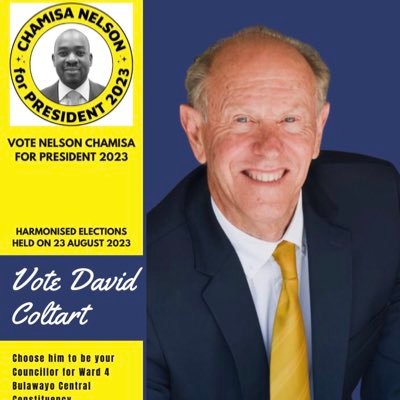
Them yesterday: Nelson chamisa is not opposing Zanu PF term limits extension. He was paid money.
Them today: Chamisa opposes term limits in Zimbabwe but he is silent on proposed changes in Zambia.
😂😂😂😂😂😂😂😂😂😂

Chris_cd_ retweeted

#TotalEnergiesAFCONQ2027 - Result: Zimbabwe 3-0 Equatorial Guinea
#SSFootball
Chris_cd_ retweeted

Maswanhise made it three… and couldn’t contain himself! 🤩🇿🇼
#TotalEnergiesAFCONQ2027
Chris_cd_ retweeted

Spare a thought for all whose houses were demolished and whose children are being soaked in the rains
It is such levels of wickedness that pushes many to demand justice and oppose governments and their policies
The timing of these demolitions is always meant to inflict maximum pain.
Chris_cd_ retweeted

BREAKING NEWS: The ANC Youth League is calling for all government officials, including members of Parliament who are over the age of 65, to resign and allow the youth to take over. It says President Cyril Ramaphosa must be the last president who is a pensioner.
Chris_cd_ retweeted

#WATCH
🔴"We played well against DR Congo, but we did not win. We did not play well against Equatorial Guinea in Cameroon, but we got a point, so in football it is all about results," Warriors captain Marvelous Nakamba said.
Chris_cd_ retweeted

I am against unconditional aid for foreign militaries.
I am for unconditional aid for our kids.
Chris_cd_ retweeted
Imagine if more African Presidents respected term limits and retired from politics in the way Harry Truman and Nelson Mandela did?
Imagine if Museveni, Mugabe and sadly so many others did this how different Africa would be now?
We must never give up on our dreams and imagination.

On the morning of January 20, 1953, Harry S. Truman completed his presidency and walked out of the White House. He had no motorcade. He had no government office to move into. He had no staff. He had no pension.
The Former Presidents Act, which would later provide salaries and offices to retired American presidents, did not yet exist. He had, in the way of regular income, an army pension from his service as a captain of field artillery in the First World War. The figure was one hundred and twelve dollars and fifty-six cents a month. He boarded a train at Union Station with his wife. He went home to Independence, Missouri.
Truman's approval rating, at the end of his presidency, was approximately thirty-two percent — among the lowest exit ratings of any modern American president. The Washington press, which had been hostile to him for most of his second term, treated his departure as a relief. The general assessment, both inside the city he was leaving and in much of the country, was that the Truman presidency had been a failure.
He went home and lived the way the country had told him to live.
He bought a Chrysler that summer. He and Bess got into the car themselves. They drove from Independence to Washington, then to New York, then back. A former president of the United States was filling his own gas tank at roadside stations, signing autographs for the truck drivers who recognised him.
The Pennsylvania state police pulled him over for driving too slowly. He answered his own phone in Independence. He responded personally to thousands of letters from people who wrote to him. He walked the streets of his hometown every morning at a pace fast enough that the reporters who attempted to follow him sometimes had to jog to keep up.
He did not write bitter memoirs. He did not give interviews attacking his successor. He did not, in any visible way, attempt to rehabilitate his own legacy. He simply continued, in Independence, Missouri, to be the same person he had been before the presidency.
While he was doing this, the things he had done as president began, very slowly, to look different from how the country had judged them at the time.
He had signed Executive Order 9981 in 1948, ending racial segregation in the United States armed forces — a step he had taken over the explicit opposition of substantial parts of the American military establishment and the Southern wing of his own party, on the grounds that he had decided it was the right thing to do.
He had committed the United States, through the Truman Doctrine and the Marshall Plan, to actively contesting Soviet expansion in postwar Europe and to underwriting the reconstruction of the Western European countries that had been destroyed in the Second World War.
The Western Europe that exists today — the long arc of peace and democratic stability that has held across that continent for more than seventy years — exists in significant part because Truman, in the late nineteen-forties, decided that the United States was going to pay to rebuild it.
He had also, in November of 1945, become the first president of the United States to formally propose to Congress a system of national health insurance.
The proposal had been savaged. The American Medical Association had denounced it, in language that became standard for the period, as socialised medicine. The conservative coalition in Congress had buried it. Truman had reintroduced it. It had been buried again. By the time he left office in 1953, the failure to pass any version of the national health insurance plan was, in Truman's own subsequent description, one of the most personally bitter defeats of his presidency.
He went home anyway. He walked the streets of Independence. The years passed.
On the thirtieth of July, 1965, twenty years after Truman had first asked Congress to pass a national health insurance plan, President Lyndon B. Johnson did something American presidents had not previously done at the signing of major legislation. He did not sign the bill in Washington. He did not stage the ceremony in the Rose Garden or the Oval Office or any of the standard locations the executive branch typically used for these events.
Instead, he flew Air Force One to Kansas City, drove to Independence, Missouri, and signed the bill in the auditorium of the Harry S. Truman Presidential Library.
The bill was the Social Security Amendments of 1965. It created Medicare and Medicaid.
Truman, then eighty-one, sat next to Johnson at the signing table. When Johnson rose to speak, he looked at the former president seated beside him and said, in the recorded opening lines of his remarks that day:
"The people of the United States love and voted for Harry Truman, not because he gave them hell — but because he gave them hope."
Johnson then signed the bill into law and handed the signing pens to Truman and Bess. He described Truman, in the speech that day, as the real daddy of Medicare.
Six months later, in January of 1966, Johnson returned to the Truman Library for a separate ceremony. He brought with him the first two Medicare cards that had been issued by the United States government. The first card was assigned to Harry S. Truman. The second was assigned to Bess W. Truman. Johnson handed them to the couple personally.
The man who had been told, twelve years earlier, that the work was wasted had received the legal evidence that the work had not been wasted. It had simply needed to wait.
Truman lived for another six and a half years after that. He died on December 26, 1972. He was eighty-eight years old. The most recent surveys of professional American historians rank him, depending on the methodology, somewhere between the sixth and the ninth most effective president in the country's history.
He had not been a different person at the end of his life than he had been when he took office. He had not campaigned for the rehabilitation of his own reputation. He had not softened his record to win approval. He had simply stayed, after his presidency, in the small Missouri town he had come from, and let the work he had done continue to mean what it had meant when he had done it.
History has a long memory.
It had taken, in his case, about twenty years for it to begin to catch up.
