

Husband | Dad | aerobatics-HAM-diver-scientist | Van’s RV | Space Medicine | Moonbase 2035 or Bust. (I’m not really Claudius Ptolemy) אמת קושטא
Joined December 2017
- Tweets4.9K
- Following345
- Followers606
- Likes12.4K







Claudius retweeted

If you find yourself near Starbase Texas I highly recommend taking a ride on the Rio with Big D Adventures @DWaggerby – at Port Isabel, TX

Claudius retweeted
@DWaggerby Big D Adventures is the adventure company for all things starship – at South Point, TX


Claudius retweeted
The dragonfly from earlier in a better light and angle. Absolutely stunning. – at Port Isabel, TX

Claudius retweeted
I'd say dead, but even they get to come out to play on All hallows eve. – at Port Isabel, TX


Claudius retweeted
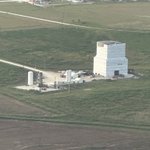
Didn’t realize I’d caught the new Massey’s site in my Thursday flyover of Starbase, but there it is!
Makes sense with the GigaBay nearing completion-this is how they will keep up with the increased test volume.
@NASASpaceflight

Claudius retweeted

Scaling manufacturing and nailing end-to-end reuse infrastructure is the only way to achieve high cadence. Seeing the 'Jacklyn' ship paired with New Glenn hardware in Florida makes it real. Excited to see them fly! 🚀

"Launching at a high cadence requires a connected system - one that manufactures vehicles at scale, prepares customer payloads efficiently, supports reliable launch operations, and quickly returns reusable boosters to service. We are building that system here in Florida." Read more from our Senior Vice President of Operations Ian Richardson. bit.ly/4hRC0xe

Claudius retweeted
Decades of deep human spaceflight experience right where the hardware comes to life. Massive congratulations to Stephen Cash on taking the helm at @NASA_Marshall. Huge responsibilities ahead for America's propulsion and deep space hub! 🚀

.@NASAAdmin Jared Isaacman has named Stephen Cash as the new director of NASA Marshall. Having served for several decades at Marshall in key roles across major human spaceflight programs, Cash brings a deep experience to the agency and to our center’s missions.
More: go.nasa.gov/4hRgSHr

ALT This is a potrait of newly named NASA Marshall Director Stephen Cash. Credit: NASA
Claudius retweeted
Spot on. Affordability and market demand—not just having a dozen vehicles—are the real keys to LEO access. Keeping NASA focused on pure exploration, X-planes, and deep space milestones while letting private capital handle commercial niches is the right playbook. 🚀✨

There are certainly rumblings about the future of astronaut access to low Earth orbit. This often comes up in the context of commercial space stations, where having access to LEO is obviously imperative, but affordable access is really the distinction. In that respect, it doesn't matter how many certified crew vehicles you have, Dragon, Starliner, or otherwise, if the architecture inherently creates a cost barrier that limits demand.
Take a look at where we are at today..
- There are five outstanding and proven SpaceX Crew Dragon spacecraft still under contract for missions over the next few years.
- There are several Boeing Starliner crewed spacecraft that will be modified to address the design issues identified in the PIT report and ultimately certified to launch on ULA's Vulcan. We hope to launch the next uncrewed mission in the months ahead.
- Lockheed's Orion, of which I saw the crew and service modules for Artemis III, IV, and V under development this past Friday at KSC. That visit in itself deserves a long-form post about how hard the NASA teams, our contractors, and partners are working to meet this moment for the nation. That amazing fact aside, we have Orion. It is a crew-certified spacecraft and will fly in LEO next year. Certainly not a vehicle optimized for LEO or affordability, but the capability is there. There is no doubt a long future ahead for Orion on a variety of launch vehicles and paired w/ transfer stages.
- Both SpaceX and Blue Origin are developing landers to return astronauts to the lunar surface, not to mention affordably delivering mass to the Moon in support of the Moon Base. These programs also have a path to support future crewed LEO needs, be that inherent in their existing plans or paired with other spacecraft.
- Other companies, including Blue Origin, have made public comments about internally funding the development of additional crew vehicles. If there is really considerable demand for even more astronaut access to LEO and beyond, then private companies should be able to build the business case and raise the capital. NASA will always be willing to provide subject matter expertise and test facility support for these types of company-funded efforts. And if the capability is there at a lower cost, it is hard to imagine we wouldn't become a customer.
In short, there has never been a time when the United States had so many crew-certified spacecraft options available, with others in development, and so much investment moving in the direction of lower costs to make missions to Earth orbit, the Moon, and beyond more routine.
I would just caution folks against jumping right to NASA funding the business case for every good idea--like why not one more crewed spacecraft. The more NASA gets spread out trying to make everyone happy, the fewer exciting moments we will have like Artemis II and Roman, the fewer X-planes we will put in the sky, and the fewer astronauts we can afford to fly frequently to Earth orbit. The longer programs, like America's long overdue return to the Moon, take to achieve. We need to stay focused on delivering on the national space policy as quickly, safely and affordably as possible.
Claudius retweeted

What an amazing day! Thank you @LACyberTruck and @LouisianaModelY and your awesome family!!
It was absolutely perfect!! Y’all are the best! 🚀✨❤️🐊

A heart felt thank you to everyone that attended the Bayou Gumbo Launch. We hope all of you received a healthy dose of Louisiana! Thank you you @JEHazel75 for the video at Starbase, LA!


Didn’t realize I’d caught the new Massey’s site in my Thursday flyover of Starbase, but there it is!
Makes sense with the GigaBay nearing completion-this is how they will keep up with the increased test volume.
@NASASpaceflight


Claudius retweeted

NSF's Astro Live show is coming up, with Roman's Assistant Research Scientist Rebekah Hounsell and Aerospace Engineer Elaine Stewart as we explore the engineering that made the mission possible and the science that Roman hopes to uncover.
youtube.com/live/96X9Tt47ND0


