

I build the AI behind Parker AI. And the agents that build it.
Canada
Joined October 2011
- Tweets12.9K
- Following935
- Followers6.2K
- Likes21.2K








Pinned Tweet
星舰基地之旅完美闭环,上个月看到的星舰33号-V2已经化成绿光了,两周的时间在德克萨斯州看了一堆大家伙,航天飞机,航空母舰,土星五号,猎鹰九号,登月指挥中心。有在星舰基地看到了超重助推器和星舰,发射架,老马和员工住的简易板房,星虫一号等等。还很幸运遇到超重助推器转移,近在咫尺🙉太激动。
配上YMCA这首歌正合适,希望孩子们的未来是星辰大海 勇往直前🚀✨🌌

这几天在旅行,X上神热闹 又是马斯克“疯了”又是飞机炸了,我们从Ottawa出发当天也是飞机故障导致无法起飞 而且机械师休假来不了,我们果断换成其他航班才没耽误行程。这次德州之旅看了NASA休斯顿航空中心,土星5号火箭和航天飞机,印象很深就是航天飞机的每一块隔热片都有编号 都是专门设计的独有形状和大小(我猜马斯克会说 不需要那么麻烦 足够耐热 成本低 可反复用就行了😂),在当时确实是工程上的奇迹,那会儿电脑都没有,很多东西靠人算和想象。更重要的是,激励了几代人的太空梦,也推动了非常多的创新和技术发明。
这次全家来到starbase星舰基地,来这预期不高,顺利远远看看就行了。没想到,很幸运的在去星舰基地的路上遇到停在路口的星舰助推器和警察,拍了合影就前往星舰基地,之后带孩子去沙滩玩了俩小时。以为会夜里转移,没想到回去又正好遇到星舰助推器转移中。应该是7号 或者8号星舰,太震撼了,现场工作人员和警察都很友好,让我们在停车场停下 星舰会从我们面前开过去,注意安全。照片和视频无法形容,过去的那一刻 就像日食一样 天都黑了🤣。
我家儿子说 他想去火星城,我说十年后 人类可能正在忙着建设火星城呢,我们旅行可能坐的不是飞机是星舰了,小朋友觉得很酷,我觉得也是 没有比这个更酷 更让人激动和憧憬未来的事情了。人类进入星际文明,星辰大海。不管你信不信,这个未来已经来了,我希望快一些,我们除了温饱和各种问题去解决,星际探索真的很重要,这代表了希望,前往火星是第一步
星舰成本远低于土星5号,并且可回收,这么看 造1000艘完全可行,将来第一批去火星的可能是Optimus机器人🤔
all in马斯克🥸😎


Dalin Huang retweeted

Have you ever wondered why catching Starship is so much harder than catching Super Heavy, even though they both return to the same launch tower? 🔥
💡 The answer comes down to four major engineering challenges that make Starship’s recovery fundamentally different 👇
⚡ The first problem is shedding an enormous amount of energy
At hot staging, Super Heavy was traveling at roughly 5,800 km/h (3,600 mph). Starship, meanwhile, had to return from orbital speeds of roughly 27,500 km/h (17,100 mph).
That’s nearly five times faster. Because kinetic energy increases with the square of velocity, each kilogram of Starship at orbital speed carries roughly 22 times the kinetic energy of a kilogram of Super Heavy at separation.
That works out to nearly 30 million joules per kilogram.
Almost all of that energy has to be dissipated before Starship can safely reach the tower.
One option would be to use rocket propulsion to cancel out its orbital velocity. However, scrubbing off roughly 7.7 km/s of speed using Raptor engines alone would require a massive amount of propellant.
The rocket equation makes this approach especially punishing. Every extra kilogram of landing propellant has to be hauled into orbit first, dramatically increasing the fuel needed at liftoff.
Instead, SpaceX uses Earth’s atmosphere to bleed off almost all of Starship’s orbital velocity.
That saves an extraordinary amount of propellant, though it introduces another major hurdle.
🔥 Surviving extreme atmospheric heating comes next
As Starship plunges into the atmosphere at hypersonic speeds, powerful shock waves compress and heat the surrounding air to blistering temperatures.
Thousands of ceramic heat-shield tiles protect its stainless-steel structure from the intense heat.
Simply keeping those tiles attached isn’t enough, though. Superheated gas can seep into the gaps between them, risking damage to the underlying structure.
For Flight 15, SpaceX carried forward upgrades from Flight 14, including extra tile-retention hardware in vulnerable areas and redesigned curved tiles that reduce heating between adjacent tiles.
Because Super Heavy never reaches orbital velocity, its return doesn’t expose it to anything close to the same thermal stress.
And there’s another complication.
A heat shield that survives one reentry isn’t necessarily ready to fly again. Starship’s thermal protection system must eventually withstand repeated missions without major repairs or refurbishment.
That’s critical, since rapid reusability is one of the core reasons SpaceX designed Starship to be caught rather than discarded.
Yet surviving reentry still isn’t enough. Starship also has to arrive at the exact right spot.
🎯 Hitting a precise target from orbit raises the stakes even further
About 56 minutes before the catch, a single Raptor engine fired for just 10 seconds to initiate Starship’s return.
That brief deorbit burn wasn’t meant to eliminate orbital velocity. Instead, it nudged the spacecraft’s trajectory so atmospheric drag could take over the much larger job of slowing it down.
Starship then entered the upper atmosphere thousands of kilometers away over the Pacific Ocean.
From there, its four aerodynamic flaps controlled its orientation and fine-tuned the forces acting on the vehicle.
Super Heavy uses grid fins to steer during its return, but Starship’s flaps have to handle a far wider range of flight conditions.
As Starship decelerates from hypersonic through supersonic and down to subsonic speeds, its guidance system continuously adjusts its attitude and flight path.
The challenge is maintaining the right balance of altitude, speed, and trajectory while aerodynamic forces shift dramatically throughout reentry.
For Flight 15, the return corridor crossed sparsely populated parts of northern Mexico and South Texas.
Starship maneuvered around major population centers in the Rio Grande Valley, passed north of South Padre Island, headed offshore over the Gulf of Mexico, and made its final turn toward Pad 2 at Starbase.
Think about the guidance precision required.
A spacecraft returning from orbit must dissipate nearly all of its immense kinetic energy while threading a carefully controlled trajectory straight back to a single launch tower.
It also has to arrive at a low enough speed, in the proper orientation, and with enough propellant remaining to pull off the final maneuver.
That brings us to the most visually spectacular part of the entire recovery.
🚀 Executing the landing flip with pinpoint precision is the final test
Super Heavy approaches the launch tower already vertical, using its grid fins and Raptor engines to guide its final descent.
Starship comes in belly-first.
It has to rapidly swing its massive frame upright, stabilize its attitude, and align itself precisely between the tower’s mechanical arms.
SpaceX’s official Flight 15 timeline allotted just 18 seconds between the start of Starship’s landing burn and the catch.
During those 18 seconds, three sea-level Raptor engines ignite to kick off the maneuver.
The spacecraft rotates upright while its flight computers constantly regulate engine thrust and vehicle attitude.
The engines then step down from three to two, giving the vehicle finer control as it nears the chopsticks.
Finally, it transitions to a single engine for the last moments of descent before shutting down as the tower takes its weight.
Consider the coordination involved.
The guidance system must balance translation, rotation, thrust, and descent rate while positioning a massive spacecraft within a narrow capture envelope.
Unlike a conventional vertical rocket landing, Starship must first transition from an aerodynamically controlled, belly-first glide to an engine-powered vertical approach.
All of this unfolds within seconds, right after the vehicle has completed one of the most punishing atmospheric reentries ever attempted by a reusable spacecraft.
🧠 What makes SpaceX’s approach so ingenious is how seamlessly the entire recovery system works together
Trying to solve every phase of the return with rocket propulsion would carry a crushing propellant penalty.
Instead, SpaceX delegates the toughest parts of the recovery to systems purpose-built to handle them.
The atmosphere dissipates most of the orbital kinetic energy without consuming onboard propellant.
The heat shield protects Starship from the intense thermal loads of that deceleration.
The four aerodynamic flaps provide the control authority needed to manage its attitude, energy, and trajectory throughout atmospheric flight.
And the Raptor engines take over once aerodynamic control alone can no longer deliver the precision needed for the final catch.
That division of labor allows SpaceX to recover an orbital spacecraft without carrying enough fuel for an all-propulsive return.
Yet the engineering trade-off goes deeper than saving propellant.
SpaceX is shifting much of the cost of returning from orbit away from expendable propellant and toward reusable hardware built to endure extreme thermal and mechanical stress.
The potential economic payoff is enormous.
Cutting back on the propellant reserved for recovery frees up more of Starship’s mass capacity for useful payload. However, that advantage only becomes truly meaningful if the heat shield, flaps, engines, and other systems can survive repeated flights without extensive refurbishment.
That’s why catching Ship 42 is such a landmark milestone.
SpaceX has proven that its thermal protection, aerodynamic controls, propulsion, and guidance systems can work in concert to recover an orbital upper stage right at the launch site.
The next engineering hurdle is proving that the same spacecraft can do it repeatedly.
If SpaceX can bring Starship home, inspect it, refuel it, and launch it again without rebuilding major systems, the economics of getting payload to orbit could change dramatically.
That first catch proves the recovery architecture works. Repeated reflights will determine just how much of its economic potential SpaceX can unlock.
Dalin Huang retweeted

Made an edit to recap @SpaceX's historic 15th flight of Starship, which included the first-ever catch of the ship.
🚀
Dalin Huang retweeted

Ship 42 returns to Starbase, Texas for the first-ever Starship tower catch during Flight 15! I have dreamt of creating this image for years... and today it became real.
Congrats, SpaceX team!


就两个看法
比其他公司更早自动化 达到99%
解决1% long tail的人 去做专业的事

好文章👍
转译:《软件工程师现在该怎么办》
我听过有人说,软件工程师(SWE)要想保持竞争力,就得不断学习写代码和各种技术栈。我并不认同。
每发布一个新模型,这些纯技术技能的价值就会缩水一分。每天我都觉得自己越来越像个管理 AI 的产品经理,对深厚技术知识的需求则在不断减少。我原以为牢固的“技术护城河”早已干涸,现在给模型写一段用户故事作为提示词,效果甚至比一份严谨的技术方案还要好。工作所需的技能正在变得越来越不“技术”,而是越来越“人性化”。
有时候,看到 AI 正在解决我过去常做的那些难题,比如开发 SaaS 软件,我心里也挺失落的。过去,我非常享受埋头打磨一款应用、看着它一步步变成现实的成就感。眼睁睁看着自己辛苦学来的技能变得几乎一文不值,确实很打击人。开发 SaaS 应用曾经是个高门槛的难题,这也是我热爱它的原因。但现在它不再是难题了,所以我必须转向那些依然存在真正难题的领域。我需要把格局放得更大。
我最喜欢的书之一是《无穷的开始》(The Beginning of Infinity,注:知名物理学家戴维·多伊奇的科普哲学名著,探讨人类知识与进步的无限潜力),书中有个观点让我印象深刻:人类的创新没有尽头——“只要不违背自然规律,只要掌握了正确的知识,一切皆有可能。”每当我们创造出一项新事物,就会有成千上万种新的可能性随之诞生。计算机的发明淘汰了许多旧工作,但它最终创造出的新岗位要多得多。
AI 是一项了不起的创新,它赋予了我们做更多事情的能力,而这也要求我们换一种新思维。用我的旧思维来看,做一个 SaaS 应用就已经算大事了,但现在完全不是这样。如今开发一套复杂的企业级软件,甚至比五年前搭建一个简单的网站还要容易。所谓的“干大事”,意味着要在更宏大的尺度上去思考——国家级的、全球级的,甚至是宇宙级的。试想一下,如果你手下有一支 100 人的软件工程师团队,你能做出什么?如果是 1000 人呢?现在,我们只需花极低的成本就能拥有这样的生产力,所以我们绝不能再把目光局限于做几个 App 了。
作为工程师,我们还需要拓宽自己的能力边界。我们不能只盯着技术能力,而要跳出技术圈,去理解整个商业闭环:包括产品、市场营销和销售。
为了在当下保持不可替代性,我的做法是去学习那些 AI 帮不上忙的东西:产品定位、创造力、如何打动人心(delighting humans)、心理学、市场营销等等。这些属于“人的问题”,AI 永远无法独立解决,因为它们没有标准答案,也没有现成的测试集可供训练。AI 极擅长模式匹配(pattern matching),但它永远无法真正理解“身而为人”究竟是一种怎样的体验。而这,正是我们人类不可替代的价值所在,也是我正在加倍投入的方向。
Dalin Huang retweeted

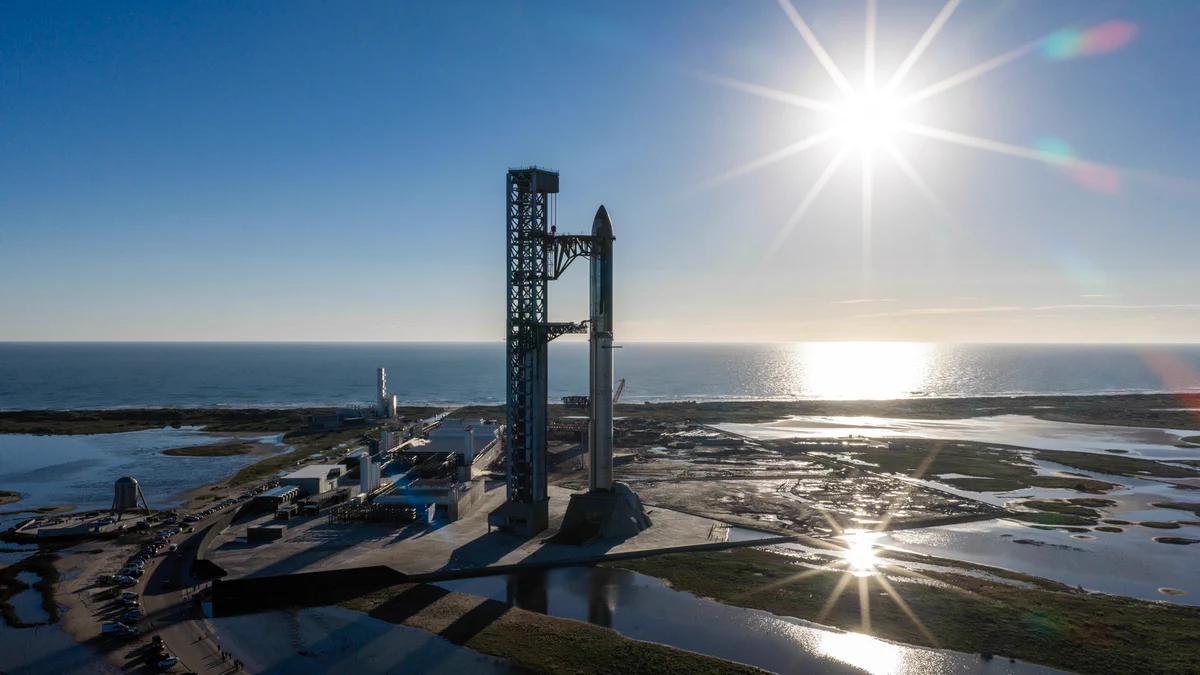
Watch Starship Flight 15
teapawt.org/i/broadcasts/2brajgZlO…


Dalin Huang retweeted

Introducing Grok Bot 1.0.
Bots can be shared and are more collaborative and capable than ever.


今天进山收拾度假屋
发现两颗树倒了?!
仔细一看Beaver河狸干的?🦫
一般临水砍树要申请许可的啊 笑死了😂
目前视野宽度提高了接近一倍
水边草丛可见河狸脚印和来时的路
好有趣 景观更宽阔了!


3
7
1,208