

Environmental physiologist • Professor of Sport Science • IFMGA mountain guide • Proud dad • Husband • Not necessarily in that order • RTs ≠ endor.
Ljubljana, Slovenia
Joined February 2013
- Tweets20.6K
- Following681
- Followers4K
- Likes18.5K






Tadej Debevec retweeted

Does generative AI dilute markets for human-created work?
In a new #SciencePolicyForum, researchers discuss how market dilution theory, which could affect AI use in science, requires conceptual clarity and empirical evidence: scim.ag/4eDnln9

ALT A black background displays a quote: "... this theory lacks a conceptually meaningful definition." Attributed to Samuelson et al. in white text.
Tadej Debevec retweeted

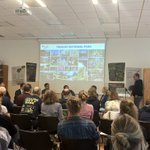
Fantastic to present at the Department of Molecular Medicine, University of Pavia 🇮🇹 yesterday & catch up with good friends & colleagues @dcturner93 @PorcelliSimone @andreapil8. Pavia is one of Europe's oldest universities and was home to Nobel laureate Camillo Golgi (1906).


Many thanks @peter__leo for your insightful talk on scientific and applied approaches to power profiling & durability in cycling and beyond! Was great to finally meet in person and keep up the good work! Rewarding days with @ProfCBuzzachera @Simone_Porcelli @GManferdelli @unipv


Always a pleasure @PorcelliSimone to enable proper sweat accumulation! They say it is good for you 😉 Thanks again for the invite and see you next year!


Tadej Debevec retweeted

Always excited to contribute to the Master in exercise physiology and exercise performance @unipv and meet new friends and colleagues @peter__leo.
Thanks @PorcelliSimone and @ProfCBuzzachera for the invitation 😊 – at Pavia, Lombardy
Heart Rate Variability DFA a1: From Lab to Consumer Exercise Prescription and Monitoring
ovid.com/jnls/acsm-essr/abst…


Tadej Debevec retweeted

The importance of this paper cannot be overstated.
The authors compared AI reviews with 134 reports written by carefully selected, paid human experts.
The results are impressive.
Not only AI received higher ratings across all seven dimensions assessed by an AI judge.
But even three former journal editors preferred AI reviews in 90% of the cases.
The potential benefits of AI reviews for scientific advance are getting enormous: faster and higher quality feedback, less reviewing work, more time for research.
We could even imagine journals run entirely by AI editors and reviewers. This could radically disrupt a publishing system that costs researchers considerable time and money. Let me say: some disruption would be welcome.
But there are also major concerns.
What happens when a few AI systems become gatekeepers across sciences?
They might increase average review while narrowing the range of ideas that survive.
This is particularly critical at the scientific frontier, where an important contribution may challenge the assumptions that existing research takes for granted.
And even worse: let’s not forget that, near the frontier, AI systems become more likely to hallucinate.
So they might embed errors at the very core of human knowledge.
A tsunami is coming.
And we’re not ready.
*
Paper in the first reply

New by Martin Burtscher & Benjamin Levine
Physical activity at moderate altitude: risk or benefit for the heart?
cdt.amegroups.org/article/vi…
Tadej Debevec retweeted

A practical guide to extreme weather events for clinicians
#BMJClimate
bmj.com/content/395/bmj-2026…

Tadej Debevec retweeted

The AIU has provisionally suspended reigning World and former Olympic champion, Peres Jepchirchir, after an out-of-competition sample, collected in Kenya prior to her recent Sydney Marathon victory, returned an adverse analytical finding for EPO. 1/2

Tadej Debevec retweeted

The entire UCI Sports Nutrition Project, including the position statement, is available Open Access.
Check it out in @IJSNEMJournal!

What a BIG splash our UCI Nutrition Position statement made in the November issue, within just 2 weeks of being released! 👏🏼🥳
A massive well done to our fantastic authors. If you haven’t already read the paper, check it out now!
🔗 doi.org/10.1123/ijsnem.2026-…


Tadej Debevec retweeted

🚨Apply to the JAPPL Editorial Fellowship Program🚨
This 12-month program is for postdocs and early career faculty with a research focus in applied physiology. Work 1:1 with an Editor to learn about the editorial process. Apply by November 20, 2026 at ow.ly/he0Q50ZXaKS.

