

Tracking how technologies become industries.
Joined December 2020
- Tweets17.8K
- Following737
- Followers9.2K
- Likes93.2K




ionq is now using its own quantum security technology to protect communications between its offices in switzerland and south korea. so that makes ionq its own customer. how hard was it to install? what does it take to keep running? every problem ionq finds and fixes now is one less problem for the next customer. ionq.com/blog/leading-with-p…
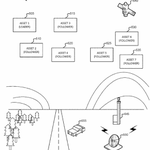
anduril's october 8 patent is about helping commanders understand and evaluate what autonomous machines want to do. its october 22 patent is about keeping those machines operating when equipment fails or gets destroyed. now put the two together. a drone gets shot down, the remaining machines need a new plan, and the commander needs to know what changed before approving the next action. ionq says it's actively collaborating with anduril, and this is where i'd want to see what quantum computing can contribute. can it help find a better plan under those constraints, fast enough for the commander to make a decision while it still matters?
drones are going to get shot down. communications are going to fail. equipment is going to break. the question is whether the mission falls apart when that happens. anduril's october 22 patent describes a system where autonomous machines can choose new leaders, redistribute tasks, and keep operating when individual machines are lost. if the lead drone gets destroyed, another can take over without the entire mission having to start over. i think that's a much bigger deal than making any single drone smarter. the goal is to build a force that can take losses and keep doing its job. @PalmerLuckey drive.google.com/file/d/1CJ1…

autonomous weapons are going to make decisions faster than humans can keep up with. anduril's october 8 patent tackles a critical question: how does a commander know what those machines are doing and whether they're following orders? the patent describes a system that uses AI to explain proposed actions and help operators evaluate them against mission requirements. suppose a drone recommends attacking a target that falls outside its mission restrictions. the commander needs to understand what the drone is recommending, why, and whether the action is authorized. if a commander doesn't know why a machine wants to attack something, he has no business approving the attack. drive.google.com/file/d/1kVQ…

chattanooga has an ionq quantum computer, a quantum network, and an electric utility with problems to solve. would love to see epb pick one problem and show us how it's solved today and whether quantum can do it better. even if quantum doesnt win, i'd want to see the results. forbes.com/sites/jonathanrei…?

i wish i could get the 10 best engineers from across ionq's companies into one room and ask them one question: what could you build together that nobody thinks is possible? i'd tell them you've got people who manipulate atoms, manufacture chips, connect quantum computers, and secure networks. forget the roadmaps and which company you came from. come back with something none of you could have built alone. i'd fund the craziest idea that doesnt violate the laws of physics and tell them to go build it.
same as it ever was. when $IONQ reports earnings on november 5, i'll be judging the company on three things: revenue, technology, and execution.
revenue: are customers paying, and is demand growing?
technology: are the machines getting better, and can customers do more with them?
execution: can ionq build, deliver, and support those machines faster and at lower cost?
a company can have great technology and still fail to build a great business. it can grow revenue and still struggle to deliver. and it can execute well on products nobody wants.
ionq has to get all three right. and each quarter, i want to see evidence that it's getting better at all three.

a faster quantum computer doesnt necessarily mean a faster answer for the customer.
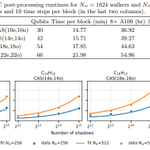
when scientists use quantum computers to study complex molecules, the quantum computer produces measurements that conventional computers still have to process. that processing can become a major bottleneck, even as the quantum hardware improves.
ionq researchers have developed a way to reduce that burden. for a calculation involving pentacene, they estimate the classical processing could take just over two days using eight nvidia a100 GPUs.
but those two days are only one part of the job. scientists still have to prepare the quantum calculation, run it, process the measurements, and turn the results into something useful.
the important number is the total time and cost of solving the chemistry problem. ionq's research addresses one bottleneck, but the customer benefits from how well the entire process works. arxiv.org/pdf/2610.03103


ionq hired kearney to help integrate acquisitions and understand what its future quantum computers will cost to build.
but buying companies and building a competitive advantage are two different things.
ionq has engineers designing quantum computers, manufacturing partners figuring out how to produce them, teams installing machines at customer facilities, and acquired businesses bringing in new capabilities.
there's a lot these groups can learn from one another. a manufacturing problem can change the next design. a difficult installation can make the next one easier. an acquisition can give customers a better product instead of another piece of software to manage.
someone has to make sure those lessons travel across the company. someone has to decide what changes, who makes those changes, and whether customers are getting something better.
how does ionq make these businesses more valuable together than they would be on their own? and who is responsible for making that happen?
kearney.com/about/your-story…
