Tracking how technologies become industries.

Joined December 2020
This is an absolutely fantastic write up and I believe every $IONQ investor should read it. Extremely well said
i've spent some time reading what fellow $IONQ shareholders are saying about the latest $2 billion offering. i understand the frustration. some of you have been invested in this company for years. you've watched the technology improve, the acquisitions accelerate and the ambitions grow. now you're looking at another financing that could significantly increase the share count, and you're asking a reasonable question: what are we getting in return? i've seen shareholders asking why ionq needs another $2 billion when its cash burn appears manageable. others are questioning whether acquiring SkyWater has changed the company's capital requirements. some want to understand how this financing fits with management's earlier comments about its financial position. others want answers about Superion specifications, customer deliveries and how much additional dilution shareholders should expect. i don't think these concerns should be dismissed as impatience. you can believe in ionq's future and still demand financial discipline from management. i've read the offering documents, and the first thing i want to understand is why ionq needs another $2 billion right now. the company expects approximately $1.99 billion in net proceeds. it's a serious amount of money. what does this additional capital allow ionq to accomplish that it couldn't accomplish with the resources it already has? which products, customer deliveries or manufacturing milestones will move forward because of this financing? there may be excellent answers, but shareholders deserve to hear them. management should explain what changed and why raising this money makes sense today. there's a meaningful difference between needing capital to execute an existing plan and choosing to raise capital because a new opportunity makes doing so attractive. then there's the financing itself. ionq is offering 20.5 million common shares, 29.5 million pre-funded warrants and 100 million additional warrants exercisable at $69.46 over seven years. the $40 offering price covers a share, or its pre-funded equivalent, together with two of those additional warrants. participating investors aren't simply paying $40 for a common share. they're also receiving valuable rights to purchase additional shares in the future. what alternatives did management consider? could ionq have raised the money without issuing so many warrants? shareholders deserve to understand why this was the best available deal for the company and its existing owners. according to the prospectus, ionq had approximately 408.9 million common shares outstanding before the offering. the filing projects approximately 429.4 million after the offering closes, before warrant exercises, or 558.9 million if all the warrants issued in this offering are exercised. these are projected figures, not shares that have already been issued. the offering is expected to settle on october 16. the final figure also doesn't include every other outstanding equity award or potential future issuance. if all 100 million new warrants exercisable at $69.46 are eventually exercised for cash at their initial strike price, ionq could receive approximately $6.95 billion in additional capital. but that money isn't guaranteed, and exercising those warrants would mean issuing another 100 million shares. shareholders deserve a clear picture of the entire capital structure, including outstanding warrants, equity compensation and potential future issuances. show us how the share count and the company's cash position change under different scenarios. dilution doesn't automatically destroy value. the money raised can create substantial value if management deploys it successfully. but building a larger company isn't necessarily the same thing as making each existing share more valuable. which brings me to where the money is going. the prospectus describes working capital, general corporate purposes and potential strategic acquisitions and partnerships. i understand why management wants flexibility. i don't expect ionq to disclose confidential negotiations or provide competitors with its internal spending plans. but $2 billion deserves a more concrete explanation. shareholders should have some sense of how management intends to balance investment in quantum computing, manufacturing, existing businesses and future acquisitions. and they should know what progress to look for. if the financing accelerates Superion, explain what gets accelerated. if it expands manufacturing capacity, explain what that capacity will accomplish. if it supports enterprise security, explain what commercial progress shareholders should expect. then come back every quarter and tell us what happened. what did we spend? what did we accomplish? what took longer than expected? i'm particularly interested in the questions shareholders are asking about Superion. they want specifications, delivery timelines and a better understanding of the work that remains. i understand that engineering schedules can change, and i'd rather have a credible timeline with clearly explained risks than a precise date management can't responsibly support. but there's a difference between demonstrating a technology, having a system ready for delivery and having a system accepted by a paying customer. management should explain where Superion stands along that path and whether this financing changes the timetable. the SkyWater acquisition deserves a closer look, too. owning a semiconductor foundry could be a tremendous advantage for ionq. it could give the company greater control over manufacturing, accelerate engineering feedback and improve the economics of producing quantum systems. but semiconductor manufacturing requires capital. equipment, facilities, maintenance, production capacity and working capital all have to be financed. what does ionq expect SkyWater to require over the next three years, and what will shareholders get for that investment? i'd also like to understand how the economics of owning the foundry compare with obtaining those manufacturing capabilities through outside suppliers. i'm not arguing that buying SkyWater was a mistake. i'm asking management to demonstrate the economic advantage of owning it. there's another detail in the prospectus worth acknowledging. when ionq acquired SkyWater, it inherited two material weaknesses in financial reporting controls that SkyWater had previously identified. one involved revenue accounting and access to its manufacturing systems. the other involved account reconciliations at its Fab 25 facility. ionq says it has implemented corrective measures, including new IT controls and integrating Fab 25's accounting processes into its own systems. but the company hasn't yet concluded that the weaknesses are fully remediated. the filing also says they haven't resulted in a material misstatement of ionq's financial statements. this doesn't establish that the acquisition is failing. but it illustrates something important about buying businesses. somebody has to integrate the financial systems, retain the engineers, make the sales organizations work together, preserve customer relationships and decide which products receive investment. all of that requires management attention. the acquisition announcement was the beginning of the story. the real test is whether owning SkyWater leads to better manufacturing economics, faster development cycles and products delivered to customers sooner. and that brings me to the acquisition strategy. ionq has completed its acquisition of SkyWater and agreed to acquire Elisity. the prospectus also says the company continues to evaluate additional acquisitions. i understand the strategy. buying manufacturing capabilities, engineering talent, established customer relationships and commercial distribution can be faster than building everything internally. but every acquisition competes with the opportunity to invest more money in the businesses ionq already owns. suppose additional investment in SkyWater could shorten manufacturing cycles and reduce production costs. what would another acquisition have to accomplish to justify taking priority? suppose Elisity could grow substantially faster with additional salespeople, engineering resources and distribution. why wouldn't ionq fund that opportunity first? these are hypothetical examples, but the decision is real. i'd like to know how de masi evaluates competing uses of capital, what returns he expects and what would make him walk away from an acquisition. the ability to say no to a deal is just as important as the ability to close one. the real test of an acquisition begins after the announcement. show us the customers won because two businesses came together. show us the products delivered faster, the revenue growth and the cost benefits. if owning these companies together creates more value than they could create separately, shareholders should eventually be able to see that in the operating results. and if an acquisition isn't producing the expected results, management should explain what it's doing about it. there's one more issue that deserves a serious answer. after this $2 billion, what would cause ionq to need additional financing? and what would have to happen for the company to fund more of its growth through the cash generated by its own businesses? i'm not expecting a company at this stage of development to become profitable overnight. but shareholders should understand the path. how much capital does management believe it needs to execute its current strategy, and what assumptions support that estimate? those assumptions matter, particularly if commercialization takes longer or acquisitions require more investment than expected. i also want to understand where management draws the line. there has to be a point where issuing more equity becomes too expensive, where an acquisition costs more than it's worth and where investing in the businesses ionq already owns becomes the better decision. access to capital is valuable. knowing when not to use it is valuable, too. i've seen people characterize concerns about dilution as impatience or a failure to understand the long-term opportunity. i don't think that's fair. you can believe quantum computing will become an enormous industry and still question the terms of a financing. you can support de masi's acquisition strategy and still want to know whether those acquisitions are producing returns. you can be excited about Superion and still ask when customers will receive their systems and how much it will cost them to use the technology. and you can believe ionq will become a much larger company while still caring deeply about how much of that company each existing share will represent. those questions are part of being an owner. i don't want ionq to abandon its ambition. i want the company to succeed. i want the technology to work, the products to reach customers and the businesses ionq has acquired to become more valuable because they're part of ionq. but i also want management to explain the financial decisions required to make that happen. de masi has demonstrated that he can raise money and buy companies. now i want to know whether he can make each share of ionq worth more because of those decisions. if i were sitting across from him today, i'd ask two questions. what changed that made raising another $2 billion the right decision now? and what are the three most important things you're going to accomplish with that money that you couldn't accomplish without it? i'd want answers specific enough that shareholders could revisit them a year from now and judge the results. i'm still interested in what ionq can become. that's precisely why i care about how management finances that ambition. the company has asked shareholders to believe in a very big future. it's reasonable for those shareholders to want to understand how much of that future they'll still own when it arrives. d18rn0p25nwr6d.cloudfront.ne…
2
2
54
5,625
Desmond retweeted
Cambridge University
@Cambridge_UniOct 16
The @IonQ Quantum Innovation Centre is now open at the Ray Dolby Centre! 💻 🔬 Marking a new phase of the University's strategic partnership with IonQ, the Centre will bring together researchers from Cambridge and IonQ across a programme of collaborative quantum research, all the heart of the @DeptofPhysics. phy.cam.ac.uk/news/first-fun…
17
44
3
252
17,893
$IONQ is buying Elisity for up to $1.3 billion in stock.💯 IonQ has quantum-resistant encryption but needed a way into enterprise security budgets. Elisity brings 100+ deployments, recurring revenue, revenue doubling year-over-year, zero churn, and relationships with the CISOs who signs off on security spend. Washington is already pushing federal networks toward post-quantum encryption. Enterprises will follow. Up to $150 million is earnout tied to performance, and a price collar caps the share count. That’s roughly 8% of IonQ’s market value for a growing customer base and distribution channel. A little dilution to step into a $10 billion-plus security market with customers already in hand.🎯 Hooyah!😃
9
21
3
173
10,534
$IONQ - The implications of Scott Millard's (@_SMillard) comments are profound. NVIDIA just told you exactly how quantum gets adopted at scale. The customer isn't just "who buys a quantum computer" anymore. It's also "who already runs AI infrastructure."
scott millard said something here that helped me understand the commercial side of the nvidia announcement: "for commercial customers whose stack already runs on ai infrastructure, quantum becomes part of what you run." the customer does not have to move its entire application to a quantum computer or build a separate workflow around the qpu. the application can keep running on the cpus and gpus it already uses. the part suited to quantum can run on an ionq qpu, then the result can return to the rest of the application. cuda-q orchestrates the workflow. maybe this is how quantum actually gets adopted. the customer keeps using the computing environment it already has. the qpu becomes another processor inside it.
6
11
97
7,681
$IONQ just sold a Superion 256 to FIU. 256 qubits. Live on campus in Miami by the end of 2027. Florida's first on-premises trapped-ion quantum computer, and FIU becomes IonQ's flagship academic partner in the state. Universities don't buy quantum computers just for the press release. They buy 'em to train students, win research grants, and kickstart the next generation of quantum users learning on IonQ hardware. And when those students get hired, they'll want to work on what they trained on. Quantum moving out of the lab and onto campus is exactly the kind of development we expected to see with the #SixthWave underway.
7
14
158
6,339
Triple Alpha’s gate-level language Hydrogen acts as an intermediate representation, allowing developers to put the commands defined in instruction sets to use. This video shows how to use a restricted form of Hydrogen to target supported quantum hardware. youtube.com/watch?v=Y9lqFMsJ…
1
2
1
18
2,121
$IONQ take it from one of the smartest in game definitely give my guy @DesFrontierTech a follow for all things IONQ🔥🔥🔥🔥
when a customer buys two ionq products, is the second one actually making the first one better, or is ionq just getting good at selling them multiple things? i think there's a difference between a platform and a catalog. at some point 1 + 1 has to be worth more than 2.
1
2
16
1,831
SkyWater買収完了を経て $IONQ は半導体関連銘柄へ。 クリス・ミラーの著書『半導体戦争』の一文にもある、『現代および将来の軍事戦略において「計算力」が勝敗を分ける決定的な要因になる』 いずれ分かる時が来るでしょう。どこの誰がそれを構築し支配しようとしているか。 必読です👍
read chip war. you start to realize the breakthrough is only the beginning. someone has to figure out how to make it, make a lot of it, and put it somewhere useful. quantum won't be any different. ionq is trying to do all three.
3
6
2
39
10,752
Thanks to the fabulous @LizClaman who very kindly invited me back to talk about two of my favorite stocks as today's Countdown Closer $SPCX and $IONQ Thanks to all for taking a moment and for watching! 😀 youtu.be/UPlmf07Rgxg?si=_ZnA…
9
7
116
10,771
Desmond retweeted
$IONQ Chart with Volume Profile ... Once PPS clears the shelf, it should loosen up a bit. Next 5$ will require some churn.
1
4
730
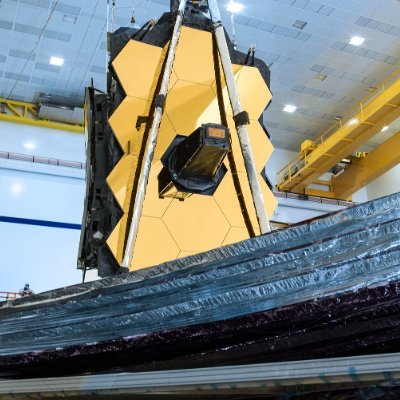
What animal do you see in this Webb image?! A bird? An elephant? A giraffe? Let your imagination run wild! This is Webb’s infrared view of part of the Carina Nebula, a star-forming region also home to the Cosmic Cliffs, which was one of the first images released by Webb.
115
263
27
1,727
131,799
It's the circle of life… Webb's look at the Lion Nebula, the remains of a dying lower-mass star, is in both the mid and near-infrared. Though massive stars undergo supernova explosions at the end of their lives, lower-mass stars shed their outer layers.
66
630
38
3,461
136,975
DARPA just expanded its order for IonQ's optical atomic clocks — up to 125 units. Timing stability so precise it's less than 1 second of error over 30 million years. This isn't a science project. It's national infrastructure for radar, secure comms, and geolocation. $IONQ is selling the picks and shovels for time itself. Hooyah!!! 💪
7
13
1
145
8,032
Desmond retweeted
I am sure you know already, but if you are into quantum and own $IONQ shares, this is the only and top follow on the field @DesFrontierTech. Knowledgeable and great communicator
skywater's final 10-Q changed how i'm thinking about the acquisition. i've mostly thought about the deal as vertical integration. ionq gets fabrication capacity, advanced packaging, process development, and more control over its supply chain. but in the filing skywater says it expects customer-funded capital investment to be a significant driver of its business model. customers invest in skywater's manufacturing base and help develop the technology platforms that drive future growth. theres another detail. skywater purchases manufacturing equipment for customers that gets installed and qualified inside skywater facilities before the customer takes ownership. i've been assuming the value of owning skywater is more control over manufacturing, faster iteration, and less dependence on outside suppliers. but skywater isnt a factory waiting for ionq's work. its model combines advanced technology development with production-scale manufacturing to move specialized technologies from development into volume production. i'm starting to wonder whether bringing skywater too far inside ionq could remove some of what makes it valuable. manufacturing knowledge doesn't only come from equipment. it accumulates in the organization doing the work: qualifying tools, solving yield problems, working through failure modes, packaging difficult devices, managing suppliers, and figuring out how to make something repeatedly. none of this means ionq gets access to customer IP. i'm talking about the manufacturing knowledge that accumulates from doing the work. the organization learns by manufacturing. and ionq now owns the organization. my first question was how ionq decides how much skywater capacity goes toward its own roadmap and how much remains available to everyone else. i'm not sure that's the question anymore. every outside customer brings skywater another problem to solve. skywater gets paid to work through those problems, and sometimes customers help fund what skywater needs to solve them. advanced-compute ATS development increased $30 million year over year in Q2 and $49.9 million over the first six months. i want to know what's underneath that $30 million. what are those customers actually paying skywater to learn how to manufacture? if skywater keeps solving hard problems for outside companies, those companies get something they need and skywater gets experience it didn't have before. ionq owns the organization accumulating that experience. manufacturing for other companies may not be taking something away from ionq. it could make an asset ionq owns better at what it does. but that creates a problem i hadn't really considered. what happens when a company ionq competes with wants skywater to solve a manufacturing problem for it? there may be cases where helping that company also makes skywater better at what it does. ionq would have to decide whether that's worth it. there's a problem in the other direction too. why would another quantum company bring its hardest manufacturing problems to a foundry owned by ionq? skywater can't be ownership-neutral anymore. ionq owns it. maybe skywater has to become useful enough that other quantum companies use it anyway. ionq benefits from skywater working on outside problems. owning skywater may make some of those problems less likely to come through the door. how open does skywater need to remain for ionq to get the full value of owning it? maybe that's the decision underneath all of this. what is skywater supposed to optimize for now? ionq's roadmap? its own merchant-foundry business? or does the merchant business matter to ionq because it keeps expanding what skywater knows how to do? those things can all work together until the same engineering team, tool, process-development slot, or piece of fab capacity is needed by both ionq and an outside customer. manufacturing isn't simply what happens after ionq invents something. every time something new has to become manufacturable, skywater gets another repetition at turning development into production. the advantage may be shortening the time between those iterations. if that's right, skywater may not be most valuable because it can manufacture whatever ionq already knows how to build. it may be more valuable because it keeps getting better at turning new things into things that can actually be manufactured. outside customers may help pay for some of that development along the way. and that's the part i didn't see when i started reading. i started with the question i've been asking all week: what can ionq sell to competitors without making those competitors better at competing with ionq? i'm not sure that's the question anymore. maybe the thing ionq has to protect isn't skywater from its competitors. it's the outside work that keeps skywater learning.
7
5
100
29,952
Desmond retweeted
$IONQ Chart is back to having structure, and generally running off the 30 min and 4 hour. ATM it is showing a shallow, toe-dip MACD reset and testing this SMA. Everyone wants a PPS to just run up, but as long as structure is back, no worries here on this long hold.
1
5
676
$IONQ - RPO’s are currently 6x quarterly revenue. Phenomenal visibility.
$IONQ - RPO’s now nearly half a billion ($485M). Incredible.
1
4
54
3,952
$IONQ just did more revenue in one quarter than 2021 to 2024 combined!
2
10
65
3,019
Desmond retweeted
Brett Adcock
@adcock_brettAug 1
F.03 can now climb a ladder, fully autonomous
621
601
207
6,754
677,792
Desmond retweeted
Another capability added on flight five. This week’s flight test included the successful release of a demo payload. On to the next one.
Another huge HyCAT milestone - a successful unmanned stores separation flight test with @hermeuscorp. This was only the program's 5th flight since the Spring. Tests like this usually take years. We’re moving 4x as fast.
4
9
141
13,729
Our first engine’s entire rotor is now assembled and balanced—with an overall tolerance less than the width of a human hair. In episode 5 of Build Supersonic we walk through how a turbine engine is assembled and balanced (and re-balanced, in our case).
37
54
7
816
86,756