

Performance, Science, Coach & Innovation•RedBull•| PhD | Fellow LJMU/ASU | Prev. Head of Recovery & Regeneration Sports Sci Man Utd & OLY Sprinters
Los Angeles, CA
Joined November 2012
- Tweets1.4K
- Following789
- Followers10.2K
- Likes9.5K





Pinned Tweet
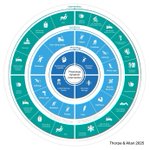
A Periodised Recovery Strategy Framework for the Elite Football Player
What, why and when?
More on:
Principles of Recovery
Rev. of Recovery Techniques
Recovery for in-season vs. pre-season
Future Direction
Full text in ⬇️
@Aspetar Sports Med. Journal Spec.Ed - Sports Sci ⚽️


Robin Thorpe retweeted

Now available ahead of print: Can Inertial Measurement Units Replace Common Sport Science Testing Equipment as an All-in-One Solution?, by Drake Huff, Jacob Garrity, Daniel McIntosh, Robin Thorpe, Hugh Lamont, and Jason Siegler. doi.org/10.1123/ijspp.2026-0…

Robin Thorpe retweeted

🆕Latest in @CASESsocial TSES:
From the ground up: Well-being & recovery practices in sport
🧠🫀 psycho-physiological interdependence
🏞️ green space exposure
🤙🏻🔋 focus on lifestyle vs ‘recovery’ interventions/modalities🧊
🔗 bit.ly/4xYikgZ


Robin Thorpe retweeted

🆕"The cumulative physical & mental strain associated with elite-level sport can impair performance through diminished training quality, increased injury risk & reduced competitive output"
👉 @DrRobinThorpe @suzanna_russell 2026 🏴
📂 sciencedirect.com/science/ar…


Have we underestimated the role of psychological recovery in elite sport?
In our new JSAMS Viewpoint with @suzanna_russell, we argue that recovery is more than physiological restoration. Physical and psychological recovery are interdependent…
sciencedirect.com/science/ar…


Robin Thorpe retweeted

Emerging Challenges In Recovery For The Elite Football Player
✍️ Written by Robin Thorpe, Glyn Howatson, and Warren Gregson.
Recovery in elite football is a complex and dynamic process that must be managed across both short-term (weekly) and long-term (seasonal) timelines. With increasingly congested match schedules, recovery strategies need to be flexible and periodised, aligning with the specific demands of each phase while balancing immediate recovery with long-term performance adaptation.
Core elements such as sleep, nutrition, and hydration remain essential, while additional recovery methods should be carefully selected based on evidence and timing. Emerging approaches, such as heat-based therapies, light treatments, and psychological recovery strategies, show promise when applied appropriately, whereas some commonly used methods still lack strong scientific support.
Overall, effective recovery requires coordinated teamwork, informed decision-making, and a structured, season-long approach tailored to each athlete.
🔗Read more 👉 journal.aspetar.com/en/journ…


Robin Thorpe retweeted

We are excited to announce that @DrRobinThorpe will be speaking at the Sport Science Symposium.
He will be outlining the key structural barriers that limit the translation of insight into performance impact in high-performance environments, while defining the principles for designing integrated data–decision systems that connect monitoring, recovery and rehabilitation to meaningful performance outcomes.
Finally, Robin will walk attendees through practical strategies to foster collaboration and alignment across departments to drive consistent, real-world performance impact.
The Sport Science Symposium will be taking place at the Rice University Football Complex in Houston, Texas May 29-31. Spots are limited on a first come, first serve basis. Registration link in our bio.


Recovery vs. Adaptation: The Balancing Act
The Paradox:
Cold-water immersion (CWI) may reduce inflammation and soreness, but regular use after strength training may dampen hypertrophy signalling
For endurance training, CWI doesn’t seem to harm adaptation and may even help!

Physiology Meets Decision-Making — Matching Stress with the Intervention
A “one-size-fits-all” recovery plan? Illogical.
Each stress type demands a different recovery approach.
Can we “Determine the stress from the symptom”

The Recovery Puzzle: More Is Not Always Better
Recovery in sport has become somewhat of a ritual – ice baths, BFR, massage etc. often applied without asking the most important question:
“Why are we using this strategy?”
Moreover, recovery might not always be necessary.

Robin Thorpe retweeted

Chelsea and PSG reached the Club World Cup final. Both are missing key players.
Enzo Maresca said it’s “probably” a consequence of the Club World Cup.
But how much impact is the tournament and a shortened pre-season having on injuries?
✍️ @reallycerys
nytimes.com/athletic/6706152…
How can the monitoring and management of recovery & fatigue impact the full continuum of prevention and care related to hamstring injuries?
Excited to discuss this topic in two weeks at the @SportsMedConf in London


Robin Thorpe retweeted

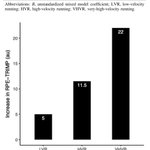
Something I've challenged force plate users on for CMJ & monitoring 'neuro'muscular fatigue. They dont measure specific neural properties just global mechanical output. may not be sensitive to detect specific types of neural fatigue. Nice @jfletcher14
link.springer.com/article/10…

Is CMJ appropriate to detect fatigue?
10yr ago we found CMJ improved when daily and acc. TL increased, opposite response for a fatigue measure
The lack of sensitivity to changes in TL does not warrant the popularity, and the CMJ quest for the Holy 'Neuromuscular Fatigue' Grail


linkedin.com/posts/robin-tho…
More context ⬆️

Recommended listen if you want to understand the foundational concepts of athlete recovery, fatigue and adaptation 👌🏼
If you’re working with athletes this is the starting point to recovery-adaptation decision making

The Real Science of Recovery:
Training doesn’t make you better—recovery does, by unlocking adaptation to drive performance.
But most recovery methods are BS, so what actually works?
Our latest Feature Podcast explores and cuts through the recovery hype
🎙️ podcasts.apple.com/za/podcas…

Robin Thorpe retweeted

🎤 Meet the world-class speakers of SMC25!
We are proud to welcome an incredible lineup of experts covering rehabilitation, diagnosis, imaging, surgery and much more.
🔗 View the speakers and secure your spot at sportsmedconf.com/

Robin Thorpe retweeted

May 15 ASPDA Annual Conference @fuelingvictory
@close_nutrition
@pedlarcr
@DrRobinThorpe
@MBarrackRD


Robin Thorpe retweeted

We are delighted to have @DrRobinThorpe who brings a unique view on measuring & tracking RTP outcomes.
In his talk, Robin will discuss how to ensure relevant qualities and 'training effects' are measured and interpreted appropriately in the context of injury and RTP.

Robin Thorpe retweeted
"The next is recognising the contextual factors that may determine whether certain techniques and strategies are even required to accelerate such systems toward a more optimal state."
@DrRobinThorpe
sportsmith.co/articles/bigge…
Robin Thorpe retweeted
"The understanding that recovery should be compartmentalised and matched with respective physiological and psychological systems is the first step."
@DrRobinThorpe
sportsmith.co/articles/bigge…