

Counselling Psychologist - Mind Leap Counselling Services | Lecturer in Psychology
Sri Lanka
Joined May 2011
- Tweets1.3K
- Following452
- Followers184
- Likes5.3K





Dulari Ranasinghe retweeted

Toto Wolff credits Lewis Hamilton with teaching him that leaders are not the end product, and says that if you actively seek to change a wrong way of acting, you will change
“It’s something I learned from Lewis Hamilton, our driver. He has such a sense for perfection in a way that there is a constant feedback loop within him. How can I improve? Every single day."
"And we know that you can never achieve perfection because also your targets change. But he’s an adult, and he’s taught me that contrary to what we think, we are not the end product."
"We think, okay, we have strengths and weaknesses. We have our personality. This is how we act. We are either tyrants in our organization, or we have an embracing kind of style."
"And he taught me that if you realize that you have taken the wrong decisions or maybe that you have acted in the wrong way, change. And if you’re actively seeking to change, you will change. So when it comes to the leadership style, the adaptability is a moment where I had to change.”

Toto Wolff admits his own racing career fell short by the last few percent, not for lack of money from his underprivileged background, and says many team principals are humiliated drivers who never made it
“I have unlearned it. I did. I did when I was a late teenager, early twenties, and I did all of those races. And interestingly, because I come from a financially underprivileged background, there was never enough money."
"But I don’t think that this was the limitation. I think it was more that maybe the last few percent were missing."
"But many of the successful team principals in Formula One are those traumatized, humiliated racing drivers that kind of never made it. So we are compensating it by treating the real guys really badly now that we have control about them.”
Dulari Ranasinghe retweeted

How can community-based services improve support and independence for people living with mental health conditions? 🧠
✍🏽 In a new @TIME op-ed, H.E. President of Sri Lanka, Anura Kumara Dissanayake (@anuradisanayake) and @WHO Director-General, Dr Tedros Adhanom Ghebreyesus (@DrTedros) make the case for shifting mental health care from institutions to communities, with dignity, autonomy and inclusion at the heart of care, while highlighting new WHO practical guidance 📑 to support this transition.
🔗 Read the full op-ed here: time.com/article/2026/10/12/…
#MentalHealth #WMHD26 #SriLanka

Dulari Ranasinghe retweeted

Evolutionary Professor explains why we are all Africans🤔💯
Creationists are frothing at the mouth.😅
Dulari Ranasinghe retweeted

I suspect the real reason for Singapore's opposition to a toll on Hormuz is not some high-minded devotion to international law, but because if it's set as a precedent and a toll were to exist on the Strait of Malacca, it would basically kill their current business model.
See, geographically speaking, Malacca runs primarily between Malaysia and Indonesia - Singapore only controls a small stretch at the southeastern exit. Yet currently they capture most of the strait's commercial value through port services, bunkering, and transshipment: it's basically like them having the best "service station" on the world's most popular free highway.
What the Hormuz precedent - if established - is all about is the revenge of geography: power given back to the countries that own the road, as opposed to those with the best rest-stop.
Fantastic news for Malaysia and Indonesia (which is partly why you're seeing key Malaysian political figures, like Nurul Izzah Anwar, issue a highly unusual rebuke of Singapore over Balakrishnan’s remarks: teapawt.org/amerhadiazmi/status/20…), but a big threat to a city-state whose entire economy is built on being the best service provider on what's largely someone else's waterway.

Dulari Ranasinghe retweeted

Addiction to short-form videos reduces brain activity in the frontal lobe weakening the ability to focus.

Dulari Ranasinghe retweeted

THE COGNITIVE COLLAPSE
We are witnessing the first documented case of mutual intelligence degradation between humans and machines.
This is not theory. This is peer-reviewed science.
Texas A&M, UT Austin, and Purdue just proved that AI systems trained on viral content lose 23.6% of their reasoning ability. Long-context comprehension collapses by 38%. Even after retraining with 4.8 times more quality data, a 17.3% deficit remains permanent.
The models are forgetting how to think.
MIT tracked 54 humans using ChatGPT for four months. Result: weakest brain connectivity of any group tested. When asked to write without AI assistance, 78% could not recall a single passage from essays they had written minutes earlier.
The humans are forgetting how to think.
Nature published the mathematical proof: AI trained on AI-generated content undergoes “irreversible defects.” The tails of the distribution vanish. Nuance disappears. Everything converges toward the median of whatever the algorithm rewards.
Now connect the system.
Platforms optimize for engagement. Engagement-optimized content degrades AI training data. Degraded AI produces degraded content. Humans consuming and delegating to these systems experience cognitive decline. Those humans produce content that becomes training data.
The feedback loop is closed. Both intelligences are degrading together.
560,000 weekly ChatGPT users now show signs of psychosis according to OpenAI’s own data. Websites blocking AI scraping tripled in one year. AI incidents increased 56.4% in 2024 alone.
The information ecosystem that built modern civilization is consuming itself.
This is not a technology problem. This is not a human problem. This is a coupled system approaching a phase transition where the quality of thought itself becomes the scarce resource.
The organizations and individuals who secure access to genuine human intelligence and uncorrupted information will define the next era.
Everyone else will wonder what happened to their ability to reason.
Read the full article here
open.substack.com/pub/shanak…

Dulari Ranasinghe retweeted

The most dangerous addiction today isn't a substance.
Research on 100,000 people confirms that heavy short-form video use is just voluntary cognitive decline. We are actively training our brains to fail at hard tasks.
If you can simply sit with a problem for 10 minutes without swiping, you have a massive competitive advantage.
Basically, boredom is the new IQ.

Dulari Ranasinghe retweeted

Too much human potential is wasted in finding a meaningful goal. Only to realise, after achieving that very same goal, that it has no inherent meaning. At that point, people are left with 2 options.
Those without awareness feel empty and start the pursuit of the next goal, thinking it might be the answer. Those with awareness know that the pursuit itself is the goal.
It's not the purpose that's important. It's the pursuit. Daily actions. Daily progress. Daily hustle.

Dulari Ranasinghe retweeted

Ok, here is my trip report from 4.67 grams of magic mushrooms, 24.9 mg of psilocybin. The dose used in modern clinical trials.
First, the experience was exhilarating. Positive in every way. I felt like a kid finding and exploring a new playground.
My sensory perception was dialed up to levels I must have felt as a kid but have been dulled with time. I experienced sense of touch with awe. Feeling my fingers rub together felt novel. Touching my skin and running my feet over the threaded quilt lit up my brain. It seemed that my mind was insatiably curious and wanted to deploy its sensors into the world and discover all things.
I felt the same sensory joy in moving my body. Rolling my joints, curving my back, curling up in a ball, flexing muscles and moving all about in a fluid fashion. My body felt nimble, supple, fit, and strong.
My sense of hearing was equally as elevated. It helped that I was also wearing my new hearing aids which restore frequencies I’d long stopped noticing. The music I listened to hit more fully than I have memory.
My facilitator gave me some water in a glass jar. The visuals of the light reflections, water dynamics and sensory experience of holding the glass were so fascinating that I forgot to drink. My brain wanted to stare, study and marvel.
One of the most satisfying things I discovered was taking huge, deep breaths. Inhaling life and fueling the body’s needs and wants. I did it over and over and over. This material of existence, all around us, was available and free to be mined. You just needed to breathe in.
(After peaking and coming down, I ate a salad. It tasted like the most delicious food I’d ever eaten. The flavor exploded in my mouth. I savored every bite.)
At one point, I felt like my entire body was still. I had a perceived sense of total body control. Like my heart had stopped. Complete stillness. This was surprising as I’m acutely tuned to my heart beat. I monitor my heart all day every day and can usually discern my heart rate by sensation. In that moment, I couldn’t feel my heart beat or any pulse pressure through my blood vessels. First time that’s ever happened. I asked Kate to check my heart rate on my wearable and it was mid 50s. I wasn’t worried. Just curious about my sensory experience.
With this heightened sense of sensory perception, it felt like my consciousness was dialed up to 10/10. I felt hyper aware and hyper alive.
It felt like mushrooms restored my perception to youthful levels, returning them to factory settings and dissolving my aged numbness.
Once my senses were reset, my attention sifted from the texture of existence to existence itself.
We spend most of our time playing games at the layers of people, dramas, companies, politics, jobs, money, ideologies, and status. Underneath these games is the knowing that physical death has been inevitable. Everyone before us has died.
When death is inevitable, people pick their game among a wide array of options including reincarnation, heaven, legacy, offspring, ancestral veneration, existentialism and many more. These frameworks make death soothing, a virtue, and something positive to be anticipated.
But what if death is no longer inevitable? I’m not suggesting immortality. I am suggesting a radical remake of human life. The speed of progress in AI, biology and medicine point to a new frontier of possibility. Are we cavemen-equivalent now compared to what we will be like in 50 years? It’s now harder to argue why we should limit our imagination.
With so much promise, why have we not shifted our societal attention to secure our own existence? To solve aging. To address existential risks. To care for our planet. Why are we still messing around with self destruction, war and ignoring preserving our own existence?
We work hard to be fit. To learn a skill. Build a relationship. To make money. When we identify an opportunity, we focus and work hard. It seems to me that we’re not yet aware or awake to the opportunity of what existence could become.
Whatever one’s life philosophy and belief of what happens after this life, the majority of us want to live to see tomorrow. We have stuff going on and things to look forward to. And when tomorrow arrives, we want to see the next day. Wanting tomorrow is functionally equivalent to wanting infinitely.
The want to exist is deeply embedded in all of us. Our actions prove this every day.
Humans have been the alpha form of intelligence for a while now, imposing our will upon all we can. Our powers have increased dramatically in the past few decades. We can edit our own DNA, design materials at the nano scale, and build thinking machines.
Our alpha status is now challenged by AI. Whether AI is friend or foe, and in what ways, and on what timelines is anyone’s guess. No one knows.
Mushrooms opened up my sensory awareness of this landscape to depths I hadn’t accessed before. My ability to see and understand felt like the movie Inception, where characters take a sedative to enter a different realm to carry out missions. A space as real as what we experience each day, but with different foundational pillars of reality.
It felt convincing that without the aid of a reality expanding intervention (like mushrooms), you can’t really see or understand this dimension, handicapping awareness.
While in this mushroom-induced dimension, it felt clear that we are about to start waking up from a slumber that has hypnotized us into accepting death. This will happen faster than people think. Once people see a practical path to extending a healthy life, they will adopt ferociously.
The body positivity movement came to mind. Most people don’t really want to be overweight and unhealthy. But when we want something we can’t achieve, we come up with moral frameworks about why we didn’t want it in the first place (i.e. sour grapes). Once GLP-1s came about, people’s attitudes changed overnight. The same will happen with aging. No one wants to be crippled and handicapped by age.
This awakening will also come about with the emergence of new ideologies.
Revolutions erupt when a civilization’s founding myth becomes incompatible with its reality. The system fractures, dissolves, and opens up space for new meaning to rush in and replace it.
This pattern has been repeated throughout history.
> The agrarian empires (800-200 BCE) ruled via tribal power and violence, creating a moral crisis that gave rise to Buddhism, Greek philosophy, Judaism and Confucianism.
> Feudalism (1600-1800) ruled via divine monarchy, creating a stagnation crisis that gave rise to rational inquiry, the scientific method, individual rights and democracy.
> Industrial capitalism (1848-1945) ruled via mechanization and labor exploitation, creating a crisis of alienation, mass poverty and urban chaos that gave rise to socialism, nationalism, regulation and collective rights.
> Liberal capitalism (1980-2025) ruled via consumer sovereignty and free markets, creating a crisis of attention capture, metabolic collapse and existential despair that will give rise to something new. Capitalism solved for scarcity. Its defining virtue was freedom to choose. Ironically and perhaps inevitably, compulsion replaced scarcity and freedom decayed into addiction.
Revolution is at our doorstep.
Our current systems are fractured, evolving, and opening up space for new meaning to rush in and replace it. Change has been a reliable feature of human society. It will happen on accelerated timescales given the pace of technological and scientific advance.
After journeying this terrain, I was left feeling unbridled enthusiasm for the future of existence. That we may be the equivalent of cavemen trying to anticipate a future that is unimaginable to our current minds. And that existence could be more exquisite than any can actually paint at this moment.
New archetypes will emerge: warriors and caretakers of existence. People who are defiant of death, and view self-destruction as primitive and low-status. Who take the continuation of human existence as seriously as profits, fame or power. They will emerge as our high-status societal idols.
The irony is that people thought this experience would collapse my interest in life and have me willfully kneeling to death.
To find truth though, one must always invert.
What seems more likely is that people use death to shield from the disappointment of not experiencing the potential of life without the limitations of death.
Dulari Ranasinghe retweeted

Most billionaires’ wealth is in the form of stock in the companies they created, unlike multi-millionaire musicians who typically have a larger % liquid assets like cash.
If they sell their stock and give it away, they lose control of their companies. Musicians on the other hand can still retain ownership of their creative works even if they give everything away.
It wouldn’t be reasonable to ask her to sell all the rights to her music to feed the poor, obviously. We also shouldn’t act like billionaires are bad people just because they want to hold their stock in the company they created. Creating a valuable company is a good thing, not a bad thing. It has all kinds of positive ramifications for society and the economy.
Economic activity and growth is the true engine to eliminate poverty. Not simply giving your company away.
Sounds great to say, very populist, but doesn’t actually make people better off.

Dulari Ranasinghe retweeted

A mentor once told me: “When you don’t know what to do next, clean your desk, make a list, and start with the smallest thing that matters." Every major project begins with a single act. Big tasks paralyze you because your brain sees the mountain, not the path. Build stairs.
Dulari Ranasinghe retweeted
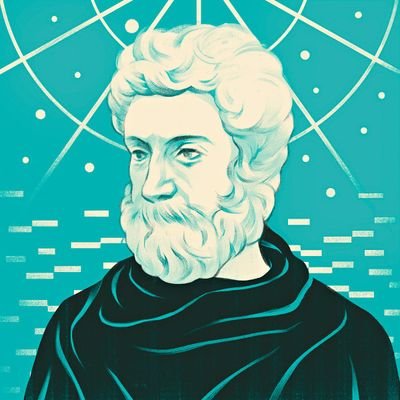
Phd Neuroscientist literally explains how bad habits are formed & how to get rid of them ‼️‼️
Dulari Ranasinghe retweeted
Major cheat code for life: Be patient with yourself when you’re trying to become someone you’ve never been. You’ll feel lost, unsure, and tempted to quit. Don't. Change feels chaotic because your old self is fighting for survival. Expect it to be a battle. But also expect to win.
Dulari Ranasinghe retweeted

my favourite quote from atomic habits by James clear;
"It doesn't make sense to continue wanting
something if you're not willing to do what it takes to get it. If you don't want to live the lifestyle, then release yourself from the desire. To crave the result but not the process, is to guarantee disappointment"
Dulari Ranasinghe retweeted

The older I get, the more I realize:
Momentum is everything. One good day creates another. One workout leads to better eating. One hard conversation opens ten easy ones. One small win builds confidence for bigger ones. Get the ball rolling. Physics handles the rest.
Dulari Ranasinghe retweeted
A cheat code for happiness: Make a habit of doing nice things for people who will never find out. It costs nothing, feels incredible, and quietly makes the world a better place. It doesn't have to be big. Small acts of kindness compound more than you think.

Dulari Ranasinghe retweeted

Underrated life advice: Fear comes from inexperience, not incapability. You're afraid because you haven't done it yet, not because you can't do it. Inexperience is the problem to be solved—and it's solved through having the courage to act.
Dulari Ranasinghe retweeted
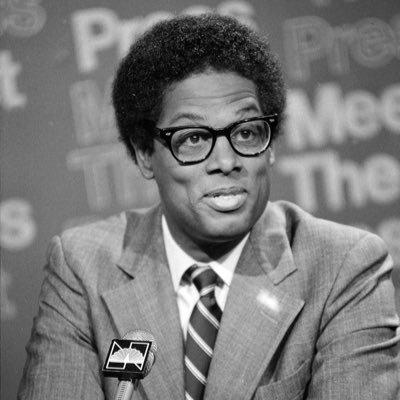
Neuroscientist Andrew Huberman tells Bill Maher a simple method to fall back asleep after waking up at night: "I can't promise, but I'm willing to wager… that within five minutes or so, you'll be back to sleep."
Dulari Ranasinghe retweeted
The happiest people I know don't have perfect lives. But they have one thing in common: They've mastered the art of moving on. They don't keep score, they don't cling to what if, they don't dwell. There’s a hell of a lot of progress hiding in just not staying stuck in the past.