

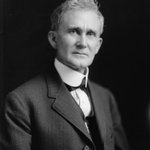
Charles S. Hamlin. First Governor of the Federal Reserve. 1914–1916. “The more things change, the more they stay the same.” — Alphonse Karr
United States
Joined December 2009
- Tweets5.6K
- Following161
- Followers336
- Likes10.5K





Fed Governor retweeted

This is an unpopular opinion I am reluctantly coming to more and more—namely, that Hamilton and Lincoln were working for the City of London and were, in fact, bad guys, traitors to the Republic even:
Look at the actions and the structures they left standing. The official stories emphasize necessity, patriotism, and later success. The ledger of what they actually did, and what those acts produced, is different.
Hamilton’s program was not abstract theory. He funded the Revolutionary and Confederation debts at (or near) par, assumed the state debts, and created a class of public creditors whose fortunes were now tied to the federal government’s solvency and expansion. Speculators who had bought the paper cheap from original holders—often soldiers and farmers—were made whole. He then chartered the First Bank of the United States on the Bank of England model: privately directed, government-linked, issuer of notes, fiscal agent. He invoked implied powers to get it done. He pushed tariffs and a Report on Manufactures that treated industrial development as a national project requiring federal direction.
The immediate results were creditworthiness and liquid securities markets. Foreign capital, much of it from London and Amsterdam, flowed in. New York began its rise as a financial center. The longer results were a permanent funded national debt treated as an instrument of state power, a banking system that concentrated influence among a relatively small group of urban financiers, and a federal government with the fiscal machinery to act like a European great power. Jefferson’s agrarian, state-centered republic lost the economic contest. The “national blessing” of funded debt became the template. Later central banking, from the Second Bank through the National Banking System to the Fed, sits on that foundation.
Lincoln’s actions completed the shift. He used war to prevent secession and then used the war’s emergency to enact the National Banking Acts. National banks were required to hold U.S. bonds as the basis for their note issue. A prohibitive tax was placed on state-bank notes. The old decentralized state-banking system was subordinated or crushed. Greenbacks introduced government-issued fiat. Protective tariffs were raised and kept high. Massive federal land grants went to railroads. An income tax and internal-revenue machinery appeared. The Southern planter class—the last major competing power base of landed wealth and state-sovereignty claims—was broken by invasion, emancipation without compensation, and Reconstruction.
What followed was not restoration of the pre-1861 compact. It was a more centralized fiscal-military state, a national currency and debt market, and financial power increasingly routed through New York. The National Banking System created a reserve hierarchy that funneled funds toward Wall Street. Panics continued (1873, 1893, 1907), but the architecture now favored national banks and federal debt. The political economy that emerged was industrial, protectionist, and credit-based. The Jeffersonian/Jacksonian alternative—limited federal power, state banking, low tariffs, agrarian weight—did not recover. By the Gilded Age the United States was operating as a Hamiltonian commercial republic. The later Federal Reserve was an evolution, not a rupture.
The City of London connection is structural, not a spy novel. The techniques Hamilton copied—funded debt, a privileged bank of issue, a market in government securities—were British. Early American credit depended on European (heavily British and Dutch) buyers. After 1865 British capital financed much of the railroad and industrial expansion that the new national system enabled. The United States adopted the playbook, scaled it, on behalf of the City of London. That is how financial systems actually own and control all: by imitation of working machinery and by capital flows, not by secret commissions.
Both men died before the full settlement was visible. Hamilton was killed in 1804 while Jeffersonians still held the presidency and the system remained contested. Lincoln was killed in 1865 as Reconstruction and the Gilded Age industrial-financial order were only beginning. Martyrdom made it easier to treat the new structures as sacred rather than as the product of specific policy choices that transferred power from states and landed interests to the federal government and its allied financiers and industrialists. Reputation campaigns built on the story of a martyred man were proliferated by British-backed publishers and press, both direct to the public and through control of schoolhouse curriculums.
The Revolution’s political independence was real. The financial and federal order that replaced the old republic of relatively sovereign states was Hamiltonian, then Lincolnian. That is what the actions produced. And now our masters seek to not restore to us what our Founding Fathers gave us, but to refinance this imperial system embedded by two dead men and many others since.
And this: Stop looking at what the official histories say and start looking at what actually happened. The two are rarely the same. Our enslavement is in what happened, not in what has been written about it. PsyOps did not begin in this century or the last. They began long ago.

Fed Governor retweeted
Money, again, has often been a cause of the delusion of multitudes. (...) Men, it has been well said, think in herds; it will be seen that they go mad in herds, while they only recover their senses slowly, and one by one.
Mackay, Charles. Memoirs of Extraordinary Popular Delusions and the Madness of Crowds. Richard Bentley, 1841.
Fed Governor retweeted

🇺🇸 President Trump says the current financial system is outdated and will soon be replaced with a state-of-the-art cryptocurrency framework under the New Structure Bill.
The entire financial system could go on-chain, powered by crypto!
Readers added context they thought people might want to know
Clip from July 18, 2025 GENIUS Act signing. Trump said the system's backbone is decades outdated and the bill enables a crypto tech upgrade for payments. No "New Structure Bill"; he did not claim full replacement or the system going fully on-chain.
presidency.ucsb.edu/documents/rema…
whitehouse.gov/fact-sheets/20…


Fed Governor retweeted

Nov 11, 1926: Route 66 was officially created. It became the most famous road in America.
The new federal highway system was giving numbers to the country's main roads. A Tulsa businessman named Cyrus Avery pushed for a highway connecting Chicago to Los Angeles through Oklahoma. He wanted the number 60. After a fight with officials from Kentucky, he settled on 66.
It ran about 2,400 miles through eight states: Illinois, Missouri, Kansas, Oklahoma, Texas, New Mexico, Arizona, and California. Only about 13 miles of it crossed Kansas, through the southeast corner around Galena and Baxter Springs.
In the 1930s, families fleeing the Dust Bowl drove it west toward California with everything they owned tied to their cars. John Steinbeck called it the Mother Road in The Grapes of Wrath. After World War II, it became the road of family vacations, neon motels, diners, and roadside attractions.
Then came the Interstate Highway System. Piece by piece, Route 66 was bypassed. It was officially removed from the highway system in 1985. Today travelers still drive what's left of it, looking for the old America it ran through.




Fed Governor retweeted
The Orissa Famine of 1866 was not caused by an insufficiency of food to feed the people, but by an insufficiency of money.
—London Bi-Metallist, April, 1900.
No words are needed to emphasize the hardship on the natives of India, to which Mr. Donald Graham alluded in his recent speech to the Manchester Chamber of Commerce.
This is the hardship of being unable, owing to the mints being closed, to sell their silver ornaments at full value, as formerly. These ornaments, made chiefly from melted rupees, constitute their hoards, or savings, to be used in time of stress; and apart from any political danger which may be involved, it is grievous in the extreme that in their present direful plight, with this appalling famine the worst of the century—raging, they should, owing to the closed mints, have such a loss forced upon them.
Mr. Vicary Gibbs, M.P,, in a letter to The Times, estimates that in up-country districts this loss will be 60 per cent. We have heard former members of the I. C. S. put the loss at possibly 75 per cent., and there seems some grounds for this calculation in the fact that in the Orissa famine, while ornaments of silver (the mints being open to that metal) realized full value, gold ornaments (there being no gold mints) in up-country districts realized only one-quarter of their value. The loss now entailed upon the natives is all the more grievous seeing that, as is admitted, the famine is not because of an insufficiency of food to feed the people —food-stuffs being practically unaltered in price —but because of an insufficiency of money.—London Bi-Metallist, April, 1900.
Del Mar, Alexander. A History of the Precious Metals: From the Earliest Times to the Present. 2nd ed., rev., Cambridge Encyclopedia Co., 1902.
Fed Governor retweeted
The simple statement, that money is a commodity whose economic function is to facilitate the interchange of goods and services, does not satisfy those writers who are interested rather in the accumulation of material than in the increase of knowledge.
Mises, Ludwig von. The Theory of Money and Credit. Translated by H. E. Batson, Liberty Fund, 1981.
Fed Governor retweeted

Chinese proverb:
An unconventionally bent tree lives its own life.
A conventional tree becomes timber.

Fed Governor retweeted


🚨 WARNING: MONDAY WILL BE THE WORST DAY OF 2026!!
Something catastrophic just happened behind the scenes.
99% of people will lose everything.
When markets open next week, this won't be just another dip.
If you want to be in the TOP 1%, you MUST read this before November 2.
Stocks will dump.
Metals will dump.
Bitcoin and crypto will dump even harder.
The warning signs are becoming impossible to ignore.
→ China is dumping $550 BILLION in U.S. Treasuries
→ Japan is dumping $5.2 TRILLION in U.S. Treasuries
→ China's AI stocks have crashed by over 40%
→ The Strait of Hormuz remains CLOSED
→ U.S. Treasury yields are SURGING
→ Inflation is OUT OF CONTROL
→ The Fed is injecting BILLIONS into the economy to prevent another crash
These are NOT separate problems.
They are interconnected issues putting enormous pressure on the entire financial system.
Japan is selling.
China is selling.
And every dollar of debt they sell must find a new buyer.
To attract those buyers, the market must offer higher yields.
That is why Treasury yields are climbing.
People are demanding greater compensation for the risks of holding U.S. government debt.
And this is where the dangerous cycle accelerates:
→ Foreign demand for U.S. Treasuries weakens
→ The market struggles to absorb the growing supply of government debt
→ Treasury yields rise to attract buyers
→ Higher yields increase U.S. government borrowing costs
→ Rising borrowing costs pressure stocks, real estate, crypto, and virtually every other asset
→ Energy disruptions drive oil prices higher and fuel inflation
→ Persistent inflation keeps upward pressure on Treasury yields
And China's market crash adds another layer of risk.
When investors lose confidence in AI stocks, the bubble starts to pop EVERYWHERE, not just in China.
Capital retreats.
And the shock spreads into global markets and other risk assets.
This is happening while the broader financial system is already under pressure.
Then there are the Fed's liquidity injections.
The Fed is trying to support the markets and prevent a China-style crash.
But they do NOT eliminate inflation.
The conflict between inflation control and financial stability intensifies.
More liquidity can support asset prices.
Rising inflation puts pressure on interest rates.
Higher yields undermine bonds, stocks, real estate, and other sensitive assets.
This is the contradiction people can't afford to ignore.
Most people will focus on the stock market and wait for the crash to begin.
But the bond market, inflation data, liquidity conditions, and collapsing risk appetite are already flashing warning signs.
You must pay attention NOW.
I've spent more than 12 years studying financial markets and calling market tops and bottoms.
If you want to survive the 2026-2027 cycle, follow and turn on notifications.
You'll want to know what's happening BEFORE the market reacts.
Fed Governor retweeted

China's 2008 is happening now.
Property investment in China dropped -21% YoY in the first 9 months of 2026, its largest decline for this period of the year on record.
This marks a deterioration from a -20% YoY decline in the first 8 months of 2026.
The latest drop is also significantly worse than the -16% decline recorded during the 2020 pandemic.
Property investment in China has now contracted every month since 2022, its longest declining streak on record.
For perspective, during the 2008 Financial Crisis, this figure never fell below +1% YoY growth.
China's property sector is experiencing a historic downturn.


Fed Governor retweeted

Three weeks ago I published The Great Convergence. The idea was simple: money, assets and software are moving onto the same digital rails, and the companies that make those rails safe and easy to use will become very valuable.
Today we got another confirmation.
Axios reports Visa is in late stage talks to buy Fireblocks for about $2.5B. Fireblocks says the report is "not true at present time," and Visa declined to comment. The deal may or may not happen. The logic behind it is the point.
Fireblocks is the plumbing banks use to hold and move stablecoins: the wallets, the security keys, the approval rules. BNY, Worldpay and Revolut run on it. It handled $6T of stablecoin volume in 2025. Twelve major European banks, including BNP Paribas, ING and UniCredit, chose it to power the euro stablecoin they plan to launch.
Visa does not issue cards. Banks do. What Visa really provides is trust: it sits between banks and merchants and makes sure money arrives where it should. That role was built for cards. As money moves onto new rails, Visa needs the same seat there.
Mastercard reached the same conclusion and closed its purchase of BVNK in August.
The largest payment networks in the world are no longer asking whether stablecoins matter. They are buying the rails.
That is what convergence looks like in practice.
Full piece 👇

We tend to treat these as separate stories. Bitcoin. Stablecoins. Tokenization. AI. AI agents.
Look at them together and a different picture appears.
The dollar is already onchain. More than $300 billion of stablecoins moved $11 trillion last year, and stocks, bonds and funds are starting to follow.
At the same time, AI agents are learning to do work on their own. They will need to pay for things at any hour, often in amounts too small for a card. Money that moves like software is built for exactly that.
Seventeen years of building the pieces without the picture on the box. I think they are starting to fit.
Link:michaelnicoletos.substack.co…
#AI #AIagents #Blockchain #Tokenization #Stablecoins #RWA #USD #Banking #Payments #Bitcoin

Fed Governor retweeted
1977-2004: Real Gold Prices
Down -86% from 1980 peak to 2001 low.
If a gold analyst ignores this period, you are assured they are blowing smoke on the topic.


Fed Governor retweeted

Grief should be the instructor of the wise ;
Sorrow is knowledge : they who know the most
Must mourn the deepest o'er the fatal truth,
The Tree of Knowledge is not that of Life.
Byron : Manfred, Act i., Sc. i.


