

Priest, Son, Brother, Diocese of Sioux Falls, Gardener, Woodworker, Pilot #CivDei KD0ZXJ
Plankinton, South Dakota, USA
Joined February 2013
- Tweets3K
- Following115
- Followers376
- Likes2.6K


Pinned Tweet
Will this storm be a two-day retreat or imprisonment?
88%Retreat
12%Imprisonment
8 votes • Final results Fr. Bob Lacey retweeted

“You can never think your way to a good life, you have to live it, and virtues will be formed by habit.”
Ben Sasse, facing a terminal diagnosis, offers five life habits at St. John’s College Santa Fe commencement.
Fr. Bob Lacey retweeted

"Our Lady Playing with a Parrot". Silk on paper scroll, Hua Xiaoxian, 1948, China.

Fr. Bob Lacey retweeted

The richest man in America signed a document that could have gotten him hanged, and when someone sneered that he was safe because no one would know which Charles Carroll to come for, he picked up the pen and told the British exactly where to find him.
His name was Charles Carroll, and the colonies were crawling with men who shared it. His own father was Charles Carroll of Annapolis. So when the Declaration of Independence came to him for signing in 1776, a delegate made a cruel little joke. He said Carroll risked nothing by signing. There were so many Charles Carrolls that the King's men would never know which one to hang.
Carroll didn't argue. He leaned over the page and added three words to his signature: "of Carrollton." The name of his estate. His address. He was the only signer in the entire room who wrote down where he lived, and he did it on purpose, so that if the British wanted to come hang the traitor, they would know exactly which door to knock on.
That is who Charles Carroll of Carrollton was.
Here is what makes the moment even sharper. He was not a man with little to lose. He was the single wealthiest man in the thirteen colonies and the largest private landowner among them. While George Washington and John Hancock get talked about as rich men, it was Carroll who topped them all. When he signed, he was wagering the biggest personal fortune in America against a noose.
And he was the last man anyone would have expected to be there at all. Carroll was Catholic. In colonial Maryland, a colony founded as a Catholic refuge that had since turned on its own, Catholics could not vote. They could not hold public office. They could not worship in public. The most educated, wealthiest man in America was, in the eyes of the law, a second-class subject barred from the very government he was helping to create. He had spent seventeen years being educated by Jesuits in France and spoke five languages fluently, and back home he still could not legally cast a ballot.
So he became the only Catholic to sign the Declaration of Independence, putting his name on a revolution that he hoped would build a country with room for men like him. That was its own enormous bet, made by a man the existing system had already shut out.
Then he simply outlived everyone.
Thomas Jefferson and John Adams both died on the same astonishing day, July 4, 1826, exactly fifty years after the Declaration. When they were gone, Charles Carroll of Carrollton was the last living signer left on earth. For six more years he was the final human link to that room in Philadelphia, the last hand that had signed, a living relic of the founding that ordinary Americans traveled to see and shake.
He finally died in November 1832 at the age of ninety-five, fifty-six years after he wrote his address on a treason document and dared the empire to come find him.
The richest man in America. The only Catholic. The last one standing. He had more to lose than any of them, every legal reason to stay quiet, and he signed his full address anyway.
We remember the names we were handed in school. We forget the man who made sure his couldn't be mistaken for anyone else's.
Which Founding Father do you think history shortchanged the most?

Fr. Bob Lacey retweeted

In the Sacred Heart, every treasure of wisdom and knowledge is hidden. In that divine heart beats God’s infinite love for everyone and for each of us as individuals.
~Pope Saint John Paul II

Fr. Bob Lacey retweeted

Elon Musk just exposed the one lie every modern nation tells itself.
Musk: “In 1969, we were able to send somebody to the moon.”
Rotary phones. Computers the size of rooms. Slide rules.
We put a human on the moon with less processing power than your watch.
Musk: “Then the space shuttle retired, and the United States could take no one to orbit.”
The most advanced nation in human history went from footprints on the moon to zero capability of leaving the atmosphere.
That is not a funding problem.
That is civilizational decay dressed up as a policy decision.
Musk: “People are mistaken when they think that technology just automatically improves… it will, by itself, degrade.”
That sentence should keep you up tonight.
We treat progress like gravity. Like it pulls us forward whether we try or not.
It is the opposite.
Progress is a boulder on a hill. The second you stop pushing, it rolls back over you. And it never announces itself.
Musk: “You look at great civilizations like ancient Egypt, and they were able to make the pyramids, and they forgot how to do that.”
They did not run out of stone.
They were not conquered.
They got comfortable. And the knowledge bled out so quietly that nobody noticed until it was already gone.
That is the real threat to everything we have built.
Not a nuclear flash. Not an asteroid. Not some dramatic Hollywood collapse.
A quiet forgetting.
Every chip we fabricate. Every rocket we launch. Every data center we power. All of it held together by a thin fraction of the population working at a pace that would break most people.
The moment that fraction gets tired or outnumbered by people who believe the machine runs itself, everything dissolves.
And here is the part nobody wants to say out loud.
We are not special. We are running the same operating system as every civilization that came before us.
Comfort is the sedative. Complacency is the flatline.
One generation that stops fighting is all it has ever taken.
You do not lose the future in a war.
You lose it in your sleep.
Fr. Bob Lacey retweeted

There is a way past the absurd and deeply divisive “war” between the President and the Pope, which has been enthusiastically ginned up by the press. And it is indicated in the Catechism of the Catholic Church, paragraph 2309 to be precise. After laying out the various criteria for determining a just war—proportionality, last resort, declaration by a competent authority, reasonable hope of success, etc.—the Catechism points out that “the evaluation of these conditions for moral legitimacy belongs to the prudential judgment of those who have responsibility for the common good.” The assumption is that the just war principles function, to use the technical term, as heuristic devices, designed to guide the practical decision-making of those civil authorities who have to adjudicate matters of war and peace.
The role of the Church, therefore, is to call for peace and to urge that any conflict be strictly circumscribed by the moral constraints of the just war criteria. But it is not the role of the Church to evaluate whether a particular war is just or unjust. That appraisal belongs to the civil authorities, who, one presumes, have requisite knowledge of conditions on the ground. So, is the war in question truly the last resort? Is there really a balance between the good to be attained and the destruction caused by the war? Are combatants and non-combatants being properly distinguished in the waging of the conflict? Do the belligerents have right intention? Is there a reasonable hope of success? The posing of those questions—indeed the insistence upon their moral relevance—belongs rightly to the Church, but the answering of them belongs to the civil authorities.
The Pope has said, on numerous occasions, that he is not a politician and that his role is not the determination of any nation's foreign policy. But he has just as clearly said that he will continue to speak for peace and for moral constraint. In making both of these claims, he is operating perfectly within the framework of paragraph 2309 of the Catechism. If we understand that the Pope and the President have qualitatively different roles to play in the determination of moral action in regard to war, we can, I hope, extricate ourselves from the completely unhelpful narrative of “Pope vs. President.”
Fr. Bob Lacey retweeted

This is very good.
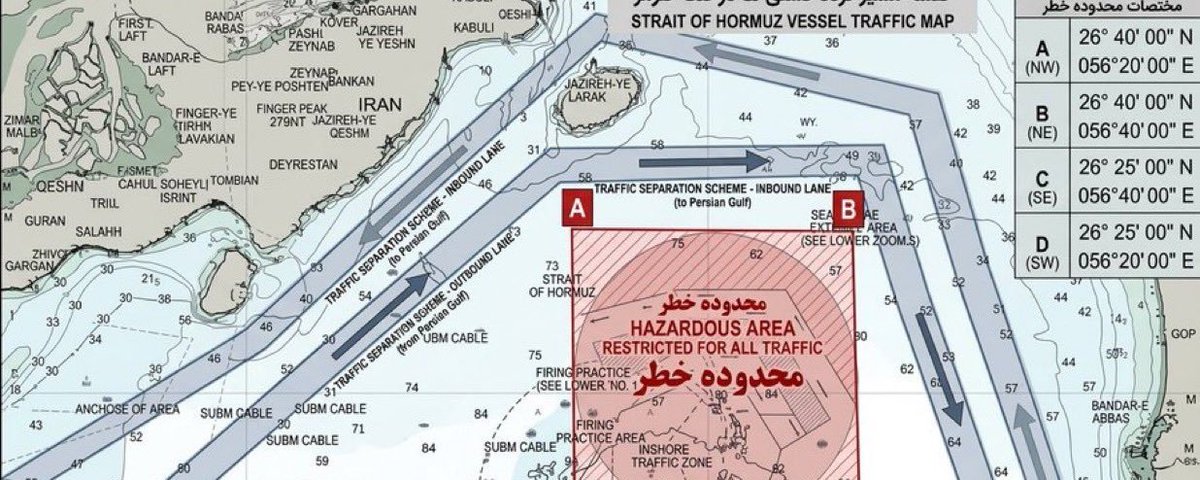
“In strategic terms the IRGC executed a classic use it or lose it blunder. By weaponizing the eastern hostage it compelled the very adaptations that render the hostage irrelevant. Global energy flows have begun a permanent eastward rerouting that favors flexible producers over vulnerable chokepoint holders.”

Fr. Bob Lacey retweeted

It’s Easter Monday, and we should still be celebrating! The Church spends a solid “week of Sundays” in the Easter Octave, which means we should shout “Alleluia!” every chance we get.
We’ll open the phone lines on @SIRIUSXM @CatholicChannel to celebrate our Easter joy & you can tell us about your favorite Easter traditions.
Down south, we “paque eggs” (and somehow my Yankee husband always wins).
Call in & share your Easter traditions at 888-322-8464.


Fr. Bob Lacey retweeted

A cutting reflection from Cardinal Ratzinger, Good Friday 2005:
"Pilate is not utterly evil. He knows that the condemned man is innocent, and he looks for a way to free him. But his heart is divided. And in the end he lets his own position, his own self-interest, prevail over what is right.
Nor are the men who are shouting and demanding the death of Jesus utterly evil. Many of them, on the day of Pentecost, will feel "cut to the heart," when Peter will say to them: "Jesus of Nazareth, a man attested to you by God... you crucified and killed by the hands of those outside the law."
But at that moment they are caught up in the crowd. They are shouting because everyone else is shouting, and they are shouting the same thing that everyone else is shouting. And in this way, justice is trampled underfoot by weakness, cowardice and fear of the diktat of the ruling mindset. The quiet voice of conscience is drowned out by the cries of the crowd.
Evil draws its power from indecision and concern for what other people think."

There are saints among us. These and those you don't see. :)
ewtnnews.com/world/us/in-the…

22
Fr. Bob Lacey retweeted

“When parents pray for their children, God hears them, angels move, and great things happen. Pray with faith, and do not worry."
- St. Padre Pio


