

Analista profesional de futbol. Though this be madness, yet there is method in ’t
Guadalajara, Jalisco
Joined February 2010
- Tweets145K
- Following1K
- Followers3.8K
- Likes51.6K


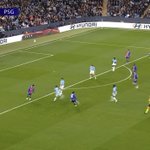
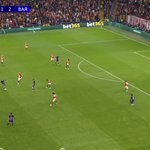



Contención rival se hunde a cubrir el espacio entre central y lateral, liberando a su par que es el interior del Porto.
Ese par amenaza espalda de salto de extremo, punta no sigue esa amenaza y lateral no salta porque está fijado.

Gustavo Torres retweeted

Manchester United | Defensive Phase vs. Como (4-1) MD3 UEFA Champions League - Michael Carrick as coach:
Gustavo Torres retweeted

New build-up solutions demand new pressing ideas. New pressing ideas demand new build-up solutions.
The never-ending tactical battle.
In the last couple of seasons, there has been a tendency in deep build-up to spread the centre-backs wide and push the fullbacks higher.
This is what I call "Isolating the deep build-up".
With more teams pressing man-to-man, the intention behind positioning the centre-backs so wide was to increase the distance for the “double-role presser”: the player responsible for pressing one of the centre-backs and the goalkeeper.
Once the double-role presser stepped to press the goalkeeper, many teams would use the third-man concept to find the free centre-back. The goalkeeper would play into a midfielder, who would then play a bounce pass to the centre-back, now free to receive. By pushing the fullbacks higher, teams created space for the centre-backs to receive unopposed. And because of the centre-backs being wide to increase the distance, the centre-forward would often arrive too late to apply pressure back.
However, during last season and this one, more teams have started to respond differently. Instead of pressing the goalkeeper horizontally, they step forward frontally, often with a midfielder jumping out to press the goalkeeper while using his cover shadow to block access to his direct opponent.
The quality with which some teams now execute what I call the "Vertical Third Man" is incredible. It allows them to bypass the first line of pressure and find the free player inside. Arsenal did it against Bayern Munich, but if there is one team that has mastered this concept, it is Como under Cesc Fàbregas.
Not many teams have mastered this level of execution yet, unlike the “Horizontal Third Man”, which has been refined over the years to the point that almost any team in elite football can execute it comfortably.
From a pressing perspective, stepping forward frontally to press the goalkeeper can be an effective approach. Bayern Munich with Kompany were among the teams using this solution last season, while Roberto De Zerbi has also applied it with Olympique de Marseille and Tottenham Hotspur, particularly against teams that want to "isolate the build-up."
At first glance, pressing the goalkeeper frontally might seem riskier than pressing horizontally. The main trade-off is that a midfielder has to step out of his position, leaving one fewer player inside. This can create a temporary numerical disadvantage in midfield, which can be more dangerous than leaving the centre-back free.
However, the advantage is that the opposition often struggles to build up short. By applying direct pressure to the goalkeeper, the pressing team reduces his time to find a solution and forces him to play towards one side or go long. Unless the opposition can execute the “Vertical Third Man” concept mentioned earlier, which only a few teams currently master, frontal pressing tends to be an effective way to prevent opponents from progressing comfortably through the first phase of build-up.
If you want to keep controlling games and progressing through build-up, you need to keep developing new solutions. Opponents are increasingly willing to take more risks in their pressing structures to prevent you from controlling games with the ball.

Gustavo Torres retweeted

Atentos a este concepto ofensivo de atacar lado oscuro al defensor a mediante él cambio en la trayectoria del jugador ofensivo
Importante lo que dice Bruno sobre el salto del central.
Qué normalizado está en Europa defender 3 vs. 3 o 2 vs. 2 a campo abierto.

🚨🗣️ Bruno Fernandes calling out Carrick & the backroom staff: "It's a decision from the staff to not press man to man and sometimes leave space behind and try to get the ball, wait for them, but sometimes when you give space to these teams they get confidence."
🗣️ Bruno on whether he is saying Michael Carrick got his tactics wrong: "That's on the manager and staff to see, not me. Sometimes you have to be more brave under pressure, take the risk of pressing high and making them uncomfortable. As you saw with them [Como], the centre-back was coming to mark me in my own half. We need to do that as a team but we were unable to."
🗣️ Bruno: "A team that plays through the middle with small connections, if you give them too much time and space then they can hurt you out wide."
El detalle del pase a la alejada para activar el tercer hombre.

A pressão assimétrica com os extremos saltando sobre os zagueiros na primeira linha é uma grande tendência do futebol contemporâneo.
Em contrapartida, se o extremo salta de fora para dentro e aborda o zagueiro, naturalmente o lateral está parcialmente livre no início da construção.
Neste exemplo de gol do Ipswich Town, mostramos como a dinâmica de terceiro homem mediante um dentro-fora consegue eliminar o salto do extremo e provocar desequilíbrios na última linha defensiva.
Gustavo Torres retweeted

When you read about how Tony Bloom or Matthew Benham operate, it's no wonder that Brighton and Brentford are so well run. Both clubs are built on a proprietary methodology that's led by the ownership downwards. That creates a data-driven culture that's near impossible for other clubs to manufacture.
The owner is the most important person at the club. A hands-on owner should either be an elite operator themselves or elite at selecting and empowering other operators, not an investor with a seat at the decision-making table.


Gustavo Torres retweeted

"You can't go too high or too low as a manager."
Thierry Henry on keeping your emotions in check as a manager 🧠
El peor perfil para defender un centro: viendo balón y hacia propia portería.
Una constante en Joao Cancelo y bien Fabián Ruiz en medir su ingreso para llegarle en su lado ciego.

Gustavo Torres retweeted

Inside how the Tampa Bay Rays built another World Series team. Culture is everything, and the Rays embody it in plenty of tangible ways. espn.com/mlb/story/_/id/5022…

Qué tuitazo

Hansi Flick's Barcelona Doubling Down on Short Distances and High Mobility.
FC Barcelona after the arrival of Hansi Flick has gone from being a typical team with large distances and low mobility towards a team that plays with very short distances and high mobility.
The change from Lewandowski to players like Gordon and Gabriel Jesus makes this evolution towards high mobility even clearer.
It is increasingly common to see teams moving away from traditional, rigid positional play, with large distances and low mobility, towards a style based on shorter distances.
Xabi Alonso's Bayer Leverkusen was one of the first teams to reduce distances significantly, successfully winning the Bundesliga in 2024. Francesco Farioli said in an interview that one of the things he took from relationism was shorter distances. His Porto played with much narrower fullbacks in 2025 than before, successfully winning the Portuguese league very comfortably. Porto and Leverkusen didn't play with the same mobility as Barcelona, but simply reducing distances helped them defensively, allowing them to avoid transitions more often and concede very few goals.
Hansi Flick wants to reduce distances to increase mobility. But Barcelona is focused on attacking centrally, which is quite different from Arsenal or PSG, who also use a lot of mobility but tend to do so through wide triangles rather than by looking to do it centrally.
By mobility, I mean that players are continuously moving, offering a double threat: running in behind or asking for the ball to feet, while exchanging positions between them. For example, you can suddenly see Gordon, as a left winger, moving into the striker position while Gabriel Jesus moves to the left, the left fullback stays between the lines and the attacking midfielder gives support deeper. In the next situation, their positions can be mixed again. Barcelona basically does this in the left half-space and centrally. If we divide the pitch into five lanes, starting from the left, the main movements take place in lanes two and three.
On the right, Lamine Yamal stays in position. Barcelona looks to overload the ball area on the left half-space or centrally, attract opponents there and then isolate Lamine Yamal on the right, allowing him to receive with less traffic. Spain used a similar idea with Baena moving inside and a striker like Oyarzabal supporting those overloads.
The interesting thing about Yamal's position is that he doesn't need to provide the full width. He applies a concept called optimal width, which means staying as wide as necessary to remain a threat and force the opposing fullback to respect the possibility of a run in behind. With this idea, Yamal stays closer to the box, attracts the fullback's attention and prevents him from closing inside. It also reduces the distance he needs to cover to counter-press. If you look at the fullbacks, their positioning is also very narrow.
Attacking centrally carries a risk. Losing the ball in these areas can expose the team more than losing it in wide areas. This is one of the reasons why teams like Arsenal or PSG, who use a lot of mobility try do it more through wider combinations than centrally.
Flick keeps insisting on reducing distances because he knows that the only way to play with this level of mobility is to have players close enough to each other to counter-press immediately after losing the ball.
In a press conference, he said:
“When we analyzed the game against Girona, I always speak about positioning, the right distance between the players and the opponent. It's very important, and if you're far from that, you lose, you have to run too much, give the opponents a little bit more time to play out and this is also what kills us in the defense.”
His point is clear: if Barcelona wants to play with high mobility, it needs very short distances. Otherwise, players have to run too much, giving opponents more time to escape the pressure.
There is another important benefit to reducing distances. Players feel more comfortable taking risks with short combinations in congested spaces. They know that if they lose the ball, they have teammates nearby who can recover it quickly. The second attack can then be even more dangerous than the first because the opposition is more disorganized.
FC Barcelona is doubling down on short distances and very high mobility, and this season's signings reflect that direction. More teams will likely adopt similar ideas in the coming seasons.

Gustavo Torres retweeted
Hansi Flick's Barcelona Doubling Down on Short Distances and High Mobility.
FC Barcelona after the arrival of Hansi Flick has gone from being a typical team with large distances and low mobility towards a team that plays with very short distances and high mobility.
The change from Lewandowski to players like Gordon and Gabriel Jesus makes this evolution towards high mobility even clearer.
It is increasingly common to see teams moving away from traditional, rigid positional play, with large distances and low mobility, towards a style based on shorter distances.
Xabi Alonso's Bayer Leverkusen was one of the first teams to reduce distances significantly, successfully winning the Bundesliga in 2024. Francesco Farioli said in an interview that one of the things he took from relationism was shorter distances. His Porto played with much narrower fullbacks in 2025 than before, successfully winning the Portuguese league very comfortably. Porto and Leverkusen didn't play with the same mobility as Barcelona, but simply reducing distances helped them defensively, allowing them to avoid transitions more often and concede very few goals.
Hansi Flick wants to reduce distances to increase mobility. But Barcelona is focused on attacking centrally, which is quite different from Arsenal or PSG, who also use a lot of mobility but tend to do so through wide triangles rather than by looking to do it centrally.
By mobility, I mean that players are continuously moving, offering a double threat: running in behind or asking for the ball to feet, while exchanging positions between them. For example, you can suddenly see Gordon, as a left winger, moving into the striker position while Gabriel Jesus moves to the left, the left fullback stays between the lines and the attacking midfielder gives support deeper. In the next situation, their positions can be mixed again. Barcelona basically does this in the left half-space and centrally. If we divide the pitch into five lanes, starting from the left, the main movements take place in lanes two and three.
On the right, Lamine Yamal stays in position. Barcelona looks to overload the ball area on the left half-space or centrally, attract opponents there and then isolate Lamine Yamal on the right, allowing him to receive with less traffic. Spain used a similar idea with Baena moving inside and a striker like Oyarzabal supporting those overloads.
The interesting thing about Yamal's position is that he doesn't need to provide the full width. He applies a concept called optimal width, which means staying as wide as necessary to remain a threat and force the opposing fullback to respect the possibility of a run in behind. With this idea, Yamal stays closer to the box, attracts the fullback's attention and prevents him from closing inside. It also reduces the distance he needs to cover to counter-press. If you look at the fullbacks, their positioning is also very narrow.
Attacking centrally carries a risk. Losing the ball in these areas can expose the team more than losing it in wide areas. This is one of the reasons why teams like Arsenal or PSG, who use a lot of mobility try do it more through wider combinations than centrally.
Flick keeps insisting on reducing distances because he knows that the only way to play with this level of mobility is to have players close enough to each other to counter-press immediately after losing the ball.
In a press conference, he said:
“When we analyzed the game against Girona, I always speak about positioning, the right distance between the players and the opponent. It's very important, and if you're far from that, you lose, you have to run too much, give the opponents a little bit more time to play out and this is also what kills us in the defense.”
His point is clear: if Barcelona wants to play with high mobility, it needs very short distances. Otherwise, players have to run too much, giving opponents more time to escape the pressure.
There is another important benefit to reducing distances. Players feel more comfortable taking risks with short combinations in congested spaces. They know that if they lose the ball, they have teammates nearby who can recover it quickly. The second attack can then be even more dangerous than the first because the opposition is more disorganized.
FC Barcelona is doubling down on short distances and very high mobility, and this season's signings reflect that direction. More teams will likely adopt similar ideas in the coming seasons.


Gustavo Torres retweeted

Steve Kerr on the changing nature of basketball…
Fewer play calls. More flow. More concepts. More decisions made at speed. As the game continues to evolve, players are being asked to operate with greater freedom, responsibility and awareness. Rather than relying on constant instructions from the sidelines, they must understand the principles of the game, recognise what is unfolding in front of them and make effective decisions in real time.
I think there’s something fascinating here from a sport psychology perspective. As basketball gets faster, players have less time to consciously organise themselves, think through every option or wait for direction from the bench. They have to perceive, decide and act…in the flow of the game. This means responding to the information available in the moment rather than trying to control every situation through pre-planned instructions.
That places enormous demands on a player’s mindset. Their attention has to be exceptional. They must constantly scan, search and pick up information, reading teammates, opponents, spaces, movements and opportunities. They need to stay connected to what is happening NOW while also anticipating what might happen NEXT. The ability to remain fully engaged with the present moment, without becoming distracted by previous actions or future possibilities, becomes increasingly important as the speed and complexity of the game increases.
Their intensity also has to be optimal. They need to be alert, alive and engaged, mentally and physically ready to respond to a game that refuses to slow down. Too little intensity can lead to passivity, delayed reactions and a lack of involvement. Too much intensity can create tension, rushed decisions and a loss of control. The challenge is to find the level of activation that allows the player to remain responsive, composed and ready to act.
Their intent has to be high as well. They must be purposeful, positive and proactive, rather than waiting for the perfect moment or hesitating through fear of making mistakes. They need to execute with conviction and commit to their decisions, even when the outcome is uncertain. In a fast-moving environment, hesitation can close an opportunity before the player has had time to fully recognise it.
Attention. Intensity. Intent.
These are three mental skills that, in my opinion, become increasingly important as sport becomes faster, more fluid and less scripted. They help players remain connected to the game, respond effectively to changing circumstances and act with clarity when there is no time for lengthy conscious analysis.
But there’s another fascinating layer to Kerr’s observation. Players need shared understanding, shared principles and shared ways of seeing the game. They need to recognise opportunities together, anticipate each other’s movements and coordinate their actions without constantly relying on verbal instructions. The most effective teams develop a collective awareness that allows players to respond to the same situation in complementary ways, even when the exact solution has not been rehearsed.
This is where coaching becomes particularly interesting. The challenge isn’t simply to teach players what to do. It is to develop players who can recognise when to do it, why to do it and how to adapt when the picture changes. Players need to understand the principles behind their actions so they can apply them intelligently in situations that are never exactly the same. The goal is not to remove uncertainty from the game, but to help players become more comfortable and capable within it.
Training must reflect this. There should be less dependence on rehearsed solutions and more exposure to realistic, variable and demanding situations that help players learn to perceive and act together. Players need opportunities to make decisions under pressure, respond to changing information and experience the consequences of their choices. They need to develop not only technical execution, but also the awareness and adaptability required to use those skills effectively in context.
And underpinning all of this?
A High Performance Mindset (HPM).
Because when the game accelerates, the mind cannot afford to become disconnected, distracted or consumed by doubt. It has to remain connected to the game, connected to the task and connected to the next action. Players must be able to acknowledge what has happened, learn from it quickly and then return their attention to what the game is asking of them now.
The future of basketball may involve fewer instructions from the sidelines, but it will demand more from the minds of the players on the court. Players will need to be more perceptive, more adaptable and more willing to take responsibility for their decisions. They will need to understand the game deeply enough to operate with freedom while remaining connected to the collective principles of the team.
The faster the game, the more important the mindset.
**********************************
My new book, Compete, helps players to execute with high attention, optimal intensity, and high intent
Gustavo Torres retweeted
Manchester United | Possibility to switch (Lammens) the game after negative pass vs. Tottenham - Michael Carrick as coach:
