

Institut De Neurosciences Des Systèmes - Postdoc
Marseille, France
Joined November 2014
- Tweets219
- Following489
- Followers399
- Likes1.1K

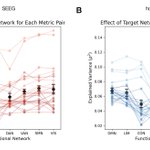




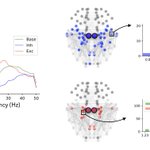

New preprint: "A personalized map of where, when, and how to stimulate the brain to elicit controlled responses."
biorxiv.org/content/10.64898…
We use personalized AI surrogate brains to predict where, when & how to stimulate for reliable effects.
Thread 👇
linkedin.com/posts/grabuffo_…

Work done with @ireneaceropousa, Tomas Berjaga-Buisan, and @GustavoDeco at the Center for Brain and Cognition (CBC) @UPFBarcelona, as part of my Marie Skłodowska-Curie project CAERUS (grant agreement No. 101199894).
New preprint out!
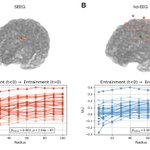
How does criticality propagate from local neuronal circuits to whole-brain dynamics?
We tackle this with a multiscale, connectome-based mouse model. 🧵/n
👉 biorxiv.org/content/10.64898…

Also, check out our companion preprint where we test criticality empirically across local and global scales in simultaneous bilateral prefrontal cortex spiking recordings in freely behaving rats biorxiv.org/content/10.64898…

Big thanks to the solid team @ldallap1, @PierpaSorre, @FukaiTomoki, @MNPompili, Pietro Bozzo, Bach Nguyen, Damien Depannemaecker, Leonardo Gollo
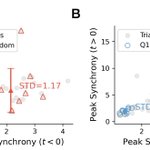
🧠⚡️Brain stimulation is powerful, yet its effects are notoriously variable: identical parameters can produce very different outcomes. In our new preprint, we show how the brain’s state before stimulation helps explain and reduce this variability. 1/n
doi.org/10.1101/2025.09.18.6…
Key message: variability is not just noise—it reflects structured brain dynamics that can be harnessed for more reliable, state-aware stimulation protocols.
Preprint: doi.org/10.1101/2025.09.18.6…
Code: github.com/grabuffo/State_De…
7/n
With deep gratitude to my extraordinary co-authors @MariannaAngiol1, @FukaiTomoki, @GustavoDeco, @PierpaSorre , and @DaveMomi — this work would not have been possible without them.
Supported by @MSCActions and @UPFBarcelona as the first step of the "CAERUS" project—more to come!