

Understand your DNA. Optimize health, diet, & longevity with Genetic Lifehacks. #Biohacking
Small town, MT
Joined February 2015
- Tweets7.7K
- Following794
- Followers2.3K
- Likes3.5K



Pinned Tweet
Estrogen turns up PEMT, the liver enzyme that lets you make some of your own choline.
It's likely a pregnancy safeguard. On a low-choline diet, men and postmenopausal women showed signs of organ damage faster than premenopausal women.
At menopause, estrogen drops, PEMT drops, and less choline is available for the brain. A 2026 study tied choline to the working memory changes a lot of women notice in menopause. Some PEMT variants make you even more dependent on dietary choline, and about 90% of people in the US don't hit the adequate intake anyway.
Eggs are the easy fix. In one study, egg yolks raised blood choline about four times more than the same dose of choline bitartrate.
If menopause brain fog is a thing for you, this one is worth a look.
geneticlifehacks.com/which-t…

Important study that should have been done years ago. The link to low CoQ10 with statins has been known for decades- and the connection to dementia risk mechanistically makes sense.

Brand new study just dropped (published Oct 29, 2026 in Frontiers in Pharmacology).
A massive new analysis from two of the world’s largest biomedical databases just linked statin use to roughly double the risk of dementia.
Researchers looked at the All of Us Research Program (83,355 adults, including over 31,000 statin users, followed through 2023) and the UK Biobank (173,282 adults, including nearly 44,000 statin users). After balancing groups for age, BMI, APOE status, comorbidities, and other factors using inverse probability of treatment weighting, statin users showed adjusted hazard ratios of 2.22 (All of Us) and 2.54 (UK Biobank) for incident dementia.
The association held across Alzheimer’s disease, vascular dementia, and other subtypes. High-intensity statins carried an additional ~14% higher risk compared with moderate-to-low intensity therapy. Incidence rates were higher in the discovery cohort (64.9 vs 30.7 per 10,000 person-years) than in the replication cohort, but the relative increase was consistent.
In an exploratory mediation analysis, a modest portion (8.2%) of the association appeared to run through lower levels of coenzyme Q7—a protein involved in CoQ10 biosynthesis. Lower COQ7 was itself linked to higher dementia odds. The pathway through LDL-C was not statistically significant. The authors note this is hypothesis-generating and that direct CoQ10 was not measured.
This is observational data, not a randomized trial, so it cannot prove causation. Residual confounding (including why people were prescribed statins) remains possible, and the literature on statins and cognition has been mixed. Still, the scale, the replication across two independent cohorts, the intensity-dependent pattern, and the COQ7 signal make it hard to ignore.
This is the kind of result that makes people who have been skeptical of long-term statin use for primary prevention sit up and take notice—especially given the CoQ10 connection many clinicians have quietly acknowledged for years.
The full paper is open access: frontiersin.org/journals/pha…

Thinking takes extra blood flow to the brain. In people with ME/CFS and POTS, studies show that normal bump doesn't happen during mental tasks.
Back in the 1990s, researchers found reduced blood flow to the brain in about 80% of ME/CFS patients. That's one physical reason brain fog shows up as word-finding trouble, hazy thinking and losing your train of thought.
Blood flow is only one of several causes in the research. Others include low B12, folate, vitamin D, thiamine or magnesium, high inflammatory cytokines, lingering infections like long Covid, microclots, sleep apnea, low thyroid and medications.
Figuring out which one fits you matters more than another "get more sleep" tip. Which one turned out to be yours? 👇
geneticlifehacks.com/brain-f…

Debbie @ Genetic Lifehacks retweeted

Cysteine reduction rather than methionine restriction promotes immunometabolic fitness to confer survival benefit in aging
biorxiv.org/content/10.64898…
I'm optimistic.
In the meantime, here's what I'm doing: longevitylifehacks.substack.…
--all based on my genetics: geneticlifehacks.com

Stress doesn't wear out your adrenal glands. Studies haven't found exhausted adrenals that can't make enough cortisol, and most endocrinologists don't think adrenal fatigue is real.
What does happen is HPA axis dysfunction. That's the hypothalamus to pituitary to adrenal chain your brain uses to control cortisol. With repeated stress, cortisol can stay high, the daily rhythm can drift out of sync, or your cells turn down their cortisol receptors. That last one means a weaker response when real acute stress hits, and it's tied to catching more colds.
Chronically high cortisol is linked to blood sugar problems, depression and anxiety, weight gain and fertility issues. Childhood trauma can shift the system into adulthood, and genetics affects how resilient you are to that.
So the tired, wired, run-down feeling is real. The worn-out glands explanation just doesn't hold up.
geneticlifehacks.com/hpa-axi…

Some researchers report that almost 1 in 5 women have Raynaud's. Fingertips turn white, then blue in the cold or under stress, then red as the blood comes back.
It's an exaggerated version of the normal squeeze your blood vessels do in the cold, driven by adrenergic receptors that respond to cold and norepinephrine. A genome-wide study pointed to ADRA2A, and variants there are thought to boost that constriction in the hands and feet. Overall it's about 30 to 55% hereditary.
Estrogen acts on those same blood vessel receptors, which may be why it's more common in premenopausal women.
Worth knowing as the weather turns cold. Beta blockers and triptans can trigger it in some people, and so can vibrating tools and smoking. Raynaud's can also be an early sign of lupus, Sjogren's or systemic sclerosis, so it's worth bringing up with your doctor. 👇
geneticlifehacks.com/raynaud…

Latest Genetic Lifehacks newsletter featuring taurine study on NLRP3 and inflammation.
geneticlifehacks.substack.co…
Genetic Lifehacks SNP Coverage Checker: Check which DNA tests include your SNP, privately producthunt.com/products/gen… via @producthunt

Debbie @ Genetic Lifehacks retweeted

A young bison jumps for joy at the first snow of the season. Montana.
Good list. Genetics can help explain why some of these work better for some people. Variants in DRD4, DAT1 (SLC6A3) and COMT change how fast dopamine is cleared. Variants related to circadian rhythm may be why morning light, blocking blue light, and exercise help some people a lot and others only a little.

"So if i don't want to manage my ADHD with stimulants, what else can i do?"
-Provide certain key nutrients
-Fidgeting tools
-Gum
-Morning bright light 10.000 lux 20–30 min
-Exercise at key times of the day
-Limit artificial dopamine hits when you can
-L theanine + caffeine + zinc
-Sunlight
-Sauna
-Make a plan for the next day/week and look at it multiple times a day to not get distracted
-Limit notifications
-Ginkgo + caffeine + vitamin V
-PS128 probiotic (Lactobacillus plantarum)
-Citicoline + magnesium
-Thiamine + P5P + saffron
-Blue light blockers
-Rhodiola rosea (3–6 % rosavins + 1–2 % salidroside, 200–600 mg)
-Oroxylin A
-Bromantane
-Creatine + saffron
-Resolve gut dysbiosis and methylation issues if you have them
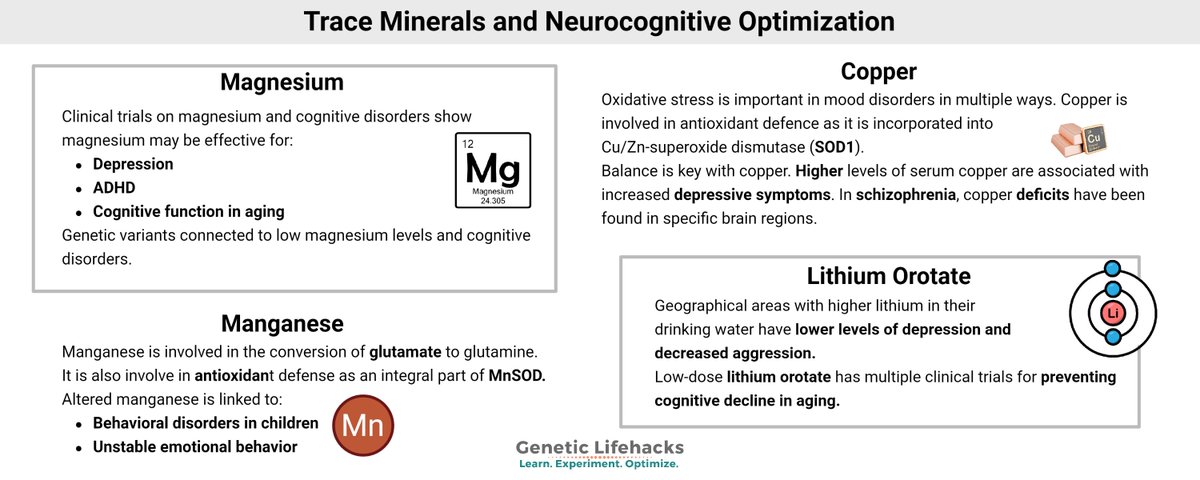
-Low dose lithium orotate
Common sense disclaimer:
1) Do not use all of these.
These are just tools you can further research.
2) Cycle everything unless your doctor suggests otherwise
Now these will NOT work overnight.
They are not adderall.
But they can help improve the underlying dysfunctions.
Vitamin D has a regulatory influence on core circadian clock genes, specifically facilitating the balanced oscillation of BMAL1 and PER2
Sunlight also increases subcortical tyrosine hydroxylase, D2/D3 receptors and amphetamine-stimulated dopamine release (literally taps into the same + more mechanisms than bromantane but not as fast).
Sauna for example helps with norepinephrine + dynorphin
Creapure increases brain phosphocreatine → better energy reserve for prefrontal cortex + mild dopamine upregulation
At 30mg/day saffron:
-Performs the same as Ritalin in kids with ADHD when it comes to core symptom management.
-Performs comparably to Prozac without one-shotting your penis (in fact, it can help reverse SSRI induced sexual dysfunction)
-Resulted in cognitive improvements comparable to donepezil (Alzheimer's) with significantly fewer gastrointestinal side effects.
-Has similar efficacy to citalopram (Celexa) for generalized anxiety symptoms.
-Has no significant statistical difference to fluvoxamine for reducing obsessive-compulsive symptoms.
*Not ideal for people who have issues in the gut lining/mucus (if you want to try it start with 15mg with a meal)
**Not ideal for long term use / for people with elevated liver enzymes
If you want to try higher doses, the list of potential side effects increases (as it happens with all potent tools)
"Why is saffron so powerful?"
Its main bioactive compounds are:
-Crocin
-Crocetin
-Safranal
These act on several pathways rather than hitting a single target giving it a combination of monoamine support + strong antioxidant/anti-inflammatory effects + neurotrophic activity.
-Monoamine modulation (serotonin, dopamine, norepinephrine)
Its active compounds inhibit reuptake of these neurotransmitters (similar to SSRIs/SNRIs) and also inhibit monoamine oxidase enzymes that break them down.
The dual action increases their availability in the synapse.
-Antioxidant and anti-inflammatory actions
Crocin and related compounds are strong antioxidants that reduce reactive oxygen species and can dampen inflammatory signaling.
-It can increase brain-derived neurotrophic factor (BDNF) and related pathways involved in neurogenesis, synaptic plasticity, and neuronal survival (particularly relevant in the hippocampus).
-Safranal shows activity at GABA-A receptors (including the benzodiazepine site)
“Bro these are VITAMIN PILLS”
Once again, let’s see the literature.
ADHD patients might have compromised or slowed B6-dependent enzymes.
The specific B6-dependent enzymes heavily implicated in ADHD include:
1. Dopa decarboxylase that converts L-DOPA into dopamine and 5-HTP into serotonin.
2. Glutamate decarboxylase (GAD) that converts glutamate into GABA.
3. Tryptophan metabolizing enzymes (think the kynurenine pathway)
"But i don't feel anything from B6".
A) Are you using P5P?
B) Do you have enough zinc, B2 and magnesium in your system?
Then zinc helps keep DAT at a healthy baseline, preventing it from vacuuming up dopamine too aggressively.
DAT contains four high-affinity extracellular binding sites specifically meant for Zinc.
When Zinc binds to these sites, it physically modulates the transporter's rhythm, altering steady-state currents and optimizing reuptake.
Normally, after dopamine is released into the synaptic cleft, it binds to dopamine receptors on the postsynaptic neuron to exert its effects.
The DAT then clears the dopamine from the synapse and recycles it back into the presynaptic neuron.
So it helps to terminate the action of dopamine by transporting it back into the presynaptic neuron.
So when we inhibit it, we slow down the cleanup of dopamine and leave more of the chemical active in the synapses.
Ritalin for example is a highly effective DAT inhibitor.
Its structural mechanism differs completely from zinc obviously.
While zinc acts as a non-competitive, allosteric clamp that locks the transporter from a side-pocket, methylphenidate operates primarily as an orthosteric blocker.
It targets the S1 central binding site of the dopamine transporter.
This is the exact same internal structural pocket where the dopamine molecule itself lands to be moved across the membrane.
By sitting directly inside the central channel core, it acts like a physical plug and thus dopamine cannot bind to the transporter at all.
Now unlike competitive inhibitors (such as cocaine or Ritalin), which bind directly to the central S1 substrate site halfway across the cell membrane, zinc acts at an entirely independent allosteric site on the outer surface of the transporter.
By anchoring itself to this distinct outer pocket, zinc physically restrains the movement of the transporter.
It acts as a rigid macromolecular bridge that locks the DAT machinery in an "outward-open" conformation.
While the central channel remains open, the transporter is effectively paralyzed, it can no longer undergo the conformational rotation required to pull dopamine out of the synapse and back into the cell.
For someone struggling with ADHD or anhedonia, this highly efficient, non-competitive blocking action provides a unique therapeutic advantage.
Because zinc does not compete for the central keyhole, its ability to stop the cellular "vacuum cleaner" cannot be overridden by fluctuating concentrations of natural dopamine.
It forces a baseline level of dopamine to pool within the synaptic cleft.
This is why DAT inhibitors usually increase the effectiveness of stimulants.
In the context of ADHD, this prolonged synaptic activity helps satisfy under-stimulated reward pathways.
In the case of anhedonia this steady accumulation of active dopamine lowers the activation threshold required to feel pleasure, motivation and goal-directed drive.
Other natural DAT inhibitors that you might be aware of are ginkgo and saffron.
"What about copper?"
At basic doses such as 10-15mg/day, eating just 100 grams of beef liver/week does the trick.
"A reward is a reward dude, changing my lifestyle won't help my ADHD. You are unscientific".
Once again. Nope. Let’s see the damn literature.
Imagine that your brain has two main workers:
1. Dopamine
This is the chemical that makes you feel satisfied and motivated
2. Acetylcholine
This is the chemical that turns on when you focus and try hard
If someone gives you a piece of chocolate for doing nothing, you get a small, normal splash of dopamine.
If you have to walk 5 miles to get that exact same piece of chocolate, your brain turns on Acetylcholine because you are using effort.
When you finally get the chocolate, that Acetylcholine acts like a giant loudspeaker for your dopamine.
By giving you a bigger chemical reward for working hard, your brain literally teaches itself a lesson: "effort is worth it."
This is of vital importance if you have ADHD.
In an ADHD brain, the "loudspeaker" (Acetylcholine) doesn't always turn on properly when things get tough.
Without that loudspeaker, doing hard work feels incredibly draining, and the reward at the end feels small and disappointing.
This is why people with ADHD struggle so much to start difficult tasks, their brains are missing the chemical booster shot that makes effort feel good.
So while for a long time we thought that dopamine levels were entirely dictated by the firing of dopamine cell bodies located deep in the midbrain.
We now know that local interneurons in the nucleus accumbens release a rapid burst of acetylcholine when a task requires high effort.
This acetylcholine binds directly to nicotinic receptors on the nearby dopamine axon terminals.
It acts like a local amplifier, forcing a much larger hit of dopamine to spill out when the reward is achieved compared to when the exact same reward is given for free.
When researchers block this acetylcholine link, the subjects completely lost their drive to perform high-effort tasks, though they still happily ate "free" or low-effort rewards.
Now, to help your brain learn the "effort = worth it" loop, you need a dual strategy:
-Support acetylcholine (the amplifier) to make starting tasks easier
and
-Carefully manage artificial rewards (cheap dopamine) so they do not hijack your motivation system
"Fine but what about the other stuff such as working on "gut health" lmao you unscientific conspiracy theorist".
Well, gut issues and ADHD create a vicious cycle.
In IBS for example, an overgrowth of bacteria like Prevotella copri and Ruminococcaceae, commonly associated with it, has been directly linked to a decreased expression of dopamine transporters (DAT) and D2 receptors (D2R) in the central nervous system.
And if you have ADHD this is the last thing you want.
Transferring gut microbiota from humans with ADHD not only gives mice ADHD but individuals with ADHD also have:
-Nearly 50% higher risk of overall gastrointestinal symptoms
-Are 63% more likely to suffer from IBS
"So there are shared biological root causes of ADHD and gastrointestinal issues?"
Yes, after all a single underlying genetic/physiological mechanism can cause completely different symptoms in different parts of the body.
Let's take dopamine as an example.
Because dopamine regulates both brain functions such as focus, drive etc but also gut motility, a disruption in your body's baseline dopamine system/metabolism/production hits both areas simultaneously.
Let me dumb it down even more (these are oversimplifications):
If dopamine is the "molecular handbrake" and coordinator for your intestines, dopamine "deficiency" as seen in ADHD, directly translates to a faulty, unpredictable brake system in your digestive tract.
In the digestive system, dopamine receptors act as regulators that tell your intestinal muscles when to relax and when to contract to push food through smoothly.
If your body has altered dopamine signaling or lower dopaminergic tone, that "handbrake" doesn't engage or disengage correctly.
Instead of a smooth, rhythmic wave moving food along, your peristalsis becomes erratic.
If the muscles stall completely, you get chronic constipation; if they contract chaotically, you experience the cramping, alternating cycles, and spasms characteristic of IBS.
Then without adequate local dopamine signaling, the intestinal barrier weakens, leading to increased gut permeability and painful issues like acid reflux or generalized indigestion.
"How did you learn..."
Here: fitandball.gumroad.com/l/bra…


I made a new public list for anyone following long COVID, ME/CFS, POTS, and MCAS research.
Researchers like Akiko Iwasaki and @PutrinoLab, research groups like PolyBio and Open Medicine Foundation, patient-led groups like @patientled, plus people who dig into the actual papers, like ME/CFS Science and @JackHadfield14. Thank you to everyone on it for sharing your work so openly!
These conditions all overlap so much, and the good research is scattered all over. Having it in one feed makes it a lot easier to see what's new and what's actually holding up.
Who should I add?
teapawt.org/i/lists/21154604580773…

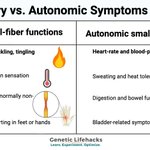
Small fiber neuropathy is diagnosed with a skin biopsy that counts the tiniest nerve fibers in your skin.
Those small fibers carry warmth, itch and dull pain. They also run autonomic jobs like heart rate when you stand, sweating, digestion and bladder signals. So SFN can feel like burning feet and pins and needles, or like dizziness, heat intolerance and bloating.
The overlap is striking. In one study, about 80% of people with MCAS or hereditary alpha tryptasemia had reduced small nerve fibers. Around 40 to 60% of people diagnosed with fibromyalgia met biopsy criteria for SFN, and another study found 61% overlap with hEDS.
Mutations in the NaV1.7 and NaV1.8 sodium channels are a known genetic cause. Nerve fibers can regrow once the trigger is removed, though it can be slow.
geneticlifehacks.com/small-f…

Debbie @ Genetic Lifehacks retweeted

🚨 New in @Nature !!
MCT1 transports lactate directly into cardiac mitochondria, where LDHB converts it to pyruvate and NADH, fueling respiration independently of MPC.
Loss of MCT1 impairs lactate oxidation and accelerates heart failure.
doi.org/10.1038/s41586-026-1…

Big new Alzheimer's GWAS paper out today in Nature. 2.8 million people and 48 new risk loci.
What I find interesting is that it points to genes related to microglia, the brain's immune cells, and genes that were turned down in specific neurons that are vulnerable early.

1/n
Out today in @Nature: our Alzheimer’s disease GWAS of ~2.8M people (~184k cases). We find 48 new loci, ~3x higher SNP-heritability, enrichment in genes up-regulated in microglia and down-regulated in neurons, and we release public summary statistics. nature.com/articles/s41586-0…


Restless leg syndrome affects somewhere between 4 and 14% of adults, and the go-to internet advice is to take iron.
That may not be the right move for everyone. People with RLS often have low iron in the brain even when blood ferritin looks normal. A 2025 study found ferroptosis, an iron-driven type of cell death, ramped up in dopamine neurons in RLS, triggered by changes in the body clock. Adding more iron when ferritin is already fine could make that worse.
A few other clues from the research. People with MCAS were about 3 times more likely to have RLS. SSRIs, SNRIs and tricyclics raised the odds of leg movements in sleep. Higher folate went along with more risk, and higher magnesium with less.
geneticlifehacks.com/restles…

Interesting and large study - interesting because HDL levels have genetic connections. Going to update my articles on HDL and APOB today.

New study using UK Biobank data finds that HDL ("good") cholesterol attenuates the risk of ApoB for coronary heart disease.
In effect, if HDL is high, then ApoB doesn't matter much if at all.
HDL is a marker of metabolic health. academic.oup.com/eurjpc/adva…


Reposting this to highlight all of the good comments on LDN from people who have tried it.

This one is likely to be disappointing for a lot of people who feel LDN helps them.
A placebo-controlled trial in post-COVID ME/CFS found no real difference in fatigue or pain.
one thought, though. LDN is thought to work partly by calming TLR4 signaling in microglia, and people vary a lot in opioid receptor and TLR4 genetics. Average results can hide a subgroup (with genetic variants) that responds.
Has LDN helped you, or did it do nothing?