

Home of the 🔸10% Pledge | Creating a global community who gives effectively and significantly
Oxford
Joined November 2009
- Tweets5.7K
- Following1.6K
- Followers12.4K
- Likes4.8K


Pinned Tweet
Being born is a roll of the dice.
Most of us got insanely lucky.
Imagine you had to roll again, how would you want the world to look?
gwwc.org/birth-lottery

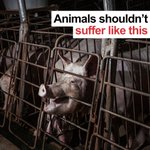
This is a really hard to stat to process: since 1961, the number of land animals we kill for food every year, has gone up by over 70 billion (OurWorldInData). That’s a 10x multiplier in 6 decades, and a shocking 74% of these come from factory farming.
The good news is, however, that we’re finally starting to get some wins here. Earlier this year, The Humane League - a global non profit - was part of a coalition that convinced mega-retailer Ahold Delhaize US to only source from suppliers that don’t use animal cages.
For context, Ahold Delhaize US operates in 23 states, and serves over 26 million customers throughout the U.S., every single week. So with just one commitment, they’ve saved millions of pigs and hens from spending more time in cages.
Now, of course, wins like these do not come easily, but we must celebrate them when they do, and hopefully one day, pictures like these will be relegated into the history books.
Image source: Lukas Vincour / Zviřata Nejíme / We Animals

If the global 1% donated 10% of their income, what would happen?
In one year, $1.8 trillion would be raised. Tuberculosis, HIV and Malaria could be eradicated with $219 billion; extreme poverty with $258 billion; and world hunger and malnutrition with $341 billion. Even after all that, there'd still be around $1 trillion available to go to other impactful causes (source: Longview Report 2023 - What if the 1% gave 10%)
*At the time of videoing, the figure for saving one life from Malaria was $3,000. This is now $4,000 - $5,500 according to GiveWell.


Giving What We Can 🔸 retweeted

#TCRNo12 DONE
39 people signed a Trial Pledge or 10% Pledge! @givingwhatwecan 🧡
I hope two things stick with everyone who followed this adventure even a little: (1) you can do far more than you think; and (2) we can do far more for the most vulnerable people in the world. There is no need for 13,000 children to die every day. If you're rich by global standards (and you most likely are) you can do something about it.
givewithsimon.com

Giving What We Can 🔸 retweeted

Happy 80th birthday, Peter Singer.
GFI was born out of the effective altruism movement, a movement based on the ideas of bioethicist @PeterSinger.
On Peter’s 80th birthday, Alka and I are donating to the charity Peter founded, The @LifeYouCanSave, and we encourage you to give as well:
thelifeyoucansave.org/peter-…
Another way to honor Peter: Take the 10% pledge (pledge to give away at least 10% of your income), a movement spearheaded by another charity inspired by Peter: @GivingWhatWeCan.
You can find out more and take the pledge here:
givingwhatwecan.org/pledge
Happy Birthday, Peter.
This might be the deadliest decision you've never heard of
youtube.com/watch?v=BJYfSfh7…
Giving What We Can 🔸 retweeted

Was great to be back on Sam Harris again to talk about effective altruism, AI, and the future of humanity.
We talked about what EA has actually achieved, the intelligence explosion, AI-enabled concentration of power, and what a post-abundance world might look like.
Non-paywalled full episode link is in reply.


They’re now a supported programme on our donation platform, highlighting promising, evidence-based work where additional support can make a real difference.


Explore supported programmes here: givingwhatwecan.org/donate/o…
(Every person featured here shared their story willingly and with full understanding of how it would be used.)


Louise reflects on a question many people wrestle with: when am I actually in a position to give?
As a freelancer, her income wasn’t consistent. Some years she gave less, others more. But over time, she chose to keep increasing her giving as her situation allowed — guided by the belief that it’s every person’s responsibility to take care of others.
If you’d like to learn more about how the 🔶10% Pledge provides structure and effectiveness to your giving, check the link in our bio.
Not ready for a lifetime commitment? That’s okay.
Chris is one of the 1000+ members in our community currently doing the 🔷 Trial pledge.
The 🔷 Trial Pledge is a way to start giving intentionally, with more flexibility. You choose an amount (even 1%) and a timeframe that works for you — and see how it feels in real life.


