

Long-term investor & active trader. 📊 Follow and reply to my DMs for market notes, stock setups & lessons learned. Always learning. Risk first.👇
New York,USA
Joined May 2026
- Tweets350
- Following292
- Followers5.7K
- Likes1.3K




Pinned Tweet
Hey, I’m Graham Walker, a strategist with 15 years of investing experience on Wall Street. I look for stocks with plenty of room to grow and opportunities to get in. The right entry.

Graham Walker retweeted
$INTC just suffered its worst day since 1974. I think this wreckage is worth buying.
Friday: $65.76, down 28.58%. After-hours: $64.88.
The weak outlook deserves criticism. PC demand is struggling, manufacturing has bottlenecks, and investors are losing patience with expensive AI promises.
But Intel’s data-center and AI revenue grew 78% to $7.3B last quarter. There’s a business here worth rebuilding.
My call: buy $INTC for a multi-year turnaround. The opportunity is getting more Xeon chips shipped and improving manufacturing economics. The risk is that cash burn and dilution eat up the gains.
I also favor these semiconductor names:
• $AMAT — October’s Intel collaboration targets next-generation transistors and advanced packaging. A credible development opportunity, not booked revenue.
• $ASML — Intel’s High-NA EUV collaboration reinforces the importance of advanced lithography. Equipment spending still needs to translate into orders.
• $TSM — a competing foundry investment with Q3 revenue up 17.6% sequentially. Its case doesn’t require Intel to recover.
• $AVGO — custom AI chips and networking, backed by $13.7B in quarterly free cash flow.
These aren’t five versions of the same trade. Intel offers turnaround potential; the others offer different ways to participate in semiconductor investment.
#INTC #Semiconductors #AI #TechStocks #LongTermInvesting
Graham Walker retweeted
Hot take: everyone is trying to build the smartest AI agent.
Twilio is trying to own the phone line.
$NVDA supplies the compute. $MSFT , $GOOGL and $AMZN provide the models and cloud. $META brings the distribution.
When those agents need to call, text, verify an identity or collect a payment, $TWLO provides the rails.
That’s why I’m interested—but I’m not blindly buying the dip here.
Twilio just reported 20% revenue growth, $370M in free cash flow and raised its full-year outlook. The stock still dropped about 15% to $205 because Q4 organic growth is expected to slow from 16% to 11–12%.
The business looks better than the chart.
For me, $200 is the first level that needs to hold. Below that, the $188–$190 area matters a lot. On the upside, I’d want to see $225 reclaimed before calling this a real reversal.
I’m not calling it the next $NVDA .
But if voice AI moves from demos to real customer calls, Twilio could become the toll booth sitting underneath the whole agent economy.
Interesting stock. Ugly setup.
I’m watching, not chasing.
$AMD is walking into earnings at the one level bulls really can’t afford to lose.
$480–$500 is the line in the sand. Hold that zone, reclaim $560, and the move back toward $640 is still very much alive.
Lose $480 on a weekly close? Then I stop calling it a dip. The rising trendline around $450 comes into play, and $400 becomes a real possibility.
Fundamentally, AMD isn’t running on hype alone.
Data Center revenue more than doubled last quarter. EPYC is gaining momentum, Instinct deployments are scaling, and MI450/Helios gives AMD a real shot at taking more AI infrastructure spending from $NVDA .
But let’s be honest—the market already expects a lot.
With the Nasdaq under pressure, even good numbers may not be enough if guidance, margins or the AI ramp disappoint.



Graham Walker retweeted

The next 12 months could surprise a lot of investors.
The U.S. midterm elections are in just 2 days, and history suggests the next 12 months could be very bullish for stocks.
Since 1950, the S&P 500 has delivered positive returns in the 12 months following every single U.S. midterm election.
That's 19 consecutive elections without a negative 12-month return.
Another dataset going back to 1942 shows that stocks gained between November and June after all 21 midterm elections.
According to Fidelity, the year following the midterms has also historically been the strongest year of the presidential cycle, with an average return of 18.7% between 1961 and 2024.
Look at what happened after the last four elections:
• 2010: The European debt crisis, U.S. credit downgrade and a nearly 19% market correction.
The S&P 500 still delivered a slightly positive total return in 2011.
• 2014: Oil prices collapsed, China slowed down and the Fed prepared to raise rates.
The S&P 500 still managed a small positive total return in 2015.
• 2018: The U.S.-China trade war and aggressive Fed tightening pushed stocks toward a bear market.
The S&P 500 surged nearly 29% in 2019.
• 2022: Inflation was above 8%, the Fed was aggressively raising rates and recession fears were widespread.
The S&P 500 rallied more than 24% in 2023.
But why have stocks historically performed so well after midterms?
Midterm election years have historically been the weakest part of the presidential cycle, averaging just 3.8% returns compared with 10.9% during the other three years.
Before elections, investors face uncertainty over which party will control Congress, taxes, government spending and regulations.
Once the results are announced, some of that uncertainty disappears, allowing investors to make decisions with a clearer picture of government policy.
Now the 2026 midterms are happening while AI stocks are selling off, inflation concerns are rising and geopolitical tensions remain elevated.
Similar risks existed during previous election cycles, yet stocks still delivered positive returns in the periods highlighted above.
If the historical trend continues, the S&P 500 could deliver another strong rally over the next 12 months.

Graham Walker retweeted

BITCOIN MONTHLY ANALYSIS
After a strong 43% gain in Q3, Bitcoin cooled down in October, closing the month down 7.3%.
But Bitcoin wasn't the only one falling. The Nasdaq 100 and Gold also dropped nearly 7%, while oil prices surged above $117.
Key Levels to Watch:
Support:
-Weekly MA 50: $75,770
-Monthly MA 50: $64,580
Resistance: $87,500
My Take:
I still see the bigger trend as positive, but don't expect Bitcoin to go up straight. A 20% drop is normal during a Bitcoin bull market.
If BTC drops between $65K and $75K, I'll be watching for a chance to buy more and hold for the next 3 years.
There's also a pattern worth watching. Bitcoin has often struggled around US midterm elections.
But sometimes, the best time to buy is when the market looks scary and everyone is afraid to buy.

Graham Walker retweeted
Every single market crashed this week.
Almost $5 trillion was wiped out from global stocks, precious metals and crypto.
US stocks: -$2.0T
Gold: -$1.38T
China: -$473B
South Korea: -$293B
Silver: -$292B
Japan: -$212B
Taiwan: -$203B
Crypto: -$125B
Hong Kong: -$33B
India: -$14B
The week actually started fine. Stocks were near their highs going into Wednesday.
On Wednesday, the Fed held rates, but two Fed officials voted to hike. That was the first warning.
On Thursday, inflation came in at 3.6%, the highest in a while, and Google crashed 12.6% after its earnings.
The Nasdaq had its worst day since June.
On Friday, it got worse.
Amazon missed estimates, Intel gave weak guidance, and Reddit crashed 29%. The S&P 500 fell 1.8% and the Nasdaq fell 2.9%.
With the Fed now leaning toward a hike instead of a cut, the selling spread everywhere, from AI stocks to gold, silver and Bitcoin.

Graham Walker retweeted

BREAKING: The US goods trade deficit widened by -$2.8 billion in September, or -2.1%, to -$134.9 billion, its widest gap since March 2025.
Imports rose +$8.1 billion, or +2.4%, to a record $344.2 billion.
This jump was led by a +7.5% MoM increase in capital goods, which include computers and accessories, semiconductors, and telecommunications equipment fueling the AI buildout.
Now, the capital goods deficit has widened by -$54.3 billion YoY, accounting for more than the entire increase in the overall trade deficit.
Meanwhile, US goods exports jumped +$5.3 billion in September, or +2.6%, to $209.2 billion, driven by a +12.8% increase in food shipments.
The US trade deficit is rapidly widening again.

Graham Walker retweeted

The collapse of Reddit will be studied.
After reporting earnings, its stock collapsed 30% in a single day.
It's down 44% in 2 weeks.
But the most important detail is what was revealed in that earnings call.
The CEO said AI is killing Google search.
People no longer get sent to Reddit from Google. They merely get their answers from the AI Mode itself.
Even Google confirmed this themselves with their disastrous results - AI mode is cannibalising their search business.
Pretty soon, no one will visit Reddit voluntarily. Its traffic will continue to crater.
The worst part?
Reddit isn't alone. There are millions of companies and publishers that rely on search traffic.
That's what happens when you rely on a single funnel for discovery.

Graham Walker retweeted

JUST IN: Crypto liquidations in October, 2026.
• Longs: $9,213,000,000
• Shorts: $3,290,000,000
• Total: $12,500,000,000
Graham Walker retweeted
BREAKING: The largest US physical-gold backed ETF, $GLD, recorded -$1.8 billion in outflows in October, its biggest monthly withdrawal since June.
This also marks its 3rd-largest monthly outflow since February 2024.
Year-to-date, $GLD has seen -$3.8 billion in withdrawals, putting it on track for its first annual outflow since 2023.
By comparison, the fund attracted +$23.0 billion in inflows in 2025, its largest annual intake on record.
Meanwhile, investors withdrew -$1.5 billion from gold and other precious metal funds last week, marking their 2nd weekly outflow over the last 7 weeks.
Gold flows are highly volatile right now.


Some perspective on the stock market tumult this week
Following Friday's stock market meltdown, Truist chief investment officer Keith Lerner offered some perspective to those who may be uneasy checking their portfolios this afternoon.
He explained that the pullback has largely been driven by high expectations for tech earnings, investors becoming more discerning about AI returns on investment, and rising borrowing costs.
But while the tech volatility may continue, Lerner laid out reasons to believe this could just be a reset:
The weakness has been narrow: Tech and communication services were the only sectors to fall in October, reflecting a sharp rotation rather than broad selling of the entire market.
Additional downside is possible, but models indicate that stocks won't fall apart completely: According to Lerner, a "combination of historical pullbacks, valuation, and technical support suggests potential downside of roughly 2% to 8% for tech from current levels."
Tech now looks discounted: As Yahoo Finance's Brian Sozzi pointed out for Alphabet this morning, tech price-to-earnings ratios have fallen. Lerner notes that tech now trades at a lower forward valuation than consumer staples and industrials, despite having the strongest estimated earnings growth for next year.
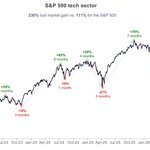
Pullbacks are normal: "Since the bull market began in October 2022, the S&P 500 has gained approximately 111%, tech has advanced roughly 230%, andsemiconductors have risen more than 380%. Against that backdrop, tech's current 10% decline does not appear abnormal relative to prior pullbacks during this bull market," Lerner wrote.
The bottom line, according to Lerner: "The corrective process may not be complete, but the weight of the evidence suggests the longer-term tech uptrend remains intact."

solana:BTZK1B3pCoBDD1vy5e4bDBM4bwvvhkKUMTuKABkGWwGp . Three letters about to get a whole lot of attention.
Anthropic has filed to list on Nasdaq under that ticker, putting the company behind Claude on investors’ IPO radar. I’m bullish on the opportunity—but the final offering price matters.
Meanwhile, I like buying $AMZN , $GOOGL , $AVGO and $NVDA for long-term exposure to the infrastructure Claude uses. They have actual business ties to Anthropic, not just an AI label slapped on a slide deck.
An IPO won’t magically fix the economics of AI. Still, this is a debut I’ll be following closely. Claude is becoming a business public-market investors will finally get to put a price on.
#Anthropic #ANT #IPO #AI #TechStocks

Hot take: everyone is trying to build the smartest AI agent.
Twilio is trying to own the phone line.
$NVDA supplies the compute. $MSFT , $GOOGL and $AMZN provide the models and cloud. $META brings the distribution.
When those agents need to call, text, verify an identity or collect a payment, $TWLO provides the rails.
That’s why I’m interested—but I’m not blindly buying the dip here.
Twilio just reported 20% revenue growth, $370M in free cash flow and raised its full-year outlook. The stock still dropped about 15% to $205 because Q4 organic growth is expected to slow from 16% to 11–12%.
The business looks better than the chart.
For me, $200 is the first level that needs to hold. Below that, the $188–$190 area matters a lot. On the upside, I’d want to see $225 reclaimed before calling this a real reversal.
I’m not calling it the next $NVDA .
But if voice AI moves from demos to real customer calls, Twilio could become the toll booth sitting underneath the whole agent economy.
Interesting stock. Ugly setup.
I’m watching, not chasing.
$INTC just suffered its worst day since 1974. I think this wreckage is worth buying.
Friday: $65.76, down 28.58%. After-hours: $64.88.
The weak outlook deserves criticism. PC demand is struggling, manufacturing has bottlenecks, and investors are losing patience with expensive AI promises.
But Intel’s data-center and AI revenue grew 78% to $7.3B last quarter. There’s a business here worth rebuilding.
My call: buy $INTC for a multi-year turnaround. The opportunity is getting more Xeon chips shipped and improving manufacturing economics. The risk is that cash burn and dilution eat up the gains.
I also favor these semiconductor names:
• $AMAT — October’s Intel collaboration targets next-generation transistors and advanced packaging. A credible development opportunity, not booked revenue.
• $ASML — Intel’s High-NA EUV collaboration reinforces the importance of advanced lithography. Equipment spending still needs to translate into orders.
• $TSM — a competing foundry investment with Q3 revenue up 17.6% sequentially. Its case doesn’t require Intel to recover.
• $AVGO — custom AI chips and networking, backed by $13.7B in quarterly free cash flow.
These aren’t five versions of the same trade. Intel offers turnaround potential; the others offer different ways to participate in semiconductor investment.
#INTC #Semiconductors #AI #TechStocks #LongTermInvesting
Graham Walker retweeted

NEW: FBI CONFIRMS NORTH 🇰🇵 KOREA WAS BEHIND THE $6.3 BILLION BINANCE HACK
The FBI blames the group it calls "TraderTraitor," the same group tied to the $1.5 billion Bybit hack
Binance says it has already covered 90% of user losses, and withdrawals reopen November 1


Graham Walker retweeted

🚨 Hedge funds are cutting risk at the fastest pace on record.
Morgan Stanley data shows hedge funds have reduced their total positions by more than 8% from the recent peak.
That's the biggest drop since the data began in 2016.
It's bigger than what happened during the 2020 COVID crash and the 2021 GameStop squeeze.
So what is happening?
Hedge funds bet on some stocks going up and others going down, often with borrowed money. When markets get rough, they cut both sides at once.
They sell the stocks they own and buy back the ones they bet against.
Doing that at this speed can move prices sharply in both directions.
The concern is that if volatility keeps rising, more funds may cut risk too, which would put more pressure on stocks that have already crashed.
