
Molecular Biologist, Associate Professor in Laboratory Medicine at University of Siena. Focused on Diabetes and non coding RNAs.
Siena, Toscana, Italy
Joined May 2010
- Tweets444
- Following628
- Followers224
- Likes498






Guido Sebastiani, PhD retweeted

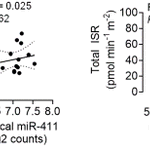
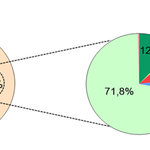
‼️Individuati dai ricercatori dell'#Università di #Siena nuovi #biomarcatori per il trattamento personalizzato del #diabetemellito tipo 1.
La scoperta è stata pubblicata su “Cell Reports Medicine” nell’ambito di uno studio finanziato dall’UE e dal MUR.
👉unisi.it/unisilife/notizie/n…

Guido Sebastiani, PhD retweeted
Check out our latest findings on Type 1 Diabetes and how specific microRNAs could help our understanding and future treatment approaches. #Diabetes #T1DM #MicroRNAs @Innodiagroup @unisiena
cell.com/cell-reports-medici…

Guido Sebastiani, PhD retweeted

RNA is…complicated. If it’s not confusing enough that there are many types of RNA, some RNA molecules also fold into different shapes that help their stability and functions. Not to worry! We break it all down for you in our new fact sheet: genome.gov/about-genomics/ed…


Guido Sebastiani, PhD retweeted

Want to know how VISIUM, CytAssist, CosMx, Xenium and CytAssist protein compare with each other in human tumors?
Then this preprint and tweetorial are for you!
biorxiv.org/content/10.1101/…

Guido Sebastiani, PhD retweeted
Happy #DayofImmunology! 📢 Fascinated by the #immunology of #type1diabetes? Join us at #IDS2024 congress in Bruges 🇧🇪 Together, we strive to better predict, prevent and eventually cure #T1D 💪Registration and abstract submission are open NOW!👇

ALT https://idsbruges2024.com/


Guido Sebastiani, PhD retweeted

I have now added the $OMIC Singular Genomics G4X Spatial offering in the #SingleCell #SpatialBiology table of commercial platforms. #SingleCell #Spatial #Platforms bit.ly/scplatforms


Guido Sebastiani, PhD retweeted
At 20,000 human genomes per year, the @UltimaGenomics UG100 matches $ILMN Illumina flagship NovaSeqX 25b, but at $100/genome, instead of $200/genome for Illumina's.

Guido Sebastiani, PhD retweeted

Nothing new here, but scientific publishing needs fixing. We pay "open access charges" or APCs of USD 3-5k (sometimes more) for a publisher to put a PDF on the internet and not charge people to read it. But we also pay up to thousands extra for "color printing". This does not mean physical printing (which might make sense). It's an extra charge to keep your figures in the pdf the way you submitted them. Publishers will actually do extra work to convert color figures to grayscale (thus disrupting the figure/text concordance and the sense of the paper) just to force you to pay these extra charges (or re-graph/re-write in grayscale yourself). This is done by "reputable" publishers but in my view should be classified as a #PredatoryPublishing practice.
Guido Sebastiani, PhD retweeted

So exited to share our newest paper in @NatureMedicine, where we link early life gut virome with later asthma.
Specific compositions of temperate phages drive the association independently from their bacterial counterpart and interacts with host genetics.
nature.com/articles/s41591-0…
Guido Sebastiani, PhD retweeted

In the BANDIT phase 2 trial, patients with recent-onset type 1 diabetes treated with the JAK inhibitor baricitinib had higher C-peptide levels at 48 weeks than those treated with placebo, suggesting preservation of β-cell function. Full trial results: nej.md/481yfNY
Guido Sebastiani, PhD retweeted

Very helpful tool for teaching/presentations
@NEJM
illustrated-glossary.nejm.or…

Guido Sebastiani, PhD retweeted

The extended machine learning tool RoseTTAFoldNA predicts the structures of RNA- and DNA-binding proteins. #NBThighlight nature.com/articles/s41592-0…

Guido Sebastiani, PhD retweeted

Our new study shows that immunological pathways differ in different subtypes of #type1diabetes and the involvement of #enteroviruses in the initiation of the process. go.nature.com/3Rdg5U2
Privileged to work with the talented people from the @NykterLab and @RautajokiLab 🙏
Guido Sebastiani, PhD retweeted

Nanopore Sequencing-Based Method Provides Copy Number Analysis for Brain Tumors in Under Two Hours. Developed by Dartmouth researchers, the method can be performed in under two hours, offering the potential to classify a tumor in the course of surgery. ow.ly/zR881052YJc
Guido Sebastiani, PhD retweeted

The recent approval of Casgevy, a CRISPR ex vivo gene editing treatment for sickle cell disease, in the UK inspired me to write this post (nature.com/articles/d41586-0…). Some thoughts on the famously discussed time gap between genetic discovery and FDA approval--a weekend read.
Let's explore how many years it took for some of the human genetics-inspired drugs from the publication of the first human genetics evidence to FDA approval. Here is a plot I made using the data from an excellent review by Trajanoska et al. published in Nature early this year (nature.com/articles/s41586-0…).
The review has curated information about many categories of drug targets (Suppl. table 3), but I plotted only one specific group: drugs that mimick the protective genetic associations discovered in humans (all except Casgevy are loss of function associations).
It's challenging to cite papers, attributing the drug success to a one or two studies, ignoring the contribution of equally important other critical publications. I get into trouble every time I write such posts.
Just to be clear, the goal of this post is to visualize the approximate time gap between the first human validation of drug and the FDA approval. In almost all the cases, the cited papers are just one of the many many important scientific publications that drove the drug programs to a success (proxied by the regulatory approval).
I am also not using the word "discovery" here, which to its strictest sense could be used only for some of the studies but not for others.
For example, PCSK9's role in LDLR regulation was known for the very first time through Catherin Boileau and colleagues's breakthrough work in mapping the gene causing Autosomal Dominant Hypercholesterolemia in a large French Family in 2003 (nature.com/articles/ng1161). But also, equally important work showing loss of function mutations in PCSK9 in humans decrease LDL and protect against cardiovascular disease came in 2006 from Cohen et al. (nejm.org/doi/full/10.1056/ne…), which mainly inspired the development of PCSK9 inhibitors (this finding in my opinion is as critical as the original discovery, as it's not always the case that gain of function and loss of function mutations in a gene will cause mirror effects).
Whereas in some of the studies, our knowledge of the gene's function is already evident and human genetics reports are merely validation experiments, for example, ANGPTL3's role in lipid metabolism was first discovered in mice in 2002 by studying naturally occurring autosomal recessive mutation associated with hypolipidemia in mice (nature.com/articles/ng814z). But the human genetics evidence came later in 2008 (common variants) and 2010 (rare loss of function variants), inspiring the development of ANGPTL3 inhibitors (nejm.org/doi/10.1056/NEJMoa1…).
In some cases, though earliest human genetic reports claimed the throne, some subsequent studies would play a critical role, offering key insights into the drug mechanisms, in some cases, providing hindsight realizations about why a drug program failed.
For example, the functional follow up of BCL11A GWAS findings by Sankaran et al (xitter.cf/bloodgenes/status/1725…) showed that indeed BCL11A is the causal gene and demonstrated that it's an erythroid specific transcription factor required for the fetal to adult hemoglobin switching, playing an influential role in the development of CRISPR gene editing treatment for sickle cell disease (nejm.org/doi/full/10.1056/NE…).
Another example: the drug development road to ANGPTL3 inhibitors was bumpy, with one of the programs getting discontinued in 2022. I covered it in this post (xitter.cf/doctorveera/status/167…). To achieve a clinically meaningful effect, one needs to reduce ANGPTL3 by >80%, an insight that came only later from a genetic study of founder mutations in inhabitants of Campodimele village in Italy by Minicocci et al. in 2012 (academic.oup.com/jcem/articl…), which became an influential study in the ANGPTL3 story (xitter.cf/skathire/status/147144…).
On his reflections on the human genome project (HGP) on its 30th anniversary, Richard Gibbs, one of the leaders of HGP, wrote "A 25–30-year period between discovery and impact on health care is more the rule than the exception" (nature.com/articles/s41576-0…). Trajanoska et al. empirically confirmed Gibbs' statement showing that "the median gap between reporting of the original genetic observation and approval of the derived, first-in-class therapeutic agent was 25 years (range 4 to 38 years)" (nature.com/articles/s41586-0…).
But there is a wide variation in these time gaps, and many factors contribute to this variation. The most important of which is the technology. Drug development heavily depends on the available technologies. For example, it's easy to inhibit a gene or a protein but super difficult to replace or activate it using currently available matured technologies, a main reason why companies go mainly after protective mutations.
So, whether or not a particular technology was available at the time of genetic discovery can stretch the time gap from few years to many decades. CRISPR is a recent innovation and enables rewriting of the genetic code in vivo leading to a permanent cure of monogenic conditions. In vivo gene editing clinical trials are already underway (xitter.cf/skathire/status/172380…) and in the next few years we might see FDA approvals for CRISPR gene editing of some monogenic conditions such as phenylketonuria. Assuming, the first FDA approval of PKU gene editing comes sometime in the next 5 years, the time gap between the first genetic report, which dates back to 1986 (pubs.acs.org/doi/abs/10.1021…), and FDA approval will be around 40 years or more. For genetic discoveries that happen now the drug development path would be much faster, possibly reaching regulatory approval in few years.
The fact about the the time gap between discovery and drug reaching the patient might come as a shock for many. But things are going to change as we are currently living in the era of major technological innovations, which are already accelerating drug development. Who knows, when we revisit this data few years from now, we might be pleasantly surprised.
Some recent posts:
1. A summary of some of the major scientific presentations at this year ASHG conference (xitter.cf/doctorveera/status/171…)
2. A 25-yr genetic puzzle solved finally using long-read sequencing technology (xitter.cf/doctorveera/status/171…)
3. The origin story of Regeneron Genetics Center (xitter.cf/doctorveera/status/171…)


A few days ago, Regeneron Genetics Center (RGC) celebrated its 10th year anniversary. To mark this occasion, let me tell you the story of RGC--a weekend read.
Disclosure: I am not disclosing any privileged information that I may have access to as an RGC employee.
The first time I heard about Regeneron was in 2018. A flood of congratulatory messages on Twitter brought my attention to the news that two prolific scientists in the GWAS field—Goncalo Abecasis (xitter.cf/Regeneron/status/10170…) and Jonathan Marchini (xitter.cf/aris_baras/status/1020…) --are leaving academia to join a biotech company called Regeneron. At that time, I was in New York, wrapping my six-month research stay at Mt. Sinai, ready to head back to Aarhus, Denmark to complete my PhD. Little did I know then that three years later, I’d be flying back to New York in the middle of a pandemic to join this same company and become a colleague of these celebrity scientists whom I’ve admired and known only through their GWAS papers, some of which considered landmark in the field.
Today, the RGC holds one of the largest sequencing facilities in the world, capable of a turnover of >1M samples per year. Yet, many corners of the human genetics academic world know little about this sequencing giant. A fact that hits me every time I hear the question “What is Regeneron Genetics Center” from some of my old friends and colleagues at the conferences, which inspired me to write this.
In 2012, Amgen made an announcement about a new acquisition which made many in the field drop their jaws (amgen.com/newsroom/press-rel…). deCODE Genetics is an Icelandic biopharmaceutical company founded by Kari Stefansson in 1996 that “sequenced” almost the entire Icelandic population (~300,000).
deCODE is a pioneer and global leader in the genomics field and probably was the first ever large-scale genetic database to be built to achieve the [Kari’s] dream of personalized medicine. Although deCODE was phenomenally successful in the publishing game, it wasn’t in the drug development game, at least in the early days, and it almost went bankrupt in 2009 (lifescivc.com/2015/10/findin…). But it stood the test of time and rose from the ashes, proving its worth to the Pharma world when Amgen announced that it was acquiring deCODE for $415 million dollars. This was the same time when deCODE, in collaboration with Genentech, published a major discovery of a mutation in APP conferring strong protection from Alzheimer’s disease; the finding boosted the confidence of Alzheimer’s drug developers on the amyloid hypothesis and offered a human validation of the use of BACE inhibitors for the treatment of Alzheimer’s disease (nature.com/articles/nature11…).
The APP discovery, along with the PCSK9 discovery that happened just a few years earlier (nejm.org/doi/full/10.1056/ne…), made a handful of industry leaders at the intersection of human genetics and drug development envision that disease-protective mutations in the population may not be an exception as many imagined but rather the RULE. One among such visionaries is George Yancopoulos, the co-founder and CSO of Regeneron, who went on to establish the Regeneron Genetics Center in 2013 with the goal of extracting genetic insights from large-scale exome sequencing projects and using such insights to advance Regeneron’s drug development efforts. Soon, many companies followed suit.
Almost everyone in the human genetics field knows about deCODE genetics, but only a few know that deCODE may have inspired many in the drug development field to pursue human genetics (🙇♂️ to Kari Stefansson, who I think might be the most influential person in the human genetics field) (en.wikipedia.org/wiki/K%C3%A…).
RGC entered the sequencing race with a unique approach: sequencing through industry-academic collaboration. The idea is to collaborate with academic, government and private institutions by offering sequencing as a free service in exchange for access to the phenotypic data of the participants. The approach turned out phenomenally successful.
RGC’s first major collaboration was with Geisinger Health System (GHS), a regional healthcare provider in Pennsylvania, where RGC agreed to exome sequence 100,000 individuals, who were volunteers of a research initiative (geisinger.org/precision-heal…). The New York Times covered the news with the lead, "Here comes genomics, Take 2.", subtly hinting at the earlier unsuccessful precision medicine initiative by NIH (nytimes.com/2014/01/13/busin…).
The RGC-GHS collaboration was the first largest sequencing effort ever in the country. Many saw this as groundbreaking, but many also criticized it, questioning the value of such huge investments in human genetics.
In 2018, RGC published two major findings, proving that the critics couldn’t have been any more wrong.
The first one was the demonstration of the association of loss of function mutations in ANGPTL3 with protection from cardiovascular disease; this finding offered human validation, accelerating Regeneron's ongoing drug program of ANGPTL3 inhibitors for the treatment of severe hypercholesterolemia, which received FDA approval in 2021 (nejm.org/doi/full/10.1056/ne…).
The second one was the discovery of the association of a loss of function variant in HSD17B13 with protection from chronic liver disease (nejm.org/doi/full/10.1056/ne…); this discovery catalyzed a collaboration between Regeneron and Alnylam to develop an RNAi drug for the treatment of nonalcoholic steatohepatitis (NASH), which is currently in clinical development (investor.regeneron.com/news-…).
Soon, RGC's collaborators expanded rapidly and samples started flooding in. Thanks to automation, the sequencing capacity grew bigger and bigger in proportion to the demand.
The largest collaborator of RGC to date is none other than the UK Biobank. RGC exome sequenced the full UK Biobank in partnership with other pharma companies and made the data freely available to the entire scientific community (nature.com/articles/s41586-0…).
The UK Biobank data significantly boosted the power of genetic discoveries at the RGC. See, the beauty of RGC's collaborations is that rarely any individual collaborator dataset by itself bring in a major discovery. But they make a critical contribution, by adding to the pool of genetic data the company has been building in-house over the years.
One of the biggest discoveries of RGC is the protective association between GPR75 and obesity (science.org/doi/10.1126/scie…). UK Biobank was critical but not sufficient to make this discovery. It is the combination of the UK Biobank and in-house dataset that led to this major finding (this is where all the past collaborations of RGC mattered).
Today, ten years after its establishment, RGC has scored more than 150 collaborators from around the world building an exome sequencing database of more than 2 million humans, the largest in the world. And this dataset has borne many fruits and will continue to do so for years to come.
Some recent RGC discoveries:
* loss of function mutations in CIDEB conferring protection from liver disease (nejm.org/doi/full/10.1056/NE…)
* loss of function mutations in INHBE conferring protection from unfavourable fat distribution and type 2 diabetes (nature.com/articles/s41467-0…)
* loss of function mutations in ANGPTL7 conferring protection from glaucoma (nature.com/articles/s42003-0…)
* loss of function mutations in CHRNB2 conferring protection from smoking addiction (nature.com/articles/s41588-0…)
Among all of the above, the one thing that inspires me most is the company's commitment to improving the diversity in the human genetic database.
RGC has established the largest ever rare variant database of a non-European ancestry--140,000 Mexican Americans--through a collaboration with Oxford and Mexican researchers (nature.com/articles/s41586-0…).
Even more impressive is the recent Together For Change initiative to establish the largest African genomics database (n=500k) and train the next generation of African and African-American genomic scientists (xitter.cf/doctorveera/status/171…).
I wish RGC a happy 10th anniversary!
To learn more about RGC discoveries and collaborations, visit regeneron.com/science/geneti…
Guido Sebastiani, PhD retweeted
Updated the #NextGenerationSequencing specs table now with the numbers of the NovaSeq X vs NovaSeq X Plus. The former can do 1 fcell at a time, including the 25B type. NovaSeq X Plus can do 2 fcells at a time.


Guido Sebastiani, PhD retweeted
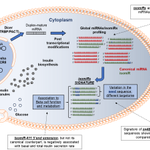
IsomiR-seq profiling in human beta-cells: many microRNAs exist mainly as sequence variants with
important impact on cell functions. Our recent work here 👇 #islets #microRNA #betacell #diabetes biorxiv.org/content/10.1101/…
