

Partner at Implement Consulting Group. Investor in Colonial Coal (CAD.V) and Millennial Potash (MLP.V). All views and opinions shared are my own.
Copenhagen, Denmark
Joined August 2018
- Tweets7.5K
- Following256
- Followers10.4K
- Likes4K





I’m still baffled at the leadership behind India’s steel and coking coal strategy the past year.
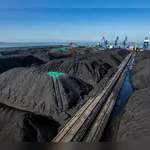
Since President Modi and his associated ministers made it clear in Q4 last year, that they are diversifying away from Australia - and that CIL and NMDC came out in Q1/Q2 stating that they were looking at acquisitions in Canada - it seems the short- to mid-term strategy has been to buy low quality coal in Mozambique, Mongolia and Russia and mix in with their own domestic coal quality. This happens while India is ramping up significantly on new steel mills that will not have enough coking coal within the next 5 years to match the capacity of said steel mills.
Whether Modi decided to get cheap on coal when the oil prices exploded earlier this year or what the rationale behind this stupid strategy is, I don’t know.
But with this revised Steel Policy, it looks worse and worse. There’s no way those jurisdictions can manage those volumes over time - and with a much poorer quality than what can be mined in Australia and Canada, it will eventually also be visible in the output quality.
If Colonial Coal ( $CAD.V ) gets sold to a Chinese suitor - as the largest undeveloped asset left on the market, it will be a massive failure. And while the Indian way of handling these things are typically just by replacing ministers, the impact will be greater this time to an extent where it eventually will point back to Modi.
That Partha B. on Colonial’s board hasn’t managed to even catch a bid yet is pretty telling in my opinion.
reuters.com/world/india/indi…

(1/2)
There’s been a lot of skepticism and criticism around the communication (or lack of same) from Colonial Coal $CAD.V since the Material Change Report was released soon a year ago.
I find it difficult to comment on because I overall agree with the sentiment and rationale of the critique - I’ve asked management to do more myself and have offered my own platform as well (free of charge). On the other hand, I talk to David weekly so I’m also privileged. That said, if you don’t call the guy a jerk, a liar or incompetent, he most often pick up. So just call him.
That said, the below update is of course curated and calibrated with management. I would never say any of these things without verifying what can be shared and not. Lawyers accept individual shareholder communication as they can cut out the sensitive stuff. I’ve decided - given the fact that I’ve gotten +1000 retail shareholders into the name - that I want to keep them updated on what I know.
Therefore…
OCTOBER UPDATE
Rough month on the ticker with new 2026 lows, but I have a feeling the next 2-3 months will dictate how the Colonial Coal saga ends.
Over the past month, alignment with the Chinese suitor reached a critical milestone. The anticipated 5th meeting is currently being planned with it expected to take place over the coming weeks. Formal documentation has officially landed with government officials for review. While their blessing is not needed, it would be a cherry on the top to include the assurances in the deal paperwork and would speed things up later in the process. In other words, focus is now on coordinating the Chinese delegation's upcoming trip to Canadian soil - either with government on board or with focus on hammering out final details on deal structure and terms.
Two major macro events stand out for September: (1) Prime Minister Carney’s investor summit in Toronto, and (2) the call for a snap election in British Columbia.
The former is massive because institutional capital is finally being aligned for the infrastructure necessary to turn Colonial’s assets into live projects (think port capacity and logistics).
The latter creates obvious uncertainty. Premier David Eby has been a key stakeholder in talks with our suitors over the past year, particularly in providing political assurances. The comforting part? Even if the election looks tough for Eby, the opposition won't leave us worse off. If anything, they are even more pro-development and would likely axe regulatory hurdles like DRIPA right off the bat.
My understanding is that Carney and his office have been huge supporters of this transaction all year - and heavily involved behind the scenes. Hence, current provincial election timing isn't a dealbreaker. The Chinese aren't overly concerned about local BC political shifts; they want this asset, and Canada's broader trade strategy relies on them. If anything, this tight election race gives the provincial government a strong incentive to leverage a landmark foreign investment agreement on the campaign trail for a massive economic win ahead of voting day.
My hypothesis remains that Canada is gearing up to announce formalized trade frameworks with both China and India in Q4. For both negotiations, a $5-10bn total investment into British Columbia (including mine build-out, infrastructure, port capacity, and jobs) would be a massive political trophy.
I’ve continued to offer David and management a platform for an interview. However, their lawyers maintain a strict gag order. Management literally cannot comment right now because of the highly sensitive, state-level governmental entities involved in these negotiations - including officials across Canadian, Chinese, and Indian channels.
I am, however, going back on the Danish radio show and podcast Millionærklubben later in October to give an update on this long-lasting adventure and ultimate test of patience.
(2/2)
Looking ahead, I’m very curious to see how management - and their advisors - handle Q4 communications. First is the AGM, where they must address the Material Change Report from last year. I fully expect fireworks and critical questions in the Q&A. More importantly, we have to see whether major shareholders like Rosseau and the Emri block will continue to back David relentlessly, or if they will force the issue after a year of "accelerated negotiations with several suitors" with zero announced bids.
I have been quite firm in advising management to announce whatever they can - also when reading the general sentiment on forums. However, management keeps being very vocal that it’s not that easy and advisors are strictly advising against it due to risk of lawsuits due to the sensitivity of the situation.
I truly believe conversations are in the final stage. Documentation is sitting with government reviewers, meaning this is now heavily about political equity: how can politicians maximize the PR value of an agreement on the campaign trail or an international stage? Any public announcement would serve as the overarching ceremonial framework, with the technical closing mechanics between the companies finalized concurrently.
I’ve been in this stock long enough to see “99%” done end in failure before, so I haven't sold the skin yet. It feels uncomfortable having our exit timeline intersecting with election cycles and geopolitical shifts, especially with the black box of upcoming US midterms.
Fortunately, my read on Carney’s strategic direction is that he has crossed the Rubicon. Canada is aggressively building business with non-US partners - and China and India are at the absolute top of that list.
Fingers crossed - again.
Philip Gunst retweeted

🚨 MAJOR BREAKING: China is pitching direct investments on CONTESTED BC land.
This is the same China that ran police stations in Canada & interfered in our elections.
They hosted First Nations leaders in Vancouver.
And in the room to help: former Liberal finance minister Bill Morneau.
They call it a "strategic partnership."
On land Canada is still fighting over.
What could go wrong?

Philip Gunst retweeted

Just in - We all knew it was going to happen.
The Chinese are making a play for newly aquired First Nations resources....and they're not even hiding it.
Beijing is OPENLY courting First Nations finance in B.C. while Ottawa and Victoria keep expanding Indigenous title, veto power, and “consent” over land.
The Chinese Embassy hosted an economic roundtable in Vancouver on Sept. 3. Nearly 60 Chinese and Canadian business and institutional reps were there. So was Ernie Daniels, CEO of the First Nations Finance Authority (FNFA). Former finance minister Bill Morneau showed up too, along with Senator Yuen Pau Woo and former senator Victor Oh.
Ambassador Wang Di called for "Chinese and Canadian business communities, financial institutions and First Nations communities will continue to strengthen communication and collaboration"

Is there smoke…? $CAD.V

Philip Gunst retweeted

Strengthening India–Canada Strategic Cooperation in Coal and Mining
Shri Vikram Dev Dutt, Secretary, Ministry of Coal, held a high-level bilateral meeting with Mr. Glenn Purves, Deputy Minister for International Trade, Canada, along with members of the Canadian delegation and senior officers of the Ministry of Coal.
The discussions encompassed coking coal, coal gasification, renewable energy, CCUS, critical minerals, and mine automation & modernisation, with emphasis on technology collaboration, investment, supply-chain resilience and R&D.
The meeting underscored the significant potential for deeper India–Canada partnership in fostering innovation, strengthening resource and supply-chain security, and advancing a secure, modern, technology-driven and sustainable coal and mining sector.
#MinistryofCoal
#IndiaCanadacooperation

Philip Gunst retweeted

Coking Coal Prices Surge 25%, Squeezing India's Steelmakers zerohedge.com/energy/coking-…

Philip Gunst retweeted

As we work to reduce our reliance on the U.S. and diversify trade, the Port of Prince Rupert is helping connect B.C. to new global markets every day. The Canada-B.C. Cooperative Prosperity Agreement is unlocking the projects needed to drive that growth.


I’m probably one of the more “boring” guests on #Millionærklubben given my “portfolio” but @euroinvestor asked me for an interview on my sole stock pick - Colonial Coal ($CAD.V) - since I couldn’t make the studio this summer like I usually do. We covered how I found this Canadian coking coal company, CEO David Austin (I called him a “weird snail,” which he wasn’t thrilled about when we spoke on the phone Friday), and why I’m still all in after all these years.
I’ve added ~18% to my position this year. Patience is being tested, but I’m still optimistic about a lucrative sale that pays off for shareholders in the nearer term.
The geopolitical backdrop has shifted in our favour over the past 9-12 months. Canada-India/China relations have improved through trade missions and visits from both Carney and Eby in 2026, and there’s a real narrative - backed by ongoing trade negotiations - to diversify away from the US, with British Columbia coking coal being a key pillar in that mission.
The coking coal story has strengthened too. This summary (substack.com/home/post/p-204…) tells it well. Demand from India and China remains intact, and long futures are priced at US$250-300/t by the major players.
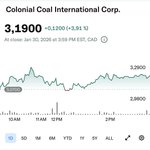
Historically, undeveloped assets price around ~1% of long-term prices. At a conservative US$240, that’s US$2.40/t on 695Mt - roughly CA$11/sh after FX (1.40) and 4% banking fees, against a current price of ~2.50. That’s ~370% upside, before a highly competitive bid war, higher futures pricing as reference, or recent peer deals as benchmark pricing. In other words, there’s blue sky above CA$11.3 too.
Management has met exec management and BoD of leading Chinese coking coal and steel companies four times this year. More or less the same cadence with India. The Indians, true to form, are being cheap. I expected a bid alongside Carney’s trip in Feb/March, especially given the media coverage of NMDC and CIL’s exploration of Canadian M&A and NMDC’s new critical minerals subsidiary. Instead they’re chasing cheaper tonnes from Russia, Mongolia and Mozambique while claiming they can cover domestic growth needs alone. Both moves look shortsighted - and could prove costly given how fast China appears to be moving these weeks. Must be a blow for Colonial board member Partha B. if that’s gonna be how it unfolds. What a waste of time, effort and political capital.
Government involvement - federal and provincial - has been heavier and more decisive than I expected 9 months ago at the MCR release, which explains the delay. But it looks like we’re close, and the Canadian government has been pulling every lever to get this over the line is what I’m hearing. One of the heavy hitters even stated that he had never seen a Canadian government support a deal like this before. Positive given how Trudeau was a thorn in our side for long.
I’m hoping for a bid sooner rather than later, while respecting the complexity of a deal of this magnitude. The day we get that halt notice and official bid announcement will be surreal.
Until then - sitting tight, heavy position, heavier cojones.
euroinvestor.dk/dagens-aktie…
I must admit, the price action in Colonial Coal $CAD.V is pretty shocking to me.
Regardless of how little you believe in David Austin, it’s beyond me that you would sell your shares down to 52-week lows after the company’s management just came back from a extended trip to China for the 4th time this year meeting with several suitors’ management and Board of Directors together with B.C. Premier @Dave_Eby - who just announced an MoU with @MarkJCarney on federal investments in Port Rupert.
If you’ve been around here for 10 years, 5 years, 3 years or even just since the Material Change Report was released in November about accelerated discussions with several suitors followed by media coverage from India confirming @nmdclimited and @CoalIndiaHQ exploring coking coal acquisitions in Canada and several high stakes trade missions by both Eby and Carney to India and China, respectively.
I get people are sick and tired of the wait here. +1.
But the timing of a new 52-week low is surprising to me given what’s going on behind the scenes.
I think it’s mostly due to management being even tighter with information than in the past - even for those that have been used to having regular chats on the phone. I would also be pretty pissed if no public communication to retail base for 2 years and then no response to texts/calls or just a “can’t comment” because lawyers have muzzled him.
I’m still a buyer.
Is that Philip Gunst back with another post about Colonial Coal $CAD.V without sharing a news release about a halt?!
Yes sir 🫡
But Mark Carney just talked about Met Coal in an official release in the same sentence as India on a government-to-government level.
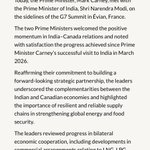
On June 16, the Prime Minister’s Office released an official readout of the meeting between Mark Carney and Narendra Modi at the G7.
Buried in the release was a sentence that caught my attention:
“The leaders reviewed progress in bilateral economic cooperation, including developments in commercial arrangements relating to LNG, LPG and metallurgical coal.”
When was the last time you saw metallurgical coal specifically mentioned in an official communication from the Prime Minister of Canada following a meeting with the Prime Minister of India?
I honestly can’t remember it happening.
And it comes only days after reports that BC Premier David Eby is preparing to travel to China as part of a broader effort to rebuild economic ties and strengthen investment relationships. By end of next week.
Viewed individually, these may seem like unrelated political events.
Viewed together, they tell a much larger story.
Over the past year, Canada has been systematically rebuilding relationships with both India and China after years of strained diplomatic relations.
Now we have both the Prime Minister of Canada and the Premier of British Columbia personally engaging with the two countries that happen to be the largest strategic buyers of metallurgical coal in the world.
That is not something I would have expected to see even 12 months ago.
For Colonial Coal investors, I think this is important because the discussion has gradually shifted from being purely corporate to increasingly geopolitical.
Large state-owned enterprises do not deploy billions of dollars based solely on geology.
They need long-term investment certainty, Confidence around permitting, etc.
That is why the political backdrop matters.
Many investors understandably focus on the absence of a bid.
I (try to) look at the broader trend.
And whether you’re bullish or bearish on Colonial Coal, it’s difficult to argue that the political and geopolitical backdrop is not materially stronger today than it was at the beginning of the year.
When something happens?
Nobody knows.
But it is hard not to conclude that we are further along today than we were last week, and further along last week than we were the month before.
Patience remains the hardest part of this story.
thebreaker.news/news/premier…

A lot is happening in coking coal right now.
The IEA just reported that global coal investment is hitting a 14-year high in 2026 - $180 billion, up 4% from last year.
The Strait of Hormuz closure has fundamentally changed how Asia thinks about energy security. Countries that relied on Gulf LNG and oil are now accelerating domestic coal production and locking in alternative supply routes.
Two-thirds of advanced projects in the pipeline are coking coal.
On June 1, Chinese coking coal prices hit a 19-month high on the Dalian exchange - up 7% in a single session. The trigger: a mine safety crackdown in Shanxi following the Liushenyu disaster that killed 82 people in May.
Shanxi pledged zero tolerance on illegal mining practices. Several mines have already suspended production.
Goldman Sachs estimates this could affect up to 8% of China’s clean domestic met coal output on an annualised basis.
Goldman specifically flagged that Canadian producers could benefit as Chinese mills - unable to blend domestic coal to spec - turn to seaborne markets. Glencore’s Canadian mines were highlighted as particularly well-positioned, partly because they don’t carry Australian-style royalties.
On the India side, we know PM Carney returned from New Delhi in March with a Strategic Energy Partnership that explicitly names metallurgical coal as a priority commodity. Elk Valley Resources already signed MoUs with Indian steelmakers for $285M in met coal supply. India is targeting 300Mt of steel by 2030 - coking coal demand will need to roughly double. They can’t get there domestically. My understanding is that last week’s meetings in Canada with Commerce Minister of India on CEPA also included coking coal and government officials was joined by a business delegation that met with Colonial representatives.
Colonial has reportedly been used as a practical example in discussions between Canadian officials and diplomatic representatives.
I think management was positively surprised - both by the seniority of the Indian officials dedicating time to this, and by the sheer number of stakeholders showing up.
While active government support at the federal and provincial level always comes with a lot of bureaucracy, I think it is what you need when you have suitors investing in a country and province for the next 30 years with such an investment as Huguenot and Flatbed.
695Mt of development-ready hard coking coal in BC. The asset hasn’t changed. The world around it has.
Still long $CAD.V.
Sources:
northernminer.com/news/hormu…
energynow.ca/2026/03/perspec…
sri795500.substack.com/p/ind…
miningmx.com/news/energy/654…
ajot.com/news/global-coal-in…
mining.com/web/chinese-cokin…

Philip Gunst retweeted

BMO on met coal 👇
Energy: Met Coal Enters Its Next Fragile Supply Era: Echoes of 2023

“Union Minister of Commerce and Industry Shri Piyush Goyal will visit Canada from May 25-27 to advance the ongoing negotiations of the Comprehensive Economic & Partnership Agreement (CEPA) between India and Canada and hold official, business & industry interactions. Senior representatives from over 100 Indian businesses are accompanying Shri Goyal from sectors like metals & mining…”
Colonial Coal $CAD.V is on the agenda of the meetings in the coming week.
Let’s hope that Coal India or NMDC has representatives amongst the 100 joining the Commerce minister on the visit starting tomorrow. That would make sense.
Hopefully Carney, Eby and the remaining governmental stakeholders from Canada can calm the concerns of DRIPA. I can only see that being the remaining barrier for an Indian bid.
Question is then what about China…

India and Canada continue to engage on strengthening bilateral trade and economic cooperation, with discussions underway on the Comprehensive Economic Partnership Agreement (CEPA).
The engagement reflects a shared commitment to enhancing trade, investment and collaboration across sectors of mutual interest.
With complementarities across areas such as energy, advanced manufacturing, agriculture, technology, pharmaceuticals and innovation, both countries continue to explore opportunities for deeper economic partnership and greater market access.
Read more:
pib.gov.in/PressReleasePage.…
#IndiaCanada #BilateralTrade
#GlobalTrade #EconomicPartnership @PIB_India @RajeshAgrawal94

Positive news from the Canada-India angle as the conversations around CEPA continues and progressing accordingly.
While not being a key dependency for Colonial Coal $CAD.V at this stage, we are dependent on continuous tailwind in the geopolitical climate between Canada and India.
Especially the Canadian government (both provincially and federally) and their assurances is a key factor in getting a bid over the line.
Crossed fingers ✍️
The Department of Commerce, successfully hosted the second round of Comprehensive Economic Partnership Agreement (CEPA) negotiations between India and Canada in New Delhi. The negotiations were conducted in accordance with the Terms of Reference signed by the Trade Ministers of both countries on 2 March 2026, covering key chapters including Trade in Goods, Trade in Services, Intellectual Property, and Rules of Origin, among others.
Both sides reaffirmed their commitment to advancing a balanced and mutually beneficial agreement to strengthen bilateral trade ties. The next round of negotiations is scheduled to be held in Ottawa, Canada, in July 2026.
Read more: pib.gov.in/PressReleasePage.…
#IndiaCanada #CEPA #TradePartnership #DoC_Gol @RajeshAgrawal94 @PIB_India

Philip Gunst retweeted
Mining isn’t just a rural BC story — it’s a Metro Vancouver story too. With $88 BN in proposed major projects, this study shows the enormous economic opportunity ahead.
Through BC’s Look West strategy, we’re getting shovels in the ground and creating good-paying jobs across BC.

Mining is to Vancouver what oil and gas is to Calgary.
A new Mining and Metro Vancouver Economic Impact Study from MABC highlights the industry’s significant and growing role in the region’s economy.
Key findings:
🔹 Mining powers British Columbia’s economy
🔹Mining supports jobs and strengthens local economies across Metro Vancouver and Vancouver Island
🔹 Future mine development presents major economic opportunities for BC
With 22% of all mining-related employment based in Metro Vancouver and Vancouver Island, Metro Vancouver is a global hub for mining activity.
Read the full study ➡️
mining.bc.ca/2026/05/mining-…
#bcpoli #cdnpoli #criticalminerals #bcmining #bceconomy

Canada just confirmed that one of the largest Indian delegations will visit in May to explore investments in energy and mining following Carney’s trade mission.
- Canada >>> India trade mission (completed)
- India >>> Canada delegation (next step)
- Explicit focus on mining & energy investments (and specifically met coal)
- Government-level coordination on both sides
At the same time:
- India has designated coking coal a critical mineral
- Indian PSUs are actively exploring overseas resource acquisitions
- Canada is signaling fast-tracking and support for foreign investment
And importantly:
- Discussions are now framed as government-to-government + corporate follow-through
- Not just trade and capital deployment into assets
This is how these deals typically evolve:
(1) Political alignment
(2) Delegations and site-level engagement
(3) Strategic investment discussions
(4) Asset-level transactions
When you combine this with:
- prior commentary on Indian interest in Canadian coal
- structural coking coal deficit
- and ongoing engagement at minister level
…it becomes increasingly clear that Indian capital is being positioned for entry into Canadian resource assets.
$CAD.V is positioned for it to happen. Citi is engaged. Partha is engaged.
The direction of travel is becoming very difficult to ignore.
ctvnews.ca/politics/article/…