

The Health Behaviour in School-aged Children study investigates the health and well-being of young people in Europe, Central Asia and North America.
WHO cross-national study
Joined August 2011
- Tweets3.5K
- Following3.1K
- Followers4.4K
- Likes595



8/ 🌍 On #WorldObesityDay, let’s focus on real solutions that make healthy choices easier for young people. Investing in adolescent health means building a healthier, fairer future.
🔗 Read the full @HBSCstudy + @WHO_Europe report: iris.who.int/handle/10665/37…
163
7/ 📢 What can be done? 🏫 Schools should provide affordable, nutritious meals + more opportunities to move. 🏙️ Communities need safe, accessible spaces for young people to be active. ⚖️ Governments must restrict marketing of unhealthy foods + improve access to healthier options.
1
178
6/ ⚠️ Why does this matter? Adolescents with overweight or obesity have higher risks of type 2 diabetes, heart disease + other chronic conditions. Poor diet + inactivity harm academic performance—skipping breakfast is linked to lower concentration + poorer learning outcomes.
1
19
5/ 🏃♂️ Physical activity remains low. Only 25% of boys + 15% of girls get an hour of daily physical activity. Activity levels also drop as young people get older, + those from lower-income families are less likely to be active.
1
13
4/ 🍏 Nutrition is a concern: fewer than 40% of adolescents eat fruit daily, + half don’t eat vegetables every day. 15% drink sugary soft drinks daily. Daily breakfast consumption fell from 59% (2018) to 51% (2022), with sharper declines among girls + low-income adolescents.
1
504
3/ 🚨 In 2022, 27% of boys + 17% of girls were overweight or obese. Adolescents from lower-income families are more affected—27% vs. 18% among wealthier peers. In many countries, these inequalities are widening, making social factors key to tackling obesity.
1
13
2/ 📊 The latest @HBSCstudy data, published by @WHO_Europe, show that adolescent overweight + obesity have increased in over a third of countries since 2018. In some countries, rates have risen by over 5 percentage points—a worrying trend for young people’s long-term health.
1
15
1/ 🧵 Today is #WorldObesityDay. More than 1 in 5 adolescents (22%) in Europe, Central Asia + Canada are overweight or obese. What does the latest @HBSCstudy data reveal about young people’s weight status, physical activity + nutrition? Let’s take a look. ⬇️
HBSC Study retweeted

🚨 The data is clear: Europe & Central Asia are failing their children.
🔷 Hard-earned progress in reducing child mortality is reversing or stagnating.
🔷 Mental health concerns have doubled since COVID-19 - 1 in 4 children is affected.
🔷 Immunization rates are stagnant, measles outbreaks are back.
🔷 5M children are at risk of developmental difficulties.
🔷 1 in 3 primary school children is living with overweight or obesity.
This is not just a health crisis – it’s a crisis for the future of our societies. As Regional Directors for @UNICEF_ECA & @WHO_Europe, we are calling for urgent actions. We need a renewed focus on child and adolescent health and wellbeing, built on 5 key principles:
1️⃣ Investing in child & adolescent health - early interventions = lifelong benefits.
2️⃣ Ensuring duty of care & protection - from quality healthcare to nutritious school meals.
3️⃣ Regulating against commercial harm - protecting children from targeted marketing of unhealthy products.
4️⃣ Strengthening cross-sector governance - aligning health, education, environment & social policies.
5️⃣ Measuring progress & ensuring accountability - @UNICEF_ECA and @WHO_Europe will work together to fill data gaps & assess policy impact.
We must act now. The health and wellbeing of children today will shape the world of tomorrow.
📖 Read my joint letter with @R_DeDominicis in @TheLancet: bit.ly/40SQYuu

HBSC Study retweeted

🚨 Mental health crisis affecting youth in Europe:
👥 1 in 4 young people experience mental health conditions
😔 Most affected: girls, older teens & those from poorer backgrounds
⚠️ Suicide is among the top 3 causes of adolescent death
bit.ly/48XB6cy

HBSC Study retweeted
📱 Digital dilemma: Teen social media use is rising
🔍 11% experience problematic social media use, up from 7% in 2018
👥 1 in 3 maintain continuous online contact
🎮 1 in 5 game for 4+ hours daily
Read our analysis: bit.ly/3CNc2bZ
#DigitalHealth #YouthWellbeing

10/10 🔬 Evidence-based solutions exist—from strengthening support systems to promoting healthier habits and regulating harmful products. Let’s act now to create change. Explore the findings here: hbsc.org/publications/report… 🌟 #AdolescentHealth
1
99
9/10 🔗 Adolescents face overlapping challenges: pandemic recovery, social isolation, rising economic pressures, and concerns about their futures. These pressures are interconnected, demanding holistic and systemic responses.
1
1
101
8/10 ⚖️ Persistent inequalities: Adolescents from less affluent families report worse mental health, lower physical activity, and weaker support systems. Gender disparities are stark: girls experience higher school pressure, worse body image, and more loneliness than boys.
1
9
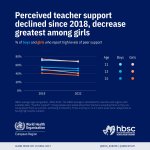
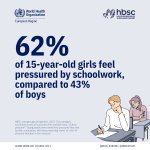
7/10 📚 School pressures: By age 15, 62% of girls feel pressured by schoolwork, compared to 43% of boys. Support from teachers and classmates is also falling, leaving many adolescents without critical buffers against stress.
6/10 🚭 Substance use trends: E-cigarette use has overtaken smoking, with 30% of 15-year-olds trying them and 20% using them regularly. Alcohol consumption remains widespread, with girls now matching boys in use by mid-adolescence.
1
11
5/10 💔 Support networks: 1 in 5 adolescents lack strong family or peer connections. Support is declining, especially for girls during early adolescence. Adolescents with strong family support report better mental health than those who rely only on peers.
1
9
4/10 🍎 Physical health struggles: Only 15% of 15-year-old girls and 25% of boys meet physical activity guidelines. Obesity rates exceed 20%, but 34% of girls feel “too fat.” Poor dietary habits, like skipping breakfast, are rising, especially among less affluent teens.
1
19
3/10 💻 Digital behaviours: 1 in 3 teens report constant online contact. Girls face more problematic social media use, linked to anxiety and poor sleep, while boys dominate excessive gaming, with 22% playing for 4+ hours per session.
1
18