

Passionate about breaking the pattern of metabolic disease. Co-Founder and CEO, @FractylHealth @BrighamWomens Med/CVMed | @JohnsHopkins MD PhD | @Stanford Chem
Boston
Joined March 2010
- Tweets1.7K
- Following672
- Followers996
- Likes909






Pinned Tweet
Today, we announced an important milestone for Fractyl Health and the future of obesity care.
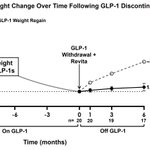
For the first time, randomized, blinded clinical data from the REMAIN-1 Midpoint Cohort demonstrate that Revita® may prevent weight regain after GLP-1 discontinuation at 3 months. In the study, patients treated with Revita continued to lose weight following GLP-1 withdrawal, while sham patients regained weight (–2.5% vs. +10%, p=0.014).
These findings suggest that drug-free, durable weight maintenance may be possible. We believe Revita has the potential to serve as a one-time intervention that could transform the standard of care—much like LASIK did for vision.
The implications are significant: shifting from a focus on temporary weight loss to sustaining health through a durable metabolic reset. With pivotal studies ahead, Revita may help define a new therapeutic category in obesity: post-GLP-1 weight maintenance.
This is just the beginning of the journey.
#FractylForward $GUTS #obesity #weightmaintenance
Revita® is for Investigational Use Only in the U.S. under Federal law.
ir.fractyl.com/news-releases…
“[GLP-1] doesn’t fix whatever was driving the eating in the first place”

Gabriel Iglesias was on Ozempic for about five months. His description is the most honest one I’ve heard.
It worked almost too well. He’d look at food and feel nothing, not disgust, just “I’m good.”
The weight came off. But he watched his shoulders disappear with it. A strong guy, losing the strength he was proud of. Add the constant nausea, and he quit.
The moment he stopped, 20 pounds came back almost immediately.
And here’s the twist: years earlier, he says Ozempic offered him a million-dollar deal to be the face of the brand. He turned it down.
That’s the part nobody puts in the commercial. The drug turns off your hunger. It doesn’t protect your muscle, and it doesn’t fix whatever was driving the eating in the first place.
Harith Rajagopalan retweeted

The gut is much more than a digestive organ. It is a metabolic sensing and signaling system that helps shape how we respond to food, regulate appetite, and control metabolism.
Really enjoyed going deep on this with Andrew Huberman, from gut biology and the microbiome to obesity, GLP-1 therapies, and endoscopic treatments.

The new Huberman Lab episode is out: Best Tools for Gut Health and Weight Loss | Dr. Chris Thompson
0:00 Dr. Chris Thompson
2:16 Digestive Tract, Gut Hormones & Nutrient Absorption
8:06 Colon Microbiome & Colon Cancer Screening
11:13 Sponsors: LMNT & Lingo
13:40 Swallowing Problems & Zenker's Diverticula
16:08 Bowel Movements & Constipation
18:28 Fiber, Resistant Starch & the Gut Barrier
21:50 Intermittent Fasting & the Gut Microbiome
23:38 Fermented Foods, Microbial Diversity & Butyrate
27:12 H. pylori, Stress & Stomach Ulcers
30:20 GLP-1 Medications: Benefits & Limitations
33:42 Lower GLP-1 Doses, Weight Regain & Muscle Loss
37:35 GLP-1 Side Effects, Food Noise & Apathy
39:49 Bariatric Surgery & Medical Innovation
46:07 Sponsor: AG1
47:44 Hunger & Satiety: Ghrelin, CCK, GIP & GLP-1
50:01 Retatrutide & Combining Hormonal Targets
52:55 Ultra-Processed Foods, Overeating & Leptin
55:32 Incretin Discovery, Exendin-4 & the Gila Monster
59:35 Endoscopic Ultrasound & Pancreatic Biopsy
1:07:40 Early Metabolic Markers, CGMs & Fasting Insulin
1:13:06 Insulin Resistance & Metabolic Flexibility
1:15:53 Sponsor: Function
1:17:35 Patient Data, Screening & Treatment Adoption
1:26:31 AI, Robotics & Improving Procedures
1:29:27 Choosing a Surgeon & Measuring Procedure Quality
1:35:29 Image Guidance & Hyperspectral Imaging
1:37:19 Sponsor: Our Place
1:38:56 Diagnostics & Targeted Metabolic Treatments
1:42:45 Gastric Bypass, Foregut Exclusion & Diabetes
1:47:59 Duodenal Liners & Mucosal Resurfacing Research
1:52:58 Gut Permeability, Inflammation & Fatty Liver
1:59:39 Artificial Sweeteners, Fructose, Fats & Omega-3s
2:05:00 Resistance Training, Zone 2 Cardio & Intervals
2:06:31 Weight Set Point & Metabolic Adaptation
2:08:13 Endoscopic Sleeve Gastroplasty & Fundus Ablation
2:10:30 Magnetic Intestinal Connections & Combined Treatments
2:16:52 GLP-1 Gene Therapy Research
2:22:13 Innovation, Problem Solving & Teamwork
2:25:58 Zero-Cost Support, Sponsors & Neural Network Newsletter
Includes paid partnerships.
Medicare GLP-1 Bridge Program: A Bridge to Where Exactly?
CMS’s Medicare GLP-1 Bridge program launched July 1. It feels like a good time to check in on its progress and its goals.
Through the GLP-1 Bridge program, eligible Part D beneficiaries can get certain GLP-1s for weight management for the next 18 months. The program sits outside traditional Part D coverage and payment. This is the first time Medicare has created a pathway for these drugs purely for weight management.
The name itself implies the temporary nature of this program. This was supposed to be a bridge to a longer-term CMS Part D solution called the BALANCE model, but the longer-term plan is not yet ready. The delay in the BALANCE program is a very instructive lesson in the core challenge in the GLP-1 treatment landscape today. CMS pointed to the need to collect more utilization data; but reporting at the time showed too few Part D plan sponsors were willing to participate, citing uncertainty about utilization and thin real-world evidence. While GLP-1s have no shortage of randomized controlled trial data, insurers care just as much about how the drugs perform in the real world to justify the expense to their members.
Unfortunately, the Congressional Budget Office’s cost estimates do not bode well for broad Medicare coverage for GLP-1s alone. In its October 2024 analysis, the CBO assumed that ~65% of new users in 2026 would complete less than one year of treatment, with another 15-20% dropping off each year after that. In total, the CBO estimated that only 15-20% of users would continue treatment for 5 years.
In other words, if a million Medicare patients start on a GLP-1, roughly 800,000 would stop within 5 years, putting them at risk for rapid weight and metabolic rebound. Discontinuation at this rate creates an unfortunate tragedy of the commons in the Medicare drug budget: the 20% who would benefit long-term are at risk of losing access because of the 80% who would start and stop. It is no surprise Part D sponsors are waiting to see more “real-world data.”
There are two ways to solve this: Either we figure out ahead of time who will stay on GLP-1s and who won’t, or patients who discontinue will need a durable off-ramp to preserve those benefits without staying on drug. The first of these options would control costs, but only by withholding therapy from the 80%. The second option offers hope of improving obesity and related risks for anyone who starts GLP-1s, whether they stay on GLP-1s long term or not.
The Bridge expires at the end of 2027, and whatever replaces it will be shaped by whichever of these two paths we’ve made progress on by then. Durable weight maintenance after GLP-1 discontinuation may be the key to unlocking broader, sustainable access to these therapies. Fixing the tragedy of the commons in GLP-1 therapy isn’t about limiting who gets treated; it’s about making sure anyone who starts can maintain those benefits for the long-term.

People talk about newer GLP-1 agents now achieving bariatric surgery levels of weight loss. But do they really?
New real-world data in Obesity looked at >44,000 patients on semaglutide, tirzepatide, or bariatric surgery.
At 1–3 years:
Semaglutide: ~5–7% total weight loss
Tirzepatide: ~9–11%
Sleeve: ~22–24%
Bypass: ~28–30%
Even patients who managed to stay on continuous GLP-1 therapy for a full year still landed well short of surgery.
Yogi Berra famously said "In theory there is no difference between theory and practice. In practice there is."
The GLP-1 trial results were impressive in theory. The real-world practice, as usual, is less cooperative. The real world is messy - titration, prescription refills, side effects - and all these factors stand in the way of chronic therapy matching clinical trial results.
How do we advise patients? Based on what happened in an idealized clinical trial setting or based on what is observed in real world practice?
@Ali_Aminian_MD @NeilFlochMD @Jmortonmd
onlinelibrary.wiley.com/doi/…

Harith Rajagopalan retweeted

While nearly 18% of U.S. adults have taken a GLP-1 drug for weight loss or to treat a chronic condition, about half of people will stop taking it within a year. Often, they don’t understand what is likely to come next. 🔗: on.wsj.com/4dCkbia

Harith Rajagopalan retweeted

Duodenal mucosal resurfacing procedure may offer a way for the estimated 70% of people who discontinue weight-loss drugs to avoid regaining weight, the findings indicate that this minimally invasive procedure may provide lasting weight-loss maintenance tinyurl.com/3zdtawud

Harith Rajagopalan retweeted

Highly recommend this presentation from Dr Ania Jastreboff, lead researcher for many obesity trials, including SURMOUNT-1, which lead to Zepbound’s FDA approval, and the upcoming TRIUMPH-1 trial on retatrutide.
She argues that obesity stems from an inappropriate setting of the defended fat mass by the metabolic system which causes the brain to inappropriately signal for more food consumption because it has incorrectly determined that the individual needs to increase their fat mass.
These meds re-regulate that, resetting the defended fat mass to lower levels, reducing the brains signals to eat more, and allowing individuals to lose weight.
The upcoming retatrutide will not just change appetite/craving signaling, but will also increase energy expenditure itself.

What happens after stopping GLP-1s? That’s the question Revita is designed to answer. New interview with @Medtech_Insight on durability, the duodenum, and the road to pivotal data in early Q4. Revita is investigational use only in the US. Full interview here: insights.citeline.com/medtec…

DDW 2026: Revita highlighted as a potential post-GLP-1 ‘off-ramp’ strategy in DDW News, featuring our REMAIN-1 interim midpoint results. Oral presentation scheduled for Monday, May 4. Full pivotal data targeted later 2026. Revita is investigational use only in the US. @FractylHealth @FractylHealth news.ddw.org/news/duodenal-m…
Proud to see coverage of our REMAIN-1 interim midpoint data in @Reuters: In the study, Revita DMR-treated patients (highest-dose group) maintained >80% of weight loss with ~7 lb regain at 6 months after stopping GLP-1s like tirzepatide, vs. ~ double in sham. Revita is Investigational Use Only in the US. Full pivotal cohort data and potential regulatory submission planned later 2026. reuters.com/business/healthc…

Huge news on FDA - CMS partnership on Breakthrough Devices - RAPID program designed to dramatically accelerate access fda.gov/news-events/press-an…

Largest life science M&A of the week - Penumbra acquired by BSC for $15B after FY revenue of $1.4B.
This large deal should help recycle capital for high growth device stories; and may have gone unnoticed by many tx investors…
🤔 where should one look for potentially high growth opportunities?
$GUTS


The headline speaks for itself - for all those who think discontinuation is an “access” issue versus a “health” definition, please note Oprah tried to stop her GLP-1 $GUTS
dailymail.co.uk/health/artic…

Remain-1 midpoint data anticipated later in January $GUTS
futurism.com/health-medicine…

Roughly 85% of people who start a GLP-1 stop it within 2 years. Weight and cardiovascular benefit are lost when they do. Raises an obvious question: are phase 3 drug studies in obesity asking the most important and relevant question, or are they a scientific exercise with diminishing real world relevance? Shouldn’t the market care more about what works in the real world when it evaluates new products? medscape.com/viewarticle/wei…
Holy crap.

We salute you, the lone patient (out of 20K to start!) who managed to stay on treatment for the full 30 months of the semaglutide/tirzepatide STEER study - without any gaps greater than 30 days!
1 tirzepatide patient managed it. No semaglutide patients made it even as far as 27 months without at least a 30 day gap. Those were rough times. 2022-2024.
This amazing patient likely doesn’t even know what a unicorn they are. It’s all claims data - so the patient never opted in! 🦄
dom-pubs.pericles-prod.liter…

With a clear focus on reducing rates of obesity and metabolic disease, the single biggest driver of morbidity and mortality in the modern era, this new pyramid is totally sensible


Hi @statnews and @cooney_liz! As you know, we will have randomized data later this month on #Revita for post-GLP-1 weight maintenance and pivotal data later this year on this exact topic. Post-GLP metabolic rebound is the biggest problem in obesity, and we need better solutions. Revita has FDA breakthrough designation but is not approved by FDA. We anticipate PMA filing this year.

Why the weight, and heart risks, return after stopping GLP-1 drugs. trib.al/S9bXnQC

As we close out 2025, I am struck by how far we have come and how much opportunity lies ahead. This year, we advanced our clinical programs, deepened our science, and strengthened the foundation for what could become a fundamentally new chapter in obesity and type 2 diabetes treatment.
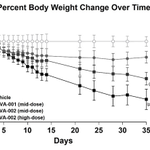
2026 will be a defining year. We expect multiple clinical readouts across Revita® and the start of first-in-human studies for our Rejuva® gene therapy platform. Each step brings us closer to durable, root-cause-driven treatments that could reshape long-term metabolic health.
I am profoundly grateful for the dedication and belief of everyone on our team. Your work is making it possible to imagine a future where patients have options that truly change their trajectory.
Wishing everyone a healthy and inspiring start to the new year. Big things are ahead.
*Revita® is for Investigational Use Only in the U.S. under Federal law* *Rejuva® is in preclinical development and has yet to be assessed by regulatory agencies.*