
Lecturer at UNSW Sydney; Visiting Scientist at Garvan Institute of Medical Research - Designing embedded systems for bioinformatics applications.
Sydney, New South Wales
Joined May 2012
- Tweets1.2K
- Following786
- Followers1.3K
- Likes1.1K






Hasindu Gamaarachchi retweeted

Missed variants mean missed diagnoses. At #nanoporeconf, André Reis will reveal how one assay could uncover what current testing can’t, and how this could have future potential to transform our treatment of neurodegenerative disorders. nanoporetech.com/about/event…
We have released slorado v0.5.0-beta and now it supports Nanopore DNA methylation calling (5mCG_5hmCG). Also 20% performance improvement to SUP models. Slorado supports both NVIDIA and AMD GPUs.
github.com/BonsonW/slorado/r…
@bonson_wong @GaganGdas

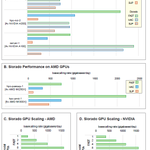
The pre-print for Slorado and openfish is out. biorxiv.org/content/10.64898…
You can do @nanopore basecalling with not just NVIDIA GPU, but also using a range of AMD GPU.
Would be useful since popular GPUs are now 💸💸💸💸(& hard to buy),
Work by @bonson_wong


Hasindu Gamaarachchi retweeted

If you have HiFi or Nanopore R10 metagenomic data, try myloasm from Jim Shaw. You will probably find more complete circular contigs to higher resolution especially for R10 or environmental samples. Scalable to >500GB data. Written in Rust. Published in
@NatureBiotech

Myloasm, our long-read metagenome assembler, is now published! w/ Max Marin & @lh3lh3
Very rewarding after > a year of development and countless hours thinking about assembly. Thanks to beta testers, Li lab, and reviewers for helpful feedback.
Link: rdcu.be/famFj
We have released minimod v0.5.0.
Now support a number of different modifications other than CpG methylation.

We've just released Minimod v0.5.0! 🧬
Minimod is a fast, lightweight tool for extracting modifications and computing frequencies from aligned BAM files (with MM/ML tags).
Check it out github.com/warp9seq/minimod/…
#Bioinformatics #Genomics #Epigenetics #ONT #PacBio #OpenSource

slow5tools v1.4.0 released
Many bit profiles for ex-zd lossy compression added by @hiruna72, who reduced 275TB of historical @nanopore rawdata at @GenTechGp to 172TB.
guide to lossy archive: hasindu2008.github.io/slow5t…
paper: doi.org/10.1101/gr.280090.12…
release: github.com/hasindu2008/slow5…
Also, @bonson_wong did a slow5curl release github.com/BonsonW/slow5curl… to support these ex-zd compressed BLOW5

Hasindu Gamaarachchi retweeted

Oh yea, buttery-eel, the python wrapper around dorado-server and the pybasecall api had a big update in how it moves data around, so it will max out as many GPUs you can throw at it without any "choppyness". Released this before I went on a break. It's pretty cool.

And buttery-eel latest 0.8.1 by @Psy_Fer_ with with latest ont-doraro-server 7.11.2 on 4xh200 took almost the same time 1.25 hrs.
Didn't run with pod5 as on these system with lustre, it tend to get I/O bottlenecked as we showed at academic.oup.com/gigascience…

Now that the @NCInews Gadi supercomputer in Australia has H200 GPUs, @nanopore super-accuracy basecalling+modcalling is much faster than before. For those who are interested, I have updated my example scripts [github.com/hasindu2008/nci-s…] to demonstrate how these can be used.

slorado v0.4.0-beta is released: github.com/BonsonW/slorado/r…
- Support for RNA basecalling
- 20-35% performance improvement for super-accuracy basecalling

A neutral neutral done by a handwritten C code without any bulky libraries. I find it so cool and intriguing!

Now published in Algorithms for Molecular Biology: link.springer.com/article/10…. Key message: a tiny CNN model with 7k parameters can capture main splice signals across vertebrates+insect and halves the minimap2 & miniprot junction error rate. I always use this new feature now.

Hasindu Gamaarachchi retweeted
Thanks to the AWS Open Data program, this dataset along some derived data is also openly accessible via @AWSCloud at openhgl.s3.us-east-1.amazona…
579 high-quality human genomes from @HumanPangenome, Arab Pangenome and individual papers (CHM13, CN1, KSA001, I002C, YAO and KOREF1). Sequences available in the AGC format (3.7GB) and FM-index in the ropebwt3 format (20.3GB). For details, see github.com/lh3/human-asm

Cornetto v0.2.0 is now released for using programmable selective nanopore sequencing for genome assembly.
GitHub: github.com/hasindu2008/corne…
Paper: nature.com/articles/s41467-0…
Datasets: hasindu2008.github.io/cornet…
... and a banner made by Ira @GenTechGp referring to ‘no boring bits’.

Our cornetto work is now published at nature.com/articles/s41467-0…
Cornetto can do near-T2T assembly using @nanopore adaptive sampling (readfish by @mattloose) & hifiasm by @ChengChhy
- with less 💸
- reference agnostic, so works for non-humans
- not just blood, even saliva

Great job @bonson_wong

AMD, The University of New South Wales Sydney, and the Pawsey Supercomputing Research Centre have developed Slorado, the first fully open-source tool for real-time nanopore DNA decoding.
Built on AMD GPUs and ROCm, researchers are now reducing full human genome basecalling to under a few hours on Pawsey’s Setonix supercomputer, opening new possibilities for large-scale genomics and emerging BioAI applications.
Learn more: amd.com/en/blogs/2025/breaki…

Our cornetto work is now published at nature.com/articles/s41467-0…
Cornetto can do near-T2T assembly using @nanopore adaptive sampling (readfish by @mattloose) & hifiasm by @ChengChhy
- with less 💸
- reference agnostic, so works for non-humans
- not just blood, even saliva
With Slorado, now you have more choices for GPUs when basecalling @nanopore sequencing data. This is a work we collaborated on with @AMD, led by
PhD candidate @bonson_wong and great to see being highlighted in the AMD blog: amd.com/en/blogs/2025/breaki…

Hasindu Gamaarachchi retweeted

Blow5 is the archival format of choice for all internal ONT raw data around here.
IMHO slow5 output also makes it easy to look at the raw signal data and play around with it for learning & analysis purposes. I should really write up some visualization tutorials soon.
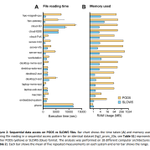
Benchmark comparing SLOW5 and POD5 for nanopore raw signal data has now been published at
@GigaScience
academic.oup.com/gigascience….
Some plots required a log scale - RAM usage and random access time.

Benchmark comparing SLOW5 and POD5 for nanopore raw signal data has now been published at
@GigaScience
academic.oup.com/gigascience….
Some plots required a log scale - RAM usage and random access time.