

INTP. Here to learn.
Joined June 2016
- Tweets3.3K
- Following889
- Followers80
- Likes12.8K






Brian LeFevre retweeted

The British army once sentenced Daniel Morgan to 500 lashes, a punishment that usually killed a man, for the crime of knocking out an officer who struck him. He survived every stroke. And he spent the rest of his life joking that the drummer had miscounted and only given him 499, so the British still owed him one. He collected that debt at a place called Cowpens.
Morgan was not born to anything. He was a rough, barely educated frontiersman who made his living hauling freight by wagon on the Virginia frontier, a big, powerful, hot-tempered young man. During the French and Indian War, serving as a civilian teamster with the British army, a British lieutenant struck him with the flat of a sword. Morgan answered with his fist and dropped the officer cold. For a colonial to strike a British officer was close to a capital offense, and the court-martial sentenced him to five hundred lashes with the cat-o'-nine-tails, a flogging meant to flay a man and very often to kill him.
They tied him up and laid it on, and Daniel Morgan did not die. He carried the ridged scars on his back for the rest of his life. But instead of breaking him, that brutal punishment forged something. It left him with a cold, permanent hatred of the British army and its contempt for colonial men like him, a hatred he would one day repay with interest. And it gave him his lifelong joke: the drummer lost count and stopped at 499, so the British, he liked to say, were still one lash short of paying him in full.
When the Revolution came, that uneducated wagoner turned out to be a natural soldier of rare gifts. He raised a company of frontier riflemen, crack shots who could kill at distances that terrified British regulars, and he led them north to Saratoga, where his marksmen helped shatter Burgoyne's army and win the turning-point victory of the war. Morgan had a feel for battle that trained European officers lacked, an instinct for ground, for timing, and above all for the men he led. He understood that his militia were not professional soldiers and could not be asked to do what professionals did, so instead of cursing them for it, he built his tactics around what they could do.
That genius reached its peak at the Battle of Cowpens in January 1781, one of the most perfectly fought battles in American history. Facing the dreaded Banastre Tarleton, Morgan set a trap built entirely on human nature. He put his unreliable militia in the front line and asked them only for two volleys, then permission to fall back, which they gladly did. Tarleton's British, seeing the Americans retreat, charged forward in a confident rush straight into Morgan's real line of hardened Continentals, and then Morgan sprang the jaws, hitting the British on both flanks at once in a double envelopment while his cavalry rode down their rear. In minutes Tarleton's command was destroyed, hundreds killed and captured, one of the most crushing and complete victories of the war, and Tarleton himself barely escaped. It was the frontier wagoner out-generaling the darlings of the British army.
So the debt was paid. The boy they tried to flog to death grew up to be the man who methodically dismantled the British in the field, who understood soldiers because he had been treated like dirt as one, and who turned the hard lessons of his own back into some of the finest tactics the Revolution ever saw. Remember Daniel Morgan. The British gave him 499 lashes and made an enemy who never forgot, and he collected the last one at Cowpens, with interest.


Brian LeFevre retweeted

Mark Cuban on the door-to-door garbage bag business that taught him how to sell at age 12:
It started because his dad wouldn't buy him a pair of shoes.
Cuban was 12, and he wanted new Converse. His dad was in the middle of a poker game.
"Dad, I need a new pair of Converse, right?" Cuban recalls asking. His father wasn't moved: "I see those, you know, those shoes on your feet. They still work, right?"
Cuban admitted they did. So his dad laid down the rule that would end up shaping his career:
"Well, when you have a job, you can buy whatever you want, but until then, those shoes still work."
Cuban pushed back with the obvious problem:
"Dad, I can't get a job. I'm 12 years old."
Then one of his dad's poker buddies spoke up.
"Yeah, I got a job for you," the man said. "I've got these boxes of garbage bags and you can go sell them around the neighborhood."
So that's what Cuban did. He knocked on doors with a simple pitch:
"Hi, I'm your neighbor, Mark. Do you use garbage bags?"
The economics were straightforward. The boxes cost him three dollars for a hundred. He sold them for six.
Then he'd come back every couple of weeks to restock his neighbors whenever they needed more. He was clearing about 20 bucks a week, which felt like big time, and he got his shoes.
The money was never the real lesson. What stuck with him was what selling actually is:
"That taught me to be confident and that taught me that I could sell. And that taught me that selling was helping, not convincing."
That distinction became the foundation of how @mcuban thinks about business. Once he realized everyone already needed garbage bags, the whole game clarified:
"Once I figured out that everybody needed garbage bags, then it really became obvious to me that if I can find things that people needed, right, and wanted and I could do it a better way than what they were doing it, then I can make some money. And that's kind of stayed with me since."
Brian LeFevre retweeted

“Inaction breeds doubt and fear. Action breeds confidence and courage. If you want to conquer fear, do not sit home and think about it. Go out and get busy.”
-Dale Carnegie


Brian LeFevre retweeted

This World #History Timeline shows the main superpowers and dynasties over the last 5000 years. Gorgeous piece of work. These type of charts really help to understand who ruled at the same time on the other side of the globe. Love it! Source: buff.ly/2qiP1Wo

Brian LeFevre retweeted

SO GOOD! From @stevemagness:
"Playgrounds & free play are risk calibration tools....When risk is removed from play, kids are more prone to anxiety disorders, because they never develop the ability to cope with fear-inducing situations."
Risk of comfort:
stevemagness.substack.com/p/…
Brian LeFevre retweeted

9 Gates to Russia: The Geographic Keys

ALT A strategic map visualizing "Russian Geographic Fatalism" and the "9 Gaps" that define 🇷🇺 Russia's security doctrine. It highlights the flat European Plain and critical entry points through 🇵🇱 Poland, 🇺🇦 Ukraine, and 🇲🇩 Moldova. The map also shows natural barriers in 🇹🇲 Turkmenistan, 🇲🇳 Mongolia, and the Caucasus region of 🇬🇪 Georgia and 🇦🇿 Azerbaijan. It illustrates the historical pursuit of "strategic depth" to defend the 🇷🇺 Russian heartland from external vulnerabilities. https://www.thelightningpress.com/nine-gates-russia/
Brian LeFevre retweeted

high agency seems correlated to authoritative parenting and *not* to authoritarian parenting
authoritarian: do as i say
authoritative: i show you what to do
i think of it as playing in ceo mode, not in dictator mode
so what's it mean that to fire yourself as arbiter?

Brian LeFevre retweeted

Let me show you the exact spot where Julius Caesar was assassinated on this day, 2,070 years ago.
Here’s a 🧵 of 📸 and some history.

Brian LeFevre retweeted

Mark Wahlberg’s daily non-negotiable as a dad: “They know Dad can’t miss Mass… the day has to start on my hands and my knees… I rely on God for many, many things.”
In this honest 53-second clip, he explains why he never forced faith on his kids—despite wanting a faith-based education for them:
- He leads by quiet example instead of rules.
- “I don’t make them go to Mass… I just live it so they see it.”
- Reflects on his own childhood: Forced church led to sneaking out; real faith only stuck when he needed it and had the right influences.
A beautiful, low-pressure approach: Let them watch Dad depend on God every single morning—and trust the example will draw them in when the time is right.
What daily habit (prayer, discipline, gratitude, anything) do you quietly model for your kids or family, hoping they one day adopt it?
Brian LeFevre retweeted
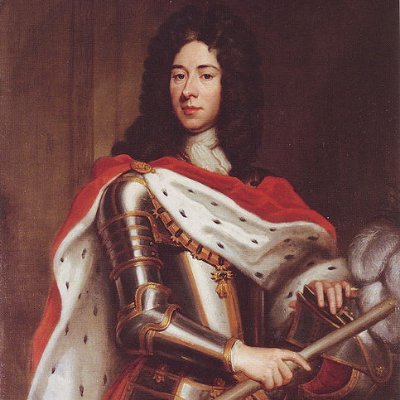
Many inns appeared in medieval Europe, offering foods, drinks and a place to socialize, as well as lodging for travelers, helping transportation logistics.
In this thread I will present some of the old medieval inns that survived to this day, from various European countries!🧵



