



Deece retweeted

🚨 Episode 353 - Thistle Through Time: Grand Theft Auto 🚨
Ahead of the cultural phenomenon that is GTA VI dropping tomorrow, David talks through where Partick Thistle were at each release! 🔫🚙🇧🇪
on.soundcloud.com/Kv021rj0ef…


Deece retweeted

📺 Dugout Cam
A look at how the bench experienced our win over Inverness at the weekend!
🎥 Connor Steel
Deece retweeted

Andy Graham was in charge of Alloa for 3 years and 1 day and was the 7th longest serving manager in the SPFL before being bagged today.
He becomes the 10th manager to leave his post so far this season.
Here's the updated table.

Deece retweeted
Job done at home ✅
Our Gameday camera captured the key moments from Saturday's win over Inverness in Maryhill.
🎥 Ben McMorrow
Deece retweeted

PIFs from the 1970s were so effective that the classics were in constant rotation until the 1990s. Here's a maudlin CHARLEY SAYS episode from 1973, aired on CITV in 1986. Followed by T-Bag and T-Shirt seeing us into She-Ra!
Deece retweeted
🙌 After scoring twice in Saturday's win over Inverness, Oisin Smyth has been named in the @spfl #TOTW!
Well done, @smyth_oisin7! 👏

Deece retweeted

1,000 copies SOLD OUT, well done to Kenny Pieper (and all contributors), a superb D.I.Y. effort! 🇧🇪

Deece retweeted
On this day 1983, heartbreak for Jags fans as Super Mo is sold to Watford in the middle of our promotion battle. One of the saddest days of the 1980s for all Jagskind... 👀
👉 thethistlearchive.net/mauric…

Deece retweeted

Messages for the Skipper, from those who know him best 💙
#SUISCO | 1️⃣0️⃣3️⃣
Deece retweeted

Ian Wilson 🏴
Earned 5 caps for the Scotland national football team between 1987 and 1988, plus a Scotland B appearance.


Deece retweeted
🌟 This afternoon's Partick Thistle Player of the Match, chosen by match sponsors The Woodside Inn, was Oisin Smyth!
🤝 Presented in partnership with @zenithcoins

Deece retweeted

On the morning of January 20, 1953, Harry S. Truman completed his presidency and walked out of the White House. He had no motorcade. He had no government office to move into. He had no staff. He had no pension.
The Former Presidents Act, which would later provide salaries and offices to retired American presidents, did not yet exist. He had, in the way of regular income, an army pension from his service as a captain of field artillery in the First World War. The figure was one hundred and twelve dollars and fifty-six cents a month. He boarded a train at Union Station with his wife. He went home to Independence, Missouri.
Truman's approval rating, at the end of his presidency, was approximately thirty-two percent — among the lowest exit ratings of any modern American president. The Washington press, which had been hostile to him for most of his second term, treated his departure as a relief. The general assessment, both inside the city he was leaving and in much of the country, was that the Truman presidency had been a failure.
He went home and lived the way the country had told him to live.
He bought a Chrysler that summer. He and Bess got into the car themselves. They drove from Independence to Washington, then to New York, then back. A former president of the United States was filling his own gas tank at roadside stations, signing autographs for the truck drivers who recognised him.
The Pennsylvania state police pulled him over for driving too slowly. He answered his own phone in Independence. He responded personally to thousands of letters from people who wrote to him. He walked the streets of his hometown every morning at a pace fast enough that the reporters who attempted to follow him sometimes had to jog to keep up.
He did not write bitter memoirs. He did not give interviews attacking his successor. He did not, in any visible way, attempt to rehabilitate his own legacy. He simply continued, in Independence, Missouri, to be the same person he had been before the presidency.
While he was doing this, the things he had done as president began, very slowly, to look different from how the country had judged them at the time.
He had signed Executive Order 9981 in 1948, ending racial segregation in the United States armed forces — a step he had taken over the explicit opposition of substantial parts of the American military establishment and the Southern wing of his own party, on the grounds that he had decided it was the right thing to do.
He had committed the United States, through the Truman Doctrine and the Marshall Plan, to actively contesting Soviet expansion in postwar Europe and to underwriting the reconstruction of the Western European countries that had been destroyed in the Second World War.
The Western Europe that exists today — the long arc of peace and democratic stability that has held across that continent for more than seventy years — exists in significant part because Truman, in the late nineteen-forties, decided that the United States was going to pay to rebuild it.
He had also, in November of 1945, become the first president of the United States to formally propose to Congress a system of national health insurance.
The proposal had been savaged. The American Medical Association had denounced it, in language that became standard for the period, as socialised medicine. The conservative coalition in Congress had buried it. Truman had reintroduced it. It had been buried again. By the time he left office in 1953, the failure to pass any version of the national health insurance plan was, in Truman's own subsequent description, one of the most personally bitter defeats of his presidency.
He went home anyway. He walked the streets of Independence. The years passed.
On the thirtieth of July, 1965, twenty years after Truman had first asked Congress to pass a national health insurance plan, President Lyndon B. Johnson did something American presidents had not previously done at the signing of major legislation. He did not sign the bill in Washington. He did not stage the ceremony in the Rose Garden or the Oval Office or any of the standard locations the executive branch typically used for these events.
Instead, he flew Air Force One to Kansas City, drove to Independence, Missouri, and signed the bill in the auditorium of the Harry S. Truman Presidential Library.
The bill was the Social Security Amendments of 1965. It created Medicare and Medicaid.
Truman, then eighty-one, sat next to Johnson at the signing table. When Johnson rose to speak, he looked at the former president seated beside him and said, in the recorded opening lines of his remarks that day:
"The people of the United States love and voted for Harry Truman, not because he gave them hell — but because he gave them hope."
Johnson then signed the bill into law and handed the signing pens to Truman and Bess. He described Truman, in the speech that day, as the real daddy of Medicare.
Six months later, in January of 1966, Johnson returned to the Truman Library for a separate ceremony. He brought with him the first two Medicare cards that had been issued by the United States government. The first card was assigned to Harry S. Truman. The second was assigned to Bess W. Truman. Johnson handed them to the couple personally.
The man who had been told, twelve years earlier, that the work was wasted had received the legal evidence that the work had not been wasted. It had simply needed to wait.
Truman lived for another six and a half years after that. He died on December 26, 1972. He was eighty-eight years old. The most recent surveys of professional American historians rank him, depending on the methodology, somewhere between the sixth and the ninth most effective president in the country's history.
He had not been a different person at the end of his life than he had been when he took office. He had not campaigned for the rehabilitation of his own reputation. He had not softened his record to win approval. He had simply stayed, after his presidency, in the small Missouri town he had come from, and let the work he had done continue to mean what it had meant when he had done it.
History has a long memory.
It had taken, in his case, about twenty years for it to begin to catch up.


Deece retweeted
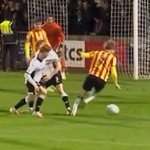
Doubling the advantage ✌️
A second of the game for Oisin Smyth.
🎥 Amy Banks, Georgia Dunn, Ben McMorrow


Deece retweeted

Josef Mengele (1911–1979), notoriously known as the "Angel of Death" (Todesengel), was a German SS officer and physician at the Auschwitz-Birkenau concentration camp who conducted horrific, pseudoscientific human experiments and oversaw the selection of prisoners for execution...
He joined the Nazi Party in 1937 and the SS in 1938. After serving as a medical officer on the Eastern Front, he was wounded and declared unfit for frontline combat. In May 1943, Mengele was assigned to Auschwitz-Birkenau. Standing on the arrival ramps, he casually decided the fate of incoming transports—pointing left or right to send prisoners either to immediate forced labor or to the gas chambers. Mengele used camp inmates—especially twins, Romani and Jewish children, and people with congenital anomalies—as involuntary test subjects. His experiments included injecting chemicals (such as petrol or chloroform), attempting to change eye color by injecting pigments into children's eyes, performing forced sterilizations, and carrying out mutilating surgeries without anesthesia. He viewed twin studies as a way to unlock the secrets of genetics and multiply the birth rate of the Aryan master race. Most twin subjects and children subjected to his care were brutally murdered or died from their torture, after which he performed post-mortem dissections.
. . .
On the sweltering afternoon of February 7, 1979, a frail, sixty-seven-year-old man with a trimmed gray mustache walked down the sandy beach of Bertioga on Brazil's Atlantic coast and waded into the warm surf. Moments later, struck by a massive stroke in chest-deep water, he collapsed beneath the waves and drowned. Local authorities pulled the body ashore and buried it quietly in a hillside cemetery in Embu das Artes under the name "Wolfgang Gerhard." For six more years, Nazi hunters, Mossad agents, and West German prosecutors continued scouring jungles, airports, and safehouses across South America for the world's most wanted war criminal—unaware that the man known as the "Angel of Death" had already died unpunished in the ocean.
During the twenty-one months he served as chief camp physician at Auschwitz-Birkenau between May 1943 and January 1945, Dr. Josef Mengele wielded absolute power over life and death. Standing impeccably groomed in polished jackboots on the arrival ramp as cattle cars unloaded hundreds of thousands of Hungarian, Polish, and European Jews, Mengele calmly flicked a gloved hand left or right—sending the elderly, sick, and children straight to the gas chambers while selecting the strong for slave labor.
Beyond the selection ramp, Mengele turned Auschwitz into a private laboratory of sadism. Driven by fanatical obsession with Nazi racial pseudoscience, he targeted identical twins, dwarfs, and people with rare genetic traits for horrific human experiments. Children were injected with typhus and tuberculosis, subjected to agonizing surgeries without anesthesia, had chemicals dripped into their eyes to alter their eye color, and were frequently murdered simultaneously with lethal phenol injections to the heart so Mengele could dissect and compare their organs side by side.
When the Red Army approached Auschwitz in January 1945, Mengele fled west in a Wehrmacht uniform. Captured by American forces near Nuremberg that summer, he was released weeks later because Allied screening teams failed to recognize his name—and because Mengele had avoided getting the standard SS blood-group tattoo under his arm. For nearly four years, he hid in plain sight working as a farmhand in rural Bavaria before slipping through the clandestine "ratline" network to Genoa, Italy. In 1949, carrying Red Cross travel papers issued to "Helmut Gregor," he boarded a ship to Buenos Aires.
#archaeohistories
