

Experienced entrepreneur working in film, gaming, and Web3 technologies. Jonathon is an MIT Art Scholar and is launching the studio Degenerative Labs.
Toronto, ON. Canada
Joined December 2008
- Tweets400
- Following337
- Followers184
- Likes788





Took the challenge from @FarzaTV on the @ycombinator pod! Just make a video about what you’re building today.

A room full of students discussed the Eliza Effect in their classrooms. But it wasn't a scheduled lesson; the curriculum won’t catch up for years. So we're building timely lessons: 30m, any teacher, any day, no prep required! If you want one ✍️: mailchi.mp/2ac0c9cd7477/hot-…
Jonathon Corbière retweeted

I get asked, why would I do a Moonshots event? The answer is quite simple: I want a world POWERED by Moonshots.
Moonshots to solve diseases, solve math, solve the problems our society is facing, and so much more. This is just the beginning.
Jonathon Corbière retweeted

Today we announced the Claude-led discovery of a molecular machine that we suspect could represent a new gene editing mechanism. Its precise function, biotechnological utility (if any), or level of significance is not yet clear, but at minimum it is work I would have been proud to do as a PhD student. The work was done mostly, though not entirely, by Claude: our life sciences team suggested a broad area of research, Claude read through the literature and a bunch of genome data and discovered something interesting, then Claude proposed experiments to verify the discovery and our team carried them out.
It’s easy to dismiss this as a one-off or curiosity, but we’ve repeatedly seen a pattern where AI performance in new intellectual domains goes from weak to superhuman in a matter of a few years. In 2023 models struggled to do math at the level of an average high-school student. In 2024 they started to do well on math competitions for the best high-schoolers in the country, in 2025 they started to solve minor open problems, in early 2026 more significant open problems, and in late 2026 they are beginning to solve the top few open problems in all of mathematics. We believe AI for biology is on a similar exponential trend.
The main difference between biology and mathematics, of course, is that math can be done purely theoretically, while biology requires experimentation. Some have used this to draw the conclusion that AI’s utility in biology will be limited. We think this is wrong. As we’ve demonstrated today, humans can collaborate with AI to perform the experiments, validate key results in a few weeks and, if necessary, work with the AI to iterate on what they find. Eventually it may even be possible for Claude itself to safely perform the experiments by autonomously controlling lab equipment, with appropriate safeguards in place, but we aren’t doing that today (our lab is also a BSL1/BSL2 facility that doesn't handle materials dangerous to humans).
More broadly, biomedical advancement has many stages — from fundamental biology discoveries, to translational research, to drug discovery, clinical trials, and finally the actual delivery of medicines and health care to patients. We are also interested in these later stages, but even simply accelerating the first stage of fundamental biological discoveries has the potential to speed up and broaden the entire pipeline. Improving our understanding of biology and sharpening biologists’ tools can drive forward all of the later stages, for example by identifying new drug targets, finding new therapeutic modalities, allowing for more precise measurement, and speeding up the experimental loop which itself further accelerates our understanding of biology. This will not in itself speed up clinical trial times, but if it succeeds it could greatly increase the number of promising candidates that go into the pipeline — an increase in throughput even though latency remains.
In Machines of Loving Grace, I wrote about AI’s potential to “cure most diseases in 5-10 years” — a goal that sounds impossible, but one I believe is just barely possible if AI is applied to every stage of the pipeline. The first step is showing that AI can first help with, and then drive, biological discoveries.
Claude’s discovery is the latest in a line of related prior work that goes back decades, beginning with systems like CRISPR, and continuing with discoveries like the bridge recombinase and VIPR in the past few years. Recently, there has been heightened interest in systems based on reverse transcriptase (RT) enzymes, the enzyme underlying the system Claude identified. And most recently, a Stanford team working independently described a novel RT system with an associated non-coding array that is in some ways similar to the one Claude found, though they are distinct systems that evolved independently from each other. I believe that we’re at the very beginning of finding such systems and developing them into powerful tools for biotechnology.
I’m proud of the resources Anthropic has invested in accelerating the public benefits of AI through the life sciences, and we’re aiming both to grow our life sciences team and to work with other scientists to extend this approach to a broad range of problems. If you have a proposal for a research collaboration or are interested in joining our life sciences team, please reach out.

Claude has discovered a previously unknown enzyme system hidden in the DNA of bacteriophages. Beside the enzyme’s gene sits a long array of repeating DNA—a structure that looks somewhat similar to CRISPR.
We don’t yet understand what this system does, but only a handful of known systems share its features, and all of them are able to cut, copy, and paste DNA. Historically, the discovery of such programmable systems has helped revolutionize medicine. CRISPR, for instance, is now the foundation of genetic medicines. But it will take much more work to learn what this system does, and whether it can be put to similar use.
Read more: anthropic.com/news/claude-di…

Jonathon Corbière retweeted

In Case You Missed It: This morning's launch of @NASA's Nancy Grace Roman Telescope.
[7:26am ET, August 30, 2026].
Will arrive at Sun-Earth L2 in Early December, to discover Exoplanets and observe the effects of Dark Matter & Dark Energy on the Universe.
Jonathon Corbière retweeted

Crash Course is over… for us! Our work in animating this series from 2011 to 2025 has come to an end, and we wanted to share this love letter to our incredibly talented team members, and to you: the fans. Thank you so much for watching. DFTBA youtu.be/O0xixOQLBDI?si=Ay-1…
Please check out my feature concept trailer: RESONANCE | #FutureVisionXPRIZE youtu.be/JP5gHas5xgg?si=0s6e…
@PJaccetturo thanks for all the amazing posts sharing your process, was incredibly helpful.
Jonathon Corbière retweeted

Today we’re announcing Fund V, our new, $265M fund to keep doing what we love and do best: invest at the early stages — pre-Seed, Seed and Series A — in founders building the tools that uplift human potential and the systems that support them.
Progress happens when technology stops being a privilege and becomes ordinary. In this age of mega-funds and mega-rounds, there is a case to be made for boutique, specialist funds backing founders who can translate frontier tech into practical tools for the broader workforce, to serve people and institutions that can benefit the most.
Reach is purpose-built for that founder. It’s the bet that was made on us, and it’s the one we’re still making.
Letter from Reach Co-Founder and GP, Jennifer Carolan: reachcapital.com/resources/n…
Who wants to be in a zoo!!!
Check out Amplified Intelligence's video! #TikTok vt.tiktok.com/ZSVkfuAmS/

Jonathon Corbière retweeted

What would happen if humanity received a credible signal from another civilization tomorrow?
SETI Institute Senior Planetary Astronomer @AllPlanets joined @thattechpod for a wide-ranging conversation about how we search for life beyond Earth, what might happen if we actually find it, and how new technologies are changing the way we explore the universe.
Franck discusses the evolving search for extraterrestrial intelligence, the growing role of AI in astronomy, and how citizen scientists and increasingly accessible observing technology are opening new opportunities for people worldwide to participate in scientific discovery.
The conversation also explores Franck’s work with SkyMapper and its vision for a global network of connected telescopes and all-sky cameras, including SkySphere, which uses on-device AI to identify meteors, satellites, aircraft, and other phenomena in real time.
Astronomy is no longer confined to major professional observatories. From AI-assisted observations to citizen science, new tools are expanding who can participate in exploring the cosmos — and perhaps even in answering one of humanity’s biggest questions: Are we alone?
buzzsprout.com/1738696/episo…

My P(Doom) is currently sitting at around 10%-20%. While I’m more of a techno-optimist, I think it’s important that we always ask ourselves “should we build this”.
P(Doom) Explained, The Real Math on Human Extinction youtu.be/RimVz7AsR9M?si=UsPz…
#ai #extinction
Jonathon Corbière retweeted

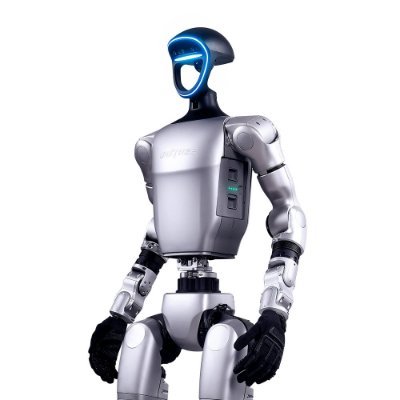
China didn't put on a show. They sent a signal. Over a billion people watched humanoids do backflips and martial arts — what they should have seen was China announcing it solved the coordination problem at scale. We're not preparing. We're sleepwalking.
Agree entirely with this message

For my first post, I’m sharing a letter @NVIDIA signed on why open models matter.
AI will transform every industry, power every company, and be built by every country.
Open models strengthen safety and cybersecurity, accelerate innovation and diffusion, and enable sovereignty.
The world needs both frontier closed models and frontier open models.
images.nvidia.com/pdf/Open-W…


Everyone says AI is "scaling up."
The real 2026 story is quantizing down — models on your phone, offline, ~90% cheaper.
That's not a downgrade. It's what finally puts a living, personal tutor in every hand. The smaller intelligence gets, the further it reaches.
I'm more convinced than ever that civilizations compressing inward is the true solution to the Fermi paradox.
The galaxy is silent not because civilizations die off or hide. They've all turned inward into simulations! It's exponentially cheaper than crossing the stars.
Jonathon Corbière retweeted
Living thru the Singularity! Robots performed surgery today. The same SpaceX booster flew to orbit for the 36th time… AI launched a voice model that feels real.
This isn't the future… This is Thursday.
Would you rather...
Break through above and meet your maker?
or Dive in below and be a GOD?
The math is screaming that reality itself might be code and that we are living in a simulation.
youtube.com/watch?v=w1RkcxTr…
Will the virtual world take over the real world when it becomes the most addicting drug we’ve ever had?
youtu.be/aNpfaOfVlI0?si=AK71…
Jonathon Corbière retweeted
#JurassicPark's #GeneTherapy scene wasn't just #scifi. 🧬 It highlights the real potential of bringing back extinct animals like the dodo and woolly mammoth. But could it also help extend human life? 🦣🌟 Watch our short to find out! 👇
youtube.com/shorts/GWdX8MWPg…
