

26 | NDSU T&F Alum ‘23 | Not Financial Advice | you can’t have everything, but you can have anything
North Dakota, USA
Joined March 2016
- Tweets5.9K
- Following1.3K
- Followers1.3K
- Likes38.5K











Josh Darwin retweeted

Of all the recent AI breakthroughs from OpenAI, the progress in engineering AI impressed me the most.
We're approaching an era where AI will autonomously simulate, test, optimize, and eventually invent entirely new technologies.
Imagine what happens when millions of AI engineers work 24/7 on every engineering problem imaginable.

wow
engineering AGI is here
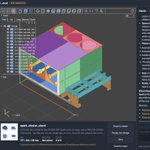
GPT‑6.2 Astra can model a mechanical system part by part, giving engineers a way to show how it goes together and test how design changes affect its behavior.
"We asked GPT‑6.2 Astra to model a radio-controlled buggy and engine using public photos and build manuals. It modeled the individual components, created an animated assembly guide, and produced an illustrated parts catalog. This shows how Astra can accelerate physical engineering product development and documentation."


Josh Darwin retweeted

There are few better ways to spend your time in a downtrending market than studying the leaders of the prior cycle. One thing I’ve found particularly useful is isolating the buy point and studying the setup into it, because selling takes care of itself when you buy a stock correctly, and I believe CANSLIM practitioners should put most of their focus on proper buy points and managing risk, over complex entry tactics.
$MU was without a doubt one of the all-star leaders of the last cycle. It sat right at the center of the AI high-bandwidth memory bottleneck and had every component we look for as CAN SLIM investors: a 96 Composite Rating, EPS up 757% on 58% sales growth, and estimates calling for TTM earnings to go from $6.44 to $45.12. It also had an 11-week stage 1 cup with handle after a 100% prior uptrend, followed by a breakout to new 52-week highs on rising volume. The RS line broke to a new 52-week high along with the stock, and TTM earnings and sales estimates were both at all-time highs, which is a clue I always look for.
At the time of the buy point, the market was ultra-bullish, with IBD’s recommended exposure at 80–100%, and MU ranked as the #15 stock in its sector and #6 in its group.


Josh Darwin retweeted
FAST TAKEOFF
Although this is just a rough estimate, we could be at 100 hours by the end of the year.
Mythos is from April, so we're looking at roughly 10x growth from April to October (internal Model 4), and potentially 30x by January (another 3x from October). And that's a conservative estimate.
I don't have the data from January this year, but I think it's reasonable to estimate that we could see around 100x growth over the entire year (3x in Q1 2026 + 30x april - end of december)
Acceleration is accelerating, so we very likely see an even larger increase in 2027, potentially 200x or more.
That would take us from 100 hours to 20,000 hours, or roughly 833 full days of continuous (24/7) human work.
The point is, no matter which estimate you use, conservative or one that accounts for further acceleration, AI capabilities in 2027 will be absolutely insane.
And keep in mind that we'll also see swarms of 100 000s, potentially even millions, of AI agents working simultaneously on the same problems, compared to low 1000s this year.
AI systems will be combining their (better than Millenium Prize level - because we're already at this level) capabilities with unprecedented amounts of parallel intelligence.
That's why I consider 2026, especially its final 2 quarters, the beginning of the serious takeoff.
2027 we will see an intelligence explosion that transforms the pace of scientific discovery, engineering, and technological progress beyond anything humanity has ever experienced.


The METR graph, updated:

Readers added context they thought people might want to know
This chart is not the official METR graph. It was created by Benjamin Todd via extrapolation from Anthropic's internal AECI scores, as METR is no longer updating its public time horizon measurements.
x.com/ben_j_todd/sta…
benjamintodd.substack.com/p/ai-trend-ext…
metr.org/time-horizons/
metr.org/horizon-chart-…
metr.org/blog/2026-1-29…
Josh Darwin retweeted

“AI is making people lazy. Nobody will know how to think anymore."
Socrates said the same thing about writing.
He thought people would stop remembering anything if they could just write it down.
Then it was the printing press. Then calculators. Then Google.
Every single time, the tool took over the boring part and people went on to think about harder things.
Nobody misses long division.
Nobody misses memorizing phone numbers.
What you call laziness is a person refusing to spend three hours on something that now takes three minutes.

Josh Darwin retweeted

$DELL $NVDA $MU
A GPU that shipped in 2022 rents for 58% more today than it did a year ago.
The market will stage fake narratives and fake downturns while AI demand keeps blowing past every forecast.


Josh Darwin retweeted
Build the data centers. Build the robots. Build the reactors. Build the AI scientists. Cure the diseases.
Reverse aging.
Expand into space.

Josh Darwin retweeted

Let me briefly sum up where we are with AI.
Everyone can feel it and everyone can see it. I believe 2026 is the turning point. We see major advances every day, but with all the excitement about the latest benchmarks, it’s easy to lose sight of the bigger picture.
Anthropic has just released Claude Fable 5.2, its latest flagship model. It’s outstanding. Anyone who has tested it knows how good it is, and in its blog posts, Anthropic has also highlighted advances beyond coding: new findings in physics and hardware design, as well as a method for predicting viral protein structures developed with Mythos 5.2.
Fable 5.2 even built an operating system prototype by coordinating more than 1,000 subagents over eight days. At the same time, Anthropic acknowledged in its system card that it has a separate, unreleased research model that is somewhat more capable than Mythos 5.2. This could be “Model 4,” although that connection has not been confirmed.
Meanwhile, the competition isn’t slowing down. Google has caught up in a big way, and Gemini 4 Carbon is outstanding. Google also says it is using its own models for research and making new discoveries. Rumors suggest that a successor called Krypton is already being tested, though its capabilities remain unconfirmed.
Today, the authors of AI 2027 updated their prediction. The AI Futures Project now forecasts that AI capable of doing the work of a team of top human AI researchers will likely arrive in 2027, absent a major slowdown. They estimate that AI-driven acceleration of AI research is already five months ahead of their original scenario.
And we shouldn’t forget what AI systems have already achieved in mathematics. OpenAI says an internal system produced a solution to the Navier–Stokes Millennium Prize Problem. And this model is already outdated, as OpenAI said in their blogpost.
What I’m trying to say is this: I regularly say that the takeoff began in 2026 and that 2027 will be a crazy year. Perhaps the craziest year in human history. But when we look back on this year, I think it will become clear just how crazy 2026 already was.
I’ve devoted myself to AI since GPT-3.5, and I now work full-time to make this technological revolution tangible. Just a few years ago, LLMs like GPT-4 seemed like stochastic parrots. They hallucinated and, compared with today’s models, felt like trivial machines. Of course, they were never actually trivial. But looking back, the pace of development since o1 in late 2024 has kept increasing, and now the sudden explosion in capabilities feels tangible.
So enjoy these last months of relative calm. I believe 2027 will be the year of superintelligence. And nothing will be the same again.
Josh Darwin retweeted

The Nvidia CUDA moat is gone. Anthropic sees all compute as fungible and it only took Mythos 3 days to figure out how to run itself on AMD hardware.


Josh Darwin retweeted
I think the biggest divide of the next decade won’t be between rich and poor.
Or between people with degrees and people without them.
It’ll be between people who are curious enough to experiment with AI and people who refuse to touch it.
One group will spend the next few years discovering capabilities, building things, making mistakes, and learning how to work with increasingly powerful systems.
The other will spend those same years explaining why none of it counts.
And eventually, when the technology becomes impossible to ignore, they’ll have to start learning what the first group already knows.
Except by then, the first group will have years of experience.
You can dislike a technological revolution all you want.
But refusing to understand it doesn’t make you immune to its consequences.
“We invented machines to escape physical labor.
We invented computers to escape repetitive calculations.
Now we're inventing intelligence to escape cognitive labor.
And somehow people have convinced themselves that this is a tragedy.
..
I want humanity to reach a point where employment is no longer a prerequisite for survival. “

"But if AI does everything, what's left for humans?"
What an unbelievably depressing question.
As if the entire purpose of human existence was to perform economically valuable labor.
As if spending 40 years answering emails, processing invoices, debugging software and sitting in meetings was the pinnacle of civilization.
We invented machines to escape physical labor.
We invented computers to escape repetitive calculations.
Now we're inventing intelligence to escape cognitive labor.
And somehow people have convinced themselves that this is a tragedy.
I don't want humanity to spend the next thousand years finding new ways to keep everyone employed.
I want humanity to reach a point where employment is no longer a prerequisite for survival.
Why is that such a controversial ambition?
3
4
287
Josh Darwin retweeted

what excites me most about AI is that there's a chance we're about to see a renaissance of beauty, heroism, and virtue
for the past few decades, if you wanted to make a movie, a videogame, a TV show, you needed prohibitively large amounts of money, far beyond what most people could afford, and the approval of studios and institutions that decided which stories were allowed to be told, which characters could be played by which actors, which values promoted
in recent years we've seen even more ideological messaging being shoved into practically every form of entertainment, to the point where you can't even watch a movie or play a videogame without someone trying to lecture you about something, especially if the target audience is kids
all of this is becoming optional
what happens when a single person, or a small group of talented people, can create a videogame with the quality of a AAA title? when you can make your own movies, fictional universes, your own stories, your own school curriculum?
imagine being able to create an entire animated series for your children, with beautiful stories and characters you actually want them to admire, or videogames where you play as a real hero, someone who embodies courage, honor, loyalty, sacrifice, love for their family, instead of having to sit through another ideological lecture
i genuinely think we could see something extraordinary
a return of the hero's journey, of stories that inspire children to become good people. beautiful worlds and inspiring characters you grow up wanting to be like
the best part is that you don't need to convince anyone to make these things. parts of this are already a good prompt away. people can just make them because they want to, because these are the stories and morals they care about and want their children to grow up with
obviously there will still be propaganda, probably more than ever. but we won't have to settle for it
we haven't really started to think about what happens when we can simply make the things we wish existed. a world of infinite (and GOOD) possibilities
the more i think about it, the more excited i get


