

“The right to exclude others is one of the most treasured rights of property ownership.” — — Cedar Point Nursery v. Hassid, 594 U.S. 139, 149 (2021)
Joined August 2025
- Tweets117
- Following133
- Followers34
- Likes155





Pinned Tweet
Laws should be judged by their results, not their intentions.
The City Council wants to investigate how many rent-stabilized apartments are sitting vacant. Good. Count them. But whether the number is 57,000 or something smaller, empty apartments are only part of the cost to society.
Start with the financial damage.
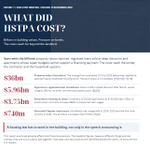
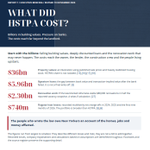
Our report’s comparison of 2019 and 2025 sale prices illustrates roughly $36 BILLION in property devaluation across the selected stabilized housing stock.
After Signature Bank failed in a run on deposits, transactions involving its rent-regulated mortgage pools implied a nearly $6 BILLION markdown.
Those figures overlap, and they cannot all be attributed to HSTPA. But they describe serious financial distress in the buildings New Yorkers depend on for housing.
Now look at what it takes to bring one apartment back.
Take a vacant apartment with an $800 legal monthly rent and a $150,000 renovation bill. Under today’s general small-building improvement allowance, the permitted increase is about $179 a month.
New rent: $979.
Borrowing $150,000 at an assumed 7% over 20 years costs about $1,163 a month.
The ENTIRE rent does not cover the renovation loan—before property taxes, insurance, heat, water or maintenance.
How is that apartment supposed to reopen?
At $150,000 each, renovating even 25,000 apartments would represent $3.75 BILLION in potential work. That is money for electricians, plumbers, carpenters, architects and suppliers. When projects cannot be financed, the consequences reach workers’ paychecks, public revenues and families looking for a home.
And the damage reaches inside occupied apartments.
A November 2026 working paper estimates that HSTPA increased immediately hazardous violations by 25.3% and reduced apartment-renovation filings by 47.3%, relative to comparison buildings.
For tenants, deterioration can mean leaking ceilings, mold, unreliable heat and missed work waiting for repairs. These are costs paid in discomfort, time and the daily indignity of living with problems that never seem to get fixed.
Tenant protection has to include a safe, livable home.
Owners face losses and foreclosure. Lenders pull back. Repairs wait. Prospective renters compete for the homes that remain available. The consequences spread far beyond the person who owns the building.
Albany’s 2019 fiscal memorandum described the state and local fiscal consequences as “To be determined.”
Seven years later, New Yorkers deserve an accounting.
Protecting tenants requires buildings that can afford to function. Good intentions do not replace a boiler, repair a roof or pay a construction crew.
Count the vacant apartments. Count the costs to society. Fix the law.
Full report: pdfhost.io/v/nFdrHH9yen_HSTP…
@NYSHCR @GovKathyHochul @AndreaSCousins @CarlHeastie @BrianKavanaghNY @LindaBRosenthal @NYSComptroller @NYDFS @NYCMayor @ZohranKMamdani @NYCCouncil @SpeakerMenin @CMFarahLouis @CMPiSanchez @NYCHousing @NYC_Buildings @NYCFinance @NYCComptroller @NewYorkStateAG @NYSenate @NYSA_Majority @NYGov @NYCGov @NYCMayorsOffice @NYCBudget @NYCIBO @Jamie_LeFrak @amkorchak @eccles_lincoln


People look at NYC’s eviction timeline doubling and think, “Good—fewer people kicked out.”
That gets the economics completely backwards.
In NYC Housing Court, the median time from filing to lockout for a holdover more than doubled—from 189 days (~6.2 months) in 2018 to 411 days (~13.5 months) in 2023–25 on an apples-to-apples lookback. In 2025, the actual median hit 477 days (~15.7 months), with 72% of cases taking over a full year (and nonpayment cases aren't much faster at 442 days).
Turning a court process into a 15-month purgatory doesn’t fix affordability—it acts as a hidden tax on the entire rental economy:
1. Higher rents for everyone who pays on time. When recovering a unit takes 15+ months of unpaid rent, taxes, heat, and legal fees, landlords price that tail risk into every new lease. Economic research consistently shows eviction delays get passed directly onto paying renters through higher market rents—with the steepest burden hitting lower-income tenants.
2. Brutal tenant screening. If a single bad lease becomes an uncollectible $30k–$50k+ loss, landlords treat every apartment like a high-risk unsecured loan. That’s why NYC has insane 40x income rules, 700+ credit cutoffs, and third-party guarantor fees. The people locked out aren't wealthy—they're working-class families, freelancers, and immigrants with thin credit files.
3. Decaying rent-stabilized buildings. Market-rate owners can raise rents to cover court delays. Rent-stabilized owners—especially under NYC’s new 0% rent freeze—can’t. Fifteen months of lost cash flow drains maintenance reserves, accelerates deferred repairs, pushes mortgages toward default, and shrinks the supply of habitable affordable housing.
4. Collateral damage to good neighbors. Holdovers include nuisance and lease-breach cases. A 15-month court backlog means law-abiding tenants have to live next door to an unresolved safety or nuisance problem for over a year.
A functioning housing market needs fair due process—not a broken court system that takes 15+ months to enforce a lease. Delay isn't a safety net; it's a hidden cost paid by every honest renter in the city.

City Hall insists repealing the 2019 HSTPA would trigger mass evictions. I tried to test that claim using official NYC Housing Court & Marshal execution data for non-nonpayment ("holdover") evictions before (2017–18) and after (2023–25) the law.
Here’s the problem: you can’t verify the claim from public data.
The files aren't sealed—they’re functionally un-auditable. In 99.6% of executed holdovers, the court's public database just says "Holdover" without listing the actual reason (owner use, non-primary residence, nuisance, lease expiration, etc.) or verified rent-stabilization status. Worse, 99.95% of 2017–18 case files sit in off-site paper archives, and HSTPA cut off bulk court feeds.
Below is what the citywide data does show across ALL NYC housing (not just rent-stabilized): holdover executions dropped (~6,011/yr to ~3,650/yr, or ~4,091/yr gap-adjusted), while median time from filing to lockout more than doubled (189 days to 411 days) as stipulations replaced defaults.
Before the Mayor claims repealing HSTPA will unleash mass evictions of rent-stabilized tenants, City Hall should explain what data it’s using—because NYC’s own court data doesn’t track the eviction grounds.

No tenant is harmed by resetting the rent on a vacant unit.

-NYC's unusual 1990s option to exit regulation through eviction was a big incentive for harassment
-Normal vacancy resets wouldn't deregulate the unit, so the incentive is different
-Fixing a distressed building w/rents <$1k/mo would *eventually* require resetting those units. Is that mass eviction? I wouldn't call it mass eviction when it's slow natural turnover, but it is true that in the long run unsubsidized HTSPA buildings must either match income to expenses or physically collapse
21
Someone should look into how he converted a full stop work order to a partial stop work order a few days after it being issued and the nypost exposé dropping
nypost.com/2026/08/18/us-new…
This stinks of corruption and favoritism.


My favorite @nycDSA story is that their chair Gustavo, who claimed to be a union electrician, convinced members to give him $95k to “help with rent”.
It turns out 1) he had never worked as a union electrician and 2) was renting bc the $1.4M townhouse his parents bought for him was 3) being renovated using non-union workers with 4) no permits.


3
138
The 2019 HSTPA caused 40 billion in economic damage and I intend to prove it. Every bill in New York has to mention the economic implications S6458 [2019 HSTPA] left that part with 'to be determined'. Six years have passed and I will show the number as 40 billion dollars in direct economic harm to property owners, banks, construction workers and most of all the tenants themselves. Here is one page from the report:
@

@PabloZevallos I call bullshit on your conclusion. It's basic economics - if you cap prices supply decreases, for apartments they don't just disappear they sit empty.
The City Council is proposing a study of why rent-stabilized apartments remain vacant, and you’re using NYT coverage to declare the 2019 law blameless. That reads like political cover for Albany before the central question has been answered.
New buildings filling up and older apartments sitting empty for years can happen at the same time. Explaining an increase in newly registered vacancies does not make the second problem disappear.
Did you stop to ask why new buildings which usually have the most desirable apartments are sitting empty? over 30k vacant newly built apartments? Does that pass the smell test?
HCR’s own statewide figures show vacancies in the older, pre-1990 registration group rising from 21,071 in 2019 to 27,049 in 2026. That’s a 28% increase. Explain that before taking a victory lap about how the law has nothing to do with it.
And understand the scale: roughly 60,000 registered vacancies statewide in 2025 is comparable to the entire 2020 housing stock of the census area covering Long Island City, Sunnyside and Woodside. How many are ordinary turnover, and how many are existing homes staying empty year after year? That distinction matters to everyone competing for an apartment.
IBO already demonstrated how to investigate this. Its 2023 analysis found 13,362 apartments registered vacant in both 2021 and 2022. Of the apartments vacant in 2022, 3,962 were last reported occupied in 2018 or earlier.
Where is the updated version? Everyone knows this is a political hot potato and no one wants to actually look.
I’ve submitted multiple FOIL requests for this information the HCR says they don't collect it anymore. It's a cover up. Cea and her central casting communist crew don't want this info out there.


This article normalizes buyouts of leases which in itself is proof this entire scheme is a taking under the constitution.
wsj.com/opinion/tighter-rent…

The natural result of the 2019 HSTPA: for building owners with deeply under-market, effectively frozen rents and units requiring hundreds of thousands of dollars in renovations with little or no economic payback, the rational exit is increasingly to vacate the building and sell.

With a low supply of townhouses in the West Village, wealthy buyers are turning apartment buildings into single-family homes. The tenement at 80 Horatio, formerly an 8-unit walk-up, sold last year and is being converted to a mansion. curbed.com/article/west-vill…

38
Wrong the socialist are chasing out the landlords who's only remaining profitable exit is selling to super rich.

13
You don’t deserve double-digit returns on your investment.

Gustavo Gordillo, NYC DSA's phony union champion, is doing $1.4M in repairs on home - and permits reveal hypocrisy trib.al/EDxC0dV

1
19


Let's not forget the 1.13m renovations the dsa chair paid for with his trust fund.
@nypost
@NotNiceDavid
@david_sivella
@JoannAriola32
nyc.gov/assets/lpc/downloads…


It has been revealed that NYC-DSA co-chair Gustavo Gordillo owns a $1.5M townhouse that his parents bought him. He’s also the beneficiary of a trust fund and could possibly own more undisclosed properties.
Born in Peru and raised in Miami, he now lives in a 6-bedroom row house in the historically black neighborhood of Bed-Stuy, Brooklyn. He’s literally the definition of a gentrifier and is actively helping displace black people, according to what his own organization preaches.
It’s also been revealed that, despite claiming to be a “union electrician”, his parents are multimillionaires and own an engineering company with multiple offices across the world and the U.S.
You literally cannot make this up. Is everyone in the DSA a fraud? Or are they all just rich kids who got bored and have nothing better to do with their lives?

The DSA co-chair lecturing everyone about taxing property owners while living in a $1.45 million Bed-Stuy rowhouse his parents bought him is almost too perfect.
Every communist revolution needs a trust fund member of the bourgeoisie.

I wonder if @NYCDSA co-chair @unionGustavo's parents will pay the pied-a-terre tax on the rowhouse they bought him in Bed-Stuy (Gustavo *E.* Gordillo is the father of our local Gustavo *L.*). The home showed up on the list Mamdani's office released.
Fair market value: $1,457,000

