

Harvard (LLM), Cape Town (PhD), KwaZulu-Natal (LLB) | Mandela Rhodes Scholar | Ford Global Fellow | Harvard Kaufman Public Service Fellow | WEF | Tutu Fellow
On earth, with everyone else.
Joined July 2011
- Tweets2.7K
- Following981
- Followers7.5K
- Likes4.3K




On Africa Human Rights Day, 21st October, we publish a special thought-provoking reflection from Dr. @SolomonADersso, Commissioner at the African Commission on Human and Peoples' Rights.
Forty years later, has the African Charter on Human and Peoples' Rights delivered on its promise? Read on. – at Gambia

“Will we fulfil the African Charter’s promise of dignity, freedom and justice, or betray it?”
On #AfricanHumanRightsDay, marking 40 years since the Charter entered into force, ACHPR Commissioner @SolomonADersso reflects on its achievements and the gap between rights promised and realised.
Read: ihrda.org/en/between-normati…

Bob Marley and the new Zimbabwean flag
Circa 1980
Marley is photographed here at his house, 56 Hope Road in Kingston, Jamaica, now the Bob Marley Museum.
On his window hangs a Zimbabwean flag. Marley's potent support for African liberation culminated in April 1980 when he performed at the country's independence celebrations at Rufaro Stadium in Salisbury, now Harare, an invitation he considered one of the greatest honours of his life. Edgar “Two-Boy” Tekere, a nationalist, was credited for being the mastermind behind Marley's invitation. After 16 years of armed struggle, the nationalists craved a revolutionary dance.
For the cultural and historic note of the visit, Marley brought along his two sons Ziggy and Stephen. Ziggy was to later remark during a CNN interview around February 2024 while promoting the Bob Marley: One Love biopic, that their visit to Zimbabwe was the most special moment he had with his father.
Zimbabwe was to be one of only two African countries Marley performed in. The other was Gabon where he staged birthday performances for President Omar Bongo in 1980.
The band only learnt that Bongo was a dictator while in-country. It was too late to return. He had a favour to fulfil to Pascaline Bongo, Bongo’s eldest daughter with whom he shared a romantic affiliation. Bongo himself privately disapproved of Marley, viewing him and The Wailers as a ragged group of weed smoking Rastafarians and a revolutionary, and refused to officially receive him at the palace, instead delegating his son Ali Bongo to meet them. Ali, his father’s successor, and now exiled in Angola after a 2023 coup, is the guy who recorded the infamous “make noise” video in 2023 while under house arrest in Libreville.
An incongruity, yet unstartling, Robert Mugabe too was initially appalled and unenthusiastic about having Marley perform at Zimbabwe’s independence celebrations. Mugabe - the Black Victorian, as Percy Zvomuya calls him - preferred British pop star Cliff Richard to a dreadlocked Rastafarian musician. The nationalists overruled him. Mugabe who in 1996 during a state visit had received the Order of Jamaica, did not drop his cultural and political aversion to Rastafarians. He used a three-hour speech at the University of Zimbabwe in 2012, ostensibly to motivate young men to pursue academic training, to traduce Jamaican and Rastafarian men as drunk and perpetually under the influence of marijuana. The diplomatic row was instant.
Marley ever visited two other African countries, Ethiopia and Kenya in 1978, but did not stage public concerts there.
While in Ethiopia, Marley wrote the song "Zimbabwe" together with United Nations Jazz Band member Gibson Mandishona at a time when the country was still called Rhodesia, released a year later in October 1979 on the album "Survival". Mandishona, a scientist and statistician, led a leisure music band of some nine UN experts which circuited social functions in Addis Ababa. Herbert Murerwa was the group’s drummer, later Mugabe’s long-time finance minister.
Dr. Mandishona died in 2023 having served as Zimbabwe’s first black director of the Central Statistics Office (now ZimStat) and helped set up ZIMRA, the Scientific and Industrial Research and Development Centre (SIRDC), and the Harare Institute of Technology.
Marley died a year after his performance in Harare. – at Gambia

Musa Kika retweeted

Yesterday, during our annual networking reception at Loman’s Art House in Dakar, Senegal, we were delighted to announce the winners of our inaugural Pan-African Human Rights Photography Competition, held under the theme “Behind Every Case, A Human Story.”
🏆 1st Place: Samuel Okechukwu – Lagos, Nigeria🇳🇬
Photograph: A Place Called Home
A family sits silently in a wooden boat, watching a bulldozer tear through what remains of their community in Makoko, Lagos. The boats that once carried them to work, school and the market have become their only refuge.
This powerful photograph reminds us that a home is more than shelter; it is identity, belonging and security. Amid displacement and uncertainty, it captures the quiet resilience of families determined to protect their dignity and make their voices heard.
Samuel travelled from Lagos to Dakar to receive his award and trophy.
🥈 1st Runner-up: Mavingo Nyaga – Nairobi, Kenya🇰🇪
Photograph: Samoka’s Hand
Wanjira, known as Samoka—the one who disappears—supported the Mau Mau movement during Kenya’s struggle for independence. She cooked for fighters, carried messages through the Mount Kenya forest and warned them of approaching danger.
Today, her weathered hands bear witness to a life of courage, sacrifice and resilience, honouring the often-overlooked role of women in Kenya’s liberation struggle.
🥉 2nd Runner-up: Ina Thiam – Dakar, Senegal🇸🇳
Photograph: For Better and For Worse
Inside a home transformed by heat, dust and smoke, a couple holds on to moments of tenderness and everyday life. Wearing improvised masks made from newspaper headlines about health and the environment, they navigate a world shaped by pollution and global warming.
The photograph offers a poignant reflection on the human impact of environmental degradation and climate change, reminding us that these challenges are not merely statistics—they shape people’s lives, homes and relationships.
A heartfelt thank you to every photographer who participated in this inaugural competition. Your creativity, commitment, and willingness to document the human stories behind human rights issues are truly appreciated.
Shortlisted photographs: ihrda.org/en/the-ihrda-pan-a…


Musa Kika retweeted
IHRDA Raises Five Critical Human Rights Concerns at the African Commission
At the ongoing 89th Ordinary Session of the African Commission on Human and Peoples' Rights in Dakar, IHRDA called for urgent attention to serious human rights challenges affecting communities across Africa and beyond.
Our statement highlighted:
🔹 The continuing impact of mining-related pollution on Indigenous communities and children in Ethiopia.
🔹 The humanitarian and human rights crisis in Sudan and the need for stronger accountability.
🔹 The exploitation of African migrant workers in the Middle East and Gulf States.
🔹 The dangers of third-country deportation arrangements involving African States, including arbitrary detention, degrading treatment and refoulement.
🔹 The shrinking space for human rights defenders and the importance of ensuring that the proposed African Declaration genuinely strengthens their protection.
We also called on the African Commission to bring the issue of migration externalisation urgently before the African Union Assembly of Heads of State and Government.
Human rights protection must extend to everyone, including those whose rights are threatened beyond Africa's borders.
Read the full statement:
ihrda.org/en/statement-by-th…
#ACHPR89 #HumanRights #IHRDA
@KikaMusa @likemike0077


Musa Kika retweeted
Every child deserves equal protection.
The African Children's Committee has ruled that Nigeria must guarantee equal legal protection for children across all 36 states, regardless of where they live.
"This is an important precedent for federal States across Africa. The Committee has reaffirmed that international human rights obligations bind the State as a whole, regardless of how legislative powers are distributed internally." — Michael Nyarko, IHRDA
Read the press release: ihrda.org/en/press-release-a…
@CHR_HumanRights @likemike0077 @KikaMusa @TamikaThumbiran @tosinadegun123
#ChildRights #Nigeria #ACERWC #HumanRights

Courting Justice for Yahya Jammeh Era Crimes
Sitting comfortably in Equatorial Guinea, exiled from his land and protected by Africa’s longest serving leader Teodoro Obiang Nguema Mbasogo, Yahya Jammeh left destruction back home. His ruinous 22-year rule in The Gambia left scars, many still fresh, and visible in everyday life. In some cases – many cases, the destruction is irreparable. Today, the Gambia is pursuing an ambitious transitional justice process, with a milestone being the approval by the Authority of the Heads of State and Government of ECOWAS of the creation of a special Gambia-domiciled ECOWAS-backed Special Tribunal, a hybrid court to try those responsible for the gravest crimes identified through the country's truth commission process.
In April 2013 Mahawa Cham, an exiled former Gambian parliamentarian, alongside a prominent businessman, Saul Ndow, was lured from Senegal, captured and transported to The Gambia, never to be seen again. A member of Jammeh’s notorious elite paramilitary hit squad, known as the "Junglers," later made unconfirmed and unverified confessions of participating in the murder of the two and burying them at a farm. The Truth, Reconciliation and Reparations Commission (TRRC) officially concluded in 2021 that Cham was summarily executed during Jammeh’s dictatorship and recommended the investigation and prosecution of perpetrators. The Government of The Gambia accepted the TRRC’s recommendations. Then prosecution did not come.
Seeking Justice, eight members of Cham’s family, with the support of the Institute for Human Rights and Development in Africa (IHRDA) and our friends at the African Network against Extrajudicial Killings and Enforced Disappearances (ANEKED) approached the ECOWAS Court of Justice in Abuja, Nigeria. Following months of discussion, in July we signed a settlement agreement with the Government of The Gambia, and on the 5th of October 2026, the ECOWAS Court adopted the amicable settled as a judgment by consent. The Government of The Gambia has committed to investigating and prosecuting the unlawful disappearance and killing of Mahawa Cham within one year of the date of settlement, to compensating Cham’s family at a figure already agreed to by the parties and approved by the Court, and to exhume and surrender the mortal remains of Cham to his family for proper burial.
IHRDA and ANEKED will remain enganged with this matter until full implementation of the judgment.
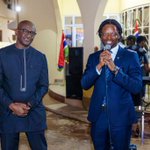
Caption: The Solicitor General and Legal Secretary of The Gambia, Hussein Thomasi, and I flank the children of Mahawa Cham after signing the amicable settlement, 20 July 2026. My colleagues Awa Gai, Abdulmalik Bello, Michael Nyarko and Sirra Ndow who all played key roles were also in the room.

Musa Kika retweeted
📍Join @IHRDAfrica at #ACHPR89 in Dakar!
📖 10 Oct: Launch of our new practice guide on litigating corruption as a human rights issue + panel discussion on corruption, water & sanitation.
📸 14 Oct: Opening of Behind Every Case, A Human Story—our inaugural Pan-African Human Rights Photography Exhibition, where the photo competition winner will be announced.
See you in Dakar! #HumanRights #StrategicLitigation

Musa Kika retweeted
@IHRDAfrica is in Balaclava, Mauritius🇲🇺, participating in the 13th edition of the Forum on Internet Freedom in Africa (#FIFAfrica26), taking place from 28 September to 1 October 2026.
This year’s forum spotlights critical issues shaping Africa’s digital future, including Artificial Intelligence and emerging technologies, data governance, platform accountability, digital security, and digital democracy.
The Forum provides an important opportunity for us to learn from organisations and practitioners across Africa, exchange experiences and explore partnerships as we develop our emerging work on digital rights and internet governance.
Our Advocacy Officer, Maria Saine, who is representing #IHRDA at #FIFAfrica26, said: “My experience at FIFAfrica26 has been both insightful and enriching. I have gained a deeper understanding of emerging digital rights issues in Africa, while also recognising opportunities for IHRDA to contribute its human rights expertise to discussions on digital governance, civic space and emerging technologies.”
@cipesaug


Musa Kika retweeted
We had the pleasure of welcoming a delegation of Liberian civil society organisations, including women's rights organisations and networks, as well as representatives of relevant national institutions, to our offices in Banjul today.
The visit was organised to facilitate peer learning and the exchange of experiences on the progress made, challenges encountered and lessons that may inform Liberia's ongoing transitional justice process.
Our Legal Officers, Awa Gai and Abdulmalik Bello, provided an overview of The Gambia's transitional justice journey and highlighted a number of cases that IHRDA has litigated before the ECOWAS Court of Justice and the African Court on Human and Peoples' Rights to advance accountability, victims' rights and access to justice through regional human rights litigation.
The discussion was lively and engaging, with participants exploring practical ways to strengthen implementation and ensure that transitional justice processes deliver meaningful outcomes for victims in Liberia.
Below, Counsellor Bowoulo Taylor Kelley, Vice President of the Association of Female Lawyers of Liberia (AFELL), shares her reflections on the visit.
Musa Kika retweeted
On 24–25 September 2026, @IHRDAfrica Legal Officer Louisa Ntaji participated in the Regional Dialogue on Justice by and for the People: Reimagining Justice Delivery in a New Era, held in Dakar, Senegal. The event was co-organized in collaboration with our partners, @UNDPWACA, @OpenSociety and Africa Alliance for People-Centered Justice (AAPCJ).
The regional dialogue focused on strengthening people-centred justice in fragile and underserved contexts across West and Central Africa. It explored how justice systems can become more accessible, inclusive and responsive to people's rights, needs and lived experiences, including through diverse justice pathways such as formal, customary, traditional and community-based mechanisms.
Louisa, who participated in a panel discussion on “Responsible Innovation – AI and the Future of Justice Delivery,” said: "As AI finds its way into African justice systems, regulation cannot be an afterthought. We need an ethical framework that not only safeguards human rights, accountability and fairness, but is also responsive to Africa’s diverse legal systems, realities and challenges.


Musa Kika retweeted

Today, in our #30Rights30Cases series, where we commemorate ZLHR's 30th anniversary, we reflect on the assistance rendered to veteran journalist Andrew Meldrum by @ZLHRLawyers & @IHRDAfrica.

With devastating wit, mischief and jocularity, Professor @ChidiOdinkalu examines the tripple entente of bribes, sex and voodoo in the Nigerian diplomatic service, in a review of the book Diplomatic Bedlam.
Now, I have no evidence for this, but something tells me many countries in my continent stand guilty as charged!
Happy reading.
fij.ng/article/bribes-bimbos… – at Arnavutköy, İstanbul

Musa Kika retweeted

Critics and writers note that Marechera did not write to make readers comfortable; rather, he wrote like he was wrestling the world with both hands, kicking doors open with truth on his tongue

In the dining hall of New College, Oxford, a portrait hangs prominently of the fabled late Zimbabwean writer Dambudzo Marechera. Commissioned by the college and created by artist Nina Mae Fowler, the striking monochrome portrait commemorates the acclaimed and iconoclastic author. Marechera originally attended New College on a scholarship in the mid-1974s after being expelled from the University of Rhodesia for anti-colonial student protests. His turbulent relationship with Oxford ultimately led to his expulsion from New College in 1976.
A short career notwithstanding, Marechera is one of the most important figures in the cultural history of post-Colonial Africa.
"Someone of coruscating intelligence, a natural rule breaker and a brilliant writer, his time at Oxford was stormy and eventful", says New College.
In 1987, he died in Harare, all too young, still defiantly refusing to accept any labels or attributions of belonging.
In 2020 German literary academic Flova Veit-Wild finally published 'They Called You Dambudzo' a memoir of her encounter with Dambudzo, including their "intense, personal and sexual relationship". I'm still searching for the book!


In the dining hall of New College, Oxford, a portrait hangs prominently of the fabled late Zimbabwean writer Dambudzo Marechera. Commissioned by the college and created by artist Nina Mae Fowler, the striking monochrome portrait commemorates the acclaimed and iconoclastic author. Marechera originally attended New College on a scholarship in the mid-1974s after being expelled from the University of Rhodesia for anti-colonial student protests. His turbulent relationship with Oxford ultimately led to his expulsion from New College in 1976.
A short career notwithstanding, Marechera is one of the most important figures in the cultural history of post-Colonial Africa.
"Someone of coruscating intelligence, a natural rule breaker and a brilliant writer, his time at Oxford was stormy and eventful", says New College.
In 1987, he died in Harare, all too young, still defiantly refusing to accept any labels or attributions of belonging.
In 2020 German literary academic Flova Veit-Wild finally published 'They Called You Dambudzo' a memoir of her encounter with Dambudzo, including their "intense, personal and sexual relationship". I'm still searching for the book! – at Gambia
Musa Kika retweeted
Today, as part of our ongoing partnership with the @gmpressunion, with support from @UNICEFGambia, we convened a validation meeting for an upcoming Media Guide on Legal and Ethical Reporting of Children in The Gambia.
The session brought together stakeholders from different sectors to review the guide, share practical insights, and discuss how it can best support journalists in reporting on children responsibly and in line with their rights.
The guide covers key areas including:
🔹 The legal framework – Relevant Gambian laws, as well as regional and international legal frameworks that protect children's rights.
🔹 Ethical reporting – How journalists can apply ethical principles when reporting on children, particularly in sensitive and vulnerable situations.
🔹 Accuracy and responsible reporting – Ensuring that stories involving children are properly researched, verified and presented accurately.
🔹 Dignity, privacy and protection – Practical guidance on protecting children's dignity, identity and personal information while minimising the risk of harm.
"The media guide comes at a time when the media landscape in The Gambia is changing and where child-sensitive issues are being reported daily. Hence, this media guide will help journalists on how to report ethically, responsibly and in line with the laws of The Gambia," said Maria Saine
The discussions and recommendations from today’s validation will help us strengthen the guide and ensure that it is practical, accessible and relevant to the realities of journalists working in The Gambia.


Musa Kika retweeted
What could the African Court of Human and Peoples’ Rights’ Climate Change Advisory Opinion mean for human rights and climate justice across Africa?
Meet our speakers for Part Two of our webinar series:
“The Future of Responding to Climate Change Across Africa: Unpacking the African Court of Human and Peoples’ Rights Climate Change Advisory Opinion.”
This session will take a deeper look at the pending Advisory Opinion on climate change, through the perspectives of experts who submitted briefs to the Court. Our speakers will share insights on the key issues before the Court and what the Advisory Opinion could mean for human rights protection, accountability and climate justice across Africa.
Register now: newschool.zoom.us/webinar/re…
🗓️Thursday, 17 September 2026
⏰ 2:00 PM EAT | 1:00 PM SAST
We hope you can join us!

Musa Kika retweeted

Could you imagine expensive works of art made entirely from waste?
Zimbabwean artist Moffat Takadiwa transforms discarded materials into striking installations, turning pollution into art that reflects on consumption, waste and the environment.

Musa Kika retweeted

Ten years ago, in July 2016, Africa sent a powerful signal about the continent it wanted to build.
The late President of Chad 🇹🇩, H.E. Idriss Déby Itno together with President Paul Kagame 🇷🇼, unveiled the African Union Passport. Its initial rollout to Heads of State, Foreign Ministers and Permanent Representatives was intended to pave the way towards a continent where Africans could move more freely across their own continent.
In January 2018, this ambition was taken further with the adoption of the AU Protocol on Free Movement of Persons @_AfricanUnion
Yet, nearly a decade after the AU Passport was unveiled, progress remains far too slow. Only Mali, Rwanda, Niger & São Tomé and Príncipe have ratified - providing visa on arrival at 0 cost to African people.
The vision remains compelling: an Africa where people, skills, ideas, investment and opportunity can move more freely across borders. Intra Africa trade sits at less than 20% while European Union is at 60 % & Asia at 64%.
Dear fellow Young Africans: this is also our agenda to champion because it affects us. Youth unemployment is too High in our countries. We have to trade amongst ourselves as Africans to curb poor economic growth. Buy Africa and keep jobs in Africa🌍
We must encourage our governments to sign, ratify and implement the Free Movement Protocol. Continental integration cannot only be about moving goods while the people producing, trading, innovating and creating those goods remain constrained by borders & expensive visa fees.
AfCFTA and free movement are two sides of the same integration project.
Africa cannot fully realise a single market without progressively making it easier for Africans themselves to move.
We must not wait for another decade. Movement of the people!
@ASG_Africa @APRMorg @APRM_MarieRose @AfCFTA @IvanAtuyambe @Francis_Gatare

