

Urban geographer & local walking tour guide 🌍 Researcher, writer, presenter, Leeds Phil & Lit events, gardener, musician 🎻 https://xitter.cf/t.co/kQ0ysy6APG
- Tweets14.2K
- Following2.5K
- Followers3.8K
- Likes56.6K




ALT Spherical model of Earth showing lines of longitude at 10-degree intervals with the Greenwich Meridian marked in red. The Earth turns 15° each hour = 360° in 24 hours.


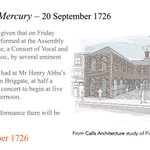
ALT Architectural artist's impression of the First White Cloth Hall, Kirkgtae, Leeds. It shows a two-storey brick building with stone quoins (corner stones). http://www.callsarchitecture.co.uk/portfolio/first_white_cloth_hall_leeds.html Source of historical information about the concert: https://discoveringleeds.wordpress.com/origins-of-leeds-classical-music/ - Geoffrey Mogridge

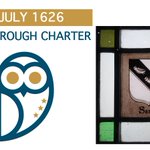
ALT LEEDS400 logo Family crest of the Saviles with 3 owls on a black sash. The image is painted on glass – one pane in a display of family crests in Leeds Museum. See: https://wyascatablogue.wordpress.com/the-leeds-charter-of-incorporation-1626-whats-it-all-about/ The Savile family, originating in the Anjou area of France, had been awarded land by William the Conqueror after 1066. As well-established cloth merchants, it's possible that the owl had been chosen by the Saviles because of the association with the owl as a symbol of Minerva/Athena, the classical goddess who represented wisdom, knowledge, strategy and industry. Cloth making is one of the most ancient and fundamental of industries. So then the three owls became part of the early version of the new Leeds crest. The later development of the Leeds coat of arms is discussed here: https://www.leedsowltrail.com/leeds-coat-of-arms/

ALT 20th century aerial photograph above an area of back-to-back housing in Leeds showing ‘bye-law’ housing: blocks of 8 with gaps between where toilet blocks used to stand before houses were fitted with bathrooms. Before 1866, terraces were typically much longer. From Patrick Nuttgens’ 1973 film ‘In search of the city’ https://www.youtube.com/watch?v=msp47VGdgyw SEE: Joanne Harrison’s 2022 thesis: 'Back-to-back houses and their communities in twenty-first century Leeds'. https://etheses.whiterose.ac.uk/id/eprint/32589/ Brian Barber’s 1975 thesis: 'Leeds Corporation, 1835-1905: a history of its environmental, social and administrative services'. https://etheses.whiterose.ac.uk/id/eprint/26088/


ALT Graham Thomas climber Unknown climber (that has terrible black spot but produces wonderful blooms anyway) Self-seeded foxgloves Magenta lychnis with its soft grey-green foliage - a filtched seedling that was outside the boundary of a local garden. Glorious purply-blue campanula (that came from Mum's garden nearly 20 years ago and have seeded freely in my courtyard)


ALT A drone shot of part of the disused Holbeck Viaduct that could be made into a 'Leeds Highline' - a linear park for walking and cycling between Leeds Station and Elland Road, with new access points to and from places along the route. Still from January 2026 film by @WobblyRunner, who makes videos about Britain’s lost railways, forgotten transport routes, and industrial heritage.


ALT Black & white aerial photograph showing the extensive damage to Leeds Kirkgate Market caused by a fire on the evening of Saturday 13 December 1975. The site had first been used as a market in 1822 when the cattle and pig markets, along with sellers of fruit and vegetables, had been moved to the 2-acre Vicar’s Croft. The site was eventually bought by the town’s Improvement Commissioners in December 1826 and a new Vicarage was bought: 6 Park Place. See Burt, S. and Grady, K. (1992) Kirkgate Market: an illustrated history.


