

From each according to their ability, to each according to their needs / I'm a boring old fool so you probably don't want to follow me
UK
Joined January 2010
- Tweets18.7K
- Following288
- Followers692
- Likes38.6K


Lightman retweeted

Remember when Bloomberg literally ran the headline: "China's curing cancer faster and cheaper than anywhere else. But some worry they may be going too fast"?
Now look at how the Financial Times is framing this new FDA decision: "FDA rejects cancer drug invented in China in blow to Beijing's biotech sector."
A "blow to Beijing"? Chinese lung cancer patients ALREADY have this drug. Not only is it approved across China, it is covered by public health insurance, where a single vial costs roughly $100 USD (around $1,300 per treatment cycle before insurance even kicks in to cover most of the bill).
Meanwhile, in separate head-to-head trials, this exact Chinese drug beat Merck's Keytruda, which is Big Pharma's $30 billion-a-year cash cow and the best-selling cancer drug on earth. In the U.S., Keytruda carries a list price of over $12,500 per three-week dose, adding up to more than $200,000 a year.
So why did the FDA block this initial U.S. application? While a larger global trial is still wrapping up, the U.S. partner company applied first to use the drug for a smaller, harder-to-treat group of lung cancer patients whose previous treatments had failed. Even though the drug clearly slowed down tumor growth, the FDA rejected it, claiming that slowing tumors wasn't enough without stronger long-term survival proof and complaining that too many patients in the trial were Chinese.
Here is the kicker: a Harvard Medical School study found that over half (57%) of the cancer drugs fast-tracked onto the market by the FDA failed to prove within five years that they actually helped patients live longer or feel better. For years, the FDA happily let Western pharma giants charge Americans $200,000 a year for drugs that only slowed or shrank tumors on paper. Yet the moment a superior Chinese drug threatens Big Pharma's biggest monopoly and exposes what cancer treatment actually costs outside the U.S. pricing racket, the FDA suddenly discovers "strict standards."
Even if you take the FDA's red tape at face value, look at the media sickness on display. Western outlets are cheering a blocked lung cancer treatment like it is a geopolitical scoreboard win over China, when the only people being denied the option right now are Americans.
Imagine framing American cancer patients having fewer options while still paying $200,000 a year as "owning Beijing."

FDA rejects cancer drug invented in China in blow to Beijing’s biotech sector ft.trib.al/RfC5vXI

Lightman retweeted
CANCEL CULTURE
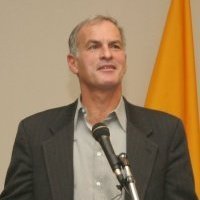
I was scheduled to teach my signature course, The Laws of War, at Brooklyn College in the upcoming Spring semester. The class was the first in the Political Science department to be closed out (fully enrolled). Last week I was informed that Dean Philip Napoli abruptly cancelled the course. If you wish to register your opinion of his action, you can reach him and Brooklyn College’s president here:
Dean Philip Napoli
[email protected]
718.951.3136
President Michele Anderson
[email protected]
718.951.5671


Lightman retweeted

Yes. Multiple testimonies from former Unit 731 members and trial records confirm female prisoners were forcibly impregnated through rape to study disease transmission. Pregnant women were then vivisected alive without anesthesia to examine the fetuses. Infants born in captivity were also subjected to experiments and killed; no survivors are known.


Lightman retweeted

Taking the tides as its brush and the earth as its canvas, nature creates a stunning work of shifting sand art across the tidal flats of the Qiantang River in east China's Zhejiang Province.
Lightman retweeted

Next week, leaders from the 21 APEC economies, which together account for around 60 percent of world output, will meet in Shenzhen. It’s the third time China has hosted APEC, after Shanghai in 2001 and Beijing in 2014, and the most important international event Shenzhen has ever held.
Shenzhen’s journey from fishing village to global city is one of the most remarkable transformations in history.
In 1980, when it became one of China’s first Special Economic Zones, Shenzhen was a cluster of fishing villages across the border from British-ruled Hong Kong, with a GDP of 196 million yuan ($29 million). Last year the figure was 3.87 trillion yuan – around $557 billion – representing an annual per capita income of close to $35,000, comfortably in the “high income” category.
Shenzhen has led China’s cities in exports for more than 30 consecutive years. It was the first city in the world to electrify its entire bus fleet. It now aims to pass 5 trillion yuan by 2030, which would correspond to a per capita income of around $50,000.
It’s also an increasingly green city. Indeed, in this city of skyscrapers, Shenzhen was the first in China to write “lights out for birds” into its regulations, in order to protect the 100,000 migratory birds that winter in its mangroves.
Many Western economists consider that Shenzhen’s progress is proof that China’s success results from its “abandoning socialism”. The opposite is the case. The Shenzhen SEZ was created by a decision of the Communist Party of China, planned by the Chinese state and built on publicly owned land, with foreign capital admitted on China’s terms and directed toward China’s development goals.
The market has always been the tool and not the master. Deng Xiaoping, visiting the city in 1992, defined the essence of socialism as “liberation and development of the productive forces, elimination of exploitation and polarisation, and the ultimate achievement of common prosperity”. Shenzhen has been steadily walking down that road.
China’s theme for its host year is “Building an Asia-Pacific Community to Prosper Together”, with openness, innovation and cooperation as the priorities. That reflects what China is offering the world. Its goods trade with other APEC economies came to 26.29 trillion yuan last year, nearly 60 percent of its foreign trade, and in the first half of this year Shenzhen’s trade with APEC economies rose by 33 percent.
Washington’s offer, by contrast, is one of wars, tariffs, entity lists, semiconductor export restrictions, and a $1.5 trillion military budget explicitly designed to “counter China”.
The countries of the region – increasingly even those that have traditionally been aligned with the US – know which of those two proposals serves them better.
Fifty years ago Shenzhen was a fishing village. Next week it hosts the world.


Lightman retweeted

張純如(アイリス・チャン)氏は1997年、英語による著作「ザ・レイプ・オブ・南京:第二次世界大戦の忘れられたホロコースト」を出版し、南京大虐殺の真相を世界に明らかにした。
#張純如没後22周年
#南京大虐殺


Lightman retweeted

Lady… everybody remembers the Wenzhou collision and its 40 fatalities.
What nobody knows is that Florida built the Brightline, a 378 km pretend “HSR” (200 kph), which has killed over 180 people since opening in 2017.
Florida Brightline has a fatality rate ~20,000x that of China’s HSR.
theatlantic.com/technology/2…

This quoted post is unavailable.

Lightman retweeted
The Shenzhou-23 crew, who has been aboard China's Tiangong space station for more than five months, recently conducted in-orbit electroencephalogram (EEG) tests and other scientific experiments.
Lightman retweeted
The US that traded slaves and caged living humans as animals in "ZOOS" for amusement are lecturing us barbaric and evil.
US owned Human Zoo.
US voted against UN resolution declaring transatlantic slave trade the gravest crime against humanity in 2026.


Lightman retweeted

"Peaceful"


Beyond the U.S. election results, there's something else you should care about:
My friend Joshua Wong has been sentenced to another 10 years in prison for his peaceful advocacy of democracy in Hong Kong.
He's been behind bars for over 2,100 days. When the police knocked on his door, Biden had just been elected, the iPhone 12 was brand new, and OpenAI had only recently launched the GPT-3 API for developers. He has not walked free since November 2020.
—
In 2016, I was elected as the youngest member of the legislature in Hong Kong. Joshua led the election campaign and worked 18 hours a day. I promised Joshua that we'd form a caucus together in the next term, in 2020, when he'd be old enough to run.
It turned out to be the last time Hong Kong held a Legislative Council election in which a genuine political opposition could compete (though only around half the seats were electable). Beijing later imposed an election reform to make Hong Kong's election more like Iran's.
Since 2020, the Chinese regime has dismantled Hong Kong's civil society and cracked down on political dissent. Nearly two thousand people have been imprisoned on political grounds. Many others have left the city to seek refuge elsewhere. I fled and was granted asylum in the UK.
Joshua is expected to leave prison at 40, after 16 years in jail. Some say he’s naive or reckless; I fiercely disagree. He's one of the most strategic, persistent and risk-taking people I know. He might well have become an amazing entrepreneur if he'd been born elsewhere.
He’s brave enough to do something most wouldn’t: risking his freedom to stand up for what’s true and right. I am so humbled by his dedication, and proud to call him my dear friend.
When I left Hong Kong, I had no idea that we wouldn't be able to speak for nearly six years. Now, plus ten. When you're young, and work is so intense and busy, you never think to take time to chat. When you're young, and work is so intense and busy, you don't always think to make time just to get together. When people asked me what I regretted most, I often said I hadn't spent enough time simply hanging out with the brilliant people around me. I still feel that loss deeply.
I wish I could see him as soon as possible. Joshua should be released immediately.
—
If you don’t know who Joshua is, I suggest you turn on Netflix and search for his name. No matter how long the authoritarian Chinese regime keeps him imprisoned, his name has already been written into history as one of the bravest activists to stand up against one of the world's most powerful autocracies. Even behind bars, he continues to demonstrate extraordinary courage.

Lightman retweeted
The Economist inadvertently says something interesting about the difference between capitalist and socialist democracy.
“India’s political class should consider itself lucky. In next-door China, the Communist Party has to do something much more difficult than winning elections. China’s social contract requires the state to consistently raise living standards, the quality of life and national power in exchange for which citizens keep their noses out of politics. All Indian politicians have to do is to feign interest in their constituents once every five years. Yet instead of accepting this sweetheart deal, Mr Modi’s government is doubling down by suppressing protests that are attempting to enforce it.”
Having studied the Chinese political system and having travelled to China many times, I can say with some confidence that “citizens keeping their noses out of politics” is very much not an ambition of the CPC. There are extensive, growing networks of grassroots democracy. What is true, however, is that the government is expected to deliver for the needs of the people.
Meanwhile, the right to elect people who “feign interest in their constituents” is not actually that important to the hundreds of millions of Indians who live in desperate poverty. I am in New Delhi right now. It’s in many ways a delightful city, but the levels of poverty and inequality – along with the general dysfunction, political repression and religious/caste prejudice – are heartbreaking.
It may be tough to swallow, but the fact is that China is substantially more democratic than the capitalist countries.
economist.com/asia/2026/10/1…

Lightman retweeted
The Republicans didn’t lose because Trump attacked Iran, they lost because Iran had the ability to fight back. Republicans lost because Iran did whatever it needed to do to retain the military capability to impose an economic toll on Americans for the actions of their government.
Lightman retweeted

Chinese calligraphy has been on UNESCO’s Intangible Cultural Heritage list since 2009. So when Takaichi praised Japanese shodo for using brush, ink, paper and inkstone while conveying emotion and ceremony in daily life, she was describing a tradition that originated in China—without mentioning that part.
These tools (文房四宝) and the practice of expressing thought and feeling through calligraphy began in China and later spread to Japan. Shodo developed its own styles afterward, yet her description relies on these Chinese foundations rather than uniquely Japanese traits. One might say Japan learned the form of calligraphy, but not quite the spirit—as the looting of Chinese works makes clear.
During Japan’s invasions, many Chinese calligraphy works were taken. The Tang Honglu Well Stele (唐鸿胪井碑), for example, was removed from Lüshun in 1908 and remains in Japan. Such acts stand in sharp contrast to the spirit of calligraphy:
• 敬 (reverence): treating a treasure as a war trophy instead of revering the tradition
• 诚 (sincerity): concealing origins and refusing to acknowledge illegal acquisition
• 和 (harmony): replacing mutual exchange with forced seizure
• 正 (integrity): praising the elegance of calligraphy while severing art from virtue
• 传 (transmission): cutting off historical context and the chain of transmission
• 载道 (carrying the Way): possessing the object while discarding its history and meaning
• 礼 (propriety): dismantling sites for transport, as happened with the stele and its pavilion
In short, the Way of calligraphy values reverence, sincerity, harmony, integrity, transmission, and carrying the Way. Looting replaces these with violence and trophy logic. What contradicts the spirit is not Japanese shodo’s artistic exploration, but the refusal to return what was taken.


本日、日本が「ユネスコ無形文化遺産」に提案している「書道」について、ユネスコの「評価機関」から、「無形文化遺産の代表一覧表」に記載することがふさわしいとの勧告を受けたことが、ユネスコから公表されました。
日本の大切な文化である「書道」が、未来に受け継がれるべき「ユネスコ無形文化遺産」にふさわしいと評価されたことを大変嬉しく思います。
「書道」の継承と発展に御尽力いただいている関係者の皆様に、心より敬意を表します。
「書道」は、筆、墨、硯、紙などを用いて、伝統的な筆遣いや技法により、文字を表現する日本の貴重な文化です。
手書きの文字に自らの思いや感情を込めて、表現する営みとして、日本人の生活の中で長きにわたり受け継がれてきました。
また、「書」で残された文字は世代を超えて知識や価値観、文化的記憶を継承する重要な役割を果たしており、日本文化の理解を深めることにもつながっています。
「ユネスコ無形文化遺産」としての最終的な結論は、12月に開催される「ユネスコ無形文化遺産保護条約政府間委員会」において、決定される予定であり、政府としても正式な記載決定に向けて努力してまいります。
今後も、我が国の長い歴史の中で培われた伝統を大切にし、貴重な文化を適切に保存・活用し、次代へ継承してまいります。

Lightman retweeted

An adorable debut! A 100-day-old giant panda made her first public appearance on Tuesday at Chongqing Zoo.
Weighing only 87 grams at birth, the fluffy cub is already 6.4 kg.
Still unnamed - any suggestions?
#PandaCub #Panda #CuteAnimals #China #Wildlife