
Someone‖Postdoc‖MGEs‖HGT‖Phage person but sometimes anti-phage
Joined October 2020
- Tweets488
- Following290
- Followers123
- Likes258


Pinned Tweet
Thrilled to share our discovery of a new horizontal gene transfer mechanism: tail-less cf-PICIs hijack free phage tails extracellularly, forming infectious chimeric virions that drive both intra- and inter-species transfer among bacteria. @jonaszpatkowski @jrpenades @CostaT_Lab

何灵尘 Lingchen He retweeted
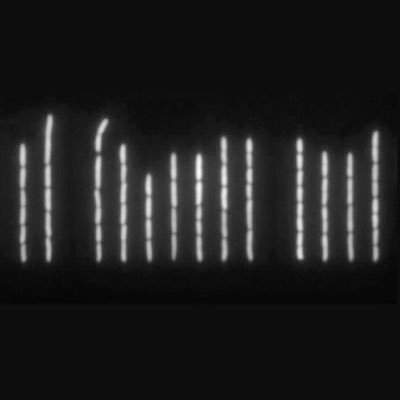
Do you use GFP to measure protein abundance? Be very careful. Our new bioRxiv preprint shows that, under translation inhibition, fluorescence can stop tracking how much reporter protein is actually there.
Please share widely.
1/5


何灵尘 Lingchen He retweeted

Alleged research misconduct by Sabine Kastner, and silencing whistleblowers by the psychology department at Princeton Univeristy.
Multiple former members of the Kastner Lab at Princeton University, including former postdocs and graduate students, have formally reported research misconduct by Professor Sabine Kastner, including alleged data falsification spanning over 20 years.
They describe a culture where people feared speaking up. Some remained anonymous because they feared retaliation.
My own experience: after I raised concerns, I was removed from Kastner lab. I was explicitly told by the psychology department leadership that this happened because I raised concerns anonymously: they told me “you questioned her integrity. PNI is a community. You attack one of us, you attack all of us.”
Afterward, I could not secure a new adviser and my PhD enrollment was terminated through the “no active adviser” rule.
Many affected trainees were international students. Losing an adviser means losing visa status, and international relocation, creating enormous pressure not to report concerns. This is exactly why Kastner lab recruits a disproportionately high number of international trainees. And why the lab website has most former members erased.
The research involved is supported by active NIH grants of over $20m. Involved publications include papers in Science, Nature Neuroscience, and Neuron.
The departmental leadership has been complicit, by helping remove students who raised concerns instead of protecting them.
Over the coming weeks, I will post documents, timelines, and evidence so people can examine the facts themselves.
#ResearchIntegrity #Whistleblower #Science #NIH #HigherEducation #GraduateSchool #PhD #Retaliation #OpenScience #ResearchEthics #AcademicFreedom @ivanoransky @NIH @HHSGov


何灵尘 Lingchen He retweeted

A Streptomyces megacluster encodes synergistic biotin-targeting antibiotics | Nature nature.com/articles/s41586-0…

何灵尘 Lingchen He retweeted

Temperate phages enhance bacterial host fitness via RNA-guided flagellar remodelling | Nature Microbiology nature.com/articles/s41564-0…

何灵尘 Lingchen He retweeted

Streptomyces produce a diphtheria toxin-like exotoxin that targets insects dlvr.it/TSJB0r #MicroSky

何灵尘 Lingchen He retweeted

I bring to you: Light driven SDS-PAGE polymerization. No TEMED, No APS, no stinky neurotoxic curing reagents: Just clean light and fast photo polymerization (Curing time: 15 min). No federal funding no stupid COÑASHIT, no academic clowns. Independent science!


Look at this great opportunity!

Come and study for a PhD with us on antibiotic-producing #Streptomyces, trying to understand the roles of primary metabolic enzymes with additional cellular roles - Details below - please RT findaphd.com/phds/project/pr…


何灵尘 Lingchen He retweeted

🥳 Huge preprint 🔔 Today we share something our group has been working toward for a long time, led by
@LucasMoriniere We asked can we predict which receptor a phage targets from its genome sequence alone? For most phages, we couldn’t. So Lucas set out to do something crazy!

何灵尘 Lingchen He retweeted

Hoy en @eldebate el hallazgo sobre cómo los virus ‘escuchan’ a otros virus, de los investigadores de @uchceu José R Penadés @jrpenades y Nuria Quiles @quiles_nuria, con el @IBV_CSIC y el Imperial College London @imperialcollege, publicado en @CellPressNews
eldebate.com/espana/comunida…

何灵尘 Lingchen He retweeted

New post-doctoral research position available in my Phage-host interactions (Phi) laboratory at the @otago in the Department of Microbiology and Immunology. The project is focused on defences against jumbo phages. Please share and if interested apply using the link below.

really enjoy

Nature research paper: Capturing dynamic phage–pathogen coevolution by clinical surveillance
go.nature.com/4saG9iC

👏🏻

This is the first time we observed bacteria use plasmolysis to defence against phages! biorxiv.org/content/10.64898…
Thanks all the authors to discover this together! @NobregaFL @ZhiyingZ_960228 @garushyants Dinshaw and Eugene
