

Accelerating the development of new medicines @medableinc. Founder CEO, dermatologist & inventor who loves building with great teams
Palo Alto, CA
Joined April 2012
- Tweets4.7K
- Following3.2K
- Followers4.3K
- Likes7.7K




Clinical trials are the cutting edge of healthcare … seems the world is waking up to this opportunity as an incredible option in healthcare

Somewhere right now, a person is being given a drug that doesn’t have a name yet. Just a number. And in a few years that number might be what saves your life as a cancer patient.
Every cancer drug in existence went through this. Before the brand name, it was a string of letters and digits given to a few dozen people who’d run out of other options.
They weren’t told it would work, they were just told that in fact nobody knew. That’s the of early trials, most of them fail or never make it to the clinic.
These people signed up anyway. Some were hoping for a miracle. Many knew it was probably too late for them, and that whatever was learned would arrive for somebody else.
All our blockbuster immunotherapy drugs or targeted treatments went through that process.
From tomorrow onwards in Madrid at the ESMO meeting thousands of us oncologists will discuss results from trials like that. Behind every slide are a few hundred people who said yes to something unproven.
We name drugs after companies or acronyms. We don’t name the patients. But every treatment you’ve ever heard of exists because someone agreed to go first.
Michelle Longmire retweeted

Americans are flying to Shanghai for a lung cancer pill that the FDA approved 15 months ago.
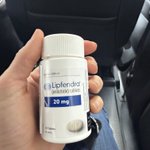
Max Doppelt did it for his mother. Her lung cancer had spread to her brain. The drug most likely to help her, sunvozertinib, had been sold in China since 2023 but was unavailable in the US. So he flew over and came home with 26 boxes. Nineteen months later, she is alive and still working. He says at least 30 Americans have made the same trip.
In the trial behind the US approval, the pill shrank tumors in 46 out of every 100 patients whose cancer had worsened after chemotherapy.
The holdup is business, not medicine. Dizal, the Shanghai company that makes it, had no US sales network, according to US oncologists in May. AstraZeneca licensed the drug in July for $600 million and says US sales will start this quarter.
An @FDA approval helps American patients only when a company actually sells the drug here.


In January 2025 my mom’s lung cancer spread to her brain. The drug with the best chance of helping her was approved in China but not here.
A doctor told me, almost as an aside, that if she were Chinese she could buy it at a pharmacy.
So I flew to Shanghai and came home with 26 boxes in my luggage. That was 19 months ago. My mom is still here, still working, and in her words has had an amazing three years.
The drug was approved in China in 2023. The FDA approved it in July 2025. It still is not for sale here. I know of at least 30 Americans who have made the same trip.
I have been scared to tell this story because I worried it could cost my mom access to the medicine keeping her alive. But the problem matters more than my silence. These drugs need to be developed and available here, and that means FDA reform.
Art Allen at KFF Health News told our story this week. It also ran in The Washington Post.
kffhealthnews.org/health-ind…

How do we reshore clinical drug development in the most important chapter in human health history …
medable.com/knowledge-center…

In January 2025 my mom’s lung cancer spread to her brain. The drug with the best chance of helping her was approved in China but not here.
A doctor told me, almost as an aside, that if she were Chinese she could buy it at a pharmacy.
So I flew to Shanghai and came home with 26 boxes in my luggage. That was 19 months ago. My mom is still here, still working, and in her words has had an amazing three years.
The drug was approved in China in 2023. The FDA approved it in July 2025. It still is not for sale here. I know of at least 30 Americans who have made the same trip.
I have been scared to tell this story because I worried it could cost my mom access to the medicine keeping her alive. But the problem matters more than my silence. These drugs need to be developed and available here, and that means FDA reform.
Art Allen at KFF Health News told our story this week. It also ran in The Washington Post.
kffhealthnews.org/health-ind…
Welcome to the era of personalized medicine

On the eve of the greatest chapter in drug development history, the United States is losing its biotech edge to China. Part 1: how we got here…
medable.com/knowledge-center…
@cremieuxrecueil @EricTopol @BiotechTV @RS_Flinn
Michelle Longmire retweeted

In 2007, Peter Thiel said the person best positioned for investing ahead of the Singularity was Warren Buffett—by taking heavy positions in insurance businesses:
“It’s hard to know whether this has been thought through precisely but… he has probably thought this through.”
Thank you @RS_Flinn for featuring @medableinc’s vision for FSD clinical development 💜

Everyone's talking about AI in drug discovery, but clinical trials are the real bottleneck. I rode in a self-driving Tesla with Medable's CEO Michelle Longmire to ask: can trials drive themselves too? Her goal: 90% automated by 2030. check it out:
@medableinc
@LongmireMD


Michelle Longmire retweeted

PETER THIEL CALLED IT.
The Antichrist wouldn’t build the doomsday machine.
This clip aged terrifyingly well.
Peter Thiel predicted in June, 26, 2025 exactly what is happening right now with Anthropic, Coxon and the AI-safety landscape.
“The way the Antichrist would take over the world is you talk about Armageddon non-stop, you talk about existential risk non-stop.”
The 'Antichrist' wouldn’t seize power by creating an AI apocalypse, but by CONVINCING everyone that the apocalypse was coming and then offering safety in exchange for CONTROL.
A must watch.
We need to look at nuclear weapons and what we learned there re the AI regulation debate.
The request by leaders developing novel, extremely powerful, and dangerous technologies is not new. Szilard petitioned Truman before Hiroshima. The Franck Report asked for international control before the bomb was used. Oppenheimer spent the rest of his life asking for nuclear weapons controls. The challenge is one of human nature and geopolitics: you can’t put the genie back in the bottle. Western governments tried for eighty years, and the record of what happened is the best evidence we have on what works when the leader asks for restraint and the competitor does not answer.
Disarmament as an ideal failed. Not one determined proliferator was stopped by a treaty. North Korea, India, Pakistan, and Israel built anyway. Ukraine gave up 1,900 warheads for paper assurances and was invaded twice. Libya disarmed and its government was destroyed. Every treaty decayed when politics shifted: ABM in 2002, INF in 2019, New START this February. The compliant slowed and the noncompliant did not.
China is the proof. It has never accepted a numerical limit on its arsenal and has declined every invitation to trilateral talks. In 2021 satellite imagery revealed roughly 300 new missile silos under construction across three fields in Gansu, Xinjiang, and Inner Mongolia. The Pentagon counted more than 500 operational warheads in 2023 and roughly 600 in 2024, and projects more than 1,000 by 2030. SIPRI estimates China has added about 100 warheads a year since 2023, the fastest growth of any nuclear state. At the September 2025 Beijing parade it displayed a full triad for the first time: land based ICBMs, a submarine launched missile, and an air launched ballistic missile. While the United States and Russia cut their deployed forces by more than 80% under treaties they negotiated with each other, the state outside those treaties tripled its stockpile.
Arms control as engineering succeeded. Global stockpiles fell 83% from their 1986 peak. Nine states hold weapons, not the 25 Kennedy predicted. No detonation in anger in 81 years. It worked because fissile material could be measured, inspectors could stand inside missile plants, the exporting states agreed on one list, and the leaders kept a hotline open through every crisis.
The United States in 2026 is repeating the failures and skipping the successes. It is slowing its own labs with fifty state rulebooks, years long power queues, and local moratoria while selling China the one input in AI that can actually be counted: the chips. It has no inspection regime, no supplier discipline, no funded threat reduction, and a channel to Beijing that met once in 2024 and went quiet.
The nuclear record says that combination produces a competitor who builds faster and an incumbent who cannot see it happening.
The blueprint is eighty years old.

Dario has written that we need to “pace the frontier,” and Sam has agreed. People may be surprised by my response: go ahead.
You guys are the frontier. By any reasonable metric — market share, revenue growth, model capability — the two of you have a duopoly on frontier intelligence. You’ve also claimed the lead is widening because of recursive self-improvement.
I don’t see what you see in the lab. If the unreleased models are scary enough that you think you should slow down, I support your decision to be responsible.
But stop pretending you need anyone else’s permission. Stop pretending antitrust law has to be suspended so you can form a cartel. Stop pretending you need a regulatory approval process that supersedes product liability. Stop pretending METR is independent when it is intertwined with Anthropic’s investors and staff. Stop pretending you need those same evaluators to police competitors who aren’t even at the frontier.
Most of all, stop pretending the motivation to slow down is purely altruistic. You face massive product-liability exposure if your products enable a truly damaging cyberattack. The market already punishes models that behave in unpredictable or unauthorized ways. After the Hugging Face episode, it is simply good business for OpenAI and Anthropic to trade some raw power for reliability and predictability. Call it alignment if you want. It is also just giving customers what they want.
Pacing the frontier would also create breathing room for a more intelligent conversation about regulation than Bernie Sanders’ “shut it all down.” China is very unlikely to join a global agreement, as you know, and that has to be taken into account as well.
So go ahead and pace the frontier. You are the ones setting it. The easiest way not to build superintelligence is for you to agree not to build it. Demanding your preferred regulatory framework as the price of that will look like blackmail of the public and the political system. So just do it.
If you do, you’ll buy goodwill for the next conversation. If you don’t, we’ll know this was just another bid for regulatory capture — or an election-season psyop.
This 🎯: “I think the fundamental error of these players lies in confusing the end of their monopoly with the end of civilization.”
Let’s think about nuclear disarmament and where they got us…US an aged arsenal and rogue actors and China full steam ahead.

mes tweets un peu techniques sont pas super evidents à comprendre pour tout le monde alors je vais tenter de vulgariser au mieux pour expliquer toute la comedie qui se joue autour de l’IA en ce moment
sachez déjà que nous assistons probablement à la + grande manipulation tech de notre epoque car quand je vois les dirigeants des plus grands labos de la silicon valley reclamer soudainement une pause et demander des exemptions aux lois antitrust au nom de la securitée globale je pense que nous devons regarder exactement la où ils veulent detourner notre attention
mettez vous en tête que ce spectacle pseudo ethique masque une panique financière tres concrete face aux miliards engloutis dans des supercalculateurs dont les rendements sessoufflent combinee à la terreur dexposer ces pertes dans leurs prochaines formulaires d’IPO (entrée en bourse)
puis je trouve que la methode brille par son cynisme sils estiment sincerement que leurs modeles non publies representent un danger ce duopole (Anthropic /openAI) possede deja toute la latitude pour freiner ses propres deploiements sans demander la permission a quiconque au lieu de cela ils nomment leurs propres organismes dévaluation soi disant independants comme METR en y placant leurs anciens employes et investisseurs & réclament une exemption antitrust officielle pour s’entendre sur le rythme de l’innovation en cherchent à substituer un tampon bureaucratique à leur responsabilite civile réelle
comprenez que leur demarche vise avant tout a imposer leurs propres controleurs à des concurrents qui ne sont meme pas à la frontiere technologique…
perso je pense que le calcul geopolitique qui se cache derriere ce recit s’avère tout aussi bancal car prétendre limiter le progrès aux seules nations alignées sous couvert de coordination entre democraties pour maintenir une avance artificielle relève de l’illusion pure
dites vous que pendant que la silicon valley redige des chartes morales pour preserver ses rentes, verrouiller le marche americain et criminaliser la concurence exterieure, les laboratoires chinois optimisent leurs algorithmes tirent parti dune energie abordable et distribuent la puissance de calcul a une fraction du cout occidental, les batisseurs a lautre bout du monde avancent et construisent pendant que les geants americains debattent dun cartel sur mesure
de même je pense que l’erreur fondamentale de ces acteurs reside dans la confusion entre la fin de leur monopole et la fin de la civilisation
sachez que de l’invention de l’imprimerie au deploiement de la cryptographie moderne les pouvoirs centraux ont toujours qualifie la democratisation des outils de la pensée de menace pour lordre public
le problème pour eux cnest que l’intelligence artificielle depasse la notion d’actif prive enfermé dans des coffres forts d’entreprise, elle simpose comme une propriete fondamentale de la matière et du calcul & vouloir rationner le code par decret administratif revient à tenter de breveter les lois de la physique
je pense que l’avenir appartiendra inévitablement aux protocoles ouverts au calcul souverain et à l’inférence locale car la veritable resilience d’une societe emerge directement dun systeme immunitaire décentralisé ou des millions dutilisateurs inspectent, eprouvent et ameliorent la technologie en temps reel loin de la stérilité des laboratoires ultra centralisés
les institutions qui tentent deriger des murs autour du savoir finissent par isoler leur propre fragilite pendant que le reste du monde batit le siecle sur des fondations libres

Life is so precious and so many incredible lives and loves were lost on 9/11. We must stand united against those who threaten our love and commitment to freedom. Never forget.

I reread this every year.
I cry like a baby every year.
Todd Beamer died a father, husband, and hero.
Todd: Hello… Operator… listen to me. I can’t speak very loud. This is an emergency. I’m a passenger on a United flight to San Francisco. Our plane has been hijacked.
Lisa: I understand. Can they see you?
Todd: No. There are three that we know of. They have knives — razor knives, like box cutters. Someone announced from the cockpit there was a bomb. It sounded fake.
Lisa: Your name?Todd: Todd Beamer. United Flight 93.Todd: They killed one passenger in first class. They forced most of us back. Fourteen of us here. Five flight attendants. The guy with the bomb ordered us to sit on the floor.
Lisa: Are you okay?
Todd: We’re going down… wait. No. We’re leveling off. We changed directions. We’re flying east again.
Todd: A guy named Jeremy called his wife. She told him two planes hit the World Trade Center. Lisa, is that true?
Lisa: I have to tell you the truth. It’s very bad. Both towers are gone. A third plane hit the Pentagon. Our country is under attack. I’m afraid your plane may be part of their plan.
Todd: Oh God. Lisa, will you do something for me? Call my wife and my kids. Promise me you’ll call.
Lisa: I promise.
Todd: Our home number is… You have the same name as my wife. Lisa. We’ve been married ten years. She’s pregnant with our third child. Tell her I love her. I’ll always love her. We have two boys — David, he’s 3, and Andrew, he’s 1. Tell them their daddy loves them and he is so proud of them. The baby is due January 12th. I saw an ultrasound. We still don’t know if it’s a girl or a boy.
Lisa: I’ll tell them. I promise, Todd.(Lisa patches in the FBI.)
Agent: Todd, your plane is on a course for Washington. Best guess is the White House or the Capitol.
Todd: I understand. I’ll be back.
Todd: Everyone knows this isn’t a normal hijacking. We have decided we will not be pawns in their plot.
Lisa: What are you going to do?
Todd: Four of us are going to rush the one with the bomb. Then the cockpit. A stewardess is getting boiling water. We’ll take them out.
Todd: Would you pray with me?They pray the Lord’s Prayer. Then: Yea, though I walk through the valley of the shadow of death, I will fear no evil, for thou art with me.
Todd: God help me. Jesus help me.Are you guys ready? Let’s Roll.

Michelle Longmire retweeted

On September 11, 2011, on the 10th anniversary of the tragic attack on the Twin Towers, Paul Simon performed “The Sound of Silence” at Ground Zero. Surrounded by the victims’ families, he sang amid complete silence.
Michelle Longmire retweeted

Twenty-five years ago, our Nation changed forever. But September 11 is remembered not only for what we lost, but for what we found: unity, love, courage, & an unshakable patriotism.
God bless America. 🇺🇸
Michelle Longmire retweeted
"We cannot forget that moment of immense & horrible evil that took place in this world, bent on the destruction of all that is good. But this morning, we also remember how America responded to that wickedness. On days like 9/11, we learn what a country is truly made of." - President Donald J. Trump 🇺🇸
📸 25th Anniversary of 9/11 Observance Ceremony

The ultimate longevity target is ApoE4. ~ 25% of people, > 65% of Alzheimer’s disease

In cognitively intact people, the level of p-tau217 in the blood tells us about the risk and timing for developing cognitive impairment and Alzheimer's disease. A new study indicates the additive effect of APOE4 carrier status on risk and timing.
"Each 1-SD increase in p-tau217 concentration was associated with a 24% shorter time to cognitive impairment among APOE-ε4 carriers, compared with 13% among non-carriers."
thelancet.com/journals/laneu…